A Guide to Selecting the Perfect Stainless Steel Slop Sink for Your Space
- Share
- Issue Time
- Jun 30,2026
Summary
Choosing the appropriate utility sink for demanding environments is crucial for operational success, hygiene, and durability, as standard kitchen sinks are insufficient for such rigorous use. This guide emphasizes why stainless steel slop sinks are the industry standard for commercial, industrial, and public settings. These sinks are engineered to withstand harsh chemicals, heavy impacts, and constant use, making the selection process a foundational decision. Key factors for choosing the perfect
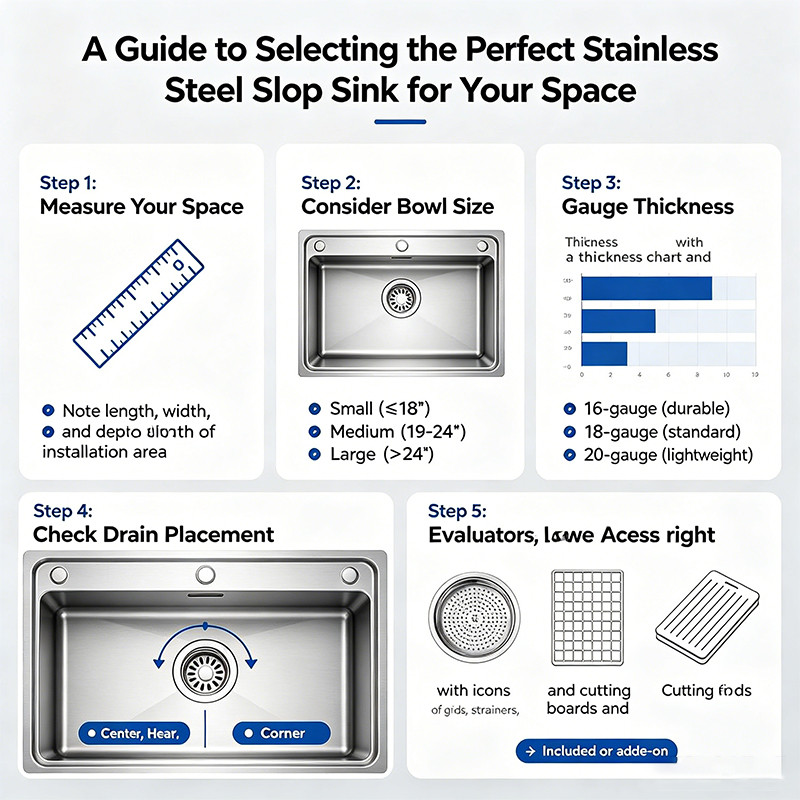
Choosing the right utility sink for tough environments is crucial, especially when standard kitchen sinks just don't cut it. We understand the challenges of maintaining hygiene, efficiency, and durability in demanding spaces. In commercial, industrial, and public settings, a sink must withstand far more than the daily rinse of a few coffee mugs. It must endure harsh chemicals, heavy impacts, constant use, and rigorous cleaning protocols. The choice of a sink becomes a foundational decision for operational success.
In this guide, we'll walk you through the essential factors to consider when selecting the perfect stainless steel slop sink for your specific needs, helping you make an informed decision. We will delve into material grades, design configurations, application-specific requirements, and the accessories that can transform a simple basin into a high-efficiency work station. This comprehensive overview is designed to equip you with the knowledge to invest wisely in a fixture that delivers long-term value.
Join us as we explore why stainless steel has become the industry standard and how to pick a slop sink that ensures cleanliness, longevity, and smooth operations. From bustling restaurant kitchens and sterile healthcare environments to high-traffic janitorial closets and rugged outdoor park facilities, the right stainless steel sink is an unsung hero. Let's ensure you choose a hero that is perfect for your space.
Key Takeaways
Selecting the ideal stainless steel slop sink is a critical investment for any commercial, institutional, or industrial environment. This decision directly impacts long-term durability, operational efficiency, and sanitation standards. To simplify this process, we've distilled the most crucial points of this guide into a scannable overview. The primary takeaway is that not all stainless steel sinks are created equal; understanding the nuances of material, design, and application is paramount.
First and foremost, material quality is non-negotiable. The industry standard for high-performance slop sinks is Type 304 stainless steel. This specific alloy contains a high percentage of chromium and nickel, forming a passive, corrosion-resistant layer that protects it from rust, chemical damage, and pitting. Coupled with material grade is gauge thickness. A lower gauge number signifies thicker, more durable steel (e.g., 14-gauge is thicker and more robust than 16-gauge), making it better suited for heavy-duty applications where impacts are common.
Second, design directly influences functionality and safety. Sinks are available in various configurations, including floor-mounted, wall-mounted, and corner-fit models, allowing for flexible installation in any space. Innovations like anti-splash guards are essential for maintaining a clean and dry surrounding area, while drop-front designs offer ergonomic benefits, making it easier to lift and empty heavy mop buckets. Furthermore, ensuring a sink is ADA compliant is not just a legal requirement in many public spaces but a commitment to accessibility for all users.
Third, the application dictates the ideal features. A commercial kitchen sink must meet NSF standards for sanitation. A healthcare facility requires a sink with a non-porous, easily sanitized surface to prevent cross-contamination. Public and educational institutions benefit from vandalism-resistant, fully welded construction that can withstand rough use.
Finally, customization and accessories unlock peak performance. Accessories like mop drainage trays, utility shelves, and service faucets enhance usability, turning a simple sink into a comprehensive janitorial station. For unique requirements, such as those in correctional facilities or specialty labs, custom features are invaluable. Leading manufacturers like Samsink offer tailored solutions, including custom bowl sizes, enhanced security packages, and integrated janitorial cabinets, ensuring you get a fixture perfectly matched to your operational needs. By focusing on these key areas—material, design, application, and accessories—you can confidently select a stainless steel slop sink that will serve as a durable, hygienic, and efficient cornerstone of your facility for years to come.
The Undeniable Advantages of a Stainless Steel Slop Sink
When it comes to outfitting a utility space, the choice of a sink is more than a matter of convenience; it’s a decision that impacts durability, hygiene, and long-term maintenance costs. While various materials exist, stainless steel consistently emerges as the superior choice for slop sinks, especially in demanding commercial and industrial environments. Its inherent properties provide a unique combination of strength, cleanliness, and resilience that other materials simply cannot match. Let's explore the core advantages that make a stainless steel slop sink an indispensable asset.
Unmatched Durability and Resistance
The primary function of a slop sink is to handle the toughest cleaning tasks, from draining mop buckets filled with dirty water and harsh chemicals to washing bulky equipment. This requires a level of durability that goes far beyond what is expected of a residential kitchen sink. Stainless steel is engineered for this exact purpose, offering a robust construction that promises longevity and unwavering performance.
Built Tough: Resisting Corrosion, Rust, and Impacts
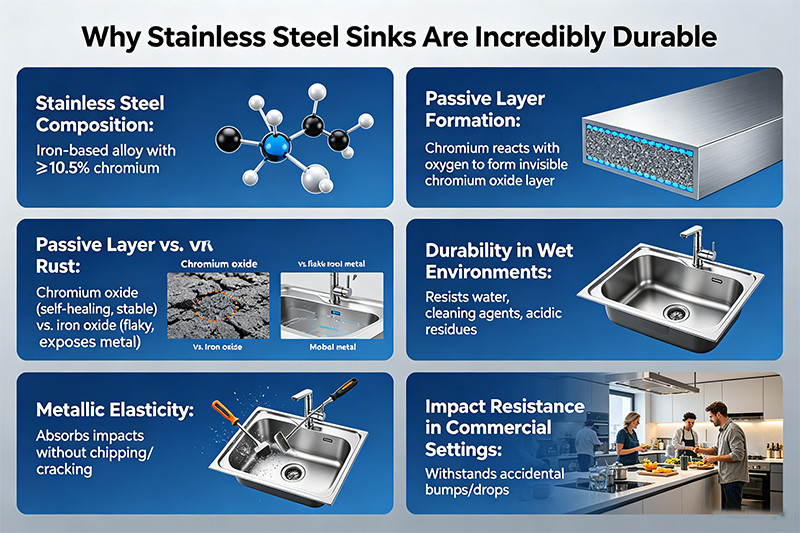
Stainless steel's renowned durability stems from its unique chemical composition. It is an iron-based alloy containing a minimum of 10.5% chromium. This chromium is the key to its defense mechanism; when exposed to oxygen in the air or water, it forms a thin, invisible, and incredibly stable "passive layer" of chromium oxide on the steel's surface. This layer acts as a powerful shield, protecting the underlying iron from the elements that cause rust and corrosion. Unlike iron oxide (rust), which is flaky and breaks away to expose fresh metal to further decay, the chromium oxide layer is self-healing, quickly reforming when scratched or damaged.
This inherent resistance makes stainless steel sinks ideal for environments where they are constantly exposed to water, cleaning agents, and acidic food residues. Furthermore, its metallic structure gives it a natural elasticity, allowing it to absorb the force of impacts from dropped tools or heavy equipment without chipping or cracking like ceramic or composite materials might. The durability of stainless steel means it is less likely to suffer from dents or scratches, ensuring the sink maintains its functionality and appearance over time. This impact resistance is crucial in a busy commercial setting where accidental bumps and drops are inevitable.
Standing Up to Daily Wear and Tear
Commercial and industrial spaces are high-pressure environments where fixtures are used relentlessly. Stainless steel is the ideal material for sinks in these settings because it is incredibly durable and resistant to damage. Unlike materials that can become brittle or wear down with constant scrubbing and exposure to extreme temperatures, stainless steel maintains its integrity. Its ability to withstand daily use, heavy cookware, and accidental impacts without showing significant signs of wear ensures a long lifespan. A sink made from high-quality stainless steel won't rust or corrode easily, making it a reliable long-term investment. This resilience translates into lower maintenance and replacement costs, making it a wise financial choice for any business or institution. The investment in a quality stainless steel sink means reduced replacement costs and less frequent maintenance, ultimately benefiting the bottom line.
Superior Hygiene and Easy Cleaning for Your Stainless Steel Slop Sink
In any environment where cleanliness is a priority—from commercial kitchens to hospitals—the choice of sink material plays a pivotal role in infection control and sanitation. Stainless steel is overwhelmingly favored in these sectors for its hygienic properties, which are a direct result of its physical structure.
Non-Porous Surface: A Barrier Against Bacteria and Germs
The key to stainless steel's hygienic superiority is its incredibly smooth, non-porous surface. Unlike materials like wood, plastic, or even some ceramics, stainless steel has no microscopic pores, cracks, or crevices where dirt, bacteria, and other pathogens can hide and multiply. This solid surface effectively prevents contaminants from penetrating the material, making it an ideal choice for environments requiring strict hygiene controls. Because there are no hiding places for germs, bacteria have been shown to survive for shorter periods on stainless steel compared to many other materials. This inert quality ensures that the sink itself does not become a breeding ground for harmful microorganisms, which is a critical feature in healthcare, food service, and laboratory settings.
Effortless Cleaning and Compliance in Regulated Environments
The non-porous nature of stainless steel also makes it exceptionally easy to clean and sanitize. Most dirt and grime can be wiped away with a soft cloth, mild soap, and water. Because it is non-absorbent, it repels liquids and prevents stains from setting in. This resistance to staining and discoloration allows it to maintain a crisp, clean appearance even after years of heavy use. Another benefit is the material's ability to withstand harsh cleaning agents and disinfectants without degrading, which is essential for frequent, rigorous sanitation protocols. You cannot wear out stainless steel by over-cleaning it.
In many commercial industries, especially food service, equipment must meet specific regulatory standards. NSF/ANSI 2 is a key standard that sets minimum food protection and sanitation requirements for equipment like sinks. Sinks certified by the National Sanitation Foundation (NSF) are designed with features like coved (rounded) interior corners to eliminate crevices where bacteria can grow, ensuring they can be cleaned effectively. Using NSF-certified stainless steel sinks is often mandatory to pass health inspections and demonstrates a commitment to public safety.
Vandalism Resistance: Ideal for Public and Educational Spaces
Fixtures in public locations like schools, parks, transport hubs, and stadiums face a high risk of damage, both accidental and intentional. In these environments, durability is synonymous with vandalism resistance. Stainless steel is the material of choice for these applications due to its exceptional strength and impact resistance. Unlike softer or more brittle materials like porcelain or plastic, stainless steel can withstand heavy impacts, scratching, and other forms of abuse without chipping, denting, or breaking.
This inherent toughness makes stainless steel sinks an incredibly cost-effective investment for public facilities. Facility managers in high-traffic areas need fixtures that can endure constant use and potential misuse while requiring minimal maintenance and replacement. The longevity of stainless steel reduces long-term operational costs significantly. Wash troughs and sinks designed for these spaces often feature heavy-gauge, fully welded construction to maximize strength. They are an ideal choice for any educational or public facility looking for a low-cost, hardwearing, and easy-to-clean solution that is exceptionally resistant to vandalism.
Deciphering the Features: What to Look for in Your Stainless Steel Slop Sink
Once you've decided on stainless steel as the right material, the next step is to navigate the specific features that differentiate one slop sink from another. The grade of the steel, the thickness of its construction, and the overall design are critical factors that determine a sink's performance, longevity, and suitability for your intended application. Understanding these details is key to making a purchase that provides the best possible value and functionality.
Understanding Material Grade and Construction
The phrase "stainless steel" covers a broad family of alloys, each with different properties. For a slop sink that will endure, paying close attention to the specific grade and the method of construction is crucial. These two elements are the foundation of a sink's quality.
The Importance of Type 304 Stainless Steel
For most commercial and residential applications, Type 304 stainless steel is the industry gold standard, and for good reason. This grade, also known as 18/8 stainless steel, is an austenitic alloy composed of approximately 18% chromium and 8% nickel. This specific composition gives it an excellent balance of corrosion resistance, durability, formability, and cost-effectiveness. The high chromium and nickel content makes it highly resistant to rust, staining, and oxidation from daily exposure to water, heat, and common acidic substances found in food and cleaning products.
Because it is non-porous and food-safe, Type 304 is the most widely used grade for kitchen sinks, food processing equipment, and medical devices. While other grades exist, such as the more expensive Type 316 (which includes molybdenum for enhanced resistance to chlorides and salts), Type 304 provides more than sufficient protection and longevity for the vast majority of indoor slop sink applications. Investing in a sink made from high-quality Type 304 stainless steel ensures you are getting a product that is hygienic, long-lasting, and offers tremendous value.
Gauge Thickness and Fully Welded Designs for Your Stainless Steel Slop Sink
Beyond the material grade, the thickness of the steel—known as its gauge—is a primary indicator of a sink's durability. In the world of metal, the system is counterintuitive: the lower the gauge number, the thicker the steel. For example, a 14-gauge sink is thicker and more robust than a 16-gauge sink.
- 18-22 Gauge: Thinner steel, typically found in residential sinks or very light-duty applications.
- 16 Gauge: Considered the standard for most commercial applications. It offers a great balance of durability and cost, holding up well to daily use in restaurants, schools, and janitorial closets.
- 14 Gauge: A heavier, thicker option ideal for exceptionally demanding industrial environments, machine shops, or any setting where the sink will be subjected to heavy impacts and extreme use. A 14-gauge sink provides superior strength and dent resistance.
The construction method also plays a vital role. High-quality commercial slop sinks often feature fully welded construction. Unlike stamped sinks, which are pressed from a single sheet of metal and can become thinner at the corners, welded sinks are fabricated from separate, consistently thick panels. This method results in superior structural integrity, tighter corner radii (maximizing usable basin space), and enhanced overall rigidity, ensuring the sink will not bend or deform under heavy loads.
| Gauge | Thickness (Inches) | Best Application | Characteristics |
|---|---|---|---|
| 14-Gauge | ~0.0781" | Heavy-Duty Industrial, Institutional | Maximum durability, highest resistance to dents and impacts. |
| 16-Gauge | ~0.0625" | Commercial, High-Traffic Janitorial | Excellent durability for most professional settings, good value. |
| 18-Gauge | ~0.0500" | Light Commercial, Residential Utility | Suitable for less demanding environments. |
Exploring Design Innovations and Configurations
Modern slop sinks are more than just simple basins. They come in a wide array of designs and configurations tailored to solve specific challenges related to space, ergonomics, and functionality. Choosing the right design can significantly improve workflow efficiency and worksite safety.
Standard, Anti-Splash, and Drop-Front Stainless Steel Slop Sinks
Slop sinks are available in several key designs, each serving a distinct purpose:
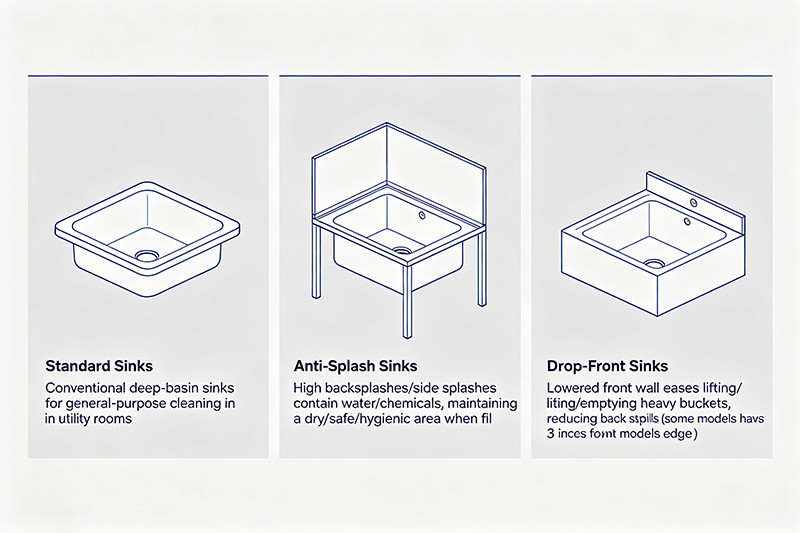
- Standard Sinks: These are conventional, deep-basin sinks suitable for a wide range of general-purpose cleaning tasks. They are a reliable and straightforward option for many utility rooms.
- Anti-Splash Sinks: Featuring high backsplashes and side splashes, these sinks are engineered to contain water and cleaning chemicals, preventing them from splashing onto walls and floors. This design is crucial for maintaining a dry, safe, and hygienic surrounding area, especially when filling and emptying large buckets.
- Drop-Front Sinks: Ergonomically designed with a lowered front wall, these sinks make it significantly easier and safer to lift and empty heavy, full mop buckets. By reducing the required lifting height, they help minimize back strain and the risk of spills. Some models feature a 3-inch dropped front edge specifically for this purpose.
Floor-Mounted, Wall-Mounted, and Corner-Fitting Options
The installation style of your slop sink will depend heavily on your available space, plumbing layout, and cleaning preferences.
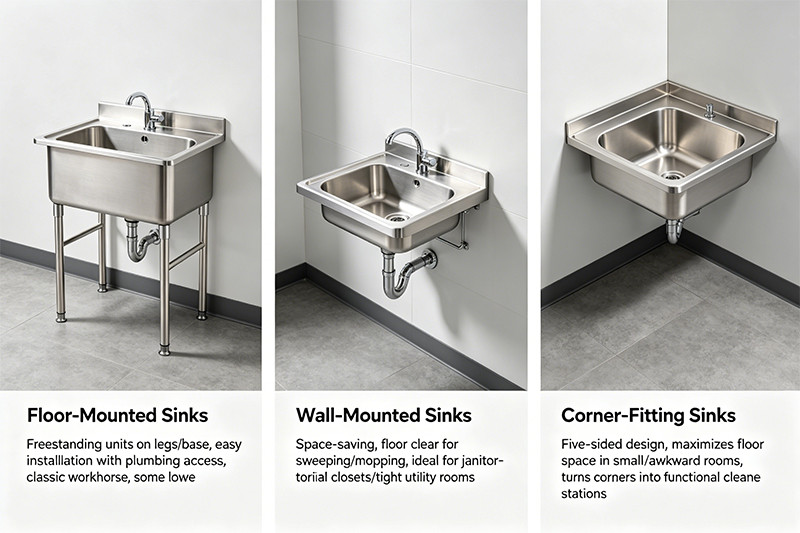
- Floor-Mounted Sinks: These freestanding units rest on legs or a base directly on the floor. They are easy to install anywhere with plumbing access and are a classic workhorse option. Some floor-mounted sinks are designed to sit low to the ground, specifically as mop sinks.
- Wall-Mounted Sinks: Attached directly to the wall, these sinks are an excellent space-saving solution. By keeping the floor clear, they make it much easier to sweep and mop underneath, contributing to better overall cleanliness in a janitorial closet or tight utility room.
- Corner-Fitting Sinks: Designed with a five-sided shape, these sinks are perfect for maximizing usable floor space in smaller janitorial areas or awkwardly shaped rooms. They fit snugly into a corner, turning an often-underutilized area into a functional cleaning station.
Considerations for Heavy-Duty and Medium-Duty Usage
The intended use of the sink should guide your selection of its robustness.
- Medium-Duty: For environments like a small office janitorial closet or a residential laundry room, a medium-duty sink (e.g., 18-gauge) is often sufficient. These sinks are built to handle regular but not constant, high-impact use.
- Heavy-Duty: For high-volume commercial kitchens, industrial workshops, hospitals, and busy public facilities, a heavy-duty sink (14- or 16-gauge with welded construction) is essential. These sinks are engineered to withstand the daily abuse of heavy equipment, harsh chemicals, and constant, rigorous use without failing.
ADA Compliance and Accessibility for Every Stainless Steel Slop Sink
In any public or commercial building, accessibility is a legal and ethical imperative. The Americans with Disabilities Act (ADA) provides clear guidelines to ensure facilities, including sinks, are usable by individuals with disabilities. While mop or service sinks used strictly for janitorial purposes are often exempt, any slop sink that may be used by employees or the public in a workspace, classroom, or lab must comply.
Key ADA requirements for sinks include:
- Mounting Height: The rim of the sink or the surrounding counter must be no higher than 34 inches from the finished floor to be approachable for a person in a wheelchair.
- Knee and Toe Clearance: A clear space must be provided underneath the sink to accommodate a person's knees and toes. This requires at least 27 inches of vertical clearance for knees and prohibits obstructions like cabinets or unprotected plumbing.
- Clear Floor Space: A clear floor area of at least 30 by 48 inches must be provided in front of the sink to allow for a forward approach.
- Shallow Basin: ADA-compliant sinks often have a shallower depth (e.g., maximum 6.5 inches) to provide the necessary knee clearance underneath.
- Accessible Faucets: Faucet controls must be operable with one hand and without tight grasping, pinching, or twisting of the wrist. Lever-handled, push-type, or touchless electronic faucets are ideal solutions.
Ensuring your slop sink installation meets these standards is not just about avoiding legal issues; it's about creating an inclusive and functional environment for everyone.
Finding the Perfect Stainless Steel Slop Sink for Your Specific Application
The versatility of stainless steel slop sinks makes them a staple in countless industries. However, the optimal sink for a bustling restaurant kitchen will have different features than one designed for a hospital or a public park. Understanding the unique demands of your specific environment is the final and most critical step in selecting a sink that will perform flawlessly for years to come.
Commercial Kitchens and Food Service Environments
In the fast-paced, high-pressure environment of a commercial kitchen, sanitation and efficiency are paramount. Every piece of equipment, especially sinks, must meet stringent health codes and withstand relentless use. Stainless steel is the dominant material in over 90% of professional kitchens because its non-porous surface is crucial for preventing bacterial growth.
When selecting a slop sink for food service, look for these key features:
- NSF Certification: This is the most critical requirement. An NSF/ANSI 2 certified sink guarantees that the design and materials are safe for food environments. Certified sinks feature coved corners and seamless welds to eliminate crevices where bacteria can hide, ensuring they are easy to clean and sanitize. Most local health departments in the United States mandate that equipment used in food service establishments be NSF certified.
- Heavy-Gauge Construction: Kitchen slop sinks endure constant abuse, from the impact of heavy pots to the disposal of hot liquids. A 16-gauge or even 14-gauge Type 304 stainless steel sink is necessary to resist dents, scratches, and warping over time.
- Multi-Compartment and Designated Use Sinks: Health codes require separating tasks to prevent cross-contamination. This means having dedicated sinks for different purposes. While 3-compartment sinks are the standard for the wash-rinse-sanitize process, a separate, dedicated slop or utility sink is required for disposing of mop water and cleaning maintenance tools. You cannot dump mop water into sinks used for food prep or dishwashing.
Healthcare Facilities and Regulated Spaces Needing a Stainless Steel Slop Sink
In healthcare settings like hospitals, clinics, and long-term care facilities, infection control is the single most important consideration. Sinks in these environments are not just for cleaning; they are a critical component of a facility's strategy to prevent healthcare-associated infections (HAIs). A slop sink, often called a "sluice sink" or "slop hopper" in a medical context, is specifically designed for the safe and hygienic disposal of clinical waste, such as contents from bedpans and urine bottles.
Key considerations for a healthcare slop sink include:
- Hygienic Design for Infection Control: The design must minimize the risk of cross-contamination. This includes seamless, fully welded construction from non-porous Type 304 or even Type 316 stainless steel (for enhanced chemical resistance). Surfaces must be smooth and free of crevices where biofilms can form. An offset drain is a critical feature that prevents contaminated water from splashing back onto the user or surrounding surfaces.
- Specialized Functionality: Sluice sinks are essentially a combination of a hopper and a flushing mechanism, much like a toilet, to dispose of waste directly into the soil pipe. It is absolutely essential to keep these waste disposal facilities separate from handwashing or equipment cleaning sinks to prevent the spread of infectious diseases.
- Durability and Chemical Resistance: Healthcare facilities use potent disinfectants. The stainless steel must be of a high grade (often 16-gauge or lower) and quality to withstand constant exposure to these chemicals without corroding or degrading.
- Hands-Free Operation: To reduce touchpoints and limit the spread of pathogens, slop sinks and associated handwashing stations in healthcare are often equipped with electronic sensors or knee/foot-activated controls for water and soap.
Educational Institutions, Public Parks, and Janitorial Applications
Slop sinks are the unsung workhorses of janitorial closets in schools, universities, office buildings, and public parks. Here, the focus is on durability, functionality, and the ability to withstand rough, high-frequency use. A well-equipped janitorial station is essential for maintaining the cleanliness and safety of the entire facility.
Mop Sinks as Essential Janitorial Equipment
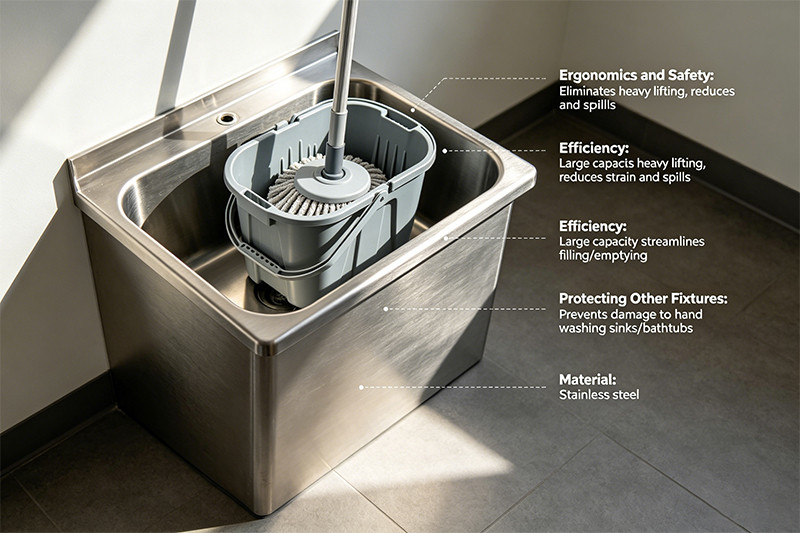
A dedicated mop sink is a fundamental piece of equipment for any professional cleaning crew. These sinks are typically floor-mounted and feature a deep basin designed to easily accommodate and fill large mop buckets. The primary benefits include:
- Ergonomics and Safety: A floor-level or drop-front mop sink eliminates the need for janitorial staff to lift heavy, full buckets of water to waist height, significantly reducing the risk of strains, sprains, and messy spills.
- Efficiency: Having a dedicated, large-capacity basin streamlines the process of filling and emptying buckets, making cleaning routines faster and more efficient.
- Protecting Other Fixtures: Using a purpose-built mop sink prevents the damage and grime that can occur when buckets are filled in handwashing sinks or bathtubs, preserving the longevity and appearance of other plumbing fixtures.
Solving Placement Challenges: Indoor, Outdoor, and High-Traffic Areas
The versatility of stainless steel makes it suitable for a wide variety of placements within public and educational facilities.
- Indoor Janitorial Closets: Space is often at a premium. Wall-mounted or corner-fit slop sinks are excellent solutions for maximizing floor space while providing full functionality. Heavy-gauge construction is still important to withstand the inevitable bumps from carts and equipment.
- Outdoor and Park Facilities: For outdoor applications, such as in public parks, sports facilities, or school grounds, corrosion resistance is paramount. While Type 304 stainless steel is generally sufficient, in coastal areas with salt in the air, upgrading to Type 316 stainless steel is a wise investment. Type 316 contains molybdenum, which provides superior protection against chloride-induced corrosion, ensuring the sink remains rust-free and functional for many years despite exposure to the elements.
- High-Traffic Areas: In locations like school art rooms or science labs, sinks must endure not only water but also paint, clay, chemicals, and frequent scrubbing. A deep-basin, 16-gauge stainless steel sink is robust enough to handle these challenges while being easy to clean and maintain.
Specialty Uses: Studios, Laundries, and Portable Solutions
Beyond the common applications, stainless steel slop sinks serve a variety of niche roles where their unique properties are invaluable.
- Art and Photo Studios: The need to wash brushes with harsh solvents, rinse screens, or develop photographs requires a sink that is chemical-resistant and easy to clean. A deep, durable stainless steel utility sink is a perfect fit, as it won't be stained by pigments or damaged by chemicals.
- Commercial and Residential Laundries: For pre-soaking heavily soiled garments, hand-washing delicates, or dealing with dye, a large-capacity stainless steel laundry sink offers superior durability and stain resistance compared to plastic or acrylic tubs.
- Portable Solutions: For outdoor events, construction sites, or temporary facilities, portable stainless steel handwashing stations offer a rugged and hygienic solution. These self-contained units, often featuring hands-free faucets, provide essential sanitation wherever it’s needed, combining the durability of stainless steel with the flexibility of a mobile design.
Enhancing Functionality: Customizations and Accessories for Your Stainless Steel Slop Sink
A standard stainless steel slop sink is a powerful tool, but its true potential is unlocked through a thoughtful selection of accessories and custom features. These additions are not mere conveniences; they are strategic enhancements that can dramatically improve workflow, organization, safety, and hygiene. By tailoring your sink to the precise demands of your environment, you can create a highly efficient and purpose-built work station.
Essential Accessories for Optimal Performance
The right accessories turn a simple basin into a comprehensive cleaning aystem. They help keep tools organized, improve drainage, and add valuable workspace, making daily tasks faster and more ergonomic.
Mop Drainage Trays and Holders
For any janitorial application, managing wet mops is a constant challenge. Accessories designed for this purpose are invaluable for maintaining a clean and safe environment.
- Mop Drainage Trays: These are perforated stainless steel shelves or trays, often mounted above or beside the sink basin. They provide a dedicated, sanitary place for mops to hang and drip-dry directly into the sink. This prevents dirty water from pooling on the floor, which can create a slip hazard and a breeding ground for bacteria.
- Mop Holders/Hangers: Simple but effective, these hangers are typically mounted on the sink's backsplash or an adjacent wall. They keep mops and brooms off the floor, allowing them to dry properly and preventing damage to the bristles and fibers. This orderly storage also keeps the janitorial closet organized and tools readily accessible.
Utility Shelves for Storage and Organization
Space in utility areas is often limited. Integrated storage is a key feature for maximizing efficiency.
- Utility Shelves: A stainless steel shelf mounted on the backsplash above the sink provides a convenient, cleanable surface for storing cleaning chemicals, soaps, brushes, and other supplies. This keeps essential items within easy reach, saving time and effort. It also keeps chemicals safely off the floor and away from potential spills.
- Service Faucets with Hooks: Specialized faucets designed for slop sinks often include an integrated hook for hanging pails or buckets. This small feature is surprisingly useful, freeing up the user's hands and making the filling process easier and more stable.
Custom Features and Packages
While standard slop sink models cover many needs, some environments have unique requirements that demand specialized solutions. This is where customization becomes a critical advantage. Leading manufacturers like Samsink excel at providing tailored features and packages to meet the most stringent specifications, ensuring you receive a sink that is perfectly optimized for your facility.
Correctional Packages and Enhanced Splash Guards
Certain environments require features that go beyond standard durability and sanitation.
- Correctional Packages: In high-security environments such as prisons, jails, and detention centers, safety and security are the top priorities. Fixtures in these facilities must be engineered to be tamper-proof and ligature-resistant to prevent self-harm and vandalism. Correctional-grade slop sinks are built from heavy-gauge stainless steel with fully welded seams and often include security features like internal plumbing controls, tamper-resistant hardware, and designs that minimize potential tie-off points.
- Enhanced Splash Guards: While many standard sinks offer backsplashes, some applications—like those involving powerful spray nozzles or the disposal of large volumes of liquid—may require custom-designed splash guards. These can be fabricated to specific heights and shapes to provide maximum containment, protecting walls, floors, and adjacent equipment from water and chemical exposure.
Custom Bowl Sizes and Janitorial Cabinets with Stainless Steel Slop Sink Capabilities
One size does not always fit all. The ability to customize dimensions and integrate fixtures into larger units is a significant advantage for optimizing a space.
- Custom Bowl Sizes: You may need a slop sink with specific dimensions to fit into a non-standard space or to accommodate oversized equipment. Manufacturers with custom fabrication capabilities can build sinks to any length, width, and depth required, ensuring a perfect fit for your unique layout.
- Janitorial Cabinets with Integrated Sinks: For a complete, all-in-one cleaning station, a stainless steel janitorial cabinet with a built-in mop sink is an excellent solution. These units combine a floor-mounted mop basin with secure, enclosed storage for cleaning supplies, mops, and brooms. This integrated design saves space, keeps supplies organized and out of sight, and provides the ultimate in sanitation and workflow efficiency for any facility.
By partnering with a manufacturer experienced in customization, like Samsink, you can design and procure a stainless steel slop sink solution that is not just a fixture, but a perfectly engineered component of your operational infrastructure. Explore their wide range of options to create a sink that meets your exact needs for durability, hygiene, and performance.
Frequently Asked Questions (FAQs)
1. What is the best gauge for a commercial stainless steel slop sink?
The best gauge depends on the intensity of use. For most commercial applications, such as in restaurants, schools, and standard janitorial closets, 16-gauge stainless steel is the industry standard. It provides an excellent balance of durability to resist dents and impacts from daily use without being excessively heavy or expensive. For extremely demanding environments like industrial workshops, high-volume correctional facilities, or areas where the sink will face severe abuse, upgrading to 14-gauge steel offers maximum durability and longevity. For very light-duty use, an 18-gauge sink may be sufficient, but 16-gauge is the recommended minimum for a reliable commercial slop sink.
2. How do I clean and maintain my stainless steel slop sink?
Maintaining a stainless steel slop sink is straightforward due to its non-porous and corrosion-resistant surface. For daily cleaning, use a soft cloth or sponge with mild soap and warm water, then rinse thoroughly and wipe dry to prevent water spots. It is best to clean along the grain of the steel's finish. For tougher grime, a paste of baking soda and water can be used as a gentle abrasive.
Important things to avoid:
- Steel wool or abrasive scrubbers: These can scratch the surface and compromise the protective chromium oxide layer, potentially leading to rust.
- Harsh chemicals like bleach or chloride-based cleaners: Prolonged contact with these chemicals can cause pitting and corrosion. If used, they should be rinsed off immediately and thoroughly.
- Leaving wet sponges or metal cans in the sink: This can trap moisture and lead to rust stains on the surface.
With regular, simple cleaning, your stainless steel sink will maintain its hygienic properties and appearance for decades.
3. Is Type 304 stainless steel always the best choice?
For the vast majority of indoor slop sink applications, Type 304 stainless steel is the ideal choice. Its 18/8 composition (18% chromium, 8% nickel) offers excellent resistance to corrosion, rust, and common chemicals found in commercial environments, all at a cost-effective price point. However, there is a key exception: Type 316 stainless steel. This grade includes molybdenum, which gives it superior resistance to chlorides. You should choose Type 316 if your sink will be installed outdoors in a coastal area (exposed to salt air), in a laboratory with harsh chemical use, or in any environment with high concentrations of chlorides. For all other standard commercial and institutional uses, Type 304 provides the perfect blend of performance and value.
4. What makes a sink ADA compliant?
An ADA-compliant sink is designed to be accessible to individuals with disabilities, particularly those in wheelchairs. The key requirements include:
- Height: The sink rim must be no more than 34 inches from the floor.
- Knee Clearance: There must be open space underneath the sink, at least 27 inches high and 30 inches wide, to allow for wheelchair access.
- Faucet Controls: Faucets must be operable with one hand and without tight grasping or twisting (e.g., lever, push-button, or sensor-activated).
- Depth: Basins are typically shallower (around 6.5 inches maximum) to create the necessary knee room.
- Plumbing Protection: Hot water pipes and sharp surfaces under the sink must be covered or insulated to prevent injury. Note that dedicated mop sinks are often exempt, but any utility sink in a public or employee space may need to be compliant.
5. Can I install a stainless steel slop sink outdoors?
Yes, stainless steel slop sinks are an excellent choice for outdoor installations due to their inherent durability and weather resistance. However, material grade is crucial. For any outdoor sink, especially one in a coastal or marine environment where it will be exposed to salt spray, Type 316 stainless steel is highly recommended. The molybdenum in T316 steel provides extra protection against the corrosive effects of salt, preventing rust and ensuring a much longer service life. For inland outdoor locations away from salt air, Type 304 may be sufficient, but T316 offers the best long-term investment for any exterior application.
6. What is the difference between a slop sink, a utility sink, and a mop sink?
These terms are often used interchangeably, but there can be subtle distinctions:
- Utility Sink: This is a general, all-purpose term for a deep-basin sink used for a variety of tough cleaning jobs, from laundry to washing tools. It can be made from various materials and installed in garages, workshops, or laundry rooms.
- Slop Sink: This term is largely synonymous with a utility sink but often implies a more rugged, commercial-grade fixture used for "sloppy" jobs, like cleaning paint brushes or disposing of dirty water. In healthcare, it specifically refers to a "sluice sink" for clinical waste.
- Mop Sink: This is a specialized type of slop sink designed specifically for janitorial use. They are almost always floor-mounted, featuring a deep basin designed to accommodate large mop buckets, and sometimes include a drop-front for easier emptying.
Essentially, a mop sink is a specific type of slop/utility sink optimized for janitorial tasks.
By considering the key features, applications, and customization options discussed, we are confident you can select a stainless steel slop sink that perfectly meets your operational and hygienic requirements. We have covered the critical importance of material grade and gauge, explored innovative designs like drop-front and anti-splash models, and matched sink types to their ideal applications—from NSF-certified kitchen sinks to vandalism-resistant public fixtures.
Investing in the right stainless steel slop sink isn't just about buying a fixture; it's about ensuring long-term durability, sanitation, and efficiency for your commercial space. A well-chosen sink constructed from high-quality materials will withstand years of heavy use, simplify cleaning protocols, and contribute to a safer, more productive environment. It is a foundational investment in the smooth operation of your facility.
We hope this guide empowers you to make an informed decision for a reliable and high-performing stainless steel slop sink solution. The perfect sink is out there, ready to become the unsung hero of your workspace. If you have any further questions or feel this guide was helpful in your selection process, please share it with others or leave a comment below. We welcome your feedback and experiences