Bulk Kitchen Sinks Explained: Cost Savings, Durability, and Design
- Share
- Issue Time
- Apr 30,2026
Summary
The article elaborates on the advantages of acquiring kitchen sinks in bulk, moving beyond the common perception that this method is exclusively for large-scale commercial ventures. It underscores how purchasing directly from manufacturers or wholesalers, such as Samsink, significantly reduces costs by capitalizing on economies of scale and eliminating retail markups. This approach not only provides substantial unit cost savings but also simplifies project management for developers and homeowner
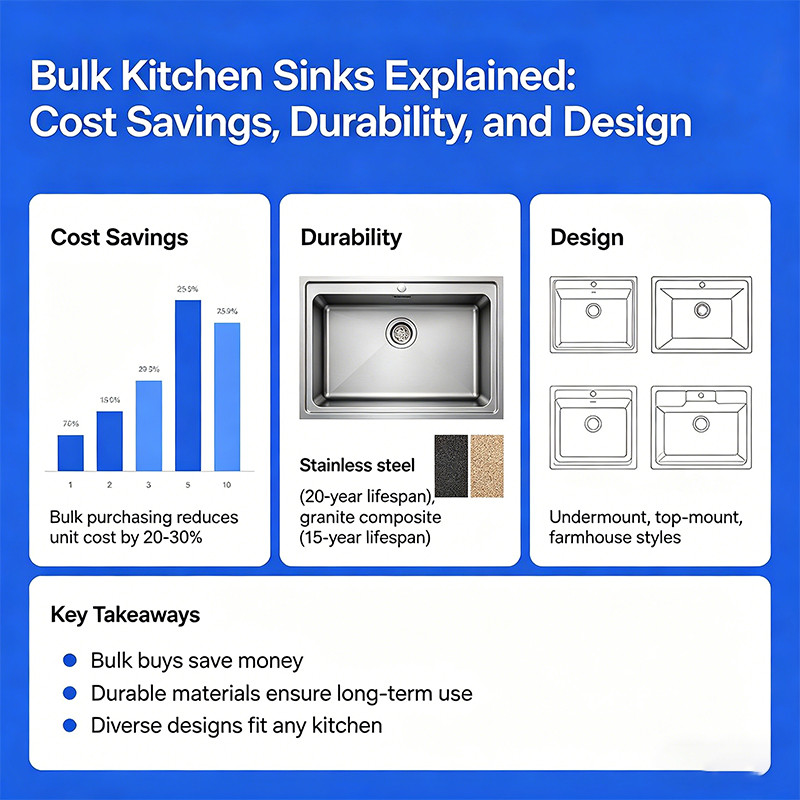
When I think about upgrading a kitchen or starting a new build, one of the first questions that comes to mind is how to balance quality with cost. I've found that bulk kitchen sinks offer a fantastic solution. Many homeowners and builders overlook the benefits of purchasing kitchen sinks in bulk, assuming it's only for large commercial projects. Today, I want to explain why this approach can save you money, provide superior durability, and still offer diverse design options.
Join me as I delve into the world of bulk kitchen sinks, exploring how they stand out in terms of initial cost savings, long-term resilience, and aesthetic appeal for your home or project.
Key Takeaways
- Significant Cost Savings: The primary driver for buying kitchen sinks in bulk is the substantial reduction in per-unit cost. By purchasing larger quantities directly from manufacturers or wholesalers like Samsink, buyers can leverage economies of scale, which means suppliers can lower their prices due to efficient production and shipping. This approach effectively cuts out the retail middleman, translating to direct savings for your project budget.
- Streamlined Project Management: For builders, developers, and even individuals managing multi-unit renovations, sourcing sinks from a single supplier simplifies the entire procurement process. It consolidates ordering, reduces administrative work, and ensures consistency across all installations. This leads to fewer logistical headaches, less paperwork, and a more predictable project timeline.
- Assured Quality and Consistency: A common misconception is that "bulk" implies lower quality. However, buying from a reputable manufacturer ensures that every sink meets the same high standards. When you order a large batch of sinks, you get uniformity in material grade, finish, and dimensions, which is crucial for large-scale projects where aesthetic consistency is key.
- Wide Variety of Design Options: Opting for bulk purchases doesn't limit your design choices. Wholesalers and manufacturers offer an extensive range of styles, from undermount and drop-in sinks to single-bowl, double-bowl, and trendy farmhouse (apron-front) designs. You can also select from various materials like stainless steel, fireclay, and composite, along with different finishes to match any kitchen aesthetic.
- Long-Term Durability: Bulk sinks are often manufactured to high standards to meet the demands of contractors and builders who require reliable products. Materials like 16- or 18-gauge stainless steel offer excellent resistance to corrosion, heat, and daily wear, ensuring a long lifespan for the kitchen's most-used feature. This durability means fewer replacements and repairs down the line, adding to the long-term value.
- Smart Budgeting and Financial Stability: Locking in a price for a large quantity of sinks helps protect your project from market volatility and sudden price increases for materials like steel. This allows for more accurate and stable project budgeting, preventing financial surprises that can derail a construction or renovation timeline.
Understanding the 'Bulk' in Bulk Kitchen Sinks: What It Means for My Project
The term "bulk" often conjures images of massive warehouses and industrial-scale orders. However, when it comes to kitchen sinks, the concept is more flexible and accessible than you might think. It's about a strategic purchasing decision that prioritizes value and efficiency, whether you're a developer outfitting an entire apartment complex or a homeowner renovating multiple bathrooms and a kitchen.
Defining Bulk Purchases: More Than Just Quantity
At its core, buying in bulk means purchasing goods in larger quantities than you would in a typical retail setting, often directly from a manufacturer or a wholesaler. This isn't just about buying a high number of units; it's a different approach to sourcing. Instead of purchasing one sink at a retail price, which includes markups from middlemen, a bulk purchase allows you to acquire multiple units at a lower cost per unit. This strategy takes advantage of what economists call "economies of scale."
The manufacturer saves on production, packaging, and shipping costs when dealing with a single large order versus many small ones, and those savings are passed on to you. For construction materials, this can involve anything from raw materials to finished products like the sinks we're discussing. So, while it certainly applies to a contractor buying 50 sinks for a new housing development, it can also apply to a small business owner purchasing 10 sinks for a series of rental property upgrades. The key takeaway is that you are moving up the supply chain to capture value directly from the source.
Why I'm Confident Bulk Kitchen Sinks are a Smart Choice
Over the years, I've seen firsthand how this procurement strategy pays dividends. It's not just an expense; it's an investment in your project's bottom line and operational smoothness. My confidence comes from two major benefits that consistently prove their worth: significant initial cost savings and a more streamlined sourcing process.
Uncovering the Initial Cost Savings
The most immediate and compelling advantage of buying kitchen sinks in bulk is the financial benefit. By acquiring sinks directly from a wholesale supplier or manufacturer, you sidestep the retail markup, which can be substantial. Retailers have to cover their own overhead—staff, storefronts, marketing—and these costs are baked into the price of a single sink. A wholesale purchase cuts out that layer.
This is possible because of economies of scale. When a factory like Samsink produces a large, continuous run of a specific sink model, its per-unit production costs decrease. Similarly, shipping a single large pallet of sinks is far more cost-effective than shipping dozens of individual boxes. These efficiencies result in a lower unit price, and for anyone managing a budget, these savings can be massive, freeing up funds for other critical areas of the project. It's also worth noting that a larger order gives you more leverage to negotiate favorable pricing and terms, an advantage you rarely have in a retail environment.
How Bulk Streamlines Sourcing for Any Project Size
Beyond the savings, buying kitchen sinks in bulk simplifies what can otherwise be a complex and time-consuming process known as procurement. Procurement involves everything from sourcing and acquiring materials to managing their delivery and quality. Managing multiple suppliers for different parts of a project can lead to increased administrative work, complicated communication, and potential delays.
By opting for a single-source supplier for all your kitchen sinks, you create a much more efficient workflow. Imagine coordinating with just one point of contact for your entire sink order. This streamlines communication, ordering, and stock management. You reduce paperwork, minimize the number of invoices to track, and create a single, predictable delivery schedule. This streamlined approach is invaluable for contractors and project managers who need to ensure materials arrive on time to prevent costly construction delays. For a homeowner undertaking a large renovation, it simply means less stress and fewer moving parts to worry about.

My Deep Dive into the Durability and Longevity of Bulk Kitchen Sinks
When investing in fixtures for a project, especially something as central as a kitchen sink, durability isn't just a feature—it's a necessity. I've learned that a sink must endure daily use, from scalding hot pans to abrasive cleaners and the occasional dropped dish. The good news is that purchasing kitchen sinks in bulk doesn't force you to compromise on longevity. In fact, reputable bulk suppliers often provide products engineered for resilience precisely because they cater to builders and developers who can't afford callbacks and repairs.
Common Materials I Look For in Bulk Kitchen Sinks and Their Strengths
The material of a sink is the primary determinant of its durability, maintenance needs, and overall lifespan. When sourcing sinks, I focus on proven materials that offer a reliable balance of strength and value.
Stainless Steel: My Go-To for Practicality and Resilience
Stainless steel is arguably the most popular and practical material for kitchen sinks, and for good reason. It is renowned for its durability, resistance to heat and corrosion, and sleek, versatile appearance that complements almost any kitchen style. When I'm evaluating stainless steel sinks, especially from a bulk supplier like Samsink, I pay close attention to the gauge.
The gauge refers to the thickness of the steel; a lower number signifies a thicker, more durable material. Most residential sinks range from 16 to 22 gauge.
- 16-Gauge: This is a thicker, premium option (about 1.59mm). It offers superior resistance to dents and is quieter because the thicker metal absorbs more sound and vibration. For a busy kitchen that sees heavy pots and pans, a 16-gauge sink is an excellent long-term investment.
- 18-Gauge: This is the most popular choice, offering a great balance of durability and affordability (about 1.27mm). It's still strong enough for everyday residential use and represents a smart, cost-effective choice for large-scale projects.
High-quality stainless steel sinks also feature sound-dampening pads and undercoating, which further reduce noise from clattering dishes and running water—a small detail that makes a big difference in user experience.
Exploring Other Robust Options: Cast Iron, Fireclay, and Composites
While stainless steel is a fantastic all-rounder, other materials offer unique aesthetic and functional advantages.
Cast Iron: These sinks are made from an iron core coated in a thick, glossy porcelain enamel. This makes them incredibly durable, with excellent resistance to staining and a classic, timeless appeal. The enamel provides a smooth, easy-to-clean surface, but it can chip if struck by a very heavy object, potentially exposing the iron to rust. Because they are extremely heavy, they always require reinforced cabinetry for support.
Fireclay: Made from clay fired at extremely high temperatures, fireclay sinks are fused with a durable ceramic glaze. This results in a non-porous, highly durable surface that is resistant to chips, scratches, and stains. Fireclay offers a classic, elegant look, especially popular in farmhouse styles, but it can be prone to cracking from extreme temperature shocks or severe impacts. They are generally easier to maintain than cast iron but offer fewer color choices, typically limited to white or off-white.
Granite/Quartz Composite: These sinks are made from a mixture of crushed granite or quartz stone and a resin binder. The result is an exceptionally durable and hard-wearing material that is highly resistant to scratches, chips, heat, and stains. Composite sinks come in a wide variety of colors and often have a matte finish that can beautifully complement stone countertops. They also dampen sound naturally, making for a quieter kitchen. While very tough, they can crack under a severe impact, especially near the corners.
| Material | Pros | Cons | Best For |
|---|---|---|---|
| Stainless Steel | Heat/stain resistant, very durable, affordable, wide variety of styles. | Can scratch, can be noisy without proper insulation, may show water spots. | All-around performance, modern kitchens, budget-conscious projects. |
| Cast Iron | Extremely durable, stain-resistant glossy finish, retains heat. | Very heavy, enamel can chip, risk of rust if enamel is compromised. | Traditional or vintage aesthetics, lifetime durability. |
| Fireclay | Highly durable, resists chipping and scratching, easy to maintain. | Can crack under severe impact or thermal shock, limited color options. | Farmhouse or traditional styles, low-maintenance elegance. |
| Composite | Highly resistant to scratches/chips, wide color selection, quiet. | Can crack from major impact, dark colors may show mineral deposits. | Seamless look with stone countertops, busy family kitchens. |
Why Buying Bulk Kitchen Sinks Doesn't Mean Compromising Quality
A major concern I often hear is whether buying in bulk means sacrificing quality for price. My answer is a firm "no," provided you are sourcing from a reputable manufacturer that adheres to recognized industry standards. True savings in bulk purchasing come from logistical and production efficiencies, not from cutting corners on materials or craftsmanship.
Understanding Manufacturing Standards and Certifications
To ensure you're getting a high-quality product, it's crucial to look for third-party certifications. These marks are an independent guarantee that the sink meets rigorous standards for safety, durability, and quality.
- ISO 9001: This is a globally recognized standard for a Quality Management System (QMS). When a manufacturer like Samsink is ISO 9001 certified, it means they have established and maintain processes to ensure consistent quality, from sourcing raw materials to final production and delivery. It reflects a commitment to continual improvement and customer satisfaction.
- cUPC Certification: This is one of the most important marks for plumbing products sold in the North American market. Issued by the International Association of Plumbing and Mechanical Officials (IAPMO), the cUPC mark signifies that a product complies with the Uniform Plumbing Code (UPC) for the U.S. and the National Plumbing Code of Canada. To earn this certification, a sink undergoes rigorous testing for material safety, performance, and durability, ensuring it is safe for drinking water and will pass plumbing inspections. For any builder or contractor, specifying cUPC-certified products is essential for regulatory compliance.
By verifying that your bulk supplier adheres to these standards, you can be confident that you are receiving products that are not only cost-effective but also safe, durable, and built to last.
Designing with Bulk Kitchen Sinks: Versatility for Any Kitchen Aesthetic
A common myth I encounter is that buying in bulk means being stuck with a single, generic style. This couldn't be further from the truth. The world of wholesale kitchen sinks is vast and varied, offering a surprising range of styles, configurations, and finishes. Whether you're designing a sleek, modern high-rise or a charming, rustic home, there is a bulk sink option that will fit your vision perfectly without stretching your budget. This versatility ensures that you can achieve a custom, high-end look while still benefiting from the cost savings of bulk purchasing.
Exploring the Array of Styles and Configurations of Bulk Kitchen Sinks
From the installation method to the basin layout, the choices are plentiful. Understanding these fundamental differences is key to selecting the right sink for your project's functional needs and design goals.
Undermount vs. Drop-in: Installation Choices Explained
The way a sink is mounted to the countertop has a significant impact on both its look and day-to-day functionality.
Undermount Sinks: These are installed from below the countertop, creating a seamless, clean transition from the counter surface directly into the sink basin. This modern look is highly popular because it makes cleanup incredibly easy—you can wipe crumbs and spills straight into the sink without a lip getting in the way. However, this installation requires a solid-surface countertop material like granite, quartz, or marble that is water-resistant and strong enough to support the sink's weight. Undermount installations are more complex and generally cost more due to the labor involved in cutting and polishing the countertop edge.
Drop-in Sinks (Top-mount): This is the traditional and more common installation method. The sink is "dropped" into a pre-cut hole in the countertop, and its weight is supported by the rim or lip that rests on the counter surface. Drop-in sinks are compatible with virtually any countertop material, including laminate and tile, making them a versatile and budget-friendly option. While the rim can trap grime and makes wiping the counter less seamless, they are much easier and cheaper to install, often making them a great choice for DIY projects or renovations on a tight budget.
| Feature | Undermount Sink | Drop-in (Top-mount) Sink |
|---|---|---|
| Aesthetics | Seamless, modern, clean lines. | Traditional, visible rim. |
| Cleaning | Easy; crumbs sweep directly into the sink. | Rim can trap dirt and grime. |
| Countertop Compatibility | Requires solid, waterproof surfaces (granite, quartz, etc.). | Works with any material, including laminate. |
| Installation & Cost | More complex and expensive; often requires a professional. | Simpler and more affordable; DIY-friendly. |
| Counter Space | Maximizes usable counter space at the sink's edge. | Rim occupies some counter space. |
Single Bowl, Double Bowl, and Farmhouse Designs for Bulk Kitchen Sinks
Beyond installation, the basin configuration is a critical choice that affects how you use your sink every day.
Single Bowl Sinks: Featuring one large, open basin, these sinks are ideal for washing large pots, pans, and baking sheets. Their simple, uninterrupted space is a major advantage for those who frequently handle bulky cookware. Single bowl sinks are often easier to clean due to fewer corners and no divider. They are a great choice for smaller kitchens as they maximize usable basin space within a compact footprint.
Double Bowl Sinks: These sinks are multitaskers' dream, offering two separate basins. This allows you to soak dishes on one side while rinsing vegetables or washing hands on the other. They are excellent for those who hand-wash dishes, as you can separate soapy water from rinse water. However, the individual basins are smaller, which can make it difficult to wash very large items.
Farmhouse Sinks (Apron-Front): Characterized by their deep basin and exposed front panel (the "apron"), these sinks make a bold design statement. Their large capacity is perfect for handling big loads of dishes and oversized items. The forward-oriented design is also more ergonomic, as you don't have to lean over the countertop as much to reach the sink. Originally designed for function in traditional farmhouses, they are now a trendy and practical choice in modern, rustic, and transitional kitchens alike.
Customization and Aesthetics: Matching My Kitchen's Unique Vibe with Bulk Sinks
Today's bulk sink market extends far beyond the classic silver of stainless steel. Advances in manufacturing have opened up a world of finishes and colors that allow for incredible design personalization, even when buying in larger quantities.
A World of Finishes and Colors Available for Bulk Kitchen Sinks
While standard brushed stainless steel remains a timeless and popular choice for its ability to hide wear and tear, manufacturers now offer a diverse palette to suit any design vision.
PVD (Physical Vapor Deposition) Finishes: This cutting-edge process bonds a thin layer of metal vapor to the stainless steel surface, creating an incredibly hard and durable coating. PVD allows for a stunning array of colors, such as matte black, champagne gold, rose gold, and gunmetal gray. These finishes are highly resistant to scratches, corrosion, and fading, offering both dramatic visual appeal and enhanced longevity.
Nano Coating: Often applied over PVD finishes or directly to stainless steel, a nano coating creates a hydrophobic (water-repellent) and oleophobic (oil-repellent) surface. This makes the sink easier to clean, as it resists water spots, fingerprints, and stains.
Colored Composites and Fireclay: Composite sinks are available in a spectrum of matte finishes, including black, gray, beige, and white, making it easy to match or contrast with your countertops. While traditionally white, modern fireclay sinks are now being produced in a variety of bold colors like matte black, deep charcoal, and even muted blues, offering a pop of personality.
These evolving trends mean that selecting bulk kitchen sinks no longer requires a compromise on style. You can specify a bold matte black farmhouse sink or a sleek gold undermount sink for your entire project, creating a cohesive, high-end design that reflects the latest trends.
My Practical Guide to Selecting and Installing Bulk Kitchen Sinks
Making the decision to purchase kitchen sinks in bulk is a significant step that can bring substantial benefits to your project. However, to truly capitalize on these advantages, a thoughtful and strategic approach is required. I've developed a practical guide based on my experience to help you navigate the selection and budgeting process, ensuring you make an investment that is both smart and successful.
Key Factors I Consider Before Investing in Bulk Kitchen Sinks
Before placing a large order, I always step back and evaluate the project from a high level. Asking the right questions at this stage prevents costly mistakes and ensures the products I choose are a perfect fit for the project's scope, budget, and long-term goals.
Assessing My Project Scale and Quantity Needs
The first step is to get a clear and accurate picture of your project's requirements. This goes beyond a simple headcount of units.
For a new construction or multi-unit renovation, such as an apartment building or a housing development, standardization is key. You'll want to select one or two primary sink models that can be used across all units. This streamlines installation, simplifies maintenance, and makes future replacements much easier for the property manager. When doing this, I always:
- Review Architectural Plans: I start by carefully examining the construction drawings to understand the kitchen layouts, cabinet dimensions, and plumbing configurations for each unit type. A common mistake in large projects is specifying a sink that doesn't fit the standard cabinet dimensions, leading to costly on-site modifications or reorders.
- Calculate the Exact Quantity: I create a detailed list of every sink needed, including kitchens, and any other areas. It is wise to add a small buffer—typically 5-10%—to account for potential shipping damage, installation errors, or last-minute design changes. This small overage prevents project delays caused by waiting on a replacement for a single damaged unit.
- Consider ADA Requirements: For multifamily or commercial projects, it's crucial to identify how many units must be ADA (Americans with Disabilities Act) compliant. These units have specific requirements for sink depth and clearance that may necessitate a different, shallower sink model to ensure proper accessibility. Planning for this from the start is essential for code compliance.
For smaller-scale projects, like a single-family home with multiple bathrooms or a duplex renovation, you have more flexibility. You might still benefit from a bulk discount by ordering all your sinks from one supplier, like Samsink, even if the styles vary between the kitchen and bathrooms. The key is to consolidate the purchase to maximize your buying power.
Budgeting Smartly for Bulk Kitchen Sinks: Beyond the Unit Price
A successful budget for bulk kitchen sinks considers the Total Cost of Ownership (TCO), not just the upfront unit price. A cheap sink can become expensive if it leads to high installation costs, frequent maintenance, or early replacement.
Here are the factors I always include in my budget:
- Unit Price: This is the foundational cost. When buying direct from a manufacturer, you eliminate the intermediary markups, which is a primary source of savings. However, this price can be influenced by material, thickness (gauge), and manufacturing complexity (e.g., handmade vs. pressed).
- Shipping and Freight: A large order of sinks is heavy and bulky. I always get a clear quote for shipping costs, as this can be a significant expense. Consolidating the order into a single shipment is almost always more cost-effective than receiving multiple smaller deliveries.
- Storage and Warehousing: If the sinks arrive before the job site is ready, you'll need a secure place to store them. I factor in the potential cost of renting storage space to protect the inventory from damage or theft.
- Installation Costs: Installation fees can vary significantly. Drop-in sinks are generally cheaper to install than undermount sinks, which require more labor and specialized countertop fabrication. For a large project, even a small difference in installation time per unit can add up to substantial labor costs.
- Accessories: Don't forget to budget for faucets, drains, strainers, and bottom grids. Sometimes these are bundled with the sink, but often they are sold separately. It's more efficient to source these from the same supplier to ensure compatibility and consolidate shipping.
- Long-Term Maintenance and Durability: Investing in a slightly more expensive but more durable sink (e.g., a 16-gauge vs. an 18-gauge stainless steel sink) can lower the TCO. A durable sink is less likely to need repairs or replacement, saving money and hassle over the life of the property.
By taking a comprehensive approach to assessing your needs and building a complete budget, you can fully leverage the advantages of buying kitchen sinks in bulk and make a decision that delivers value for years to come.

Frequently Asked Questions (FAQs)
1. Can I really buy kitchen sinks in bulk for a single home renovation?
Absolutely. While the term "bulk" often implies massive commercial orders, many wholesale suppliers are flexible. If your renovation includes a kitchen, multiple bathrooms, and a laundry room, you can often bundle these into a single order with a supplier like Samsink. This consolidation can grant you access to wholesale pricing that you wouldn't get when buying each sink individually from a retailer. It allows you to achieve a cohesive design aesthetic throughout your home while enjoying significant cost savings.
2. Is stainless steel the only good option for bulk sink purchases?
Not at all. While stainless steel is incredibly popular due to its durability and affordability, reputable bulk suppliers offer a wide range of materials to suit different design needs and budgets. You can find bulk options in fireclay, which is perfect for farmhouse aesthetics; granite or quartz composite, known for their scratch resistance and modern look; and even classic enameled cast iron. The best material depends on your project's style, the end user's lifestyle, and your budget.
3. How do I verify the quality of a bulk sink supplier like Samsink?
Verifying quality is crucial. First, look for internationally recognized certifications. An ISO 9001 certification indicates the manufacturer has a robust quality management system in place. For plumbing products in North America, cUPC certification is a must-have, as it guarantees the product meets safety and performance standards for both the U.S. and Canada. Second, request material specifications. For stainless steel, confirm the grade (e.g., 304) and gauge (thickness). Finally, read reviews and ask for case studies or references from other builders or developers who have used their products on similar-scale projects.
4. What is the typical minimum order quantity (MOQ) for a "bulk" order?
The Minimum Order Quantity (MOQ) varies significantly between suppliers. Some large-scale manufacturers might have MOQs in the hundreds, catering primarily to major developers. However, many wholesale-focused companies are more flexible. Some may define "bulk" by a total order value rather than a specific number of units, while others might offer tiered pricing where discounts increase with quantity. It's always best to contact the supplier directly to discuss your project needs; you may be surprised at how accessible bulk pricing can be.
5. Are there any disadvantages to buying kitchen sinks in bulk?
The primary challenges of buying in bulk are logistical. You will need to have adequate, secure storage space if the sinks arrive before the job site is ready for installation. There is also a larger upfront capital outlay compared to buying sinks one by one. Additionally, you are committing to a specific model. If the project design changes significantly, you may be left with excess inventory. However, with careful planning and accurate project assessment, these potential disadvantages can be easily managed and are often far outweighed by the substantial cost savings and streamlined procurement.
6. For a large project, how do I choose between an undermount and a drop-in sink?
For large projects, the choice often comes down to budget, countertop material, and target market.
- Undermount sinks provide a premium, modern aesthetic that is highly desirable in Class A or luxury apartments. They make countertop cleaning easier, which is a great selling point. However, they require solid surface countertops (like quartz or granite) and professional installation, increasing the cost per unit.
- Drop-in sinks are more budget-friendly and compatible with any countertop material, including laminate, making them a common choice for workforce or affordable housing projects. Their installation is faster and less expensive, which can lead to significant savings across hundreds of units.
Ultimately, if the budget and project specs allow, undermount sinks offer a higher-end feel. If cost-effectiveness and installation speed are top priorities, drop-in sinks are the more practical choice.
Conclusion
In my experience, opting for bulk kitchen sinks is a decision that pays off in multiple ways. We've seen how they offer significant cost savings by tapping into wholesale pricing, boast impressive durability through high-quality materials and certified manufacturing, and provide ample design flexibility to suit any aesthetic, from modern minimalist to rustic farmhouse.
By considering bulk options from a reliable supplier like Samsink, I believe you're not just buying a sink; you're making a smart, long-term investment in the functionality and aesthetic of your kitchen or project. You are streamlining your procurement process, ensuring quality and consistency across all your installations, and achieving a high-end look without the high-end price tag.
I encourage you to explore the vast possibilities when it comes to bulk kitchen sinks. Whether you are a developer, a contractor, or a homeowner with a large-scale renovation, they truly are a wise choice for anyone looking for quality, value, and style. Don't overlook this strategic opportunity to elevate your project and your budget.