Commercial Work Stations Explained: Features, Finishes, and Functionality
- Share
- Issue Time
- Jun 29,2026
Summary
Optimizing commercial spaces, whether in a bustling restaurant or a sterile laboratory, hinges on selecting the right work stations. This comprehensive guide details how efficiency, hygiene, and durability are paramount, emphasizing the foundational role of these units. Starting with materials, stainless steel is highlighted as the industry standard due to its non-porous nature, exceptional hygiene, and resistance to heat, corrosion, and impact. Specifically, Type 304 stainless steel is recommen
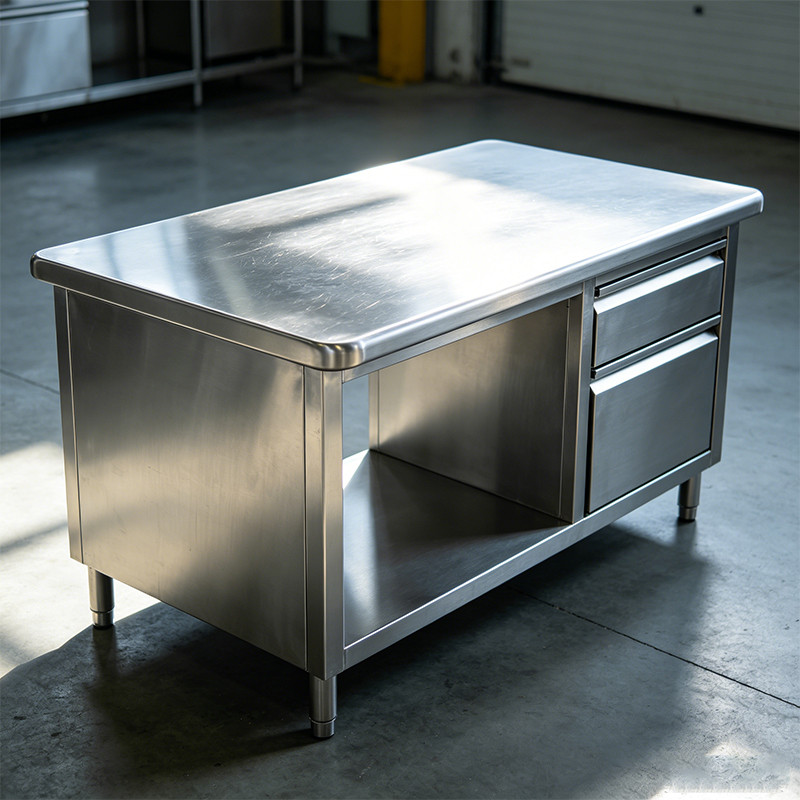
In any commercial setting, from bustling restaurant kitchens to sterile laboratory environments, efficiency, hygiene, and durability are paramount. Understanding the foundational role of commercial work stations is crucial for optimizing your space and workflow. This guide will walk you through the key features, finishes, and functionalities that define robust commercial work stations and explain how selecting the right ones can make a significant difference in your daily operations. From basic construction to advanced customization, we'll explore everything you need to consider when equipping your business with the right work surfaces—an investment in your long-term success.
Key Takeaways
For those needing a quick overview, here are the essential points to remember when selecting a commercial work station:
- Material is Non-Negotiable: Stainless steel is the industry standard for a reason. Its non-porous surface is exceptionally hygienic, preventing bacterial growth and making it easy to sanitize. It is also highly durable, resistant to heat, corrosion, and physical impact, ensuring a long service life even in the most demanding environments. For food-related applications, Type 304 stainless steel is the preferred grade due to its superior corrosion resistance compared to the less expensive Type 430.
- Thickness (Gauge) Matters: The gauge of the stainless steel determines its thickness and durability. A lower gauge number means thicker, stronger steel. For heavy-duty applications involving significant weight or impact, a 14-gauge top is ideal. For general-purpose or medium-duty tasks, 16-gauge is a versatile choice, while 18-gauge is suitable for lighter applications like assembly or storage.
- Customization Enhances Functionality: A basic table can be transformed into a high-efficiency hub. Under-shelves provide accessible storage for frequently used items, while an open base offers space for larger equipment or bins. Backsplashes are crucial for protecting walls from splashes and making cleanup easier. Edge types also play a functional role: square edges allow for seamless integration between units, rolled edges are safer and easier to clean, and marine edges feature a raised perimeter to contain spills.
- Add-Ons Drive Productivity: Elevate your work station with integrated features. Drawers provide secure, organized storage for tools and utensils. Integral sinks create a multi-purpose station for prep and cleaning, streamlining workflow and saving valuable floor space. Table-mounted shelves (overshelves) and pot racks maximize vertical storage, keeping essential supplies within arm's reach without cluttering the main work surface.
- Mobility and Ergonomics are Key: Don't overlook the importance of adaptability. Equipping a work station with casters (wheels) provides the flexibility to reconfigure your workspace, move the table for thorough cleaning, or transport materials easily. Furthermore, tailoring the height and features of a work station to the specific operational needs and the comfort of your staff can significantly boost productivity and reduce physical strain.
## The Essential Foundation of Commercial Work Stations: Material and Design
The performance and longevity of any commercial work station begin with its core components: the material it's made from and its structural design. These foundational elements dictate its suitability for specific environments, its ability to withstand daily stressors, and its role in maintaining a safe and hygienic workspace. Investing in the right material and construction is not just an initial purchase decision; it's a long-term commitment to operational excellence.
### Why Stainless Steel is the Premier Choice for Our Commercial Work Stations
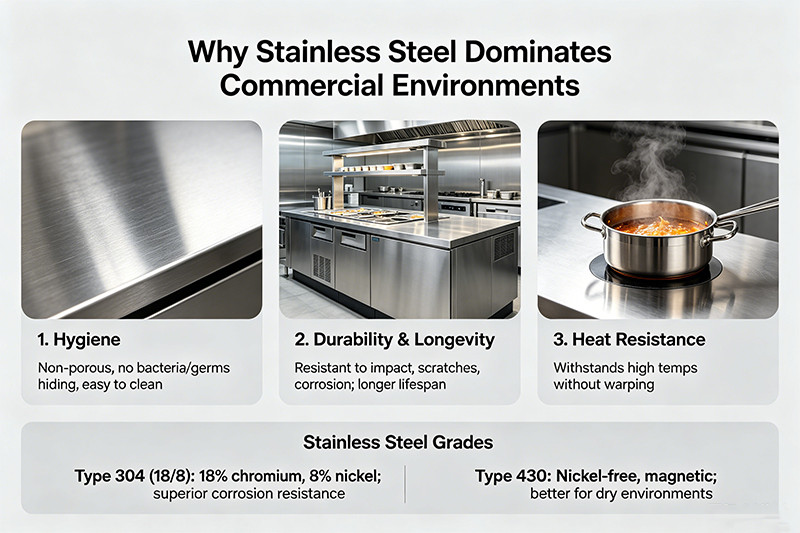
When you walk into nearly any professional kitchen, laboratory, or healthcare facility, you'll be greeted by the clean, metallic sheen of stainless steel. This isn't a coincidence. Stainless steel is the undisputed king of materials for commercial environments for a host of compelling reasons.
First and foremost is hygiene. Stainless steel has a non-porous surface, which means it doesn't harbor bacteria, viruses, or mold. Unlike porous materials like wood or certain plastics, there are no microscopic crevices for food particles or germs to hide, drastically reducing the risk of cross-contamination. This makes it incredibly easy to clean and sanitize, a critical requirement for meeting stringent health and safety standards in the foodservice and medical industries.
Second is its exceptional durability and longevity. Commercial workplaces are tough environments, and stainless steel is built to handle the abuse. It is highly resistant to impact, scratches, and dents, maintaining its structural integrity even with constant, heavy use. Furthermore, its natural resistance to corrosion and rust, especially in higher grades like Type 304, means it won't degrade when exposed to moisture, acidic foods, or harsh cleaning chemicals. This resilience translates into a longer lifespan for the equipment, offering a superior return on investment compared to other materials that may require frequent repair or replacement.
Third, stainless steel boasts impressive heat resistance. It can withstand high temperatures without warping, cracking, or scorching, allowing hot pots, pans, or laboratory equipment to be placed directly on the surface without causing damage. This property is invaluable in kitchen settings where speed and efficiency are key.
Finally, a key distinction exists between stainless steel grades, primarily Type 304 and Type 430. Type 304, often called 18/8 stainless steel, contains about 18% chromium and 8% nickel. The nickel content significantly enhances its corrosion resistance, especially against acidic substances, and improves its formability. Type 430 is a less expensive, nickel-free alternative that is magnetic and more susceptible to corrosion over time, making it better suited for less demanding or dry environments. For any serious commercial application, especially in food service, choosing Type 304 stainless steel is the professional standard.
### Understanding Gauge: How Thickness Impacts Your Commercial Work Station's Durability
While choosing stainless steel is the first step, not all stainless steel is created equal. The "gauge" of the steel is a critical specification that directly relates to its thickness, and by extension, its strength, durability, and cost. Understanding this measurement is essential to selecting a work station that can handle the specific demands of your operation.
The concept of gauge can be counterintuitive: the lower the gauge number, the thicker and stronger the steel. This system originated in the 19th century and has remained the industry standard for measuring sheet metal thickness. A work station made from 14-gauge steel will be significantly more robust than one made from 18-gauge steel.
Here’s a breakdown of the most common gauges for commercial work stations and their typical applications:
14-Gauge Stainless Steel: This is the thickest and most durable option you will commonly find for work tables. With a thickness of approximately 0.0781 inches (1.98 mm), 14-gauge steel is built for heavy-duty use. It can withstand heavy impacts, support significant weight from large equipment like mixers or slicers, and resist denting from cleavers or heavy pots. This makes it the ideal choice for high-volume environments, butcher shops, and any application where the work surface will endure intense, repeated stress.
16-Gauge Stainless Steel: This is often considered the best all-around choice for many commercial kitchens, offering a great balance of durability and cost. At about 0.0625 inches (1.59 mm) thick, it is sturdy enough for most standard food preparation and equipment stand applications. It can handle frequent use in a busy kitchen without the higher price tag of 14-gauge steel, making it a versatile and reliable option for general prep, mixing, and assembly.
18-Gauge Stainless Steel: As the thinnest of the common options at approximately 0.0500 inches (1.27 mm), 18-gauge steel is the most budget-friendly choice. It is best suited for light-duty tasks, such as salad and sandwich prep, simple assembly, or as a storage surface. While still offering the hygienic benefits of stainless steel, it is more susceptible to dents and may not be appropriate for supporting heavy equipment or enduring high-impact work.
Comparison of Common Stainless Steel Gauges
| Gauge | Typical Thickness (Inches) | Typical Thickness (mm) | Best For |
|---|---|---|---|
| 14-Gauge | ~0.0781" | ~1.98 mm | Heavy-Duty Use: Butcher blocks, heavy equipment stands, high-impact prep. |
| 16-Gauge | ~0.0625" | ~1.59 mm | Standard/Medium-Duty Use: General food prep, all-purpose work surfaces. |
| 18-Gauge | ~0.0500" | ~1.27 mm | Light-Duty Use: Salad/sandwich prep, light assembly, storage. |
Choosing the right gauge is a matter of matching the equipment to the task. Overpaying for 14-gauge steel in a light-prep area is unnecessary, while using 18-gauge steel for heavy-duty work will inevitably lead to premature damage and replacement costs. By carefully assessing your workflow, you can make an informed decision that ensures your work station is a durable and cost-effective asset for years to come.
Customizing Your Commercial Work Stations: Key Features for Enhanced Functionality
A commercial work station is more than just a flat surface; it's an opportunity to create a hub of efficiency tailored to your specific workflow. By selecting the right features and customizations, you can transform a simple table into a multi-functional unit that improves organization, enhances sanitation, and streamlines daily tasks. Thoughtful customization moves beyond basic utility, turning your work station into a strategic tool for boosting productivity.
### Under-Shelves and Open Bases: Smart Storage Solutions for Commercial Work Stations
The space underneath your work station is valuable real estate. How you utilize it can significantly impact your kitchen's organization, efficiency, and cleanliness. The two primary options—an undershelf or an open base—each offer distinct advantages suited to different operational needs.
Work Stations with Under-shelves
An undershelf is a solid or wire shelf installed between the table legs. This is an extremely popular option because it effectively doubles the storage capacity of the work station's footprint. The benefits include:
- Maximized Storage: Undershelves are perfect for storing frequently used items like small appliances, mixing bowls, containers, and bulk ingredients. Keeping these essentials close at hand minimizes the time staff spend walking to and from storage areas, speeding up prep work.
- Improved Organization: By providing a designated home for tools and supplies, an undershelf helps keep the primary work surface clear and uncluttered. This leads to a more organized and efficient workflow.
- Adjustability: Many models feature an adjustable undershelf, allowing you to customize the height to accommodate items of various sizes. This flexibility is key in dynamic kitchen environments where storage needs can change.
However, the main drawback is that they can make cleaning the floor beneath the table more difficult and may restrict the storage of very large, bulky items.
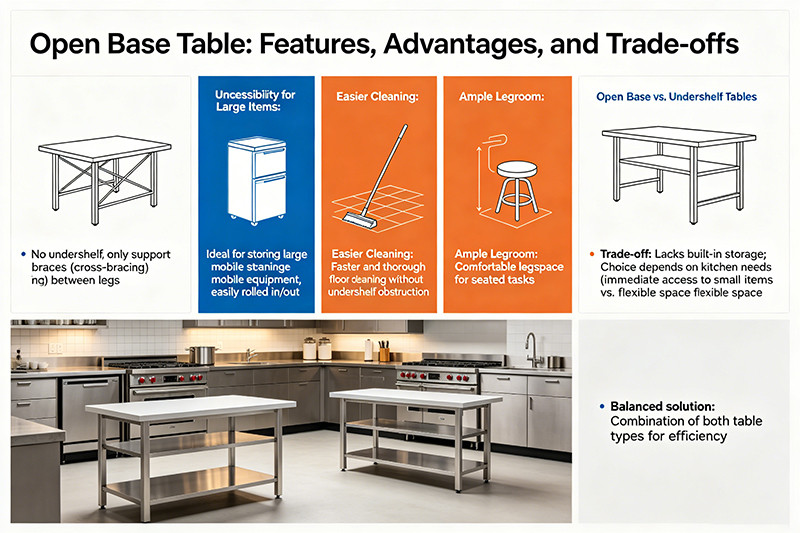
Open Base Work Stations
As the name suggests, an open base table has no undershelf, just support braces (cross-bracing) between the legs. This design offers its own set of advantages:
- Accessibility for Large Items: The open space is ideal for storing large, mobile equipment like rolling ingredient bins or undercounter refrigerators. These items can be easily rolled in and out as needed.
- Easier Cleaning: Without a shelf in the way, cleaning the floor under the table is much faster and more thorough. This is a significant advantage in environments where impeccable hygiene is a top priority.
- Ample Legroom: For tasks that may be performed while seated on a stool, an open base provides necessary legroom and comfort.
The obvious trade-off is the lack of built-in storage. The choice between an undershelf and an open base ultimately depends on your kitchen's specific needs: do you prioritize immediate access to smaller items, or do you need flexible space for larger equipment and easier cleaning? For many, a combination of both types of tables throughout the kitchen provides the most balanced and efficient solution.
### Backsplashes: Protecting Your Walls and Streamlining Clean-up Around Commercial Work Stations
Often overlooked but critically important, a backsplash is a raised edge or panel along the back of a work station. This simple feature plays a huge role in maintaining the hygiene, safety, and longevity of your workspace, especially for tables placed against a wall.
The primary functions of a backsplash are:
- Wall Protection: In a busy commercial setting, splashes are inevitable. A backsplash acts as a crucial barrier, shielding the wall behind the work station from water, grease, food particles, and other debris. This prevents staining, moisture damage, and the growth of mold in and on the wall, which can be costly to repair.
- Enhanced Sanitation: A backsplash prevents food and liquids from falling into the hard-to-clean gap between the work station and the wall. This gap can quickly become a collection point for bacteria and a haven for pests. By eliminating this gap, a backsplash makes daily cleaning routines faster and far more effective, helping to ensure you meet health code standards.
- Improved Durability: By integrating seamlessly with the work surface, a stainless steel backsplash creates a continuous, protected area that is heat-resistant and non-corrosive. This enhances the overall durability of the station.
Choosing the Right Backsplash Height
Backsplashes come in various heights, and the right choice depends on the table's function and location:
- Standard Backsplashes (e.g., 1.5" to 5"): A shorter backsplash, typically between 1.5 and 5 inches, is sufficient for most general prep work. It provides basic protection against minor splashes and prevents items from rolling off the back of the table.
- Tall Backsplashes (e.g., 10" or more): For work stations used for heavy mixing, washing, or placed behind equipment that produces a lot of splatter (like fryers), a taller backsplash is ideal. A 10-inch or even higher backsplash offers maximum wall protection. In some commercial kitchen settings, codes may even require a full-height backsplash that extends much higher up the wall.
When selecting a work station, consider its placement. If it's a freestanding "island" table accessible from all sides, a backsplash is unnecessary. However, for any table set against a wall, adding a backsplash is a small investment that pays huge dividends in cleanliness, safety, and long-term maintenance. For a truly professional and hygienic setup that will stand the test of time, an integrated stainless steel backsplash is a must-have feature.
### Edge Types: Choosing the Right Finish for Your Commercial Work Stations Set-up
The type of edge on your commercial work station might seem like a minor detail, but it has a significant impact on safety, cleaning efficiency, and how the table integrates with other equipment. Each edge style is designed with a specific purpose in mind, and choosing the right one can subtly enhance the functionality of your workspace. Let's explore the three most common edge types.
#### Square Edges: Seamless Integration for Our Commercial Work Stations
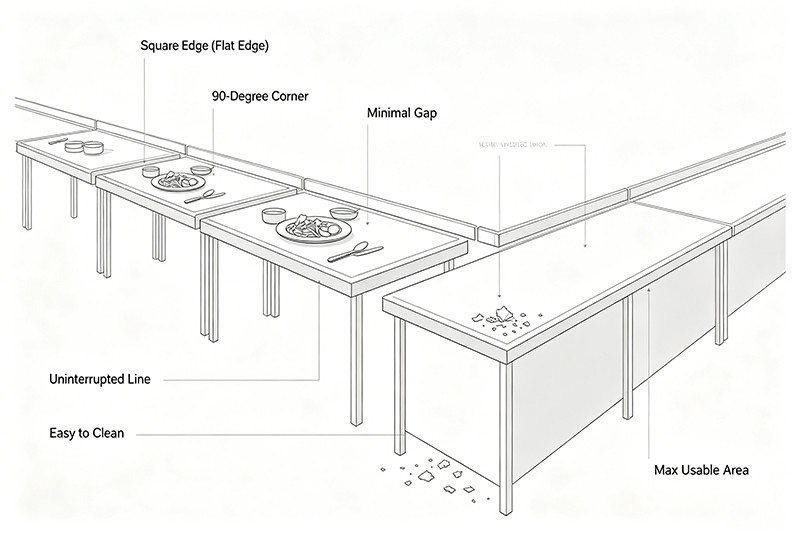
The square edge, also known as a flat edge, is the most straightforward and common design for commercial work stations. It features a clean, 90-degree corner, creating a crisp and uniform look. The primary advantage of this design is its ability to facilitate seamless integration.
When you need to create a long, continuous work surface, placing multiple tables with square edges next to each other results in a minimal gap between them. This creates a nearly uninterrupted line, which is not only aesthetically pleasing but also highly functional. It prevents utensils, food, and debris from falling into a wider crack, making the entire surface easier to manage and clean. This makes square-edged tables the ideal choice for creating customized line setups or for placing against other equipment with a flat profile. The flat surface provides maximum usable area, making it perfect for a wide range of tasks from food prep to assembly.
#### Rolled Edges: Easy Cleaning for Your Commercial Work Stations
A rolled edge, often referred to as a "bullnose" edge, features a smooth, rounded front. This design choice offers a blend of aesthetic and practical benefits, making it a popular choice for many applications.
The most significant advantage of a rolled edge is safety and ergonomics. The absence of a sharp 90-degree corner reduces the risk of bumps, bruises, and snagged clothing in a fast-paced kitchen environment where staff are constantly moving. Leaning against a rolled edge is also more comfortable for staff during long prep sessions.
Furthermore, the curved surface makes cleaning easier. Spills and liquids are less likely to get trapped on a smooth, continuous curve than in a sharp corner. Wiping down the edge is a quick, seamless motion. While the front edge is rounded, the sides of the table are typically kept square, allowing for flush placement next to other units without creating large gaps. This makes the rolled edge a great choice for individual work stations or those at the end of a line, where safety and ease of cleaning are top priorities.
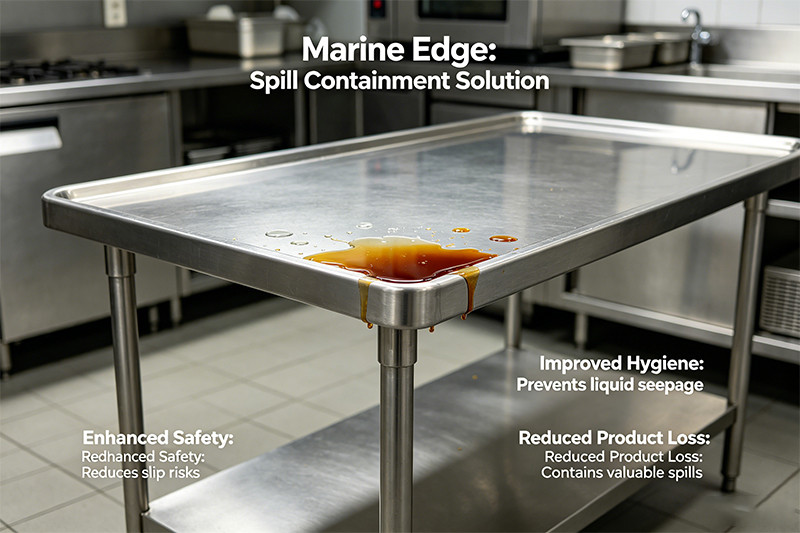
#### Marine Edges: Spill Protection for Our Busy Commercial Work Stations
For work stations where liquids are frequently handled, the marine edge reigns supreme. This highly functional design features a raised perimeter, like a small lip or ridge, running along the edges of the table. This simple but effective feature is designed for one primary purpose: spill containment.
The raised edge acts as a barrier, preventing liquids—from water and juices to marinades and sauces—from dripping off the table and onto the floor. This offers several key benefits:
- Enhanced Safety: By keeping floors dry, the marine edge significantly reduces the risk of slips and falls, which are a major concern in any commercial kitchen.
- Improved Hygiene: Containing liquids on the tabletop prevents them from seeping under equipment or into grout lines on the floor, where they can be difficult to clean and can promote bacterial growth.
- Reduced Product Loss: In applications where valuable liquids are being handled, the marine edge can help contain accidental spills, minimizing waste.
Also known as a countertop edge, this profile is the perfect choice for any "wet" work, such as meat and fish prep, washing vegetables, or any task involving sauces and marinades. For busy commercial stations focused on safety and cleanliness, a marine edge is an indispensable feature.
Elevating Productivity with Specialized Add-ons for Commercial Work Stations
While a well-built table forms the foundation of your workspace, specialized add-ons are what elevate it from a simple surface to a high-performance productivity hub. By integrating features that cater directly to your operational tasks, you can dramatically improve organization, reduce wasted motion, and create a more streamlined and ergonomic environment. These thoughtful additions are investments in workflow efficiency.
### Integrated Drawers: Keeping Tools Organized and Secure within Commercial Work Stations
In any workspace, clutter is the enemy of efficiency. Constantly searching for misplaced utensils, tools, or ingredients wastes valuable time and creates unnecessary frustration. Integrating drawers directly into a commercial work station is a simple yet powerful solution to this problem.
By adding one or more drawers beneath the tabletop, you create designated, enclosed storage that offers several key advantages:
- Superior Organization: Drawers are perfect for keeping smaller, essential items organized and within arm's reach. Utensils, measuring tools, thermometers, labels, and other frequently used supplies can be neatly stored away, keeping the main work surface clear and ready for the task at hand. This helps to establish a more streamlined and efficient workflow.
- Enhanced Hygiene and Protection: Enclosed drawers protect their contents from the dust, splashes, and airborne particles common in a commercial environment. This is particularly important for storing clean utensils, single-use items, or sensitive instruments.
- Improved Security: In many environments, securing certain items is a necessity. Work station drawers can be equipped with locks, providing a secure space for valuable tools, sharp knives, or confidential items. This not only prevents theft but also enhances workplace safety by controlling access to potentially hazardous equipment.
When selecting a work station with drawers, look for heavy-duty construction and smooth, reliable roller bearings or glides. These features ensure the drawers can handle the weight of their contents and withstand the rigors of constant daily use, making them a practical and lasting investment in workplace organization.
### Integral Sinks: Transforming Your Commercial Work Station into a Multi-Purpose Hub
For the ultimate boost in efficiency and space optimization, nothing compares to a commercial work station with an integral sink. By combining a durable prep surface with a fully functional sink in a single unit, you create a powerful, self-contained station where multiple tasks can be completed without ever taking a step.
This integration delivers transformative benefits to any commercial kitchen or workspace:
- Massively Improved Workflow: An integral sink streamlines the prep process by allowing staff to wash, rinse, and prep all in one location. Imagine washing vegetables, trimming them on the adjacent countertop, and immediately placing them in a prep container—all in one seamless motion. This eliminates the need to move between a separate sink and a work table, saving immense time and labor.
- Space Optimization: In smaller kitchens where every square foot is precious, combining a sink and a work table into one unit is a game-changer. It frees up valuable floor space that would otherwise be occupied by two separate pieces of equipment, allowing for a more open and less congested layout.
- Enhanced Food Safety and Hygiene: Integrating a sink provides immediate access to running water, encouraging more frequent hand washing and utensil rinsing. This dramatically improves sanitation practices. It also helps in creating dedicated zones—for example, a station solely for washing and prepping raw vegetables—which is a key strategy in preventing cross-contamination between different food types.
- Versatility: These multi-purpose hubs are available with various configurations, including sink placement on the left, right, or center, to best suit your kitchen's flow. They often come equipped with other useful features like faucets, drain baskets, and backsplash protection, creating a complete, ready-to-use station.
Whether you're running a high-volume restaurant, a busy bar, or a compact food truck, a work station with an integral sink is a smart investment. It streamlines operations, promotes better hygiene, and makes the most of your available space, proving that a well-designed station can be far more than the sum of its parts. Leading brands like Samsink offer a wide array of NSF-certified options designed for durability and compliance, ensuring you get a reliable, long-lasting solution.
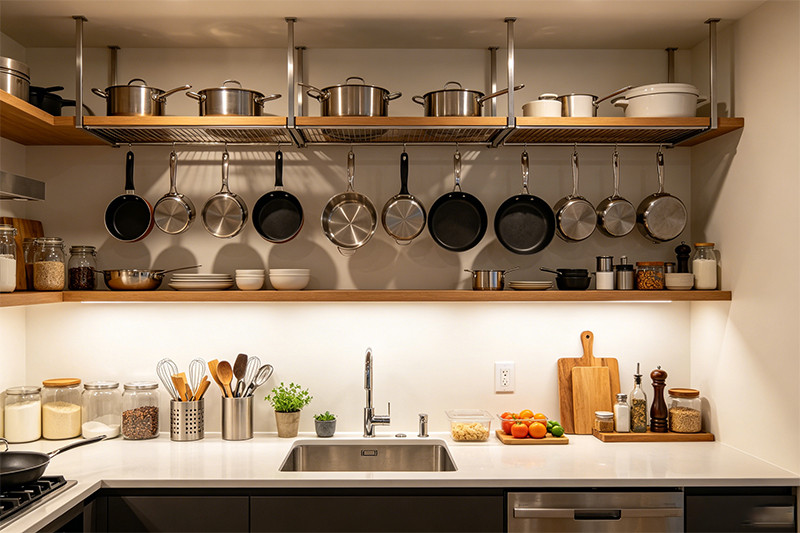
### Table-Mounted Shelves and Pot Racks: Maximizing Vertical Storage on Commercial Work Stations
In any workspace, horizontal surfaces are a finite and valuable resource. To truly maximize storage and efficiency, you need to think vertically. Table-mounted shelves (often called overshelves) and pot racks are exceptional add-ons that utilize the space above the work station, keeping essentials organized and within arm's reach without cluttering your primary prep area.
Table-Mounted Overshelves
An overshelf is a shelving unit that mounts directly onto the work table, creating one or more tiers of storage above the work surface. The benefits are immediate and significant:
- Increased Storage Capacity: By adding one (single-tier) or two (double-tier) shelves, you can dramatically increase the station's storage capacity without using any additional floor space. This is ideal for holding spices, small containers, plating accessories, or frequently used small appliances.
- Improved Workflow: Keeping essential items directly in front of the user at eye level minimizes wasted motion. Staff no longer need to bend down to an undershelf or walk to another area to retrieve supplies, which speeds up tasks and reduces physical strain.
- Creates Organized Zones: An overshelf helps to clearly define the workspace. The main table surface can be reserved for active prep work, while the shelves above serve as organized, accessible "staging" areas. Some overshelves can even be fitted with heat strips, turning them into a convenient pass-through window for keeping plated food warm.
Pot Racks
Similar to overshelves, pot racks utilize vertical space but are specifically designed for hanging bulky items like pots, pans, and large utensils. Whether integrated into an overshelf unit or mounted to a nearby wall or ceiling, pot racks offer several advantages:
- Frees Up Cabinet Space: Moving bulky pots and pans from cabinets to an overhead rack frees up an enormous amount of valuable cabinet and drawer space for other items.
- Easy Access and Visibility: Hanging cookware makes it easy to see and grab the exact pot or pan you need without having to rummage through a noisy, disorganized stack.
- Prevents Damage: Hanging pots and pans prevents the scratching and denting that can occur when they are nested inside one another.
By thoughtfully incorporating overshelves and pot racks, you can transform a standard work station into a highly efficient, organized, and ergonomic command center, proving that the most valuable storage space is often right above your head.
Mobility and Adaptability: The Future of Commercial Work Stations
In the dynamic environments of modern commercial kitchens, labs, and workshops, static, immovable equipment can be a significant limitation. The ability to reconfigure a space for different tasks, special events, or thorough cleaning is no longer a luxury—it's a necessity. This is where mobility and adaptability come to the forefront, defining the next generation of versatile and efficient commercial work stations.
### Casters: The Freedom to Move and Clean with Your Commercial Work stations
One of the most transformative add-ons for any commercial work station is a set of casters, or wheels. By replacing the standard stationary feet (bullet feet) with casters, you instantly convert a fixed piece of equipment into a mobile unit, unlocking a new level of flexibility and efficiency.
The advantages of a mobile work station are numerous:
- Unmatched Flexibility: A work station on casters can be easily moved and repositioned as needed. This is invaluable for dynamic workspaces that need to be reconfigured for different tasks, catering events, or changing workflows. A prep table can be rolled closer to the cooking line during peak service and then moved aside to create more space.
- Drastically Easier Cleaning: One of the biggest benefits of mobility is for sanitation. Stationary tables make it incredibly difficult to clean the floor underneath and the wall behind them, which can become breeding grounds for bacteria and pests. With casters, staff can simply roll the table out of the way to sweep, mop, and sanitize the entire area thoroughly and efficiently.
- Improved Space Utilization: In tight spaces, the ability to move a work station can be a game-changer. Tables can be pushed together to create a larger surface or nested away when not in use to free up floor space.
Choosing the Right Casters
Not all casters are suitable for the demands of a commercial environment. When equipping your work station, it's crucial to select the right kind:
- Swivel and Locking Mechanisms: The best casters for this application are swivel casters with brakes. The swivel action allows for 360-degree rotation, making the table easy to maneuver in any direction. The locking mechanism is essential for safety and stability; once the table is in position, the brakes can be engaged to hold it firmly in place, preventing any unwanted movement during use.
- Heavy-Duty Construction: Commercial work stations and the equipment they hold can be extremely heavy. It's vital to choose casters with a sufficient weight capacity to support the total load without buckling or breaking. Look for heavy-duty casters made from durable materials like steel with polyurethane wheels, which are strong yet gentle on floors.
- NSF Certification: For foodservice applications, ensure the casters are NSF-certified, meaning they meet strict standards for public health protection and are designed to be easily cleaned.
While stationary tables have their place, the versatility offered by adding casters is often worth the investment. The freedom to move, clean, and reconfigure your workspace is a powerful tool for improving efficiency, hygiene, and adaptability.
### Tailoring Your Commercial Work Stations to Specific Operational Needs
The ultimate goal of selecting a commercial work station is to find a solution that feels like it was designed specifically for your operation. A one-size-fits-all approach rarely leads to optimal efficiency. Instead, true productivity comes from analyzing your specific tasks and tailoring the workstation to meet those needs precisely.
This involves a holistic approach, considering factors like:
- Workflow Analysis: Before purchasing, map out the flow of work. Where do materials come from? What steps are involved in the task? Where do the finished items go? A custom work station should streamline this path, minimizing unnecessary movement. For example, a baking station might be designed with a wood top for dough work, integrated drawers for tools, an overshelf for cooling racks, and an undershelf for flour bins.
- Ergonomics and Staff Well-being: A well-designed workspace is an ergonomic one. According to OSHA, ergonomic designs reduce stress and injuries from overuse, bad posture, and repetitive tasks. This has a direct impact on productivity and employee morale. Customization can involve setting the work surface at the correct height for staff to reduce back and shoulder strain, a proven factor in boosting efficiency. Adjustable-height tables are an excellent solution for multi-user workstations or tasks that alternate between sitting and standing.
- Task-Specific Surfaces and Add-ons: Different jobs require different tools. A station for assembling electronics might require ESD (electro-static dissipative) surfaces, integrated lighting, and pegboards for tools. A food prep station benefits from integrated sinks, cutting board attachments, and marine edges for spill containment. By choosing add-ons that directly support the task, you eliminate the need for employees to search for tools or move to other areas, keeping them focused and productive.
- Industry-Specific Requirements: Different industries have unique demands. Laboratories require non-corrosive surfaces resistant to harsh chemicals. Commercial bakeries need durable surfaces that can handle heavy mixers and constant scraping. Foodservice operations must adhere to strict NSF standards for sanitation.
By investing in custom-configured work stations, you are not just buying a piece of furniture; you are designing a more efficient, safer, and more productive environment. Brands like Samsink specialize in providing these tailored solutions, offering everything from basic stainless steel tables to fully integrated workstations designed aound your unique operational needs. A custom approach ensures that every element of the work station serves a purpose, contributing to a smoother, faster, and more effective workflow.
Frequently Asked Questions (FAQs)
1. What is the best gauge for a heavy-duty commercial work table? For heavy-duty applications, 14-gauge stainless steel is the best choice. As a reminder, a lower gauge number means thicker steel. A 14-gauge top is the most durable, able to withstand heavy impacts from equipment like cleavers or support the weight of large mixers without denting or warping. For standard, all-purpose use, 16-gauge is a reliable and popular middle ground, while 18-gauge is suitable for lighter tasks.
2. How do I clean and maintain my stainless steel work station? Daily cleaning is key. Use a soft cloth or sponge with a mild detergent and warm water, always wiping in the direction of the steel's grain to prevent streaking. Rinse thoroughly with clean water and dry completely with a microfiber cloth to avoid water spots. For tougher stains like grease, a paste of baking soda and water can be gently scrubbed along the grain. Avoid using abrasive materials like steel wool or harsh chemicals containing chlorides, as they can scratch the surface and compromise its protective layer, leading to rust.
3. Are casters (wheels) worth the extra cost? Absolutely, in most cases. While they add to the initial cost, the flexibility and sanitation benefits of casters are significant. A mobile work station can be easily moved to reconfigure a workspace for different needs or pushed aside for thorough floor cleaning. This greatly improves hygiene by eliminating hard-to-reach dirt traps. For safety, ensure you choose heavy-duty locking casters that can support the table's weight and be secured firmly in place during use.
4. What is NSF certification and why is it important for a commercial work station? NSF (National Sanitation Foundation) certification means that a piece of equipment has been tested and certified by a third-party organization to meet strict standards for public health and safety. For a commercial work station used in foodservice, NSF certification ensures the materials (like food-grade 304 stainless steel), design, and construction are non-porous, smooth, and easily cleanable, preventing the growth of bacteria and ensuring it is safe for food contact. It is a critical requirement for most health department inspections.
5. Can I customize the height of my work station for better ergonomics? Yes, and it is highly recommended. Proper ergonomics are crucial for employee comfort and productivity. Many commercial work stations are available at a standard height (typically 34-36 inches), but custom heights can often be ordered. An increasingly popular and versatile option is an adjustable-height work station. These tables, which can be adjusted manually or electrically, allow users of different heights to set the surface at an optimal level, reducing back and neck strain. This is especially valuable in multi-user environments.
Conclusion
We've explored the diverse world of commercial work stations, from their fundamental materials and construction to the advanced, productivity-boosting features that can be added. It's clear that these are not just tables, but critical components of an efficient and safe workspace. By carefully considering each option—the grade and gauge of the stainless steel, the choice between an undershelf or open base, the type of edge, and the addition of functional accessories like backsplashes, drawers, and integral sinks—you can create a highly efficient and customized environment that truly benefits your operation.
Remember, choosing the right commercial work station is an astute investment in your business's long-term success and streamlined functionality. A well-designed station contributes to better hygiene, improved organization, higher employee morale, and ultimately, a more productive workflow.
Ready to design the perfect workspace? Explore Samsink's range of durable and customizable commercial work stations today. Our experts can help you select the ideal features and configuration to build a solution that perfectly matches your needs. Invest in efficiency and quality, and empower your team with the tools they need to succeed.