Everything You Need to Know About Commercial Hand Wash Stations: From Selection to Compliance
- Share
- Issue Time
- May 2,2026
Summary
Investing in commercial hand wash stations is crucial for businesses, extending beyond basic amenities to encompass public health, regulatory compliance, and business reputation. These stations serve as a primary defense against infectious diseases, with the CDC reporting that proper handwashing significantly reduces the spread of respiratory and diarrheal illnesses. Businesses must adhere to regulations set by bodies like OSHA and the FDA, which mandate accessible and adequate handwashing facil
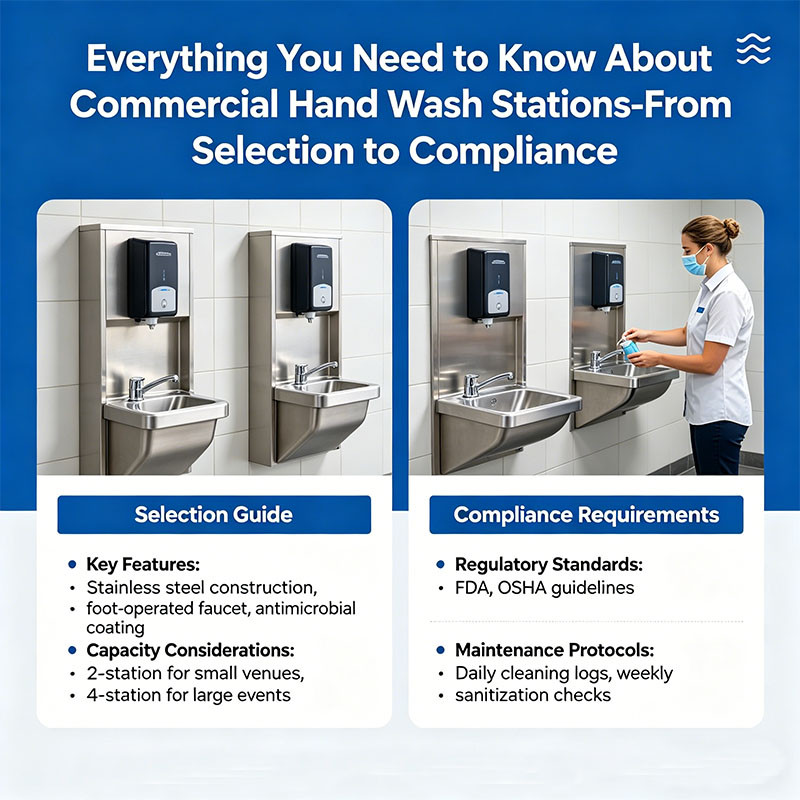
Hey there, fellow business owners and hygiene champions! We all know that keeping things clean is super important, especially where folks work, gather, or eat. But when it comes to hands, it's not just about good manners—it's about health, safety, and even the law.
Today, we're diving deep into the world of commercial hand wash stations. We'll explore why these aren't just extra features, but absolute necessities for any business aiming for top-notch hygiene and compliance. These stations are the frontline defense in preventing the spread of germs and ensuring everyone's well-being.
Join us as we break down everything you need to know, from understanding their crucial role in preventing germs to selecting the perfect station for your needs and making sure you're always following the rules.
Key Takeaways
- Public Health Imperative: Commercial hand wash stations are a first line of defense against the spread of infectious diseases. The CDC emphasizes that handwashing with soap and water can significantly reduce respiratory illnesses by 16-21% and diarrheal diseases by up to 40%.
- Regulatory Compliance: OSHA and the FDA mandate the availability of adequate handwashing facilities in most commercial settings, including construction sites, food service, and healthcare. Non-compliance can lead to fines and reputational damage.
- Types and Features: Stations can be permanent or portable. Key features to look for include touchless operation, hot and cold water supply, integrated soap dispensers, and durable materials. Portable options like those from Samsink offer flexibility for temporary sites like events or construction zones.
- Strategic Placement: Accessibility is crucial for compliance and use. Stations must be placed near restrooms, food preparation areas, and points of entry/exit to be effective and meet ADA requirements.
- Long-Term ROI: Investing in quality hand wash stations goes beyond hygiene. It protects employee health, reduces sick days, boosts customer confidence, and enhances your brand’s reputation as a safe and responsible business.
Why Investing in a Commercial Hand Wash Station is Essential for Every Business
Public Health: Our First Line of Defense with Commercial Hand Wash Stations
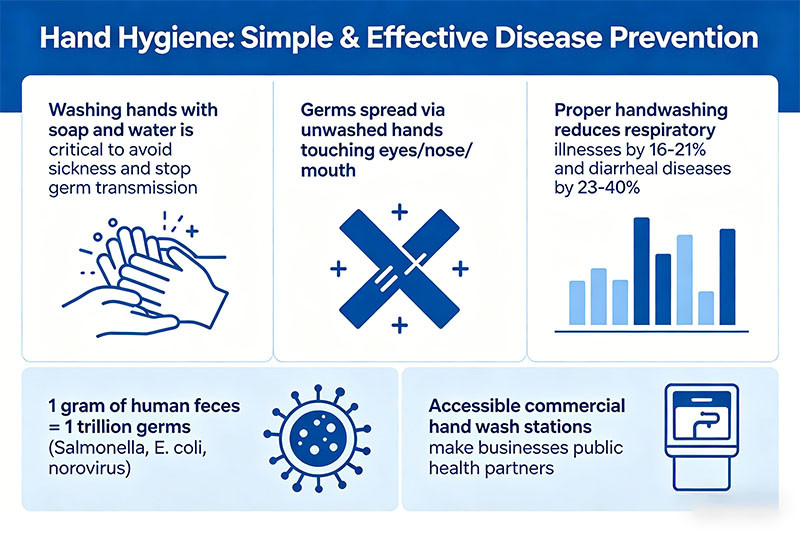
Hand hygiene is one of the simplest and most effective ways to prevent the spread of infectious diseases. The Centers for Disease Control and Prevention (CDC) has long highlighted that washing hands with soap and water is a critical step in avoiding sickness and stopping the transmission of germs. Germs can spread from person to person or from surfaces when people touch their eyes, nose, or mouth with unwashed hands.
A single gram of human feces can contain up to one trillion germs, including pathogens like Salmonella, E. coli, and norovirus. These can easily transfer to hands after using the toilet, handling raw meat, or touching contaminated surfaces. By providing accessible and well-maintained commercial hand wash stations, businesses become active participants in public health. Studies show that proper handwashing can reduce respiratory illnesses like the common cold by 16-21% and cut the risk of diarrheal diseases by 23-40%. This simple act protects not only your employees and customers but also the wider community, especially vulnerable individuals like children, the elderly, and those with compromised immune systems.
Meeting Workplace and Public Safety Responsibilities with Commercial Hand Wash Stations
Beyond being a public health best practice, providing adequate handwashing facilities is a legal and ethical responsibility for employers. The Occupational Safety and Health Administration (OSHA) mandates that employers provide "readily accessible" handwashing facilities for their employees. This isn't a new guideline prompted by recent events; it has always been a core part of workplace safety standards.
OSHA standard 29 CFR 1910.141 requires that all places of employment provide potable water for drinking and washing, along with soap or a similar cleansing agent. For industries where employees are exposed to contaminants—such as paints, coatings, or certain chemicals—washing facilities are not just recommended, they are required to be near the worksite to enable employees to remove harmful substances. Failure to comply can result in citations and penalties. Furthermore, a clean and safe environment directly impacts employee morale and public perception. A recent survey highlighted that 84% of Americans believe unclean restrooms negatively affect a business's image, demonstrating that investing in facilities like high-quality Samsink hand wash stations is an investment in your brand's reputation.
Addressing Challenging Environments: The Role of Commercial Hand Wash Stations in Construction Sites, Outdoor Events, and Food Markets
Certain environments present unique challenges for maintaining hygiene. Construction sites, outdoor festivals, and farmers' markets often lack permanent plumbing, making sanitation a significant logistical hurdle. However, the need for hand hygiene in these settings is just as critical, if not more so.
Construction Sites: OSHA has specific sanitation standards for construction jobsites. Employers must provide adequate washing facilities, especially for operations involving contaminants. Regulations often require at least one hand wash station for every 20 employees. These stations must be located near toilet facilities and be equipped with clean water, soap, and a means for drying hands. Using only waterless hand cleaners is typically not considered an adequate substitute for soap and water on a construction site.
Outdoor Events and Festivals: Organizers of festivals and large public gatherings are responsible for providing sufficient sanitation to manage the crowd. Local health regulations often dictate the ratio of toilets and hand wash stations per attendee, commonly around 1 per 100 people. Providing accessible hand hygiene is crucial for preventing the spread of illnesses like norovirus, which can travel quickly in crowded settings. Event attendees now have higher expectations for sanitation, making visible and well-stocked stations essential for public trust.
Food Markets: The FDA Food Code sets the standard for food safety, and handwashing is a cornerstone of its guidelines. The code mandates that handwashing sinks be conveniently located and accessible for employees in food preparation and dispensing areas. They must supply water at a specified temperature (the 2022 code specifies at least 85°F), along with soap and single-use towels or an air dryer. Cross-contamination from unwashed hands is a leading cause of foodborne illness, making compliant hand wash stations non-negotiable for any food vendor.
In all these challenging environments, portable hand wash stations have become an indispensable solution, offering the flexibility to meet health and safety requirements anywhere.
Choosing the Right Commercial Hand Wash Station: A Buyer's Guide
Selecting the appropriate commercial hand wash station is a critical decision that impacts hygiene, compliance, and operational efficiency. With various types, features, and industry-specific requirements to consider, making an informed choice is essential. This guide will walk you through the key factors to help you select the perfect solution for your business needs.
Portable vs. Permanent Commercial Hand Wash Stations: Which One Fits Your Needs?
The first major decision is choosing between a portable and a permanent hand wash station. Each type offers distinct advantages depending on your business's context and requirements.
Permanent Hand Wash Stations Permanent stations are plumbed directly into a building's water supply and drainage system. These are the familiar sinks you find in established restrooms, commercial kitchens, and healthcare facilities.
Pros:
- Reliability: Offer a continuous and reliable supply of hot and cold water without the need for refilling tanks.
- Low Maintenance: Do not require regular filling of fresh water or emptying of wastewater tanks.
- Durability: Typically constructed from robust materials like stainless steel, making them highly durable and long-lasting.
Cons:
- Lack of Flexibility: Cannot be easily moved once installed, making them unsuitable for temporary or mobile operations.
- Higher Initial Cost: Installation requires professional plumbing, which can significantly increase the upfront expense.
Portable Hand Wash Stations Portable stations, like those offered by Samsink, are self-contained units with their own fresh and wastewater tanks. They are designed for flexibility and can be placed nearly anywhere an electrical outlet is available for models with water heaters.
Pros:
- Maximum Flexibility: Can be easily moved and located wherever they are needed most—ideal for construction sites, outdoor events, farmers' markets, and temporary medical clinics.
- Cost-Effective Installation: They do not require plumbing, which dramatically reduces installation costs and time.
- Regulatory Compliance in Mobile Settings: Provide a compliant solution for businesses that operate without access to fixed plumbing.
Cons:
- Higher Maintenance: Require regular monitoring and servicing to refill freshwater tanks and empty wastewater tanks.
- Limited Capacity: The number of uses is limited by the tank size before service is needed.
Comparison Table: Portable vs. Permanent Stations
| Feature | Portable Hand Wash Station | Permanent Hand Wash Station |
|---|---|---|
| Mobility | High (can be moved anywhere) | None (fixed in place) |
| Installation | Simple, no plumbing required | Complex, requires plumbing |
| Water Supply | Self-contained tanks (limited capacity) | Continuous from building plumbing |
| Best For | Events, construction, mobile businesses | Restaurants, hospitals, permanent buildings |
| Cost | Lower upfront, ongoing service costs | Higher upfront, lower ongoing costs |
Key Features to Look For in Your Commercial Hand Wash Station (Water, Soap, Drying, and Hands-Free Options)
Once you've decided between portable and permanent, it's time to evaluate the specific features that ensure both compliance and a positive user experience.
Water Supply and Temperature A compliant hand wash station must provide both hot and cold running water. While the exact temperature can vary by jurisdiction and application, the FDA Food Code (as of the 2022 update) mandates a minimum water temperature of 85°F at handwashing sinks. Previously, this was 100°F. The rationale is that a comfortable water temperature encourages longer and more frequent handwashing. Many portable stations achieve this with on-demand electric water heaters.
Soap and Drying Provisions Every station must be equipped with a soap dispenser and a method for drying hands hygienically.
- Soap Dispensers: Options include manual push-button dispensers and automatic, touchless dispensers. Touchless models significantly reduce the risk of cross-contamination because users never have to touch a surface that others have touched. Studies have shown that manual pumps can become a breeding ground for bacteria.
- Hand Drying: The two primary options are single-use paper towels and electric air dryers. While both can be compliant, paper towels offer the added benefit of allowing users to turn off faucets without touching the handle, further reducing germ transmission. A waste receptacle must be provided for used towels.
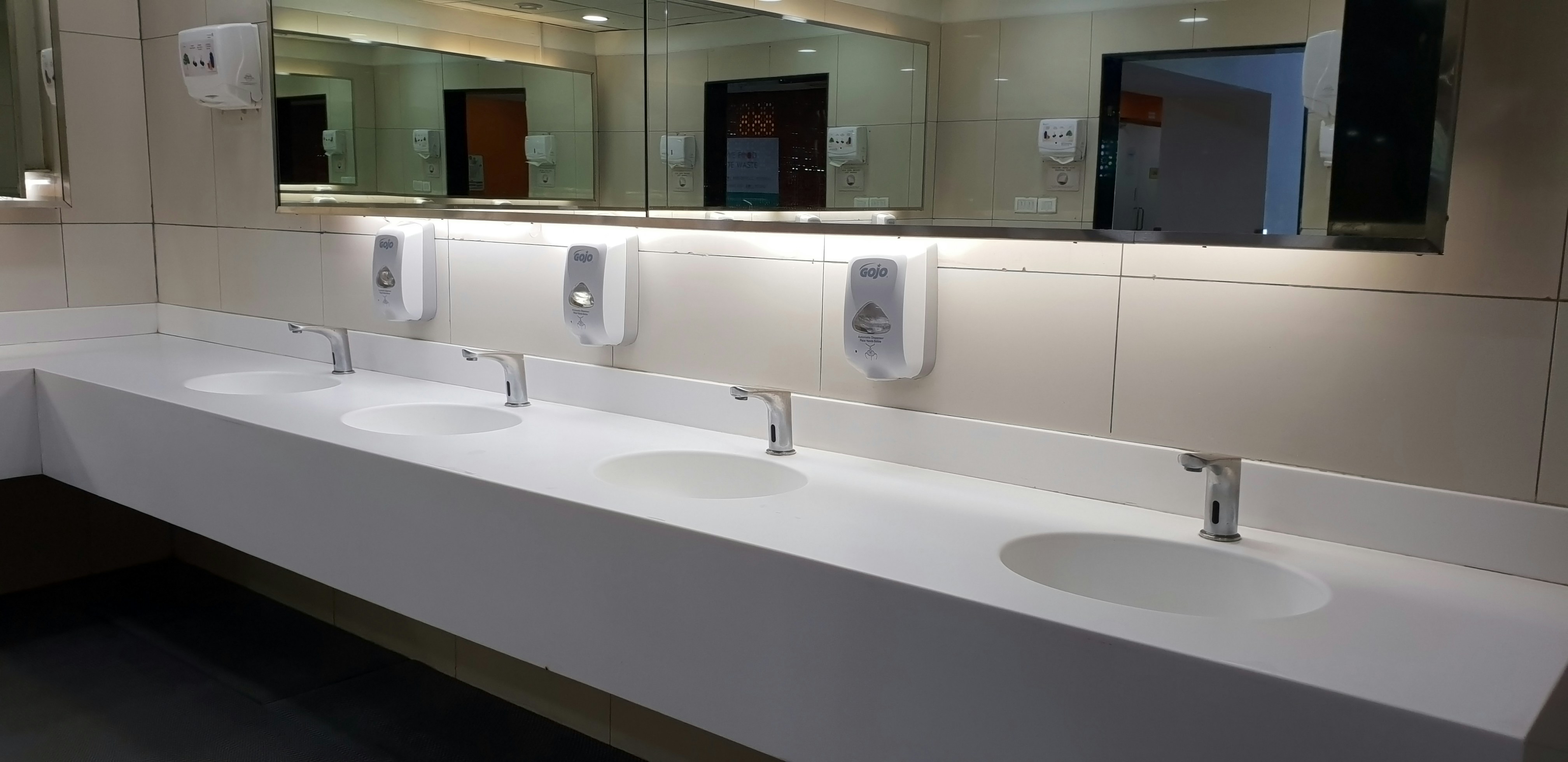
Hands-Free Operation To minimize cross-contamination, hands-free features are becoming the standard, especially in high-risk environments. This technology is essential for maintaining the highest level of hygiene.
- Faucets: Sensor-activated or foot-pedal-operated faucets prevent re-contamination of clean hands. Metered faucets must provide at least 15 seconds of water flow.
- Soap Dispensers: As mentioned, automatic dispensers provide soap without any physical contact.
- Paper Towel Dispensers: Hands-free dispensers further limit contact with shared surfaces.
Specialized Commercial Hand Wash Stations for Different Industries (e.g., Food Service, Healthcare)
Different industries have specific regulations and practical needs that dictate the type of hand wash station required.
Food Service In the food service industry, preventing cross-contamination is paramount. The FDA Food Code requires that handwashing sinks be dedicated solely to handwashing—they cannot be used for food prep or washing dishes. These sinks must be located conveniently in food preparation, dispensing, and warewashing areas. Materials like stainless steel are preferred because they are durable, non-porous, and easy to sanitize.
Healthcare In healthcare settings such as clinics, hospitals, and labs, infection control is a matter of life and death. Hand wash stations in these environments must meet stringent standards set by organizations like the CDC and OSHA.
- Materials: Sinks are often made from medical-grade stainless steel (like Type 304) which is highly resistant to corrosion from harsh cleaning agents.
- Design: Touchless, sensor-operated systems are the standard to eliminate cross-contamination between healthcare providers and patients.
- Certification: Look for NSF-certified sinks, which guarantee they meet rigorous public health and safety standards. Portable sinks for healthcare are invaluable in creating point-of-care handwashing opportunities in patient rooms or at vaccination sites.
By carefully considering these factors—portability, key features, and industry-specific needs—you can invest in a commercial hand wash station that not only meets legal requirements but also actively promotes a culture of safety and hygiene within your organization.
Installing and Maintaining Your Commercial Hand Wash Station for Peak Performance
A commercial hand wash station is only as effective as its installation and maintenance. Proper placement, a reliable water supply, and a consistent cleaning schedule are crucial for ensuring the station serves its purpose: providing a safe and hygienic place for handwashing. Neglecting these aspects can lead to non-compliance, health risks, and a poor impression on employees and customers.
Optimal Placement and Accessibility for Your Commercial Hand Wash Station
Where you place your hand wash station is one of the most important factors for ensuring it gets used and meets regulatory standards. The guiding principle is convenience and accessibility.
Key Placement Locations:
- Restrooms: A hand wash station must be located in or immediately adjacent to every toilet facility. This is a fundamental requirement of all health codes.
- Food Preparation Areas: In foodservice, sinks must be conveniently located within food prep, dispensing, and dishwashing areas to encourage frequent washing. A common rule of thumb considers a sink "conveniently located" if it is within 25 feet.
- Entrances and Exits: Placing stations at the entrance to production zones or public areas encourages handwashing upon entry, preventing outside contaminants from coming in.
- High-Traffic Zones: For events or large venues, positioning stations in high-traffic corridors and near food concessions ensures they are visible and used.
Accessibility and ADA Compliance: The Americans with Disabilities Act (ADA) sets specific standards for sinks to ensure they are accessible to individuals with disabilities.
- Height: The top of the sink or counter surface should be no more than 34 inches from the floor.
- Knee Clearance: There must be a clear space underneath the sink that is at least 27 inches high, 30 inches wide, and has adequate depth to accommodate a wheelchair user.
- Faucet Controls: Faucets should be operable with one hand and require minimal force to activate (no more than 5 pounds). Lever-operated, push-type, or touchless sensor-activated controls are ideal.
- Pipe Protection: Any exposed hot water or drain pipes under the sink must be insulated or otherwise configured to protect against contact and prevent burns.
Ensuring Water Supply and Waste Management for Your Commercial Hand Wash Station
For Permanent Stations: Permanent sinks rely on existing plumbing. Installation must be performed by a licensed plumber to ensure it meets local building and plumbing codes. This includes proper connections to both hot and cold water lines and the sanitary sewer system. A key component for sanitation is a vacuum breaker on the faucet, which prevents contaminated water from being siphoned back into the clean water supply.
For Portable Stations: Portable sinks like those from Samsink offer a self-contained system, but managing their water is key to their operation.
- Fresh Water Supply: The station has an onboard fresh water tank that must be regularly filled with potable (safe to drink) water. Some models can also be connected to a continuous water source via a standard hose.
- Wastewater Management: The wastewater (also known as greywater) is collected in a separate, dedicated tank. This tank is intentionally designed to be larger than the freshwater tank to prevent overflow. The greywater must be disposed of properly in an approved sanitary drain, never on the ground or in a storm drain, as this can cause environmental contamination and violate local ordinances.
Routine Maintenance Tips for a Hygienic Commercial Hand Wash Station
Regular maintenance is essential to keep your hand wash station clean, functional, and inviting to use. A dirty or unstocked station will deter use and can become a source of contamination itself.
Daily Maintenance Checklist:
- Clean and Sanitize: The sink basin, faucet handles, and surrounding countertops should be cleaned and sanitized daily, or more frequently in high-use areas. Use appropriate cleaning agents that are effective but won't damage the station's materials (e.g., use non-abrasive cleaners for stainless steel).
- Restock Supplies: Ensure soap dispensers are full and a plentiful supply of paper towels is available. An empty dispenser is a health code violation.
- Empty Waste Receptacle: The trash bin for used paper towels should be emptied regularly to prevent overflow and maintain a tidy appearance.
- For Portable Stations: Check water levels in both the fresh and waste tanks and service as needed.
Periodic Maintenance:
- Inspect Plumbing: For both permanent and portable stations, periodically check for any leaks from faucets or drain lines.
- Clean Drains: To prevent clogs and odors, regularly clean the sink's drain trap.
- Check Water Heater (if applicable): For stations with a water heater, ensure it is functioning correctly and delivering water at the required temperature.
By integrating these placement, utility, and maintenance practices into your operational routine, you ensure your commercial hand wash station remains a reliable asset for health and safety.
Understanding Compliance and Regulations for Commercial Hand Wash Stations
Navigating the web of rules and regulations governing commercial hand wash stations can seem daunting, but it's a non-negotiable aspect of running a responsible business. Compliance isn't just about avoiding fines; it's about safeguarding public health, protecting your employees, and building trust with your customers. The key regulatory bodies in the United States include the Occupational Safety and Health Administration (OSHA), the Food and Drug Administration (FDA), and state and local health departments, along with the Americans with Disabilities Act (ADA) for accessibility.
Navigating Health and Safety Standards for Commercial Hand Wash Stations (OSHA, FDA, Local Codes)
Different agencies oversee handwashing requirements depending on the industry and context. It is crucial to understand which rules apply to your specific operation.
OSHA (Occupational Safety and Health Administration): OSHA sets the standards for employee safety and health across most private industries. Its sanitation standard (29 CFR 1910.141) is broadly applicable.
- General Requirement: Employers must provide potable water for drinking and washing, hand soap or a similar cleansing agent, and a means for hand drying (towels or an air blower).
- Accessibility: Handwashing facilities must be "readily accessible" to all employees. This means they should be located close to work areas and restrooms.
- Construction and Agriculture: OSHA has more detailed requirements for industries like construction (29 CFR 1926.51) and agriculture, often specifying a ratio of one toilet and handwashing facility for every 20 employees and mandating their proximity to the worksite. Waterless hand sanitizers are generally not considered an acceptable primary substitute for soap and running water, especially when dealing with physical dirt or chemical contaminants.
FDA (Food and Drug Administration): The FDA Food Code serves as the model for food safety regulations adopted by state and local health departments across the country.
- Dedicated Sinks: The Food Code mandates that handwashing sinks be used only for handwashing to prevent cross-contamination. Sinks used for food prep or dishwashing are not acceptable for washing hands.
- Location: Sinks must be located to allow convenient use by employees in food preparation, food dispensing, and warewashing areas, as well as in or adjacent to restrooms.
- Supplies: Every handwashing sink must be stocked with soap, a method for drying hands, and a sign or poster notifying employees to wash their hands.
- Water Temperature: As of the 2022 Food Code, handwashing sinks must be capable of delivering water at a temperature of at least 85°F (29.4°C).
Local Health Codes: While federal agencies provide the framework, state and local health departments are typically the ones enforcing these rules through inspections. Local codes may be stricter than federal guidelines. For example, some jurisdictions may have specific requirements for the number of hand wash stations per square foot or per number of employees. It is always best to consult with your local health department to ensure you are meeting all specific regional requirements.
Ensuring Your Commercial Hand Wash Station Meets Accessibility Requirements (ADA)
The Americans with Disabilities Act (ADA) is a federal civil rights law that prohibits discrimination against individuals with disabilities. For commercial facilities, this includes ensuring that restrooms and handwashing stations are accessible.
Key ADA Sink Requirements:
- Mounting Height: The front rim or counter surface of an ADA-compliant sink should not be higher than 34 inches from the finished floor.
- Clear Floor Space: A clear floor space of at least 30 inches by 48 inches must be provided in front of the sink to allow for a forward approach by a wheelchair user.
- Knee and Toe Clearance: To accommodate a seated user, there must be clear space under the sink. This includes a knee clearance of at least 27 inches in height and a toe clearance of at least 9 inches high.
- Faucet Controls: Faucet controls and soap dispensers must be usable with one hand and without tight grasping, pinching, or twisting of the wrist. Touchless, sensor-activated models like those available from Samsink are ideal for meeting this standard.
- Exposed Pipes: Hot water and drain pipes under the sink must be insulated or otherwise configured to prevent contact, as they can pose a burn hazard.
Training and Best Practices for Using Your Commercial Hand Wash Station Effectively
Installing a compliant hand wash station is only half the battle; ensuring your team uses it correctly and consistently is what truly impacts hygiene.
The CDC's 5 Steps for Effective Handwashing: The CDC recommends the following five steps, which should be the basis of all employee training:
- Wet your hands with clean, running water (warm or cold).
- Lather by rubbing your hands together with soap. Be sure to lather the backs of your hands, between your fingers, and under your nails.
- Scrub your hands for at least 20 seconds. A helpful timer is humming the "Happy Birthday" song twice.
- Rinse your hands well under clean, running water.
- Dry your hands using a clean towel or an air dryer.
Key Times for Handwashing: Training should emphasize washing hands at critical moments, including:
- Before, during, and after preparing food.
- After using the toilet.
- After handling garbage or chemicals.
- After sneezing, coughing, or blowing your nose.
- Before and after treating a cut or wound.
By combining compliant equipment with thorough training, you create a robust system that protects your business, your staff, and the public. Investing in high-quality, easy-to-use stations makes it easier for everyone to follow these critical hygiene practices.
The Long-Term Value and Safety Benefits of Your Commercial Hand Wash Station Investments
Investing in high-quality commercial hand wash stations is not merely an operational expense or a box to check on a compliance form. It is a strategic investment in the long-term health, safety, and reputation of your business. The returns are measured not just in dollars, but in the well-being of your employees, the trust of your customers, and the overall resilience of your operation. From durable, easy-to-maintain units like those offered by Samsink to fully integrated systems, the right choice pays dividends for years to come.
Protecting Health and Enhancing Well-being with a Dedicated Commercial Hand Wash Station
The most immediate and profound benefit of providing accessible handwashing facilities is the protection of human health. The CDC states that handwashing can prevent around 30% of diarrhea-related illnesses and about 20% of respiratory infections. For a business, this has a direct impact on the workforce.
- Reduced Employee Absenteeism: Healthier employees mean fewer sick days. Studies have shown that handwashing education and access to facilities can reduce gastrointestinal illness-related absenteeism in schoolchildren by 29-57%, and similar principles apply to the workplace. A healthy workforce is a productive workforce.
- Preventing Outbreaks: In environments like restaurants, schools, and healthcare facilities, a single contamination event can lead to a widespread outbreak, causing reputational ruin and potential legal liability. A properly used hand wash station is a critical control point that breaks the chain of transmission for pathogens like norovirus and E. coli.
- Promoting a Culture of Safety: When a business visibly prioritizes hygiene by investing in quality facilities, it sends a powerful message to employees that their well-being is valued. This fosters a stronger safety culture, where individuals are more likely to adhere to all health and safety protocols.
Boosting Reputation and Trust Through Excellent Commercial Hand Wash Station Provision
In today's competitive market, customer perception is everything. Cleanliness and safety are no longer just expectations; they are key differentiators that can significantly influence consumer behavior and brand loyalty.
- Building Customer Confidence: Visible, clean, and well-stocked hand wash stations signal to customers that your establishment is safe and hygienic. A 2025 survey revealed that 71% of Americans are more likely to return to a business with clean, well-maintained restrooms. This demonstrates a direct link between hygiene facilities and customer retention.
- Enhancing Brand Image: A commitment to health and safety elevates your brand. It positions your business as responsible, caring, and trustworthy. In contrast, poorly maintained or non-existent facilities can quickly tarnish a reputation, suggesting that the business cuts corners on what matters most.
- Positive Online Reviews and Word-of-Mouth: Customers are quick to share both positive and negative experiences online and with friends. A clean and safe environment often translates into better reviews and positive word-of-mouth, which is invaluable for attracting new business.
Operational Efficiency and Peace of Mind with Your Compliant Commercial Hand Wash Station Setup
A well-planned hand hygiene strategy contributes to smoother operations and reduces risks, providing business owners with invaluable peace of mind.
- Ensuring Regulatory Compliance: Adhering to OSHA, FDA, and local health codes for sanitation is mandatory. Having compliant hand wash stations helps you pass inspections, avoid fines, and prevent forced shutdowns. This proactive approach is far less costly and stressful than reacting to a violation.
- Reducing Liability: In the unfortunate event of an illness outbreak linked to your business, having documented proof of a robust and compliant handwashing program can be a crucial defense against legal and financial liability.
- Long-Term Durability and Lower Costs: Investing in durable, high-quality stations made from materials like stainless steel can lead to lower long-term costs. Cheaper, inferior units may require frequent repairs or replacement, ultimately costing more over time. Brands known for quality, such as Samsink, provide reliable solutions that are built to last in demanding commercial environments.
Ultimately, a commercial hand wash station is far more than a sink. It's a cornerstone of a healthy business ecosystem—one that protects people, builds trust, and operates with integrity and efficiency.
Frequently Asked Questions (FAQ)
1. How many hand wash stations do I need for my business? The number of required stations depends on your industry, the size of your workforce, and local regulations. For construction, OSHA generally requires one hand wash station for every 20 employees. In food service, the FDA requires hand wash stations to be conveniently located in all food preparation and dishwashing areas, with local codes often specifying a ratio per employee or square footage. It's always best to check with your local health department for specific requirements.
2. Is hand sanitizer an acceptable substitute for a hand wash station? No, hand sanitizer is not a complete substitute for washing with soap and water. While alcohol-based hand sanitizer (with at least 60% alcohol) can kill germs, it does not remove physical dirt, grime, chemicals, or certain types of pathogens as effectively as soap and water. OSHA and the FDA consider hand wash stations the primary method of hand hygiene. Sanitizer is a good supplemental option for situations where a sink is not immediately available.
3. What water temperature is required for a commercial hand wash station? The 2022 FDA Food Code specifies that a handwashing sink must be able to provide water at a temperature of at least 85°F (29.4°C). This was lowered from the previous 100°F requirement to encourage more comfortable and thus more frequent and thorough handwashing. Hot water helps soap work more effectively, but the mechanical action of scrubbing for at least 20 seconds is the most critical factor in removing germs.
4. Can I use a portable hand wash station permanently in my business? Yes, high-quality portable hand wash stations can be used as a permanent solution, especially in locations where plumbing is difficult or too expensive to install. Models like those from Samsink are designed for durability and continuous use, offering features like on-demand hot water and large-capacity tanks. As long as the station meets all other regulatory requirements (e.g., ADA compliance, proper supplies), it can be a perfectly viable long-term solution.
5. What is the difference between a hand wash station and a utility sink? A hand wash station is a sink designated exclusively for washing hands, as required by the FDA Food Code to prevent cross-contamination. It must be stocked with soap, a hand-drying method, and proper signage. A utility sink (or mop sink) is used for cleaning equipment, disposing of mop water, and other janitorial tasks. Using a utility sink for handwashing is a health code violation and highly unsanitary.
Conclusion
So, there you have it! Commercial hand wash stations are much more than just a convenience; they are a cornerstone of public health, legal compliance, and business integrity. From protecting your employees and customers against the spread of illness to safeguarding your brand's reputation, the value of these facilities is immeasurable.
By making smart choices in selection—whether it's a flexible portable unit or a permanent installation—ensuring proper installation and diligent maintenance, and staying on top of all relevant regulations, you can create a safer, healthier environment for everyone who walks through your doors.
Let's commit to prioritizing hand hygiene. It's a simple step that yields monumental benefits for our businesses, our employees, and our communities. A clean hand is a caring hand, and by providing the right tools, we show that our business cares.