Everything You Should Know About NSF Standards for Commercial Stainless Steel Mop Sinks
- Share
- publisher
- plus
- Issue Time
- Jan 19,2026
Summary
NSF certification plays a crucial role in ensuring cleanliness and safety in commercial kitchens, particularly concerning equipment like stainless steel mop sinks. NSF International, a global independent non-profit, establishes rigorous public health and safety standards for a wide array of products, including food service equipment. For a commercial stainless steel mop sink, NSF certification signifies that the product's materials are non-toxic and corrosion-resistant, its design prevents bacte
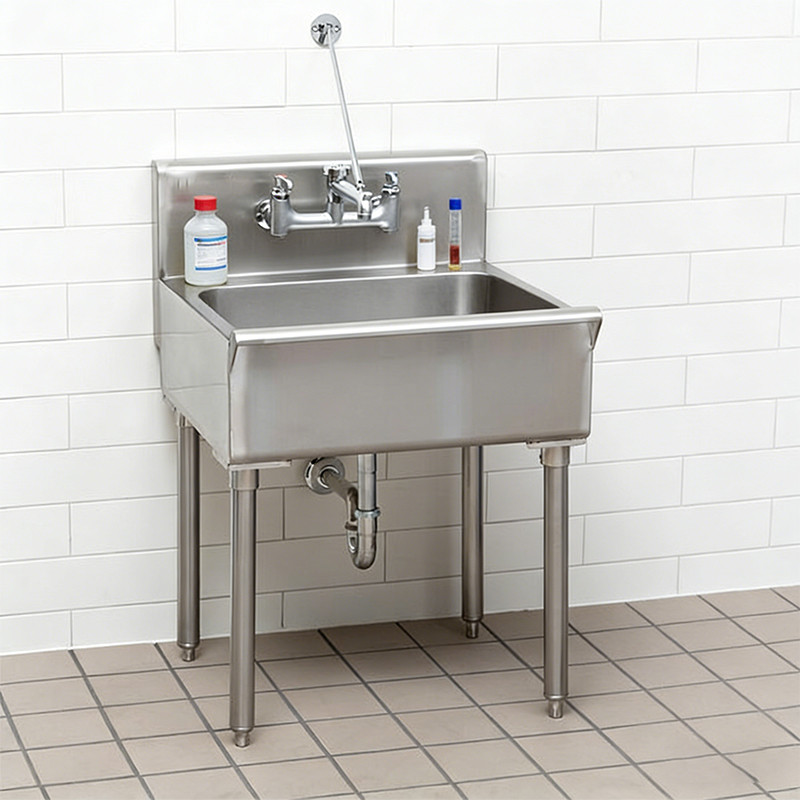
As someone working in a commercial kitchen, I know how critical cleanliness and safety are. One term you'll frequently encounter is "NSF certification," especially when it comes to equipment like commercial stainless steel mop sinks.
I'm here to break down everything you should know about NSF standards, specifically focusing on how they apply to commercial stainless steel mop sinks. Understanding these standards isn't just about compliance; it's about making smart choices for your business and ensuring a safe environment for everyone.
Key Takeaways
- What is NSF Certification? NSF (National Sanitation Foundation) certification is a trusted, third-party verification that a product meets strict public health and safety standards. For a mop sink, this means it's designed and constructed to promote hygiene and prevent contamination.
- Why is it Crucial? Using NSF-certified equipment is vital for ensuring food safety, meeting health code regulations, avoiding costly fines, and protecting your business's reputation. It demonstrates a clear commitment to quality and safety.
- Key Features of a Certified Mop Sink: NSF-certified sinks are typically made of non-porous, corrosion-resistant stainless steel. They feature hygienic design elements like coved corners to prevent bacteria growth and a high backsplash to protect walls. This construction also guarantees durability and a long service life.
- How to Verify Certification: Always look for the official NSF mark on the product itself. More importantly, verify the certification by checking the product model on the official NSF website's online database. This ensures you are purchasing a genuinely compliant product.
What Exactly is NSF Certification for Commercial Stainless Steel Mop Sinks?
When outfitting a commercial kitchen, the term "NSF Certified" appears on everything from refrigerators to cutting boards. But what does it really mean, especially for a foundational piece of cleaning equipment like a mop sink? Understanding this certification is the first step toward building a truly safe and hygienic operation.
The Role of the National Sanitation Foundation
The National Sanitation Foundation, now known as NSF International, is a global, independent, non-profit organization founded in 1944. Its primary mission is to protect and improve human health by developing public health standards and providing certification programs for a vast range of products, including food equipment, water systems, and consumer goods. Born at the University of Michigan's School of Public Health, NSF was established to create consistent, science-based standards for sanitation and food safety at a time when such regulations were lacking.
NSF collaborates with government agencies, industry leaders, academics, and consumer groups to develop these comprehensive standards. This collaborative approach ensures the guidelines are practical, up-to-date with scientific knowledge, and address real-world public health risks. Today, NSF has developed over 75 standards specifically for food equipment and has become the most recognized and trusted name in commercial kitchen safety in North America and beyond. For many health departments and inspectors, NSF certification is not just a recommendation but a requirement for operating a commercial kitchen.
What the NSF Mark Means for Your Commercial Stainless steel Mop Sink
Seeing the NSF mark on a commercial stainless steel mop sink is more than just a label; it's a guarantee of quality, safety, and compliance. This mark signifies that the product has undergone a rigorous, multi-faceted certification process. For a product to earn and maintain its NSF certification, it must meet strict criteria in several key areas.
The certification process involves:
- Material Safety Review: NSF verifies that all materials used in the sink's construction are non-toxic, corrosion-resistant, and will not leach harmful chemicals into the water or environment. This ensures the surfaces are safe and won't contaminate cleaning solutions or the surrounding area.
- Design and Construction Evaluation: The sink's design is thoroughly examined to ensure it is easy to clean and does not harbor bacteria. NSF standards for equipment like sinks often mandate features such as coved corners and smooth, non-porous surfaces to eliminate crevices where germs can multiply.
- Performance Testing: Where applicable, products are tested to confirm they perform as expected. For a mop sink, this relates to its durability and ability to withstand the rigors of a commercial environment, including constant use and exposure to harsh cleaning chemicals.
- Manufacturing Facility Audits: NSF doesn't just certify a single product; it certifies the manufacturing process. The organization conducts unannounced, annual audits of the production facility to ensure that every unit produced continues to meet the same high standards as the one that was initially tested.
Essentially, the NSF mark on your mop sink tells a health inspector, your staff, and your customers that you have invested in equipment that is verifiably safe, hygienic, and built for a professional environment. It’s an impartial, third-party validation of a manufacturer's commitment to public health.
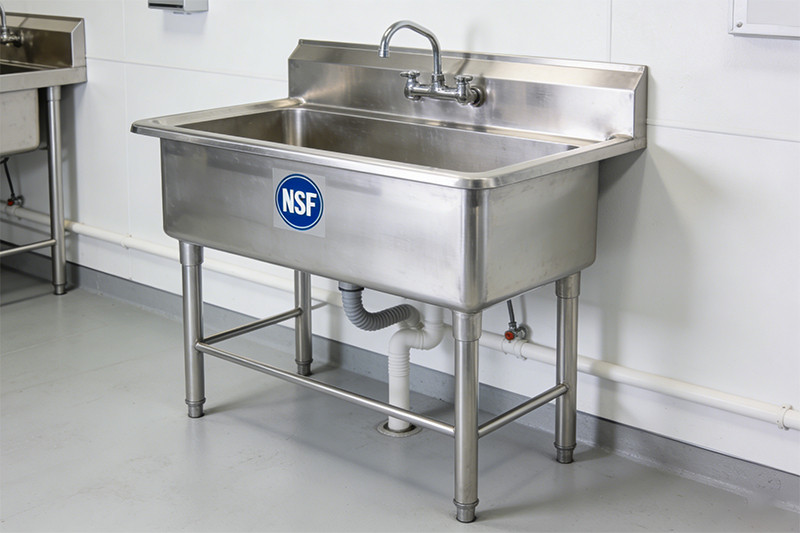
Why Are NSF Standards So Important for Commercial Stainless Steel Mop Sinks?
Choosing an NSF-certified commercial stainless steel mop sink isn't just about adhering to a voluntary standard; it's a critical business decision with far-reaching implications. In the high-stakes environment of a commercial kitchen, where sanitation is directly linked to public health, the right equipment can be your first line of defense against contamination, legal issues, and reputational harm.
Ensuring Food Safety and Preventing Contamination with Commercial Stainless Steel Mop Sinks
The primary purpose of a mop sink is to create a clear and designated separation between cleaning activities and food preparation areas. This separation is a cornerstone of any effective food safety plan. Most state and local health codes mandate a dedicated mop sink to prevent the cross-contamination that occurs when staff use food prep or dishwashing sinks for cleaning tasks.
Here’s where NSF certification becomes vital. A mop sink that isn't NSF certified can undermine your entire sanitation protocol.
- Harboring Bacteria: Non-certified sinks may have sharp, square corners, visible weld beads, or be made from porous materials. These imperfections create microscopic hiding places for bacteria like Listeria and Salmonella, which can thrive in dirty mop water. When a mop is cleaned in a contaminated sink, these pathogens are then spread across the kitchen floor, increasing the risk of foodborne illness.
- Cross-Contamination Risk: If a mop sink is not properly designed or located, splashing can transfer contaminated water onto adjacent surfaces, equipment, or clean floors. Mop water contains not only dirt but also chemical residues and dangerous microorganisms. Disposing of this waste in a dedicated, properly drained, NSF-compliant sink is essential to contain these hazards.
An NSF-certified mop sink is specifically designed to be smooth, non-porous, and easy to sanitize, ensuring that you can effectively clean your cleaning tools without introducing new hazards into the kitchen environment.
Meeting Health Regulations and Avoiding Fines with NSF Certified Commercial Stainless Steel Mop Sinks
Health inspectors are trained to look for potential points of failure in a kitchen's sanitation system, and cleaning facilities are high on their checklist. An unannounced visit from a health inspector can be a stressful event, but having compliant equipment provides significant peace of mind.
- Mandatory Compliance: Most health departments in the United States require that commercial food establishments use equipment certified to NSF/ANSI standards. The absence of a dedicated, compliant mop sink is a common reason for receiving a violation, which can lead to hefty fines, mandated equipment replacement, or even a temporary shutdown of your operation.
- Streamlining Inspections: When an inspector sees the NSF mark on your mop sink, it immediately signals that your equipment meets stringent public health standards. This can help expedite the inspection process and demonstrates your commitment to operating a safe and professional establishment. Investing in an NSF-certified sink is an investment in compliance, saving you from the headache and financial burden of violations down the line.
Protecting Your Reputation and Business with a Compliant Commercial Stainless Steel Mop Sink
In today's digital age, a restaurant's reputation can be made or broken by online reviews and word-of-mouth. A single incident related to cleanliness or food safety can cause irreversible damage. News of a health code violation or a foodborne illness outbreak spreads rapidly and can erode customer trust, leading to a direct loss of business.
- Building Customer Trust: While customers may never see your mop sink, they do notice the overall cleanliness of your establishment, from the floors to the restrooms. A visibly clean environment is a powerful indicator of your operational standards. By investing in the proper equipment to maintain that cleanliness, you are protecting the customer experience and, by extension, your brand.
- Demonstrating Commitment: Using NSF-certified equipment is a tangible way to show your commitment to quality and public safety. This commitment resonates not only with customers but also with your staff, fostering a culture of accountability and pride in the workplace. In an industry where trust is paramount, the choice to use certified equipment speaks volumes about your values as a business owner. Neglecting compliance, on the other hand, can lead to a tarnished reputation that is far more costly than the initial investment in proper equipment.

***## Key Features of an NSF Certified Commercial Stainless Steel Mop Sink
Not all mop sinks are created equal. An NSF-certified sink is distinguished by specific features mandated by standards like NSF/ANSI 2, which covers food equipment. These requirements are not arbitrary; they are scientifically grounded in the principles of hygiene, durability, and safety. When you choose a certified sink, you are investing in a piece of equipment engineered for the demanding environment of a commercial kitchen.
Material and Construction: Why Stainless Steel is Key for NSF Standards
The material a sink is made from is fundamental to its ability to be sanitized. NSF standards are extremely strict about the materials that can come into contact with food and cleaning environments.
- Premium Stainless Steel: NSF-certified equipment almost universally uses high-quality stainless steel, typically from the 300 series (like Type 304). This is because it is non-porous, non-toxic, and highly resistant to corrosion from water and harsh cleaning chemicals. Unlike materials such as porcelain or plastic, stainless steel will not chip, crack, or absorb moisture, which prevents bacteria from finding a place to grow. NSF requires that stainless steel used in food service equipment have a minimum of 16% chromium content, which is what gives it its 'stainless' and corrosion-resistant properties.
- Gauge and Durability: The thickness of the steel, known as its gauge, is also a critical factor. Commercial mop sinks are often constructed from 16 or 18-gauge stainless steel. A lower gauge number means thicker, more durable steel that can withstand the daily impact of heavy mop buckets and equipment without denting or deforming. This heavy-duty construction is a hallmark of NSF-certified products, ensuring they are built to last.
| Material | Hygienic Properties | Durability | NSF Compliance |
|---|---|---|---|
| Type 304 Stainless Steel | Excellent (non-porous, smooth, easy to sanitize) | Excellent (high corrosion and impact resistance) | Yes, the industry standard. |
| Fiberglass/Plastic | Fair (can scratch and become porous over time) | Fair to Good (prone to chipping and staining) | Generally not for food zones. |
| Porcelain/Ceramic | Good (when intact), Poor (when chipped or cracked) | Poor (brittle and susceptible to impact damage) | Not suitable for heavy commercial use. |
Design Elements for Optimal Hygiene in Commercial Stainless Steel Mop Sinks
Beyond the material itself, the design and fabrication of the sink are scrutinized under NSF standards to eliminate any potential for contamination. This is where the concept of "hygienic design" comes into play.
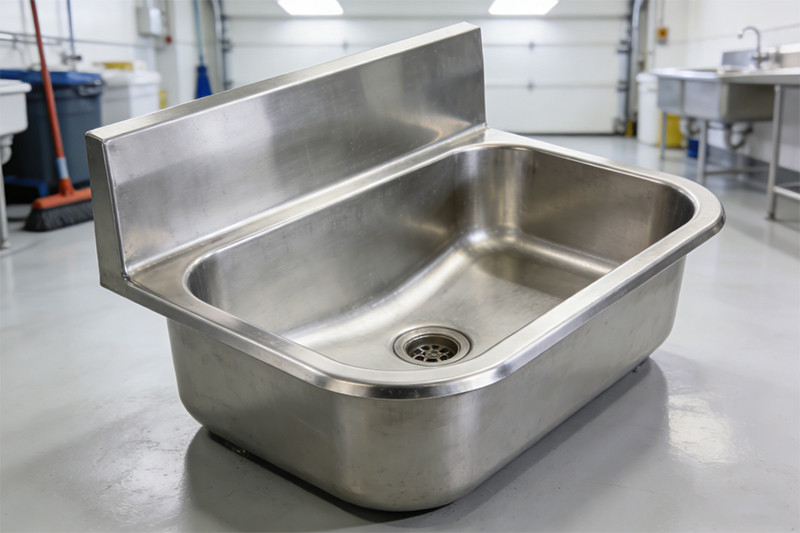
- Coved Corners: One of the most important design features required by NSF is the use of coved, or rounded, internal corners. Sharp 90-degree angles in a sink are notoriously difficult to clean, allowing dirt, grime, and bacteria to accumulate. NSF/ANSI 2 specifically requires smooth angles and corners to ensure every part of the sink can be easily wiped down and sanitized, leaving no refuge for pathogens.
- High Backsplash: Certified mop sinks typically feature a tall, integrated backsplash. This serves a critical function: preventing contaminated water from splashing onto the surrounding walls. Drywall and other common wall materials are porous and can absorb moisture, leading to mold and bacterial growth behind the scenes. The backsplash creates an unbroken, cleanable surface that contains splashes and protects the building structure.
- Proper Drainage: An NSF-certified sink is designed for efficient and complete drainage. The basin will have a subtle slope towards the drain, preventing pools of stagnant water from forming. Stagnant water is a breeding ground for bacteria and can create foul odors. A well-designed drainage system ensures that all dirty water and waste are removed quickly and effectively.
Durability and Longevity of NSF Certified Commercial Stainless Steel Mop Sinks
While an NSF-certified mop sink might represent a higher upfront investment compared to a non-certified alternative, its long-term value is significantly greater. The rigorous standards for materials and construction translate directly into a more durable and reliable product.
NSF certification ensures that the equipment is built to withstand the realities of a busy commercial setting. This includes resistance to constant moisture, chemical exposure, temperature fluctuations, and physical impact. Because they are less prone to rust, dents, and wear, certified sinks require fewer repairs and have a much longer service life. This durability not only saves money on replacement costs but also prevents the operational disruptions that occur when essential equipment fails. Investing in an NSF-certified sink is an investment in equipment that will perform reliably for years, guaranteeing a better return on investment and contributing to a consistently safe and efficient operation.
***## How to Identify an NSF Certified Commercial Stainless Steel Mop Sink
Once you understand the importance of NSF certification, the next crucial step is to ensure the mop sink you're purchasing is genuinely certified. Manufacturers may make claims, but true compliance requires verification. Taking a few extra moments to confirm a product's status can save you from significant compliance headaches and safety risks.
Looking for the NSF Mark on Your Commercial Stainless Steel Mop Sink
The most direct way to identify a potentially certified product is to look for the official NSF mark. This mark is a symbol of compliance issued by NSF International.
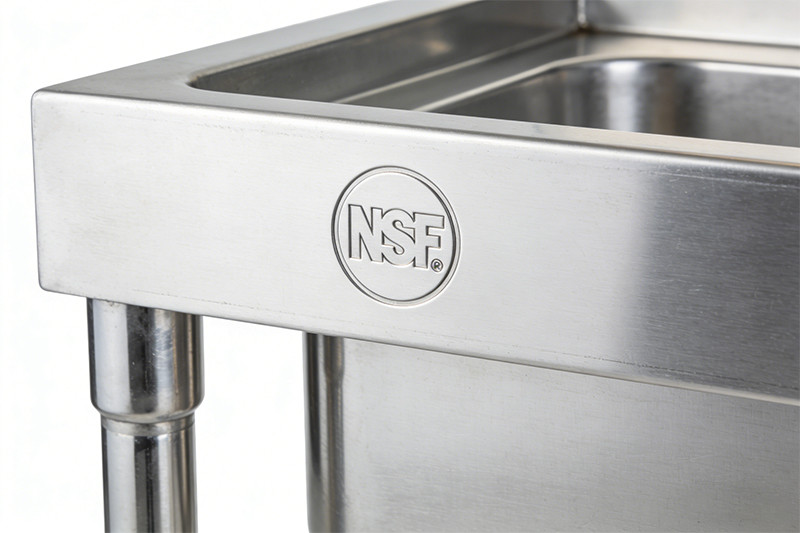
- What the Mark Looks Like: The standard NSF mark is a simple, recognizable logo, often featuring the letters "NSF" inside a circle. The mark may sometimes be accompanied by other information related to the specific standard it meets.
- Where to Find It: On a commercial mop sink, the NSF mark is typically found in a conspicuous location. Look for a small, permanently affixed metal plate, an etching directly on the stainless steel, or a label on the body of the sink. It is usually placed on the front apron or side of the sink basin. Product documentation and packaging should also prominently display the certification mark.
However, simply seeing a mark is not enough. To be absolutely certain, you must take the next step and verify its authenticity.
Verifying Certification and Documentation for Commercial Stainless Steel Mop Sinks
The most reliable method for confirming a product's certification is to use the official NSF online database. This public resource is the definitive record of all products, companies, and systems currently certified by NSF International.
A Step-by-Step Guide to Verification:
- Visit the NSF Website: Navigate to the NSF International official website. They maintain a comprehensive and searchable database of all certified products.
- Locate the Certified Products Database: Look for a section on the website labeled "Certified Products and Systems" or a similar title. This will lead you to the search tool.
- Search for the Product: You can search the database using several key pieces of information:
- Company/Brand Name: Start by searching for the manufacturer's name.
- Product Name or Model Number: For a more specific search, enter the exact model number of the mop sink you are considering.
- Keyword: You can also use general keywords like "mop sink."
- Review the Listing: If the product is certified, it will appear in the search results. The listing will provide important details, including the specific standard it is certified to (e.g., NSF/ANSI 2), the company name, and the status of the certification. If a product does not appear in this database, it is not NSF certified, regardless of any claims or marks on the product itself.
It's important to be aware of misleading language. Some manufacturers might claim their products are "made with NSF-certified materials" or "tested to NSF standards." These phrases are not the same as being "NSF Certified." An officially certified product means the entire unit—including its design, construction, and materials—has been evaluated and approved by NSF, and the manufacturing facility is subject to ongoing inspections.
By taking the time to look for the mark and, more importantly, verify it through the official NSF database, you can confidently purchase a commercial stainless steel mop sink that meets the highest standards for public health and safety.
Frequently Asked Questions (FAQ)
1. What is the difference between "NSF Certified" and "NSF Compliant" or "Built to NSF Standards"?
This is a critical distinction. "NSF Certified" (or "NSF Listed") means the product has been formally tested, reviewed, and approved by NSF International against a specific standard. The manufacturer is also subject to ongoing audits. "NSF Compliant" or "Built to NSF Standards" is a manufacturer's claim that they have followed NSF guidelines, but it has not been independently verified by NSF. Health inspectors will only recognize official NSF certification.
2. Can I use a non-NSF mop sink in my commercial kitchen?
While you technically can, it is highly discouraged and often illegal. Most local health departments across the United States mandate that equipment used in food service establishments be NSF certified to ensure sanitation and safety. Using a non-certified sink can result in failed health inspections, fines, and orders to replace the equipment immediately.
3. Are NSF-certified mop sinks significantly more expensive?
NSF-certified sinks typically have a higher initial cost due to the rigorous testing, higher-quality materials (like Type 304 stainless steel), and specific design requirements (like coved corners). However, their superior durability, resistance to corrosion, and long service life make them a more cost-effective investment in the long run, saving you money on repairs, replacements, and potential fines.
4. How should I clean and maintain an NSF-certified stainless steel mop sink?
Maintenance is straightforward.
- Daily: Rinse the sink thoroughly with water after each use to remove dirt and chemical residue.
- Weekly: Clean the sink with a mild detergent and a soft cloth or sponge. For more thorough sanitizing, use a food-safe sanitizer and follow the manufacturer's instructions.
- Avoid: Never use abrasive cleaners, steel wool, or wire brushes, as they can scratch the stainless steel surface, compromising its smooth, non-porous finish and creating places for bacteria to hide.
5. Does NSF certification apply to other commercial kitchen equipment?
Yes, absolutely. NSF develops standards and provides certification for nearly all types of commercial food service equipment, including refrigerators, freezers, ice machines, food processors, prep tables, shelves, and dishwashers. Using NSF-certified equipment throughout your kitchen is a best practice for ensuring a safe, hygienic, and compliant operation.
I've learned that NSF certification for commercial stainless steel mop sinks goes beyond a simple label; it's a commitment to public health and operational excellence. Choosing a sink that doesn't just look the part but is proven to meet these exacting standards is a foundational decision for any serious food service operation.
By choosing an NSF certified commercial stainless steel mop sink, you're investing in the safety of your staff and customers, ensuring compliance, and ultimately contributing to the success and reputation of your commercial kitchen. Always remember to prioritize NSF certification when equipping your workspace. Make it a non-negotiable part of your purchasing criteria—it's a choice that pays dividends in safety, durability, and peace of mind.