How to Choose Eco-Friendly Sinks: A Guide to Sustainable Kitchen Design
- Share
- Issue Time
- Jun 11,2026
Summary
The modern kitchen is increasingly focused on balancing aesthetic appeal with environmental responsibility, particularly when it comes to fixture selection. Choosing eco-friendly sinks is a crucial step towards fostering a greener home, considering their entire lifecycle from raw material extraction to disposal. A truly sustainable sink minimizes its environmental footprint through durability, longevity, and a high percentage of recycled content, reducing waste and conserving resources.
The art
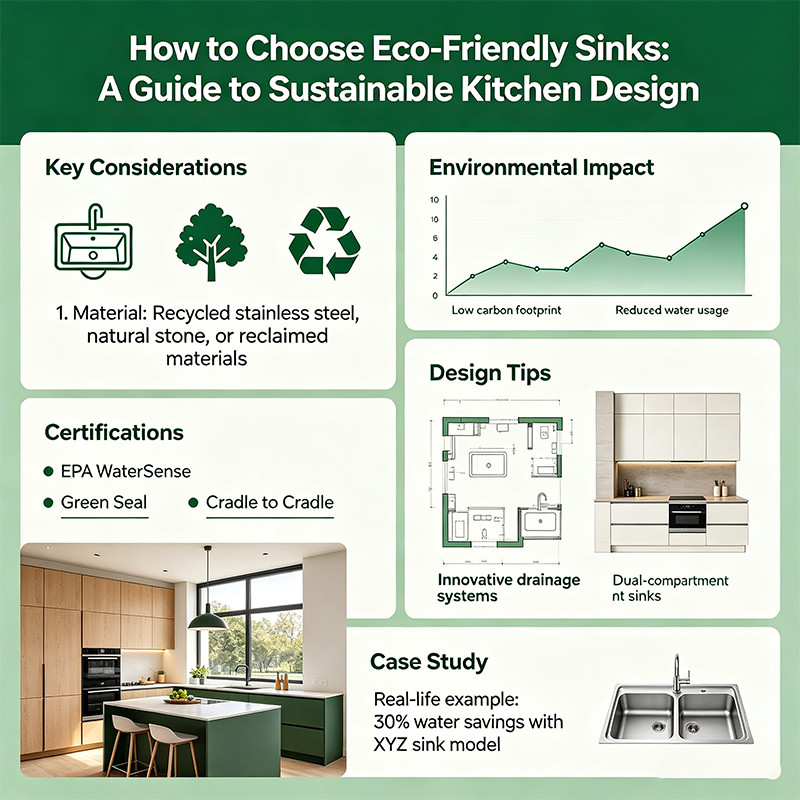
As we increasingly embrace sustainable living, the kitchen stands out as a vital area where eco-conscious choices can make a significant impact. We believe that a truly modern kitchen is one that balances aesthetic appeal with environmental responsibility, starting right from its core fixtures. A kitchen that is both beautiful and mindful of its environmental footprint is the new standard for modern living.
Among the many decisions you'll face when designing or renovating your kitchen, selecting eco-friendly sinks is a crucial step towards fostering a greener home. This guide will walk you through the key considerations for choosing sinks that are not only beautiful and functional but also kind to our planet.
Join us as we explore how thoughtful material selection, smart functionality, and an appreciation for craftsmanship can transform your kitchen into a beacon of sustainable design.
Understanding What Makes a Sink Truly Eco-Friendly
Choosing a sustainable sink goes beyond its appearance. It requires a deeper look into its entire lifecycle, from the raw materials used in its creation to its durability and eventual recyclability. A truly eco-friendly sink is one that minimizes its impact on the planet at every stage.
The Environmental Footprint of Conventional Sink Production
The journey of a conventional kitchen sink from factory to home carries a significant environmental weight. The manufacturing sector is a major contributor to global carbon emissions, and the production of kitchen fixtures is no exception. This process, known as a product's "carbon footprint," involves multiple energy-intensive stages.
It all begins with the extraction of raw materials, such as iron ore for cast iron or nickel and chromium for stainless steel. These mining and extraction processes are not only energy-intensive but can also disrupt natural habitats. The raw materials are then transported to manufacturing facilities, consuming fossil fuels and contributing to emissions.
The manufacturing process itself is where the environmental impact escalates significantly. For metal sinks, large amounts of energy are required to melt, cast, and form the materials into their final shape. For instance, producing a stainless steel sink involves processes like stamping with high-pressure hydraulic presses, annealing at temperatures over 1200°C to relieve stress in the metal, and multiple finishing steps like polishing and welding. Each of these steps consumes substantial energy. Similarly, composite sinks made from quartz and resins are pressed into shape under specific physical and chemical conditions, which also requires significant energy. The entire production process, from raw material to finished product, generates greenhouse gas emissions that contribute to a sink's embodied carbon.
Durability and Longevity: The Foundation of Eco-Friendly Sinks
One of the most powerful yet often overlooked principles of sustainability is longevity. The most eco-friendly choice is often the one you don't have to replace for a long, long time. Durable products inherently reduce waste, conserve resources, and minimize the environmental impact associated with manufacturing and disposal. When a product like a kitchen sink lasts for decades, it negates the need for multiple replacements, each with its own manufacturing and transportation footprint.
Choosing a sink built for durability is a direct investment in sustainability. Materials known for their long-lasting performance, such as high-quality stainless steel, cast iron, and fireclay, are excellent choices. These sinks resist chipping, staining, and wear, ensuring they remain functional and aesthetically pleasing for years. By prioritizing durability, you reduce the overall lifecycle cost of your sink and contribute to a circular economy that values longevity over disposability. A durable product is a testament to quality craftsmanship and a commitment to reducing our collective environmental impact.
The Role of Recycled Content and Recyclability in Eco-Friendly Sinks
The concepts of recycled content and recyclability are central to the circular economy and are key indicators of a sink's eco-friendliness. These two ideas ensure that materials are kept in use for as long as possible, reducing waste and the demand for new resources.
When discussing recycled content, it's important to distinguish between two types:
- Pre-consumer recycled content: This refers to materials diverted from the waste stream during the manufacturing process. For example, scraps and cut-offs from producing a metal sink can be collected and melted down to create new sinks. This is an efficient way for manufacturers to reduce waste internally.
- Post-consumer recycled content: This consists of materials from products that have been used by consumers and then discarded. Think of old stainless steel appliances or sinks that are collected, recycled, and transformed into new products. Using post-consumer materials is often considered more impactful for the circular economy, as it diverts waste from landfills and gives it a new life.
Many high-quality stainless steel sinks, for instance, are made with a significant percentage—often 60% to 80%—of recycled metal. By choosing a sink with high recycled content, you are supporting a market for recycled materials and reducing the environmental impact associated with extracting and processing virgin resources.
Recyclability, on the other hand, refers to a product's ability to be broken down and reprocessed into new materials at the end of its life.
- Stainless steel is a champion of recyclability. It is 100% recyclable and can be melted down and repurposed indefinitely without any loss of quality or integrity.
- Copper is another highly recyclable material, sharing many of the same benefits as stainless steel.
- Cast iron sinks can also be recycled as scrap metal.
- Fireclay and porcelain sinks, made from natural clay, are sometimes recyclable, but options can be limited. In some areas, crushed porcelain is used as aggregate in road construction.
- Composite sinks, which are a mix of stone dust and resin, are the most difficult to recycle due to their blended nature.
By prioritizing sinks made from recycled materials and ensuring they are recyclable at the end of their useful life, you are actively participating in a more sustainable, circular approach to kitchen design.
Exploring Material Options for Your Eco-Friendly Sinks
The material of your kitchen sink is arguably the most significant factor in its sustainability. Each option comes with its own environmental pros and cons, from its origin and manufacturing process to its durability and end-of-life potential.
The Ultimate Green Choice: Second-Hand and Vintage Eco-Friendly Sinks
Before you even consider buying new, the most sustainable option is to reuse. Giving a second life to a pre-existing sink is the pinnacle of eco-friendly design, as it completely bypasses the environmental costs of manufacturing and transportation. Utilizing salvaged materials diverts a significant amount of waste from landfills and conserves the natural resources that would have been used to create a new product.
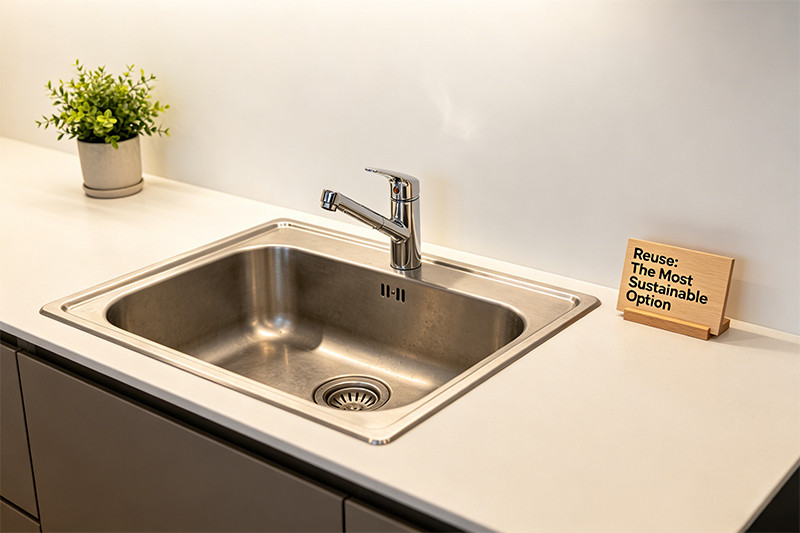
Second-hand and vintage sinks offer a unique character and history that mass-produced items simply cannot match. Sourced from architectural salvage yards, online marketplaces, or local community networks, these pieces can become a stunning focal point in your kitchen. Many vintage sinks, particularly those made from cast iron or fireclay, were built with a level of craftsmanship and durability that is hard to find today.
When considering a vintage sink, be sure to inspect it carefully for irreparable damage like large cracks or chips in the enamel. However, many common issues such as surface rust, stains, and minor dings can be affordably restored with a little effort. Refinishing kits are available for porcelain and enamel, and rust can be removed from the cast iron base, allowing you to bring a piece of history back to its former glory. Choosing a vintage sink is not just a green choice—it's a way to add a unique story and timeless charm to your kitchen.
Evaluating New Eco-Friendly Sink Materials for Sustainability
If a second-hand sink isn't a viable option, the next best step is to carefully evaluate new materials based on their lifecycle impact. Key factors include the use of recycled content, the energy required for production, durability, and end-of-life recyclability.
Cast Iron Eco-Friendly Sinks: A Durable, Often Recycled Classic
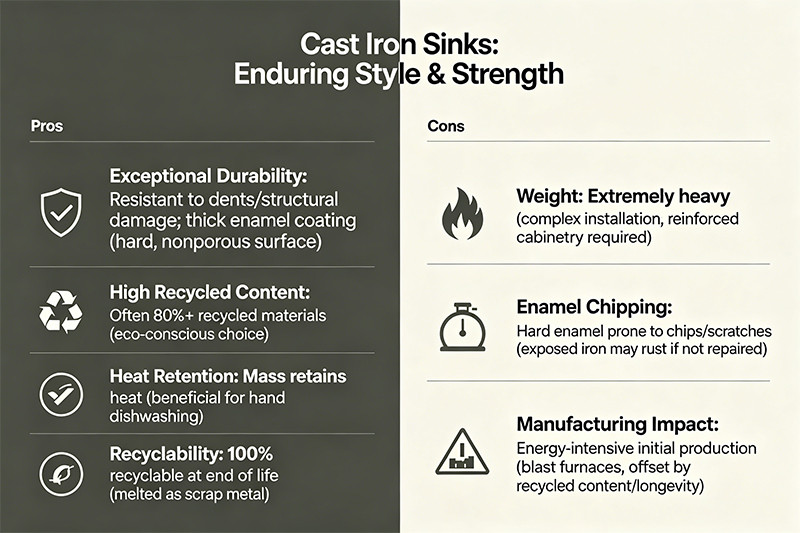
Cast iron sinks are a hallmark of enduring style and strength. Composed of a heavy iron alloy coated in a thick, glossy enamel, these sinks offer incredible longevity and can often last for decades.
Pros:
- Exceptional Durability: Cast iron is renowned for its strength and ability to withstand heavy use, making it resistant to dents and structural damage. The thick enamel coating provides a hard, nonporous surface.
- High Recycled Content: Many modern cast iron sinks are manufactured with a high percentage of recycled materials—often 80% or more—making them a strong choice for an eco-conscious consumer.
- Heat Retention: The mass of the cast iron retains heat well, which can be an advantage when washing dishes by hand.
- Recyclability: At the end of its long life, a cast iron sink is completely recyclable and can be melted down as scrap metal to create new products without losing its quality.
Cons:
- Weight: These sinks are extremely heavy, which can make installation more complex and may require reinforced cabinetry for support.
- Enamel Chipping: While the enamel is very hard, it can chip or scratch if heavy or sharp objects are dropped on it. A chipped surface can expose the iron underneath, leading to rust if not repaired.
- Manufacturing Impact: The initial production of cast iron from virgin materials is energy-intensive, involving blast furnaces that carry a significant environmental impact. However, this is largely offset by the use of recycled content and the material's extreme longevity.
Stainless Steel Eco-Friendly Sinks: Highly Recyclable and Resilient
Stainless steel is a cornerstone of modern kitchen design, prized for its sleek look, durability, and excellent sustainability profile. It is one of the most practical and eco-friendly materials you can choose for a kitchen sink.
Pros:
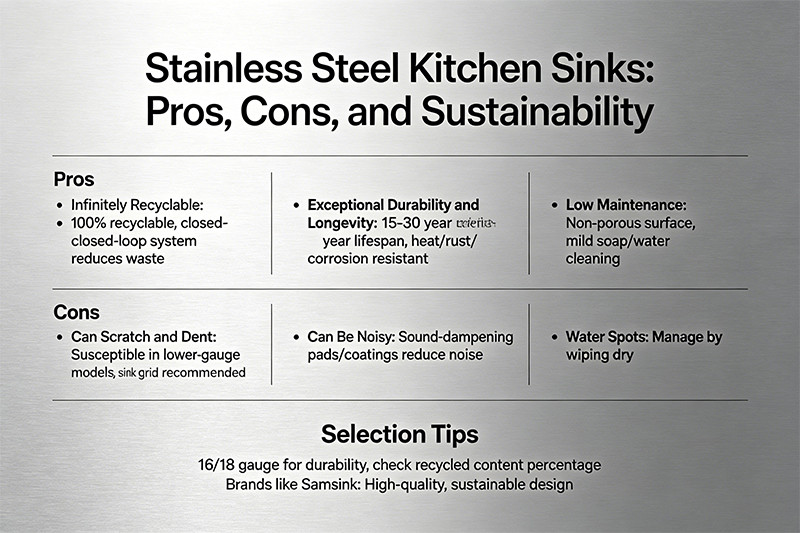
- Infinitely Recyclable: Stainless steel is 100% recyclable and can be processed back into high-quality steel without any degradation in quality. This creates a closed-loop system that significantly reduces waste.
- High Recycled Content: A large majority of new stainless steel products are made with a high percentage of recycled material—often 60-80% or more. This drastically reduces the need for virgin raw materials and the energy-intensive processes of mining and refining.
- Exceptional Durability and Longevity: A well-made stainless steel sink has a long lifespan, typically lasting 15 to 30 years or more. It is resistant to heat, rust, and corrosion, ensuring it remains a functional and hygienic fixture for decades.
- Low Maintenance: Its non-porous surface is easy to clean and maintain, often requiring just mild soap and water. This reduces the need for harsh chemical cleaners over the sink's lifetime.
Cons:
- Can Scratch and Dent: While durable, stainless steel can be susceptible to scratches and dents, especially in lower-gauge (thinner) models. However, over time, minor scratches tend to blend into a uniform patina. Using a sink grid can help protect the surface.
- Can Be Noisy: Dropping utensils or heavy pans into a stainless steel sink can be loud, although sound-dampening pads and coatings on higher-quality models significantly reduce this noise.
- Water Spots: Depending on water hardness, stainless steel can show water spots. However, these are easily managed by wiping the sink dry after use.
When selecting a stainless steel sink, look for a lower gauge (16 or 18 gauge is ideal for kitchens) for better durability and ask the manufacturer about the percentage of recycled content. Brands like Samsink offer high-quality stainless steel options that balance beautiful design with a strong commitment to sustainability.
Copper Eco-Friendly Sinks: Antimicrobial Beauty with Sourcing Considerations
Copper sinks bring a unique warmth and character to a kitchen. With their "living finish" that patinas and changes over time, they are a statement piece that is both beautiful and functional.
Pros:
- Antimicrobial Properties: Copper is naturally antimicrobial. The U.S. Environmental Protection Agency (EPA) has registered copper alloys as the first solid surface materials with the ability to kill harmful bacteria, viruses, and fungi. Studies have shown they can eliminate up to 99.9% of harmful bacteria within a couple of hours, promoting a more hygienic kitchen environment.
- Durability and Recyclability: Like stainless steel, copper is a very durable material that can last for decades. It is also 100% recyclable without any loss of quality, making it a sustainable choice that fits within a circular economy.
- Unique Aesthetic: Copper sinks develop a unique patina over time, an aging process that many homeowners find appealing. This "living finish" means small scratches and imperfections tend to blend in as the copper oxidizes.
Cons:
- Sourcing Concerns: The primary extraction of copper through mining has significant environmental consequences. Open-pit mining can lead to deforestation, soil erosion, and water pollution as waste rock creates acid mine drainage. For this reason, it is crucial to choose a sink made from recycled copper. This significantly reduces its environmental footprint.
- Reactive and Soft: Copper is a reactive metal. Acidic foods (like lemons or tomatoes) can temporarily lighten the patina if left on the surface. It is also a softer metal than steel, making it more prone to denting from heavy impacts.
- Maintenance: To maintain an even patina, copper sinks require specific care. While daily cleaning is simple (mild soap and water), acidic substances must be rinsed away quickly. Some owners choose to wax their sinks periodically to protect the finish, though many prefer to let it age naturally.
When investing in a copper sink, prioritize manufacturers who are transparent about using high-quality, recycled copper. This ensures you get all the benefits of this beautiful material while making the most environmentally responsible choice.
Composite and Granite Eco-Friendly Sinks: Blended Materials for Modern Designs
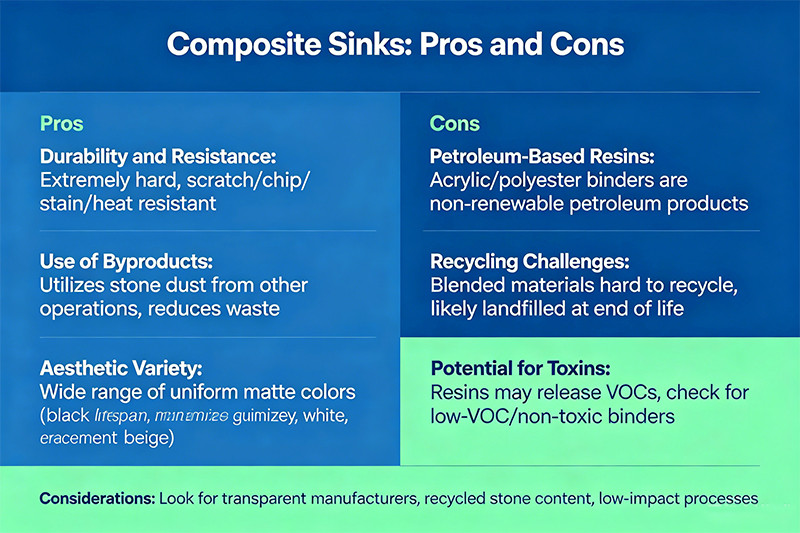
Composite sinks, often marketed as granite or quartz composite, have become a popular choice for their modern aesthetic and robust performance. These sinks are typically made by combining about 80% crushed stone (like granite or quartz) with 20% acrylic or polyester resin to bind the particles together.
Pros:
- Durability and Resistance: The resulting material is extremely hard and durable, offering superior resistance to scratches, chips, stains, and heat compared to many other materials.
- Use of Byproducts: The production of some composite sinks utilizes stone dust that is a byproduct of other stone-cutting operations. This practice helps to reduce waste from the quarrying and fabrication industries.
- Longevity: Their tough, non-porous surface ensures they have a long lifespan, which reduces the need for frequent replacement and minimizes waste over time.
- Aesthetic Variety: They are available in a wide array of uniform, matte colors (like black, grey, white, and beige) that can seamlessly integrate into various kitchen designs.
Cons:
- Petroleum-Based Resins: The acrylic or polyester resins used as binders are synthetic, petroleum-based products, which are not renewable resources.
- Recycling Challenges: The blended nature of composite sinks makes them very difficult to recycle. Because the stone particles are permanently fused with resin, separating the materials for reprocessing is not currently a widespread or feasible practice. Some manufacturers are exploring ways to recycle production waste, but at the end of its life, a composite sink is likely to end up in a landfill.
- Potential for Toxins: The resins used in manufacturing may release volatile organic compounds (VOCs). It is important to check if a manufacturer uses low-VOC or non-toxic binders to ensure better indoor air quality and reduce environmental impact.
When considering a composite sink, look for manufacturers that are transparent about their material composition, use of recycled stone content, and low-impact production processes. While very durable, their end-of-life recyclability is a significant environmental drawback.
Porcelain or Enamel Eco-Friendly Sinks: Classic Look, Specific Care Needs
Porcelain and enamel sinks offer a classic, glossy finish popular in traditional and farmhouse kitchens. It's important to understand the distinctions between the different types. "Porcelain sink" often refers to a solid ceramic fixture, while "enamel sink" typically means an enamel coating over a metal base, such as cast iron or steel. For sustainability, fireclay is often the superior choice.
Fireclay Sinks: Fireclay is a specific type of ceramic made from clay fired at extremely high temperatures (over 1600°F). This process, called vitrification, fuses the clay and glaze into a single, incredibly dense and durable, non-porous material.
Pros:
- Natural Materials: Fireclay is made from abundant and renewable natural clay deposits.
- Exceptional Durability: Fireclay is highly resistant to scratches, stains, chips, and high heat, making it one of the most durable sink materials available. Its longevity reduces the need for replacements.
- Recyclability: While recycling options can be limited depending on location, fireclay is a natural material that can be recycled at the end of its life, often by being crushed for use in other applications.
Cons:
- Energy-Intensive Production: The high-temperature firing process is energy-intensive and can release pollutants like particulate matter and volatile organic compounds (VOCs).
- Limited Recyclability in Practice: Finding a facility that accepts old porcelain or fireclay sinks for recycling can be difficult, and many end up in landfills.
Standard Porcelain & Enamel Sinks: These include solid porcelain sinks fired at lower temperatures and enamel-coated metal sinks.
Pros:
- Affordability: These sinks are often more budget-friendly than fireclay.
Cons:
- Less Durable: They are more susceptible to chipping, scratching, and staining compared to fireclay. A chip in an enamel-coated sink can expose the metal base, leading to rust.
- Specific Care: Both require care to avoid dropping heavy items. Abrasive cleaners should be avoided as they can dull the glossy finish and make it more prone to staining over time.
When choosing this style, a high-quality fireclay sink is the most sustainable option due to its superior durability and natural composition, despite its energy-intensive production.
Beyond the Basin: Functionality and Water Conservation with Eco-Friendly Sinks
A truly sustainable kitchen sink is one that not only is made from eco-friendly materials but also promotes greener habits through its design and functionality. By optimizing daily tasks and encouraging resource conservation, your sink can become an active partner in your sustainable lifestyle.
Designing for Daily Life: How Functional Eco-Friendly Sinks Enhance Sustainability
The design of a sink can significantly influence your daily habits and resource consumption. Modern sink designs, particularly workstation sinks, are engineered to streamline kitchen tasks, which not only saves time but also enhances sustainability by consolidating activities and reducing waste.
Workstation sinks have evolved from simple basins into multi-functional hubs for food prep, cooking, and cleaning. They feature an integrated ledge or track system that supports a variety of accessories, such as:
- Cutting Boards: These slide over the sink, allowing you to chop vegetables or prepare food directly above the basin. This saves counter space and makes it easy to sweep food scraps directly into a compost collector or disposal, minimizing mess and simplifying cleanup.
- Colanders: Custom-fit colanders rest on the sink's ledge, making it effortless to wash fruits and vegetables or drain pasta using less water than filling the entire basin.
- Drying Racks: Roll-up or sliding drying racks provide a designated space for air-drying dishes over the sink. This keeps countertops clear and uses the sink space more efficiently.
- Mixing Bowls and Prep Containers: Small bowls and containers can sit on the ledge, perfect for organizing ingredients during meal prep.
By centralizing these tasks, a functional sink design reduces the need to move around the kitchen, use multiple separate tools (each requiring cleaning), and waste water. It creates a more organized, efficient workflow that naturally encourages more sustainable practices. This consolidation of tasks not only makes kitchen work more pleasant but also reduces the overall environmental footprint of your daily routines.
Integrating Water-Saving Features Around Your Eco-Friendly Sinks
An eco-friendly sink is most effective when paired with features that actively conserve water. The area around your sink is a primary point of water consumption in the home, and making smart choices here can lead to significant savings in both water and the energy used to heat it.
Choosing Low-Flow Faucets and Aerators
One of the most effective ways to reduce water consumption in the kitchen is to install a low-flow faucet. Standard kitchen faucets can have a flow rate of 2.2 gallons per minute (GPM) or more, but high-efficiency models can significantly reduce this without sacrificing performance.
When shopping for a new faucet, look for the EPA WaterSense label. To earn this certification, bathroom sink faucets (and accessories like aerators) must use a maximum of 1.5 GPM, which is at least 30% less than standard models. While kitchen faucets don't have a specific WaterSense category, applying the same principle by choosing a model with a lower GPM (e.g., 1.5 to 1.8 GPM) can achieve substantial savings. The EPA estimates that replacing an old, inefficient faucet with a WaterSense-labeled one can save a family 700 gallons of water per year.
If you are not ready to replace your entire faucet, an inexpensive yet powerful alternative is a faucet aerator. This small, screw-on device attaches to the tip of your faucet and works by mixing air into the water stream. This process creates the feeling of a strong, consistent flow while using significantly less water. Aerators also reduce splashing. Installing an aerator is one of the single most cost-effective water-saving measures you can take, often paying for itself in water and energy savings within a few months.
Embracing Efficient Dishwashing Practices
Beyond the technology you install, your personal habits play a massive role in water and energy conservation. The debate between hand washing and using a dishwasher has long been a topic of discussion, but modern data provides a clear answer.
Dishwasher vs. Hand Washing Contrary to old beliefs, using a modern dishwasher is significantly more eco-friendly than washing the same number of dishes by hand.
- Water Savings: An ENERGY STAR certified dishwasher can use as little as 3-5 gallons of water per load. In contrast, washing the same amount of dishes by hand can consume up to 27 gallons, especially if the tap is left running.
- Energy Savings: Dishwashers are also more energy-efficient. They use less energy to heat the precise amount of water needed compared to the energy your home's water heater uses to keep a steady flow of hot water for hand washing.
To maximize these benefits:
- Always run the dishwasher with a full load.
- Scrape food off plates instead of pre-rinsing them, as modern detergents and dishwashers are designed to handle food particles.
- Use the "eco" or "air-dry" setting to avoid the energy-intensive heated drying cycle.
Efficient Hand-Washing Techniques If you don't have a dishwasher or need to wash just a few items, you can still save a significant amount of water by adopting efficient hand-washing methods:
- The Two-Basin Method: This is the most water-wise approach. Fill one basin of your sink with hot, soapy water for washing and a second basin with cool, clean water for rinsing. If you have a single-basin sink, use a separate tub or bowl for rinsing. This method prevents the tap from running continuously.
- Scrub First, Rinse Later: Turn off the tap while you scrub all the dishes with a soapy sponge. Once all items are scrubbed, turn the water back on to rinse them all at once.
- Wash Promptly: Washing dishes right after use prevents food from hardening, which reduces the need for prolonged soaking and heavy scrubbing, thereby saving water.
By combining an efficient sink setup with mindful dishwashing habits, you can make a substantial reduction in your kitchen's water and energy consumption.
Sustainable Waste Management: Composting Over Disposals Near Eco-Friendly Sinks
A truly eco-friendly kitchen extends waste management beyond the bin and into how we handle organic scraps. While garbage disposals are common, they present a set of environmental challenges that make composting a far more sustainable alternative.
The Environmental Downside of Garbage Disposals Garbage disposals work by grinding food scraps into small particles that are flushed into the sewer system. While this conveniently removes food waste from your kitchen, it creates several problems down the line:
- Increased Load on Wastewater Treatment Plants: Food waste adds a significant amount of solid organic material to wastewater, which many treatment facilities were not designed to handle. This increases the energy and cost required to treat the water.
- Water and Energy Consumption: Disposals require a steady flow of water to operate, using an average of two to five gallons each time. They also consume electricity, adding to a household's energy footprint.
- Nutrient Pollution: Food waste is high in nutrients like nitrogen. When this ends up in wastewater, it can contribute to algal blooms in natural bodies of water, which harm aquatic ecosystems.
- Methane Production: While some advanced wastewater plants can capture methane from food waste and convert it to energy, many cannot. In less advanced systems or if food waste decomposes in sewer lines, it releases methane, a potent greenhouse gas.
Why Composting is the Greener Choice Composting is the practice of recycling organic matter—like fruit and vegetable peels, coffee grounds, and eggshells—into a nutrient-rich soil amendment. It is a superior alternative to garbage disposals for several reasons:
- Reduces Landfill Waste: Composting diverts a significant portion of household waste from landfills, where it would otherwise decompose and produce methane.
- Creates a Valuable Resource: Compost enriches garden soil, improving its structure, water retention, and microbial health. This reduces or eliminates the need for synthetic chemical fertilizers.
- Lowers Carbon Footprint: Unlike disposals, composting doesn't require electricity or large volumes of water. The natural decomposition process has the potential to absorb CO2 rather than producing methane.
- Connects Us to the Food Cycle: The practice of composting fosters a deeper understanding of the food cycle and encourages more mindful consumption habits.
Setting Up a Kitchen Compost System: Setting up a composting system is simple. A small countertop bin with a lid is perfect for collecting daily kitchen scraps. When full, this can be emptied into a larger outdoor compost pile or bin. For those in apartments or without a yard, options like vermicomposting (worm bins) or subscribing to a local compost pickup service are excellent alternatives.
By choosing to compost, you turn food "waste" into a valuable resource, closing the loop in a truly sustainable kitchen.
Choosing Brands Committed to Manufacturing Eco-Friendly Sinks
Making a truly sustainable choice involves looking beyond the product itself to the ethos of the company that created it. A brand’s commitment to environmental stewardship, ethical practices, and transparent communication is just as important as the materials it uses.
Identifying Manufacturers with Strong Sustainability Initiatives and Recycled Content
In a market flooded with environmental claims, distinguishing truly sustainable brands from those engaging in "greenwashing" can be challenging. However, a few key indicators can help you identify manufacturers with a genuine commitment to sustainability.
Transparency and Reporting: Reputable brands are transparent about their practices. Look for companies that publish an annual Corporate Social Responsibility (CSR) or Sustainability Report. These documents detail a company's performance and goals related to environmental, social, and governance (ESG) factors. They provide measurable data on initiatives like reducing waste, lowering CO2 emissions, and managing water consumption. These reports are often found in the "About Us" or "Investor Relations" sections of a company's website.
Third-Party Certifications: Independent certifications are a reliable way to verify a company's claims. Look for recognized labels that validate a brand's commitment to environmental and social standards.
- Recycled Content: Certifications like the Recycled Claim Standard (RCS), Global Recycled Standard (GRS), or verification programs from organizations like Intertek and SCS Global Services confirm the percentage of pre- and post-consumer recycled materials in a product. They ensure claims are accurate and traceable through the supply chain.
- Environmental Management: An ISO 14001 certification indicates that a company has a formal environmental management system in place to monitor and reduce its impact.
- Holistic Sustainability: B Corp Certification is a rigorous standard that evaluates a company's entire social and environmental performance, from its supply chain to its employee benefits.
Material Sourcing and Supply Chain: Truly sustainable brands are open about where their materials come from and how their products are made. They should be able to provide information on their supply chain, including ethical labor practices and responsible sourcing of raw materials. Be wary of vague terms like "eco" or "green" without specific data to back them up.
By doing a little research into a brand's reporting and certifications, you can support companies that are actively working to minimize their environmental footprint and make a more informed and responsible purchase.
The Importance of Craftsmanship and Innovation in Eco-Friendly Sinks
Craftsmanship and innovation are the twin pillars that support the creation of truly durable and sustainable products. While they might seem like opposing forces—one rooted in tradition, the other in the future—they work together to create sinks that are not only long-lasting but also less impactful on the environment.
Craftsmanship as a Commitment to Durability Excellent craftsmanship is, at its core, a commitment to quality and longevity. In sink manufacturing, this translates to:
- Precision in Production: Skilled artisans pay close attention to every detail, from ensuring the integrity of welds to achieving a flawless, durable finish. This meticulous process results in a product that is structurally sound and resistant to wear and tear.
- Superior Materials: Brands dedicated to craftsmanship choose high-quality raw materials, not just for their appearance but for their proven performance over time. This approach ensures the final product can withstand decades of daily use.
- Timeless Design: Handcrafted products are often designed with a timeless aesthetic that transcends fleeting trends, meaning they are less likely to be replaced for stylistic reasons. A well-crafted sink is an heirloom, not a disposable commodity.
Innovation for a Greener Future Innovation drives the manufacturing industry toward more sustainable practices. In the world of eco-friendly sinks, this includes:
- Advanced Materials: Companies are developing new composite materials that use natural fibers like jute or eco-resins to reduce reliance on petroleum-based binders.
- Smarter Technology: The integration of features like sensor-activated faucets, built-in water filtration systems, and low-flow aerators is becoming more common. These innovations help conserve water and energy directly at the point of use.
- Eco-Efficient Production: Forward-thinking manufacturers are adopting circular economy principles. This includes investing in on-site water treatment for reuse, comprehensive waste management programs, and advanced dust collection systems to protect air quality.
Brands like Samsink exemplify this dual commitment. With over 30 years of manufacturing experience, they combine time-honored craftsmanship with a focus on sustainability. By using 100% recyclable stainless steel and implementing eco-innovations like water conservation systems in their production facilities, they demonstrate that a high-quality, durable sink can also be a responsible one.
When choosing a sink, look for a brand that not only creates a beautiful product but also invests in the quality, durability, and sustainable practices that ensure it is a responsible choice for your home and the planet. Explore Samsink's collection of beautifully crafted, sustainable sinks to find the perfect centerpiece for your eco-friendly kitchen.
Key Takeaways
Creating a truly sustainable kitchen starts with informed choices, and your sink is a perfect place to begin. A sink's environmental impact is determined by its entire lifecycle—from the materials it's made of and the manufacturing process to its daily functionality and end-of-life potential. By prioritizing durability, recycled content, and water-saving features, you can select a sink that is both beautiful and kind to the planet.
Here are the essential points to remember when choosing an eco-friendly sink:
1. Prioritize Durability and Longevity: The most sustainable product is the one you don't have to replace. A durable sink made from materials like cast iron, high-quality stainless steel, or fireclay will last for decades, reducing the waste and resource consumption associated with manufacturing replacements. Investing in a long-lasting sink is a fundamental principle of eco-friendly design.
2. Embrace Reclaimed and Recycled Materials:
- Vintage and Second-Hand First: The greenest choice is always to reuse. A vintage sink avoids the environmental impact of new production entirely and adds unique character to your kitchen.
- High Recycled Content: If buying new, look for sinks made from a high percentage of recycled materials. Stainless steel and cast iron sinks often contain 80% or more recycled content, which significantly lowers the demand for virgin resources and the energy needed for extraction and production. Always verify a brand's claims through certifications like the Global Recycled Standard (GRS).
3. Understand the Pros and Cons of Different Materials: No material is perfect, so it's important to weigh their benefits and drawbacks.
| Material | Key Sustainability Pros | Key Sustainability Cons |
|---|---|---|
| Second-Hand/Vintage | Zero new manufacturing impact; diverts waste from landfills. | May require restoration; availability can be limited. |
| Stainless Steel | 100% recyclable without quality loss; often has high recycled content; very durable. | Can scratch or dent (though this is less of an issue with thicker gauges). |
| Cast Iron | Extremely durable (can last a lifetime); typically high in recycled content; fully recyclable. | Heavy, requiring reinforced support; enamel can chip, exposing iron to rust. |
| Copper | Naturally antimicrobial; highly durable; 100% recyclable. | Virgin copper mining is environmentally damaging; softer metal can dent. Always choose recycled copper. |
| Fireclay | Made from natural, abundant clay; extremely durable and long-lasting; recyclable. | Production is energy-intensive; practical recycling options may be limited. |
| Composite (Granite/Quartz) | Very durable and long-lasting; can be made with stone dust byproducts. | Contains petroleum-based resins; very difficult to recycle at end-of-life. |
4. Enhance Functionality for a Greener Workflow: A sink's design can influence your daily habits. Workstation sinks with integrated accessories like cutting boards, colanders, and drying racks streamline food prep and cleanup. This consolidates tasks, reduces the need for separate tools, and helps conserve water and energy.
5. Integrate Water-Saving Features: Pair your eco-friendly sink with water-conserving fixtures.
- Low-Flow Faucets: Choose faucets with the EPA WaterSense label, which use at least 30% less water than standard models.
- Aerators: A simple, inexpensive aerator can be added to any faucet to mix air into the water stream, reducing water usage without sacrificing pressure.
- Efficient Dishwashing: Use a modern, ENERGY STAR certified dishwasher instead of hand washing whenever possible—it uses significantly less water and energy. If hand washing, use the two-basin method to avoid leaving the tap running.
6. Research and Choose Brands Committed to Sustainability: Look beyond marketing claims. Support companies that are transparent about their environmental impact. Check for Corporate Sustainability Reports (CSR) and third-party certifications like ISO 14001 or B Corp. Brands like Samsink demonstrate this commitment by using recyclable materials and implementing sustainable practices in their manufacturing processes.
By following this guide, you can confidently choose a sink that not only complements your kitchen design but also reflects a deeper commitment to a sustainable lifestyle.
Frequently Asked Questions (FAQ)
1. What is the single most eco-friendly sink material?
The most eco-friendly sink is a second-hand or vintage sink. This option completely avoids the environmental impact of new manufacturing, including raw material extraction, energy consumption, and transportation. By rescuing an existing sink, you divert waste from the landfill and give a durable, often high-quality item a second life. If buying new is necessary, stainless steel with a high percentage of recycled content is one of the strongest choices. It is durable, 100% recyclable without quality loss, and an established part of the circular economy.
2. Is a black kitchen sink a sustainable choice?
It depends on the material. Black sinks are most commonly made from granite or quartz composite. While these sinks are very durable and long-lasting—a key aspect of sustainability—they have significant environmental drawbacks. The resins used to bind the stone particles are petroleum-based, and the composite material is extremely difficult to recycle at the end of its life.
A more sustainable option for a black sink would be enameled cast iron. Cast iron sinks are exceptionally durable, often contain a high percentage of recycled iron, and are fully recyclable as scrap metal. While the black enamel coating is a finish, the underlying material has a much better end-of-life profile than composite.
3. How can I tell if a stainless steel sink uses recycled content?
Discerning marketing claims from verified facts is crucial. Here’s how you can check:
- Look for Certifications: The most reliable way is to look for third-party certifications. The Global Recycled Standard (GRS) and Recycled Claim Standard (RCS) are independent verifications that trace the recycled content through the supply chain.
- Check the Manufacturer’s Website: Reputable brands that prioritize sustainability will often publish this information on their product pages or in a dedicated "Sustainability" section of their website. Look for specific percentages (e.g., "made with 80% recycled steel"). Brands like Samsink are transparent about their use of sustainable materials.
- Consult Corporate Sustainability Reports (CSR): If a company publishes a CSR report, it will likely contain detailed information about its use of recycled materials and other sustainability initiatives.
- Ask Directly: If the information isn't readily available, contact the manufacturer and ask for specifics on their pre- and post-consumer recycled content percentages. A transparent company should be willing to share this information.
4. Is a more expensive sink always more eco-friendly?
Not necessarily. While price can sometimes correlate with quality and durability (which are important for sustainability), it is not a direct indicator of eco-friendliness. For example:
- A very expensive, custom-designed composite sink may have a larger environmental footprint than a moderately priced stainless steel sink due to its non-recyclable materials.
- An affordably priced, high-quality stainless steel sink from a brand committed to using recycled content and efficient manufacturing can be more sustainable than a luxury brand sink with no verifiable eco-credentials.
- A vintage sink rescued from a salvage yard for a low price is arguably the most eco-friendly option of all.
Instead of relying on price, focus on the factors discussed in this guide: material composition (recycled content, recyclability), durability, brand transparency, and certifications.
5. Can I recycle my old kitchen sink?
Yes, in many cases, you can. The recyclability depends entirely on the material:
- Metal Sinks (Stainless Steel, Cast Iron, Copper): These are the easiest to recycle. You can take them to a local scrap metal recycling center, which will often pay you for the material.
- Porcelain and Fireclay Sinks: These are more challenging to recycle. They cannot be placed in standard curbside recycling. Some specialized recycling facilities may accept them to be crushed and used as aggregate for construction materials like roads or concrete. Check with your local waste management authority or look for construction and demolition debris recyclers in your area. Donating a usable sink to a place like a Habitat for Humanity ReStore is always a better first option.
- Composite Sinks (Granite/Quartz): Due to their mix of resin and stone particles, these sinks are generally not recyclable through conventional means and will most likely end up in a landfill. This is a major environmental drawback of the material.
Before disposing of any sink, first consider reuse. If it's still in usable condition, donating it is the most sustainable choice.
Conclusion
Choosing an eco-friendly sink is a powerful step toward creating a kitchen that is not only beautiful and functional but also operates in harmony with our planet. By moving beyond aesthetics and considering the full lifecycle of a sink—from its material origins and manufacturing footprint to its daily functionality and end-of-life options—you can make an informed decision that truly reflects your commitment to sustainability.
By considering the materials, functionality, and brand commitments, you can confidently select eco-friendly sinks that align with your values and contribute to a healthier planet. Every conscious choice in your kitchen design paves the way for a more sustainable future. From the rugged durability of cast iron to the circular promise of recycled stainless steel, your selection matters. We encourage you to prioritize durability, recycled content, and water-saving features in your selection. Your effort in choosing eco-friendly sinks is a testament to mindful living and helps create beautiful, responsible spaces for generations to come. We hope this guide empowers you to transform your kitchen into a beacon of sustainable design.
Share this guide with friends and family who are planning a kitchen renovation, and let us know in the comments below what eco-friendly choices you're making in your own home