How to Choose the Right commercial sink dimensions: A Guide to Single, Double, and Triple Compartment Setups
- Share
- Issue Time
- Jul 17,2026
Summary
Selecting the appropriate commercial sink for a professional kitchen is a pivotal decision that directly influences operational efficiency, sanitation standards, and adherence to health regulations. Rather than a mere equipment purchase, it serves as a foundational choice impacting daily workflows. This guide highlights the distinct functions and regulatory implications of single, double, and triple compartment sinks. Single-compartment sinks are suitable for specialized tasks like handwashing o
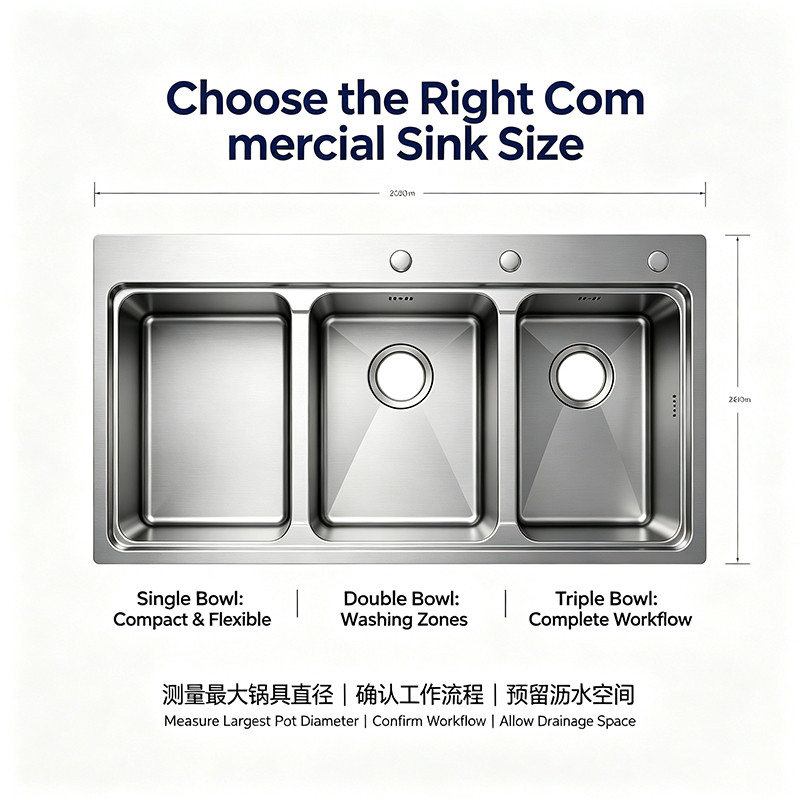
As professional kitchen operators, we know that selecting the right commercial sink dimensions is more than just buying a piece of equipment; it's a foundational decision impacting our entire operation. This choice dictates workflow efficiency, sanitation practices, and compliance with health regulations. The wrong size can create bottlenecks, compromise hygiene, and lead to staff frustration, while the right sink integrates seamlessly into the kitchen's rhythm.
This guide will walk you through understanding single, double, and triple compartment setups, helping you make an informed choice that ensures efficiency, meets health standards, and supports your kitchen’s daily demands. From measuring your largest pot to understanding stainless steel gauges, we will cover all the critical factors to help you invest in a sink that serves your business for years to come.
Key Takeaways
Choosing the right commercial sink is a critical decision that balances space, volume, and regulatory compliance. Here are the essential points to remember from this guide:
- Configuration is Key: The number of compartments directly relates to your kitchen's tasks. Single-compartment sinks are ideal for specific, isolated tasks like prep work or handwashing. Double-compartment sinks offer a basic wash-and-rinse capability suitable for smaller establishments with lower dish volume. For most food service operations, the triple-compartment sink is the standard, enabling a full wash, rinse, and sanitize process that complies with health codes.
- Measure Everything: Don't estimate. The "right size" is a data-driven decision. Start by measuring your largest items, such as sheet pans, stock pots, and mixing bowls. The sink bowls must be deep and wide enough to fully submerge these items for effective cleaning. Equally important is measuring your available kitchen footprint. Ensure you account for not just the sink's dimensions but also the required clearance for staff to move and work safely around it, including space for drainboards.
- Volume and Workflow Dictate Size: A sink that's perfect for a small café will be inadequate for a high-volume restaurant. Assess your daily operational volume—how many meals you serve and how many dishes you generate. This will determine the capacity and durability you need. Consider your staffing as well; a larger sink area with multiple drainboards can allow more than one person to work simultaneously, preventing bottlenecks during peak hours.
- Material Matters for Durability and Hygiene: Stainless steel is the industry standard for a reason. Its non-porous surface resists bacteria growth and is easy to clean and sanitize. When choosing a sink, pay close attention to the steel's gauge and type. A lower gauge number (like 16-gauge) means thicker, more durable steel that resists dents and damage. Type 304 stainless steel offers superior corrosion resistance compared to Type 430, making it a better long-term investment, especially in wet environments.
- Health Codes Are Non-Negotiable: Always consult your local health department regulations before purchasing a sink. These codes often mandate specific requirements, such as the use of a triple-compartment sink for manual warewashing, minimum bowl sizes, and the inclusion of integral drainboards on both sides of the sink. Compliance isn't just about passing inspections; it's fundamental to ensuring food safety for your customers. Look for NSF (National Sanitation Foundation) certified sinks, as this indicates they meet stringent public health and safety standards.
By prioritizing these factors, you can confidently select a commercial sink that not only meets your immediate needs but also supports your kitchen's efficiency and growth for the long term. A quality sink, like those offered by Samsink, is an investment in your operational backbone.
Understanding Different Commercial Sink Dimensions and Their Purpose
The configuration of a commercial sink is its most defining feature, directly influencing how your staff performs critical cleaning and preparation tasks. Choosing between a single, double, or triple compartment setup depends entirely on your kitchen's specific needs, volume, and the health regulations in your area. Each design serves a distinct purpose, from specialized prep work to full-scale, code-compliant dishwashing.
Single Compartment Sinks: Specialized Commercial Sink Dimensions for Specific Tasks
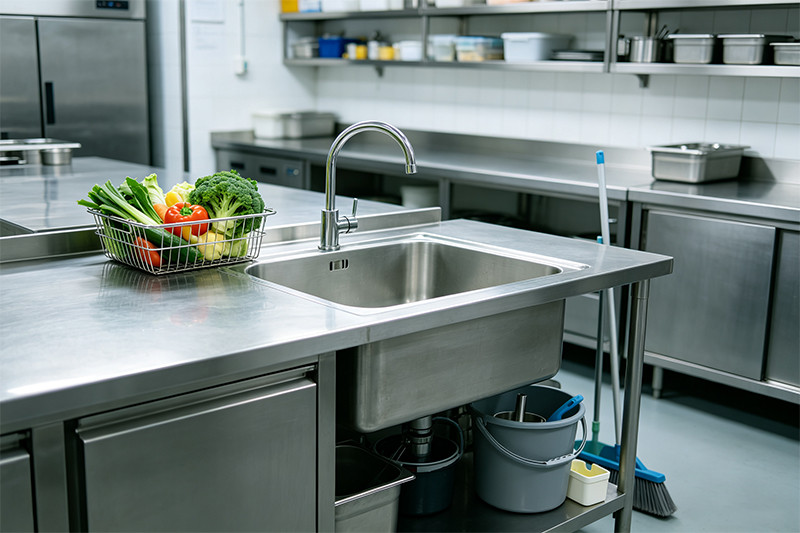
A single compartment sink is a versatile workhorse designed for dedicated, singular tasks. It isn't intended for the complete wash-rinse-sanitize process required for dishes, but it excels in other crucial areas of a commercial kitchen. You will often find them used as preparation sinks for washing vegetables, utility sinks for filling mop buckets and cleaning large equipment, or as handwashing stations. Their compact size makes them ideal for kitchens with limited space or for adding a dedicated washing station without disrupting the main workflow.
The dimensions can vary significantly based on their intended use. A small handwashing sink might only be 12x16 inches, whereas a large utility or pot-washing sink could have a bowl that is 30x30 inches or larger to accommodate bulky items. The key is to match the sink's dimensions to its specific function. For instance, a bar might use a medium-sized single bowl sink for rinsing glassware before it goes into a glasswasher.
| Use Case | Typical Bowl Dimensions (L x W) | Key Feature |
|---|---|---|
| Handwashing | 12" x 16" | Compact, often with splashguards |
| Food Prep | 18" x 18" to 24" x 24" | Deep enough for washing produce |
| Bar/Glassware Rinsing | 15" x 15" | Fits behind a bar |
| Utility/Janitorial | 24" x 24" or larger | Large capacity for buckets and tools |
Double Compartment Sinks: Versatile Commercial Sink Dimensions for Enhanced Flexibility
A double compartment sink offers a significant step up in functionality, providing the flexibility for a sequential, two-step cleaning process. This setup is commonly used for a wash-and-rinse routine. One bowl is filled with hot, soapy water for washing, while the second is used for rinsing with clean water. This configuration is suitable for smaller establishments like coffee shops, bars, or food trucks that may not have the volume to necessitate a full triple-compartment system but still need a methodical way to clean items.
While more versatile than a single bowl, a two-compartment sink does not typically meet the health code requirements for manual warewashing in most jurisdictions because it lacks the third dedicated compartment for sanitizing. However, it serves as an excellent intermediate solution or for kitchens that use a chemical or high-temperature commercial dishwasher for the final sanitizing step. The dimensions for each bowl in a double sink setup often range from 18x18 inches to 24x24 inches, providing ample space for most standard pots and pans.
Triple Compartment Sinks: The Benchmark for Comprehensive Commercial Sink Dimensions
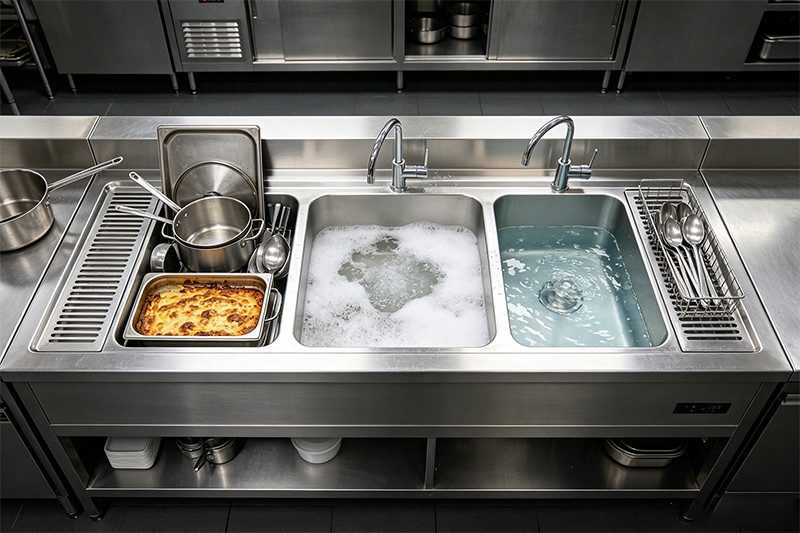
The triple compartment sink is the cornerstone of manual dishwashing in virtually every commercial food service operation. Its design is specifically engineered to facilitate the three-step wash, rinse, and sanitize method, which is mandated by the FDA Food Code and local health departments across the country for preventing foodborne illness. This mandatory process ensures that all cookware, utensils, and dishes are hygienically clean and safe for reuse.
The function of each compartment is distinct:
- Wash: The first compartment is filled with hot water (typically at least 110°F) and a commercial-grade detergent for scrubbing and removing food debris.
- Rinse: The second compartment is filled with clean, warm water to rinse away all soap residue from the washed items.
- Sanitize: The third compartment contains either a chemical sanitizing solution mixed to the proper concentration or hot water maintained at 171°F or higher for heat sanitization. Items must be submerged for a specific duration (e.g., at least 30 seconds) to effectively kill harmful bacteria.
Given their critical role, the dimensions of a triple compartment sink are subject to health code regulations. The bowls must be large enough to fully submerge the largest pot or pan used in the kitchen, and most setups require two drainboards—one for soiled items and one for air-drying sanitized items. Standard bowl sizes often start at 18 x 18 x 12 inches, but larger operations will require much bigger dimensions to handle high volumes.
How to Choose the Right Commercial Sink Dimensions for Your Operation
Selecting the correct commercial sink dimensions is a strategic decision that goes beyond just filling a space. It requires a careful evaluation of your kitchen's unique tools, available area, and operational tempo. A sink that is too small will create a constant bottleneck, while one that is too large can waste valuable space and resources. Making the right choice ensures a smooth workflow and a compliant, efficient kitchen.
Assessing Your Largest Cookware and Available Space for Optimal Commercial Sink Dimensions
The first step in determining the right sink dimensions is to look at the tools you use every day. A sink is useless if your equipment doesn't fit inside it. Begin by identifying your largest pieces of cookware, such as stock pots, mixing bowls, and, most importantly, sheet pans. Sheet pans often have a standard dimension of 18x26 inches, so your sink bowl must be able to accommodate this size, often diagonally.
How to Measure for Your Sink:
- Measure Your Cookware: Take your largest pot and measure its diameter and height. For sheet pans, measure the length, width, and diagonal.
- Determine Required Bowl Size: The sink bowl's length and width should be large enough to allow your biggest pan to lie flat or be easily maneuvered for cleaning. The depth is equally critical; a standard depth of 12 to 14 inches is usually sufficient to fully submerge most items without excessive splashing.
- Measure Your Kitchen Space: Once you know the required bowl size, measure the total footprint available in your kitchen. Remember to include space for drainboards, which are often required by health codes and are essential for an efficient workflow. You'll need one for staging dirty dishes and another for air-drying clean ones.
- Account for Clearance: Leave adequate clearance around the sink for staff to move freely and work without obstruction. A cramped sink area is both inefficient and a safety hazard.
| Item to Measure | Why It's Important | Recommended Action |
|---|---|---|
| Largest Stock Pot | Must be fully submerged for proper washing and sanitizing. | Choose a bowl depth greater than the pot's height. |
| Sheet Pans (18"x26") | A common item that must fit for cleaning. | Ensure the bowl's diagonal or width can accommodate the pan. |
| Kitchen Footprint | The sink must physically fit in the designated area. | Measure the total length, including drainboards, and compare it to your space. |
| Staff Workflow Area | Prevents bottlenecks and ensures safety. | Allow at least 36 inches of clear floor space in front of the sink. |
Accounting for Daily Volume, Staff, and Local Health Codes in Your Commercial Sink Dimensions
Beyond physical measurements, your kitchen's operational scale is a primary factor in choosing a sink. A low-volume café serving a few dozen customers a day has vastly different needs than a restaurant serving hundreds of meals during a dinner rush.
- Daily Volume: High-volume operations generate a continuous flow of dirty dishes. A larger, multi-station sink (like a wide triple-compartment model with two drainboards) is necessary to keep up with demand and prevent dirty dishes from piling up. For these businesses, investing in larger bowl dimensions (e.g., 24 x 24 inches or more) and generous drainboards is essential for efficiency.
- Staffing: Consider how many staff members will be using the sink at one time. A larger sink area can function as a complete warewashing station, allowing one person to scrape and wash while another rinses and sanitizes. This parallel workflow is only possible if the sink and drainboards are large enough to accommodate multiple people and distinct piles of soiled and clean items.
- Local Health Codes: This cannot be overstated: always consult your local health department's regulations before making a purchase. Many jurisdictions have highly specific rules regarding commercial sink dimensions. For example, they may mandate a minimum bowl size, require that drainboards be of a certain length, or specify the material and construction of the sink itself. A failure to comply can lead to failed inspections and costly replacements. Getting pre-approval for your chosen sink model is a wise step.
The Importance of Material and Health Code Compliance for Your Commercial Sink Dimensions
When investing in a commercial sink, the dimensions are only part of the equation. The material it's made from and its compliance with health and safety standards are just as critical. These factors determine the sink's lifespan, its ability to be properly sanitized, and its legality for use in a food service establishment. Choosing the right material and ensuring certification protects both your investment and your customers.
The Durability and Hygiene of Stainless Steel for Commercial Sink Dimensions
Stainless steel is the undisputed material of choice for commercial kitchen equipment, and for good reason. Its unique properties make it ideal for the demanding, fast-paced environment of a professional kitchen.
- Hygiene: The primary advantage of stainless steel is its non-porous surface. Unlike materials like porcelain or plastic, it does not harbor bacteria, mold, or other pathogens, making it exceptionally easy to clean and sanitize to health code standards.
- Durability and Corrosion Resistance: Commercial kitchens are harsh environments with constant exposure to water, heat, acidic foods, and strong cleaning chemicals. Stainless steel, particularly Type 304, offers excellent resistance to rust and corrosion. This ensures a long service life and maintains a professional appearance.
- Strength and Gauge: The thickness of the stainless steel, known as its gauge, is a key indicator of its durability. The rule is simple: the lower the gauge number, the thicker the steel.
- 16-Gauge: This is a preferred standard for high-volume commercial sinks. It is thicker and more resistant to dents, dings, and warping from heavy pots or impacts.
- 18-Gauge: While slightly thinner, 18-gauge steel is still a durable option suitable for light to medium-duty applications and is often more budget-friendly.
- 20-Gauge or Higher: Generally too thin for most commercial applications and should be avoided for primary sinks.
For a sink that will withstand the daily rigors of a busy kitchen, investing in a lower-gauge (thicker), Type 304 stainless steel model from a reputable brand like Samsink is the most reliable choice.
Meeting Health Code Requirements for Specific Commercial Sink Dimensions
Health code compliance is the final, non-negotiable checkpoint when selecting a commercial sink. Public health agencies at the local, state, and federal levels establish strict standards to prevent foodborne illness, and your sink is a primary focus during inspections.
Key Compliance Factors:
- NSF Certification: Always look for a sink that is NSF (National Sanitation Foundation) certified. An NSF mark indicates that the sink has been tested and certified to meet stringent standards for public health and safety, including material safety, design, and construction for cleanability. Using non-NSF equipment can result in immediate inspection failure.
- Coved Corners: Many health codes require sinks to have coved corners where the sink walls meet the bottom. These rounded edges eliminate sharp 90-degree angles where food debris and bacteria can accumulate, making the sink significantly easier and more effective to clean.
- Integral Drainboards: As mentioned previously, health codes often mandate the presence of drainboards. They must be integrally welded or seamlessly connected to the sink, leaving no gaps or crevices where water and grime can collect. Regulations may also specify a minimum size for these drainboards and require them to be sloped for proper drainage back into a sink bowl or a dedicated drain.
- Proper Installation: Compliance also extends to installation. The sink must be sealed to the wall with a code-compliant caulk (like silicone) to prevent water from seeping behind the unit and creating a breeding ground for mold and pests.
Before finalizing your purchase, obtain the sink's specification sheet and review it with your local health inspector to guarantee it meets all regional requirements.
Frequently Asked Questions (FAQ)
1. What size 3-compartment sink do I need for my restaurant?
The size you need depends on three main factors: your largest piece of cookware, your daily dish volume, and your local health code requirements. Start by measuring your widest pot or pan (including handles). Each sink bowl must be large enough to fully submerge this item. For many restaurants, this means bowls that are at least 18"x24" and 14" deep are a good starting point. However, a high-volume operation might need bowls as large as 30"x30". Always check your local health department's regulations, as they may mandate a minimum bowl dimension, such as 18"x18"x12". Finally, consider your workflow. If you have a constant stream of dishes, larger bowls and expansive drainboards will prevent traffic jams in your washing area.
2. Do I really need drainboards on my commercial sink?
In most cases, yes. The vast majority of health codes, guided by standards like the FDA Food Code, require drainboards on at least one, and preferably both, sides of a three-compartment sink. They are not just an accessory; they are a critical component of a compliant and sanitary warewashing process. The first drainboard (the "soiled" side) is used for staging dirty dishes and scraping food waste into a bin before washing. The second drainboard (the "clean" side) is essential for allowing sanitized dishes to air dry. Placing wet dishes on a towel or a non-sanctioned surface can re-introduce bacteria. The size of the drainboards should be adequate to hold a full rack of dishes.
3. Can I use a residential sink in a commercial kitchen?
No, you should never use a residential sink in a commercial kitchen for warewashing or food prep. Residential sinks are not built to meet commercial health and safety standards. They are typically made of thinner gauge metal (if steel), may have porous surfaces like enamel or composite materials that can harbor bacteria, and are not NSF certified. An inspector will immediately flag a residential sink, leading to a failed inspection. Commercial sinks, like those from Samsink, are constructed from high-grade, non-porous stainless steel with features like coved corners designed for durability and easy sanitation, ensuring you meet legal requirements.
4. What is the difference between 16-gauge and 18-gauge stainless steel?
The gauge refers to the thickness of the stainless steel. Counterintuitively, a lower gauge number means thicker steel. A 16-gauge sink is thicker, more robust, and more resistant to dents, punctures, and warping from heavy use and high temperatures than an 18-gauge sink. While 18-gauge is acceptable for lighter-duty applications, 16-gauge is the recommended standard for most busy commercial kitchens. It is a heavier-duty option that provides a longer service life and better withstands the abuse of dropped pots and constant use, making it a better long-term investment.
5. How do I properly clean and maintain my stainless steel commercial sink?
Proper maintenance is key to longevity and hygiene. For daily cleaning, use a mild detergent and a soft cloth or brush, always scrubbing in the direction of the metal's grain. Rinse thoroughly with clean water to remove all soap residue. For sanitizing, use a solution approved by your health department, like a chlorine or quaternary ammonium compound, mixed to the correct concentration. Never use abrasive materials like steel wool or harsh chemicals like bleach directly on the steel for extended periods, as they can damage the protective chromium oxide layer and lead to rusting. Regularly check that the drains are clear and that the seals around the sink are intact.
Conclusion
Choosing the correct commercial sink dimensions is a significant investment for any commercial kitchen, directly influencing workflow, hygiene standards, and overall efficiency. This decision is not merely about purchasing steel; it's about engineering a core component of your daily operations. A well-chosen sink becomes an invisible partner, facilitating smooth service and upholding safety.
By carefully considering your operational needs, from the size of your largest stockpot to the volume of dishes on your busiest night, you can tailor your choice. Factoring in local health codes and the superior durability of materials like 16-gauge, Type 304 stainless steel ensures you select a system built for long-term success and compliance. A quality sink from a trusted provider like Samsink will meet these rigorous demands.
Ultimately, investing in the right commercial sink dimensions ensures your operations are well-prepared for everyday service and future growth. It empowers your team to work efficiently and safely, allowing you to focus on what you do best: serving great food. We encourage you to share this guide with your peers and explore the range of professional sink solutions available to find the perfect fit for your kitchen.