How to Import Commercial Stainless Steel Sinks from China: Complete 2026 Guide
- Share
- publisher
- Samsink
- Issue Time
- Aug 4,2026
Summary
A complete 2026 guide to importing commercial stainless steel sinks from China: market data, 304 and 16-gauge specifications, NSF compliance, factory vetting, samples and third-party inspection, MOQ and Incoterms, logistics, HS code 7324 duties for the US, EU, UK and Canada, common mistakes, and how Samsink supports buyers with OEM/ODM, low MOQ and fast delivery.
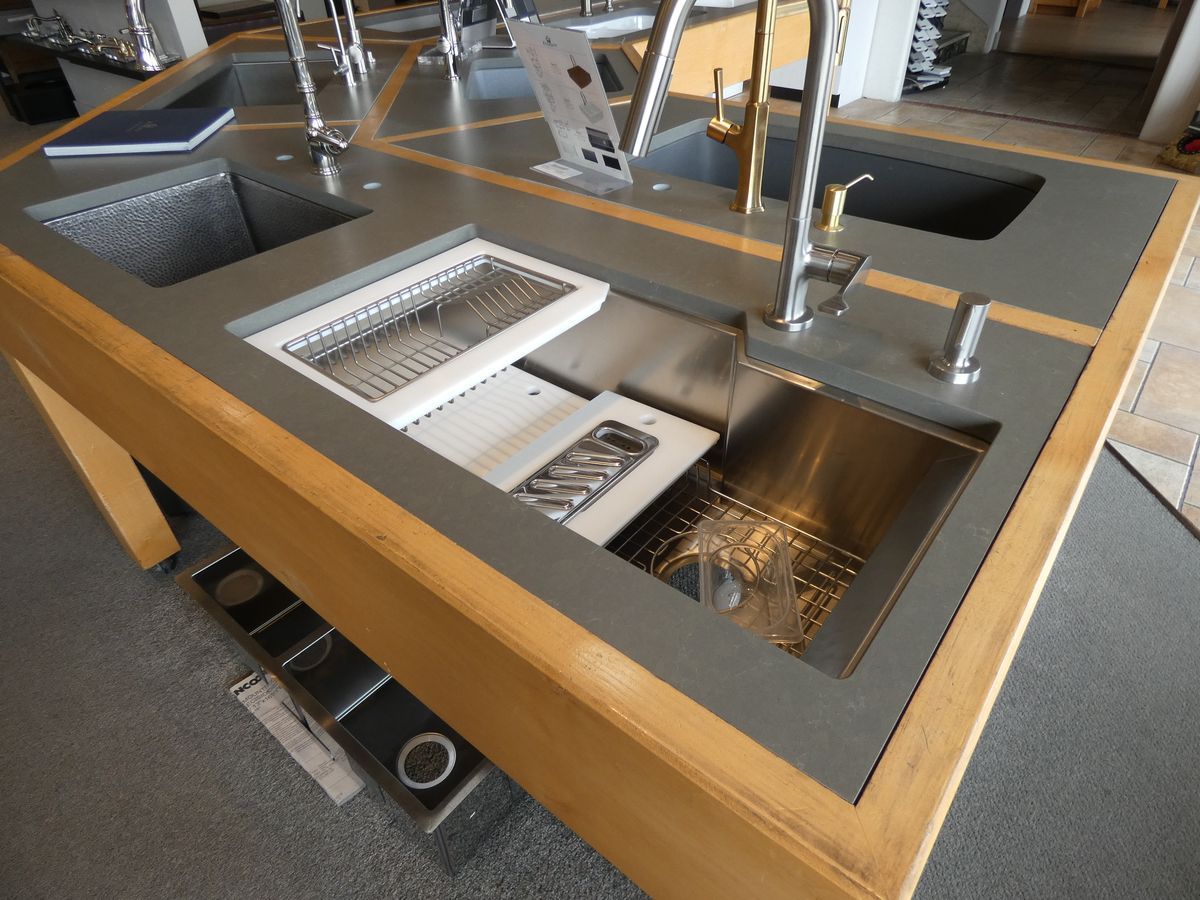
Importing commercial stainless steel sinks from China is one of the most cost-effective moves a restaurant group, hotel chain, distributor, or kitchen equipment brand can make in 2026. China remains the world's largest stainless steel sink producer, with Chinese factories accounting for roughly 56% of global unit volume, and it is home to the deep supplier clusters, mature tooling, and export infrastructure that commercial buyers depend on. This complete guide walks you through the seven steps that separate a smooth, profitable import from a costly mistake: defining specifications, vetting factories, sampling and inspection, pricing and payment, logistics, customs clearance, and long-term relationship building. Every section is written from hands-on factory-floor experience, backed by verified tariff data and industry standards, so you can source with confidence. Stainless steel sinks are a global commodity with predictable demand: every restaurant, hotel, hospital, school kitchen, and food processing facility needs durable, hygienic wash-down stations. Market researchers at Future Market Report value the global stainless steel sink market at roughly USD 11.35 billion in 2025, with projections reaching about USD 18.75 billion by 2033 at a CAGR of approximately 6.5%. Freedonia Group data cited in industry analysis puts 2025 global demand at 38.4 million units, with China producing the majority of that volume. On the trade side, the United States alone imported about USD 384 million of stainless steel sinks in 2024, with China supplying roughly USD 120 million of that total, according to UN Comtrade data compiled by HSRates. Why does China keep winning this category? Four structural advantages stand out. First, supplier density: sink manufacturing is clustered in Guangdong Province around Foshan, Kaiping, and Jiangmen, where stainless steel coil, hardware accessories, molds, and skilled labor all sit within a short radius. Second, cost of production: integrated factories that purchase steel in bulk, run automated forming and welding lines, and control polishing in-house can deliver commercial-grade sinks at a fraction of Western retail prices. Third, customization maturity: hundreds of export-oriented factories offer OEM and ODM services, so distributors can brand and spec products for their own markets. Fourth, export infrastructure: decades of sanitary-ware exports have produced reliable freight forwarders, inspection agencies, and documentation workflows. The result is not just lower unit cost, but a full supply chain that is proven and repeatable. Before you request a single quotation, understand that a commercial sink is engineered differently from a residential one. It must survive constant use, harsh chemicals, hot water, and health inspections. Three specifications separate a professional unit from a consumer model. Practical details do the heavy lifting in a working kitchen: 12 to 14 inch deep bowls for washing and soaking, a 9 inch backsplash to protect walls and meet code, rolled edges to contain splashes, rounded corners for easy cleaning, 3.5 inch basket strainers and 1.5 inch IPS drain outlets for clog-resistant drainage, fully welded seams instead of spot welds, and adjustable bullet feet for stability on uneven floors. A three-compartment sink configured for wash, rinse, and sanitize is the classic health-code-compliant dish station, often paired with drainboards on one or both sides. Specify these features in writing; they determine both price and whether the sink passes inspection in your market. The single biggest source of import problems is a vague specification. A clear, written specification sheet is the foundation of accurate quotes, fair comparison, and enforceable contracts. Include the following in every RFQ you send: If you do not have engineering drawings, most experienced factories will provide design support and free technical drawings based on your target dimensions, a common value-add from manufacturers with in-house R&D. Never approve production on verbal descriptions alone, and always have the final approved sample or drawing signed off in writing before mass production begins. There are two broad supplier categories on Alibaba, Made-in-China, Global Sources, and at trade shows such as Canton Fair: trading companies, which aggregate products from multiple factories and usually quote higher prices with less control over quality, and direct manufacturers, which own the production line and can offer better pricing, deeper customization, and direct quality control. For commercial sinks ordered in volume, direct factory sourcing is almost always the right choice. Geographically, focus your search on the established stainless steel sanitary-ware clusters: Foshan and Kaiping in Guangdong are the traditional heart of China's sink industry, with Jiangmen and nearby cities providing container-friendly export logistics. When evaluating a shortlist, verify these points before committing: One warning from years of sourcing: a price quote is not a supplier. If a factory cannot answer technical questions about gauge, grade, and certification fluently, treat that as a red flag, regardless of how low the number is. Sample approval is the cheapest insurance you will ever buy. Before mass production, order at least one finished sample of your exact configuration and have it checked against your specification sheet, including dimensions, wall thickness, weld quality, surface finish, and accessories. Alongside the sample, request the paperwork that proves material quality: For volume orders, never rely on the factory's word alone. Independent third-party inspection companies such as SGS, Bureau Veritas, or COTECNA can run pre-production, during-production, and pre-shipment inspections. A typical pre-shipment inspection covers quantity, random AQL sampling, dimensions, gauge verification, weld and finish quality, accessory completeness, carton marking, and packaging integrity. Stage the inspections this way: In our experience, buyers who skip the pre-shipment inspection to save a few hundred dollars are the same buyers who later file damage and quality claims. Inspection fees are a rounding error compared with a full container of non-conforming sinks. Commercial sink pricing from Chinese factories is built from three main components: stainless steel cost (nickel and chromium prices move with global markets, and 304-grade material dominates the bill), fabrication labor and finishing, and packaging and accessories. That is why the same sink can be quoted 30% higher during a nickel spike, and why you should ask suppliers for the current metal surcharge policy in writing. When comparing quotes, always compare on identical specifications and Incoterms, and request a full price breakdown: material grade, gauge, packaging, and freight. A quote that is 20% cheaper because it silently downgrades 304 to 201 is not a deal, it is a future rust claim. Freight should be discussed before production starts, not after the goods are packed. Confirm carton dimensions, units per carton, pallet configuration, container loading method, port of loading, and whether the quote is EXW or FOB, so your forwarder can plan accurately. A good freight forwarder with experience in sanitary ware will also double-check your documentation against HS classification and destination compliance, catching problems before they become customs delays. Stainless steel sinks are classified under HS heading 7324, subheading 7324.10 (sinks and wash basins, of stainless steel). Getting the classification right matters because duties differ sharply by country, and several markets apply additional trade remedies to Chinese-origin steel products. Regardless of destination, assemble the standard shipping file: commercial invoice, packing list, bill of lading, and certificate of origin, with every document consistent with the approved sample and purchase order. Match carton marks, item descriptions, and declared values across all paperwork, because even a correct product can be delayed by an inconsistent document set. Use a licensed customs broker in your market, and be aware that authorities in the US and EU have aggressively penalized transshipment schemes that misdeclare Chinese-origin sinks; never route goods through third countries to dodge duties. Compliance mistakes here can cost far more than the duties themselves. When the container arrives, inspect before you release payment to the balance, and photograph everything. Check for transit damage at the port or warehouse within the carrier's claim window, verify quantities against the packing list, and spot-check units against the approved sample. Report discrepancies immediately; most factories will work with you on replacements or credits for genuine manufacturing issues, but silent problems left for weeks are harder to resolve. Then think beyond the first order. The real value of Chinese sourcing compounds over time: consistent reorder volume earns tiered pricing, stable communication shortens lead times, and a trusted factory becomes an extension of your product team for new models. Suppliers with mature engineering teams can help you design for your market, whether that is NSF-compliant three-compartment dish stations for restaurants, antibacterial nano-coated models for premium hospitality, or custom dimensions for fit-out projects. Buyers who treat a factory as a partner rather than a vendor consistently get better priority during peak season, faster sample turnaround, and more favorable payment terms. With more than three decades of experience manufacturing commercial stainless steel sinks since our founding in Foshan, China in 1995, Samsink has built the exact infrastructure this guide describes: dual production bases in China and Thailand, eight production lines with monthly capacity exceeding 100,000 units, more than 500 in-house molds, and over 1,000 clients worldwide including distributors, wholesalers, contractors, restaurant chains, hotel groups, and foodservice equipment brands. Our commercial range covers three-compartment dish stations, vegetable prep sinks, bar and underbar sinks, hand-washing basins, utility and mop sinks, and custom stainless steel equipment, all produced in T304 or T316 stainless steel. ISO 9001 quality management, plus cUPC and NSF/ANSI product certifications for North American commercial kitchen compliance. Custom dimensions, bowl configurations, logos, and packaging, supported by free design consultation and technical drawings. Low minimums from 5 pieces on many stock models, standard delivery as fast as one week, and a 99% on-time delivery record. Brushed, matte, anti-fingerprint, and NanoGuard antibacterial coating options that keep sinks hygienic and easy to clean. Material verification, in-process checks, and pre-shipment inspection on every commercial order, so what arrives matches the sample. Factory-direct pricing, tiered discounts for repeat volume, and dedicated support that helps your product line grow. You now have the complete 2026 playbook for importing commercial stainless steel sinks from China. The next step is turning this guide into containers. Whether you need NSF-certified three-compartment dish stations for a restaurant rollout, custom bar sinks for a hotel project, or a private-label program with your own branding, the Samsink team is ready to support you from idea to delivery: free design consultation, technical drawings, samples, and a clear quotation with no hidden costs. Importing is a process, not a gamble. Define the spec, vet the factory, verify the material, inspect the goods, classify correctly, and build the relationship. Do that, and Chinese manufacturing remains the world's best value for commercial stainless steel sinks in 2026 and beyond.Why Import Commercial Stainless Steel Sinks from China?
Know What You Are Buying: Commercial-Grade Sink Specifications

Step 1: Lock Down Your Product Specification Before You Contact Anyone
Step 2: Find and Vet Manufacturers, Not Just Quotations

Step 3: Request Samples, Material Certificates, and Third-Party Inspections

Step 4: Negotiate Price, MOQ, Payment Terms, and Incoterms
Step 5: Plan Logistics, Packaging, and Lead Times Early
Step 6: Customs Clearance: HS Codes, Duties, and Compliance for 2026
Step 7: Land, Inspect, and Build a Long-Term Sourcing Relationship
Five Common Import Mistakes and How to Avoid Them
Why Sourcing Partners Choose Samsink
Certified for Global Markets
Full OEM & ODM Customization
Flexible MOQ and Fast Delivery
Innovative Surface Technology
Strict Quality Control
Long-Term Partnership Value
Ready to Start? Get Your Free Sourcing Quote