How to Select Top Stainless Steel Sinks Suppliers for Your Business.
- Share
- Issue Time
- Jun 8,2026
Summary
This comprehensive guide outlines a strategic framework for businesses to effectively identify, vet, and partner with top-tier stainless steel sink suppliers. It emphasizes that selecting the right supplier is crucial for operational efficiency, budget management, and brand quality, considering a sink as a reflection of commitment to durability and excellence. The guide details six key takeaways, starting with the imperative to clearly define specific needs, including intended application (comme
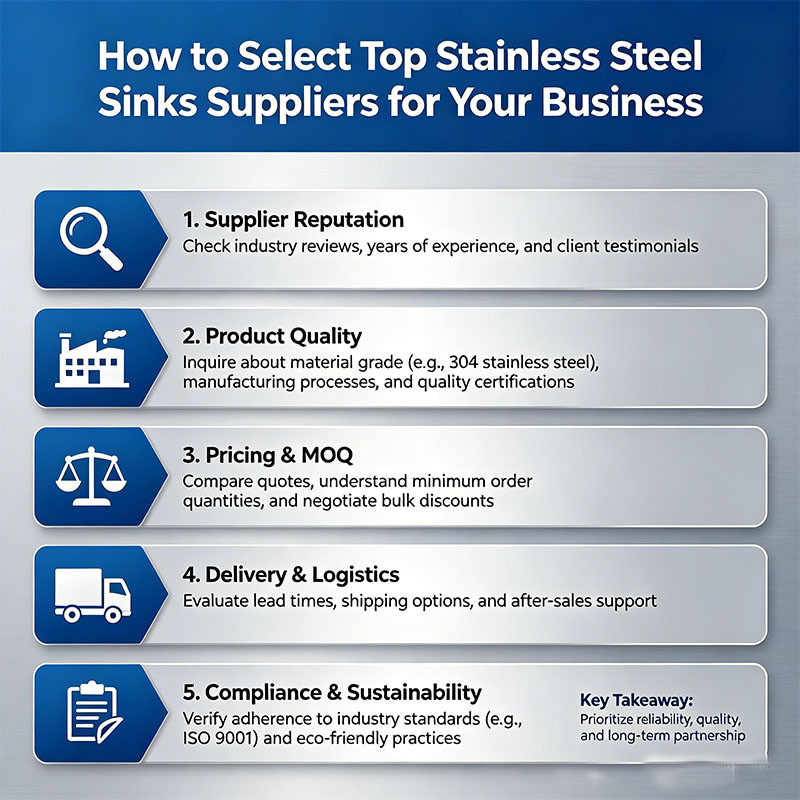
In the bustling world of business, especially in sectors like hospitality, construction, or retail, making critical sourcing decisions is a daily challenge. The choice of a supplier for a seemingly simple product can have cascading effects on your entire operation. Selecting the right stainless steel sinks suppliers can significantly impact your operational efficiency, budget, and the perceived quality of your projects or services. An excellent sink is not just a utility; it's a reflection of your brand's commitment to durability and excellence.
This comprehensive guide will walk you through the essential steps to identify, vet, and partner with top-tier stainless steel sink suppliers for your business needs. From understanding the technical specifications of the sinks themselves to navigating the complexities of international trade, we will cover the crucial elements that lead to a successful and lasting supplier relationship. By following this framework, you can ensure your investment yields long-term value, enhances your offerings, and strengthens your business's foundation.
Key Takeaways
- Define Your Needs First: Before you even start searching for suppliers, you must have a crystal-clear understanding of your specific requirements. This includes the intended application (commercial vs. residential), desired features (sound-dampening, finish), material specifications (gauge, grade), installation type, and design aesthetics. A detailed specification sheet is your most powerful tool in initial supplier communications.
- Thoroughly Vet Potential Suppliers: Don't be swayed by a low price alone. A comprehensive vetting process is non-negotiable. This involves assessing a supplier's manufacturing capabilities, understanding their quality control processes, and verifying their adherence to crucial certifications like cUPC and NSF. Ask for factory audits, sample products, and client testimonials to build a complete picture of their reliability.
- Analyze the Financials Beyond the Unit Price: A supplier's quotation is more than just a number. Analyze the complete pricing structure, including factors that might influence future costs like raw material volatility. Investigate their policies on Minimum Order Quantities (MOQs) and negotiate bulk pricing to optimize your budget. Remember to factor in shipping, packaging, and potential import duties for a true total cost.
- Evaluate Logistics and Supply Chain Reliability: A great product is worthless if it doesn't arrive on time and in good condition. Scrutinize a supplier's stated lead times and ask for evidence of their supply chain performance. Furthermore, inquire about their packaging methods. Secure, efficient packaging is vital to prevent costly damage during transit, especially for international shipments.
- Build Strategic, Long-Term Partnerships: The most successful sourcing relationships are not transactional; they are partnerships. Fostering open communication, establishing trust through consistent performance, and working collaboratively on customized solutions (OEM) can create immense value. A supplier like Samsink who acts as a partner will be more invested in your success, offering better service, proactive problem-solving, and valuable industry insights.
- Look Beyond the Purchase: Your relationship with a supplier doesn't end upon delivery. Before signing a contract, understand their after-sales support, warranty policies, and process for handling feedback or issues. A responsive and supportive supplier is an invaluable asset for ensuring the long-term satisfaction of your own clients.
Understanding Our Specific Needs Before Engaging Stainless Steel Sinks Suppliers
Before diving into the vast market of stainless steel sink manufacturers, the most critical step is to look inward. A clearly defined set of requirements acts as your compass, guiding you toward the right partners and preventing costly mismatches. Without this initial groundwork, you risk wasting time and resources on suppliers who can't meet your specific quality, functional, or budgetary needs. This foundational phase involves a detailed analysis of the sink's purpose, its technical characteristics, and your project's financial and logistical constraints.
Defining the Purpose and Application of Our Sinks
The first layer of clarification involves understanding where and how the sinks will be used. A sink destined for a high-traffic restaurant kitchen has vastly different requirements than one intended for a residential bathroom in a multi-unit development. This distinction is the starting point for building your product specification sheet.
Commercial vs. Residential Grade Requirements
The primary distinction between commercial and residential sinks lies in durability, maintenance, and compliance with health codes. Commercial-grade sinks are built to withstand constant, heavy use, frequent cleaning with harsh chemicals, and the impact of heavy pots and pans. They often prioritize functionality and NSF (National Sanitation Foundation) certification over intricate design. NSF certification ensures the sink is designed and constructed in a way that promotes easy cleaning and sanitation, a critical factor in any food service environment.
Residential sinks, while still needing to be durable, often place a greater emphasis on aesthetics, noise reduction, and a wider variety of styles and finishes. While a homeowner might use their sink for a few hours a day, a commercial sink can be in continuous use for 12 hours or more. Therefore, when sourcing for commercial projects, you must prioritize thicker steel, reinforced corners, and a design that complies with local health and safety regulations.
Essential Features for Durability and Functionality
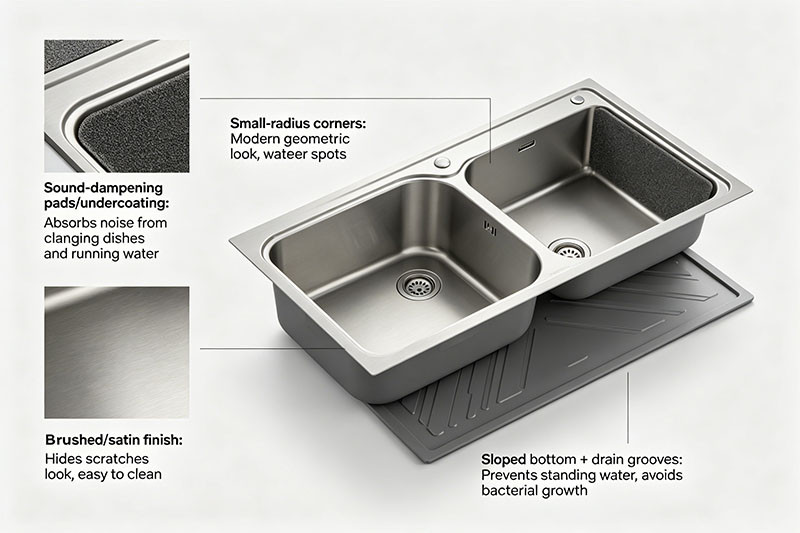
Beyond the commercial or residential classification, specific features contribute to a sink's long-term performance and user satisfaction. Sound-dampening pads or undercoating are a prime example. These are thick rubber or spray-on coatings applied to the sink's exterior to absorb the noise from clanging dishes and the running water, a feature valued in both high-end homes and open-kitchen restaurant designs.
Another key feature is the finish. A brushed or satin finish is excellent at hiding scratches and water spots, making it a practical choice for high-use environments. The corner radius is also a crucial detail; sinks with slightly rounded (small-radius) corners offer a modern, geometric look while being easier to clean than a perfect zero-radius corner, which can trap food particles. Proper drainage, achieved through sloped bottoms and drain grooves, is also essential to prevent standing water, which can lead to bacterial growth and user frustration.
Evaluating Key Stainless Steel Sink Characteristics
Once the application is defined, you can focus on the technical specifications of the material itself. Not all stainless steel is created equal, and understanding these differences is key to sourcing a product that will last. The gauge and grade of the steel are the two most important indicators of quality.
The Importance of Gauge (Thickness) and Material Quality
The gauge of stainless steel refers to its thickness; a lower gauge number indicates thicker steel. In a residential setting, you might find sinks ranging from 22-gauge (thinner) to 18-gauge (thicker). For commercial applications or high-end residential projects, 16-gauge or even 14-gauge is the preferred standard. Thicker steel, such as that used by quality manufacturers like Samsink, is significantly more resistant to denting, bowing, and vibrations, ensuring a longer lifespan and a more solid feel.
The grade of stainless steel refers to its composition. The most common type used for sinks is T-304 grade stainless steel. This grade contains a high percentage of chromium and nickel (typically an 18/8 ratio), which gives it excellent resistance to rust, corrosion, and stains. For most applications, T-304 is the industry standard for quality. In highly corrosive environments, such as coastal areas with salt air or labs with chemical exposure, you might consider the more expensive T-316 grade, which includes molybdenum for enhanced corrosion resistance. When vetting suppliers, always demand confirmation of the steel's grade.
| Gauge | Thickness (Approx. Inches) | Common Use Case | Benefits |
|---|---|---|---|
| 22 Gauge | 0.031" | Budget Residential | Low cost |
| 18 Gauge | 0.050" | Standard Residential, Light Commercial | Good balance of durability and price |
| 16 Gauge | 0.063" | High-End Residential, Commercial | Excellent dent and corrosion resistance. |
| 14 Gauge | 0.078" | Heavy-Duty Commercial, Industrial | Maximum durability for extreme use. |
Considerations for Installation Type and Design
The installation method dramatically affects both the final look and the functionality of the workspace. The three primary types are top-mount, undermount, and apron-front (farmhouse).
- Top-mount (Drop-in): These sinks have a visible rim that rests on top of the countertop. They are the easiest and least expensive to install, fitting into a simple hole cut into the counter.
- Undermount: These are installed from below the countertop, creating a seamless edge between the counter and the sink. This design is highly popular for its clean aesthetic and practicality, as it allows crumbs and spills to be wiped directly into the sink. However, it requires a solid-surface countertop like granite or quartz and more precise installation.
- Apron-Front (Farmhouse): This style features a deep basin and an exposed front panel. Originally designed for ergonomic comfort, it has become a major design trend in residential kitchens.
Your choice will depend on the project's design goals, the type of countertop being used, and the installation budget. A good supplier should offer a variety of installation types to suit your diverse business needs.
Establishing Our Quantity and Budget Parameters
The final piece of internal preparation is to define your business requirements. This involves understanding how many sinks you need, how frequently you'll need them, and what your budget can realistically accommodate. These parameters are crucial for filtering suppliers and for negotiation.
Understanding Minimum Order Quantities (MOQ)
Many direct manufacturers and large wholesalers operate on a Minimum Order Quantity (MOQ) model. This is the smallest number of units they are willing to produce or sell in a single order. MOQs are necessary for suppliers to cover their setup costs for a production run and achieve economies of scale. When you contact a potential supplier, one of the first questions should be about their MOQ. If their MOQ is 500 units and you only need 50, they are not the right fit. Understanding this upfront saves time for both parties. Some suppliers may offer flexibility, but this often comes at a higher per-unit price.
Setting Realistic Pricing Expectations
While it's tempting to search for the lowest possible price, this can often lead to-quality products. It's essential to set a realistic budget based on the quality specifications you've already defined. A 16-gauge, T-304 undermount sink will naturally cost more than a 22-gauge, top-mount model. Research market averages for the type of sink you need to establish a reasonable price range. When you receive quotes, this baseline will help you identify prices that are suspiciously low (indicating potential quality compromises) or excessively high. A transparent supplier will be able to justify their pricing based on material quality, manufacturing processes, and included features.
Crucial Criteria for Vetting Potential Stainless Steel Sinks Suppliers
Once you have a firm grasp of your own needs, the search for the perfect supplier begins. This phase is an investigative process that goes far beyond a simple price comparison. To ensure a successful long-term partnership and protect your investment, you must rigorously vet each potential supplier against a set of crucial criteria. This involves evaluating their manufacturing prowess, scrutinizing their pricing, and analyzing their logistical capabilities to ensure they can deliver quality products reliably and efficiently.
Assessing Manufacturing Capabilities and Quality Control Standards
The heart of any great supplier is their commitment to quality manufacturing. A supplier's factory is not just a place where products are made; it's the source of their quality, consistency, and reliability. It's your job to peek behind the curtain and understand their processes and standards.
Manufacturer Expertise and Production Processes
An experienced manufacturer will have a deep understanding of stainless steel fabrication. They will have refined processes for pressing, welding, finishing, and polishing. Ask potential suppliers about their production techniques. For example, how do they form their sink bowls? Are they drawn from a single sheet of steel (providing a seamless basin) or are they welded? If welded, what is their process for ensuring the welds are strong, seamless, and polished to be invisible?
Furthermore, inquire about their quality control (QC) checkpoints. A reputable manufacturer, such as Samsink, will have a multi-stage QC process. This should include inspecting raw materials upon arrival, checking dimensions and integrity after pressing, verifying weld quality, and performing a final inspection of the finish and packaging before shipment. Don't be afraid to ask for documentation or a virtual tour of their facility to see these processes in action. A supplier who is confident in their quality will be transparent.
Adherence to Quality Certifications
Certifications from recognized third-party organizations are one of the most reliable indicators of a supplier's commitment to quality and safety. They prove that the supplier's products have been tested and meet stringent industry standards. For stainless steel sinks sold in the North American market, two of the most important certifications are:
- cUPC (Uniform Plumbing Code certified): This mark, issued by IAPMO, signifies that a product complies with the Uniform Plumbing Code, which is the standard for plumbing product safety and performance in the United States and Canada. Using non-certified products can lead to failed inspections and costly replacements.
- NSF (National Sanitation Foundation): As mentioned earlier, this certification is particularly critical for sinks intended for commercial kitchens and food service environments. It verifies that the sink is non-absorbent, corrosion-resistant, and easy to clean and sanitize, thereby minimizing the risk of foodborne illness.
Always demand proof of current certifications from any potential supplier. A legitimate supplier will readily provide their certification documents for verification.
Analyzing Quotations and Pricing Structures Offered by Stainless Steel Sinks Suppliers
Once you have shortlisted suppliers based on their manufacturing capabilities, the next step is to request quotations (RFQs) and conduct a thorough financial analysis. The goal is not simply to find the cheapest option, but to understand the value and long-term cost implications of each offer.
Factors Influencing Pricing (raw materials, production volume)
A supplier's price is influenced by several factors. The most significant is the cost of raw materials—specifically, the market price of T-304 or T-316 stainless steel, which can fluctuate. An honest supplier will be able to explain how these fluctuations might impact their pricing over time. Other factors include:
- Production Volume: Higher volumes lead to economies of scale and a lower per-unit cost.
- Complexity of Design: A complex, deep-drawn sink with multiple accessories will cost more to produce than a simple, single-bowl model.
- Labor Costs: Manufacturing location plays a significant role in labor costs.
- Overhead and Margin: This covers the supplier's operational costs and profit.
When comparing quotes, ensure you are comparing apples to apples. The quotes should be for sinks of the same gauge, grade, size, and with the same included accessories (e.g., bottom grids, drain assemblies).
Navigating Bulk Pricing for Cost Optimization
For businesses purchasing in large quantities, negotiating bulk pricing is a key strategy for cost optimization. Don't hesitate to ask suppliers for a tiered pricing structure based on volume. For example, what is the price for 100 units versus 500 units or 1000 units? This not only helps you secure a better price for your immediate needs but also gives you a clear picture of future costs as your business grows.
When negotiating, leverage your position as a potential long-term partner. A supplier is often more willing to offer a competitive price for a consistent, high-volume client than for a one-time purchase. This is where building a relationship, rather than just conducting a transaction, can provide a significant financial advantage.
Evaluating Lead Times, Packaging, and Logistics Support
A high-quality, well-priced sink is of no use to your business if it arrives damaged or a month later than promised. A supplier's logistical competence is just as important as their manufacturing skill. It directly impacts your project timelines, customer satisfaction, and bottom line.
Ensuring Timely Delivery and Reliable Supply Chains
Lead time is the period between placing an order and receiving the shipment. This can range from a few weeks to several months, especially with international suppliers. You must have a clear, written confirmation of the lead time before signing any contract. Ask potential suppliers about their on-time delivery rate. Can they provide data or references to back up their claims?
Furthermore, discuss their supply chain stability. In an era of global disruptions, a resilient supply chain is invaluable. Do they have multiple shipping partners? Do they have a strategy for managing potential delays at ports or in customs? A proactive supplier will have contingency plans in place and will communicate openly about any potential delays.
Importance of Secure and Efficient Packaging
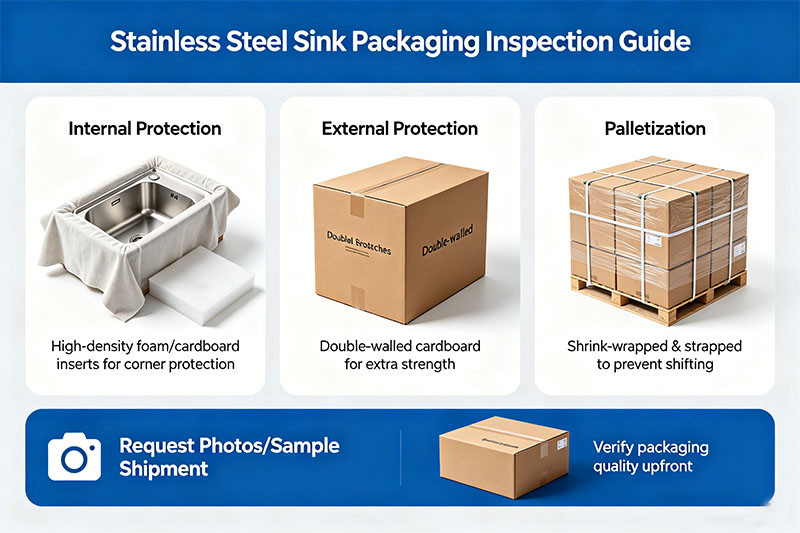
Stainless steel sinks, despite their durability, can be damaged in transit. Corners can be dented, and surfaces can be scratched. This is why packaging is a critical, yet often overlooked, element of vetting. Inquire about their packaging methods in detail:
- Internal Protection: How is the sink protected inside the box? Is it wrapped in a soft cloth or foam bag to prevent scratches? Are the corners protected with high-density foam or cardboard inserts?
- External Protection: What is the quality of the cardboard box? Is it double-walled for extra strength?
- Palletization: For bulk orders, how are the boxes stacked and secured on pallets? Are they properly shrink-wrapped and strapped to prevent shifting?
Requesting photos of their standard packaging or even a sample shipment can be a wise investment. The cost of receiving a container of damaged sinks far outweighs the effort of verifying packaging quality upfront. Secure packaging demonstrates a supplier's attention to detail and their commitment to delivering a perfect product.
Leveraging Global Markets to Find Exceptional Stainless Steel Sinks Suppliers
In today's interconnected economy, limiting your supplier search to local markets can mean missing out on significant opportunities for innovation, cost savings, and quality. The global marketplace is rich with manufacturing hubs that specialize in high-quality stainless steel production. By expanding your search internationally, you can gain a competitive edge, but it requires a strategic approach to navigate cultural differences, logistics, and international trade regulations.
Exploring Leading Manufacturing Hubs for Sink Production
Certain regions around the world have become centers of excellence for manufacturing stainless steel products, including kitchen and bath fixtures. Countries like China, Malaysia, and Vietnam have developed sophisticated manufacturing ecosystems, offering a combination of skilled labor, advanced technology, and access to raw materials. This concentration of expertise often leads to higher quality and more innovative products.
Advantages of Sourcing from International Markets
Sourcing from leading international manufacturing hubs offers several distinct advantages. The most well-known benefit is cost-effectiveness. Lower labor and operational costs in these regions can translate into a significantly lower per-unit price, even after factoring in shipping and import duties. This allows your business to either increase its profit margins or offer more competitive pricing to your customers.
Beyond cost, these hubs are often at the forefront of innovation and variety. Intense competition drives manufacturers to invest in new technologies, designs, and features. This gives you access to a wider range of products, from cutting-edge PVD coated colored sinks to advanced sound-dampening technologies. Finally, sourcing internationally can lead to higher capacity and scalability, as many overseas factories are equipped to handle massive production volumes that smaller domestic suppliers cannot.
Understanding Global Market Trends and Demands
To make the most of global sourcing, it's vital to stay informed about market trends. Currently, the demand is shifting toward more sustainable and aesthetically diverse products. For instance, there's a growing interest in sinks made from recycled stainless steel and those finished with eco-friendly PVD coatings, which offer a range of colors like gold, copper, and black while being extremely durable.
Furthermore, design trends like minimalist, zero-radius corners or integrated workstation sinks with sliding cutting boards and colanders are gaining popularity worldwide. By partnering with a globally-aware supplier like Samsink, you can tap into these trends early, offering your clients the latest in kitchen design and functionality. A knowledgeable supplier will not only manufacture what you ask for but will also provide insights into what the market will be demanding next.
Building Strong Relationships with Overseas Stainless Steel Sinks Suppliers
Sourcing from a supplier thousands of miles away requires more than just transactional emails; it demands the cultivation of a strong, trust-based relationship. This relationship is your best tool for overcoming the challenges of distance, language barriers, and different business cultures.
Effective Communication Strategies
Clear, consistent, and respectful communication is the bedrock of any successful international business relationship. While English is often the common language of business, it's important to be mindful of potential misunderstandings. Use simple, direct language and avoid slang or jargon. Whenever possible, supplement written communication with visuals, such as detailed drawings, photos, and specification sheets, to minimize ambiguity.
Regularly scheduled video calls can also be incredibly effective for building rapport and resolving complex issues more efficiently than a long chain of emails. Being responsive and respectful of time zone differences also shows that you are a considerate and professional partner.
Establishing Trust and Long-Term Partnerships
Trust is not built overnight. It is earned through consistency, transparency, and a mutual commitment to success. Start with a smaller trial order to test a new supplier's quality, reliability, and communication style before committing to a large-scale contract. Pay your invoices on time, provide clear feedback, and be fair in your negotiations.
Visiting your supplier's factory in person, if possible, is one of the most powerful ways to solidify your relationship. It shows a deep level of commitment and allows you to understand their operations on a much deeper level. Over time, as trust grows, your supplier will transform from a mere vendor into a strategic partner who is invested in your growth and willing to go the extra mile to support your business.
Navigating International Trade Regulations and Customs
Sourcing globally requires a basic understanding of a complex web of trade regulations, tariffs, and customs procedures. Ignoring this aspect can lead to costly delays, unexpected fees, or even the seizure of your shipment. It's crucial to work with suppliers and logistics partners who are experienced in exporting to your specific country.
When importing into the United States, for example, you are the "Importer of Record" and are ultimately responsible for ensuring your goods comply with all U.S. laws and regulations. Key considerations include:
- Tariffs and Duties: The Harmonized Tariff Schedule (HTS) of the U.S. determines the duty rate for imported goods. Stainless steel sinks have a specific HTS code, and the duty rate can be affected by the country of origin and current trade policies.
- Customs Bonds: Most commercial imports valued over $2,500 require a customs bond to ensure that all duties and fees will be paid to the U.S. Customs and Border Protection (CBP).
- Documentation: A complete set of documentation is required for clearance, including a commercial invoice, packing list, bill of lading, and the Importer Security Filing (ISF) for ocean freight.
Given the complexity, it is highly recommended to work with a licensed customs broker. A good broker will handle the paperwork, ensure compliance, and help you navigate the entire process smoothly, allowing you to focus on the core aspects of your business.
Strategic Engagement for Long-Term Value with Stainless Steel Sinks Suppliers
Finding a good supplier is only the beginning. The real art lies in cultivating that relationship to unlock long-term, strategic value. This means moving beyond a simple buyer-seller dynamic to create a synergistic partnership. Strategic engagement involves leveraging supplier expertise, collaborating on product development, and ensuring robust post-purchase support. This approach transforms a supplier from a cost center into a valuable asset that contributes to your innovation, quality, and overall business success.
Utilizing Sourcing Knowledge Hubs and Expert Guidance
Top-tier suppliers are more than just manufacturers; they are experts in their field. They possess a wealth of knowledge about materials, market trends, and production efficiencies. Tapping into this expertise can provide your business with a significant competitive advantage.
Accessing Industry Insights and Best Practices
An experienced supplier operates at the heart of the industry. They see what designs are gaining traction, what new materials are emerging, and what challenges other businesses in your sector are facing. A strategic partner will share these insights with you. They might advise you on a more durable finish for a high-traffic project or suggest a design modification that could reduce production costs without sacrificing quality. Engaging with a knowledgeable team, such as the experts at Samsink, provides you with free consulting that can inform your product strategy and help you make smarter sourcing decisions. This is part of the E-E-A-T (Experience, Expertise, Authoritativeness, Trustworthiness) that distinguishes a great supplier.
Benefits of Subscribing to Product Notes and Updates
Most professional suppliers maintain newsletters, product update bulletins, or blogs. Subscribing to these communications is a simple but powerful way to stay informed. These updates often contain valuable information about:
- New Product Launches: Be the first to know about new sink models, accessories, or finishes.
- Price Adjustments: Get advance notice of price changes due to raw material costs, allowing you to adjust your own pricing strategy.
- Technical Updates: Learn about improvements in manufacturing processes or material specifications.
- Industry News: Stay abreast of trends and trade show announcements.
This steady stream of information allows you to be proactive rather than reactive, keeping you one step ahead of the competition.
Customized Solutions and OEM Capabilities
One of the greatest benefits of a strong supplier partnership is the ability to create products tailored specifically to your brand and your customers' needs. This is achieved through Original Equipment Manufacturer (OEM) services, where the supplier produces goods according to your unique specifications.
Tailoring Products to Our Specific Business Needs
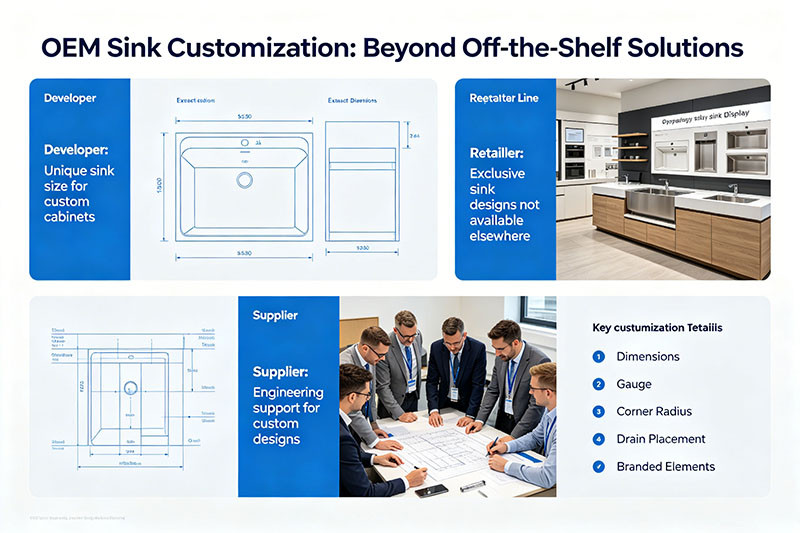
OEM allows you to move beyond standard, off-the-shelf products. You can specify the exact dimensions, gauge, corner radius, drain placement, and even add branded elements to a sink. For a developer, this could mean creating a unique sink size that perfectly fits a custom cabinet layout. For a retailer, it could mean developing a proprietary line of sinks that cannot be found anywhere else. This level of customization is a powerful way to differentiate your business and command higher margins. A supplier with strong OEM capabilities will have an engineering team that can work with your designs or help you develop new ones from scratch.
Approving OEM Samples and Matching Accessories
The OEM process is a collaborative journey that relies on clear communication and meticulous approvals. The most critical step is the sample approval stage. Before launching full production, the supplier will create a pre-production sample based on your specifications. It is your responsibility to thoroughly inspect this sample for:
- Dimensional Accuracy: Does it match your technical drawings precisely?
- Material Quality: Is the gauge and grade of steel correct?
- Finish and Appearance: Is the brushing consistent? Are there any defects?
- Functionality: Does it drain properly? Do accessories fit?
You should also approve any matching accessories, like custom-fit bottom grids, colanders, or drain assemblies, at this stage. Only after you provide written approval of the sample should the supplier proceed with mass production. This step ensures that there are no surprises and that the final product meets your exact expectations.
Ensuring Post-Purchase Service and Ongoing Support
The relationship with your supplier does not end when the invoice is paid. In fact, what happens after the sale is a true test of a supplier's quality and commitment. Robust after-sales support, clear warranty policies, and a responsive feedback system are hallmarks of a top-tier partner.
Warranty and After-Sales Policies
Before placing a bulk order, you must have a complete understanding of the supplier's warranty policy. What does the warranty cover? Typically, a good warranty for a stainless steel sink will cover manufacturing defects for a lifetime, protecting against issues like rust or corrosion under normal use. It usually does not cover scratches or dents from everyday wear and tear.
Beyond the warranty, what is their policy for handling issues like shipping damage or short shipments? A reliable supplier will have a clear, fair process for resolving these issues quickly, whether it involves sending replacement units or issuing credit. These policies should be in writing and part of your supply agreement.
Responsiveness to Feedback and Issues
Even with the best quality control, issues can occasionally arise. What distinguishes a great supplier is how they respond. A responsive partner will acknowledge your feedback promptly, investigate the root cause of the problem, and work with you to find a satisfactory solution. They see a customer complaint not as an annoyance, but as an opportunity to improve their processes.
When vetting suppliers, you can test their responsiveness early on. How quickly and thoroughly do they answer your initial questions? This initial communication style is often a good indicator of how they will behave when a more serious issue arises. A supplier who is invested in a long-term partnership will prioritize your satisfaction and work diligently to maintain your trust.
Ready to partner with a supplier who excels in quality, customization, and long-term support? Contact the Samsink team today to discuss your specific needs and discover how our expertise can benefit your business.
Frequently Asked Questions (FAQ)
Q1: What is the best gauge for a commercial stainless steel sink?
For a commercial kitchen environment, a lower gauge (which means thicker steel) is always better. The industry standard and recommended choice for most commercial applications is 16-gauge stainless steel. This thickness provides excellent resistance to dents from heavy pots and pans, reduces vibration and noise, and offers the durability needed to withstand constant, heavy use. For extremely demanding environments like industrial processing plants or butcher shops, 14-gauge may be specified for maximum strength and longevity. While 18-gauge might be acceptable for very light commercial use (e.g., a small office breakroom), it is generally not recommended for restaurant or institutional kitchens.
Q2: What's the difference between 304 and 316 grade stainless steel for sinks?
The primary difference between 304 and 316 grade stainless steel lies in their chemical composition and resulting corrosion resistance.
- Type 304 Stainless Steel: This is the most common grade used for kitchen sinks. It typically contains 18% chromium and 8% nickel, which gives it excellent resistance to rust and corrosion from everyday substances like food acids and cleaning agents. For the vast majority of residential and commercial applications, 304 grade is the perfect balance of performance and cost.
- Type 316 Stainless Steel: This is a premium grade that includes the addition of molybdenum. This element significantly enhances its resistance to corrosion, particularly from chlorides (like salt) and other harsh chemicals. 316 grade is typically specified for marine applications, coastal environments with salt spray in the air, laboratories, or medical facilities where extreme sanitation and chemical resistance are required. It is more expensive than 304 grade.
Q3: How can I verify a sink supplier's certifications like cUPC or NSF?
Verifying a supplier's certifications is a critical due diligence step. Never take a logo on a website or brochure at face value. To verify:
- Ask for the Certificate: Request a copy of the official certificate from the supplier. This document should list the certified products, the manufacturer's name, and the certification number.
- Check the Certifying Body's Online Directory: Both IAPMO (for cUPC) and NSF International maintain publicly searchable online databases. You can go to their official websites and enter the manufacturer's name or the certification listing number.
- For cUPC, you can search the IAPMO R&T Product Certification Database.
- For NSF, you can search the NSF Certified Product and Service Listings.
- Match the Details: Ensure that the company name, address, and specific product models listed in the online directory match the information provided by your supplier. This confirms the certification is current, valid, and applies to the exact products you intend to purchase.
Q4: What are the primary risks of sourcing sinks internationally, and how can they be mitigated?
The primary risks of international sourcing include:
- Quality Control Issues: The inability to physically oversee production can lead to inconsistencies. Mitigation: Thoroughly vet suppliers, insist on a multi-stage QC process, ask for third-party inspection reports, and always approve a pre-production sample before mass production.
- Supply Chain Delays: Longer shipping distances, customs clearance, and port congestion can lead to unpredictable lead times. Mitigation: Work with suppliers who have a proven track record of on-time delivery. Use experienced freight forwarders and customs brokers. Build buffer time into your project schedules.
- Communication Barriers: Differences in language and culture can lead to misunderstandings. Mitigation: Use clear, simple language. Provide detailed visual aids like drawings and spec sheets. Build a personal rapport through video calls.
- Payment and Financial Risks: Sending large payments overseas carries inherent risks. Mitigation: Use secure payment methods like a Letter of Credit (L/C) for large orders, which ensures the supplier is only paid after providing proof of shipment. Start with smaller trial orders to build trust.
Q5: Why is the Minimum Order Quantity (MOQ) so important when choosing a supplier?
The Minimum Order Quantity (MOQ) is critical because it determines the fundamental feasibility of a partnership between a buyer and a manufacturer. Its importance stems from the economics of production:
- Production Efficiency: Manufacturers have significant setup costs for each production run (e.g., preparing machinery, loading raw materials). The MOQ ensures that the production volume is large enough to cover these costs and make the run profitable.
- Supplier Filtering: For a buyer, the MOQ is one of the first and most important filters. If you only need 50 sinks for a project, and a factory's MOQ is 500, they are not a viable partner. Inquiring about the MOQ early in the conversation saves everyone time.
- Pricing Structure: MOQs are directly linked to pricing. Ordering the MOQ will get you the supplier's standard wholesale price. Ordering significantly more may unlock better tiered pricing, while ordering less (if the supplier even allows it) will almost certainly result in a much higher per-unit cost. It dictates the entry-level investment required to work with a particular supplier.
Conclusion
Our journey to find the best stainless steel sinks suppliers reveals that the process is a strategic endeavor involving careful planning, thorough evaluation, and dedicated relationship building. It is far more than a simple procurement task; it is an investment in your business's core operational strength and brand reputation. The right sink can elevate a space, while the right supplier can elevate your entire business.
By first focusing intently on our specific needs—from application and features to gauge and grade—we create a clear roadmap for our search. This internal clarity allows us to effectively vet potential partners, looking beyond the surface-level price to scrutinize their manufacturing capabilities, quality certifications, and logistical reliability. By understanding the supplier's pricing structure, lead times, and packaging, we can make truly informed decisions that safeguard our budget and project timelines.
Ultimately, a successful partnership with a top-tier supplier like Samsink is an investment in your business's efficiency, quality, and long-term success. By leveraging global insights, fostering strong communication, and engaging strategically for custom solutions and ongoing support, you transform a simple sourcing necessity into a powerful competitive advantage. We encourage you to take these principles, apply them diligently, and build the strong supplier foundation your business deserves.