NSF Certification Explained: What It Means for Your Commercial Kitchen Sink
- Share
- publisher
- plus
- Issue Time
- Jan 9,2026
Summary
NSF-certified commercial sinks provide essential kitchen hygiene solutions by adhering to stringent commercial kitchen sink standards.
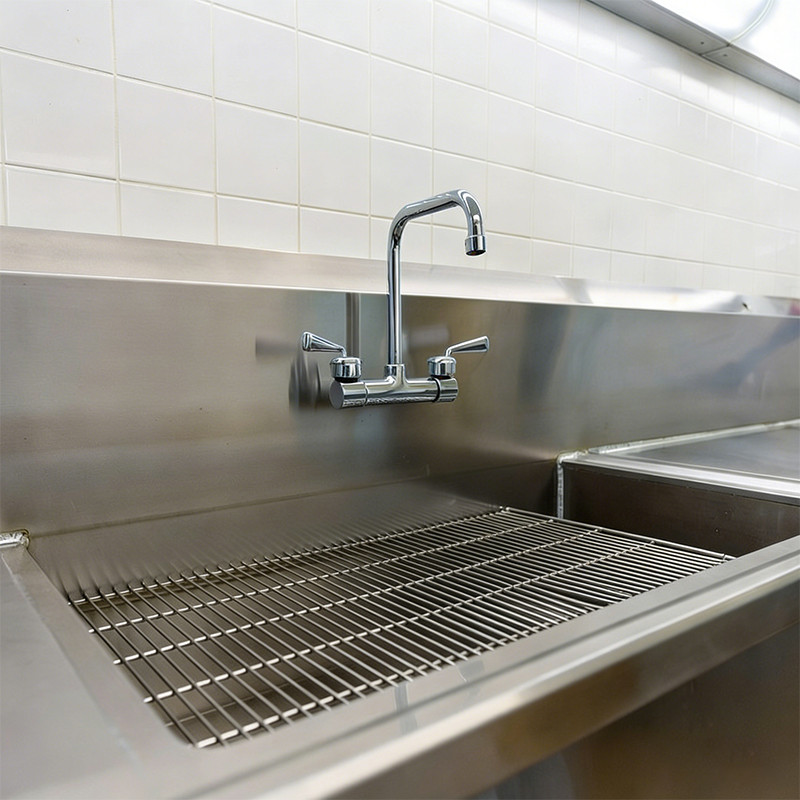
As someone who understands the ins and outs of commercial kitchens, I know that choosing the right equipment is crucial for both efficiency and food safety. One of the most important pieces of equipment is the commercial kitchen sink, and when it comes to sinks, NSF certification is a term you'll encounter frequently. It serves as a seal of approval, signifying that the product meets high standards for public health protection.
But what exactly does NSF certification mean for your commercial kitchen sink? In this comprehensive guide, I'll break down what NSF International is, why their certification is a non-negotiable for food service operations, the specific features required for a sink to earn the NSF mark, and how to choose the right one for your establishment.
Understanding NSF International and Commercial Kitchen Sinks
Before we can appreciate the value of an NSF-certified sink, it's essential to understand the organization behind the seal. NSF International is a globally recognized, independent body that has been at the forefront of public health and safety for decades.
What is NSF Certification?
When a product, like a commercial sink, is labeled "NSF-certified," it signifies that it has undergone and passed a rigorous, independent evaluation process to confirm it meets strict standards for safety, quality, and performance. This certification is not a one-time event; it involves regular, unannounced on-site inspections of manufacturing facilities and periodic re-testing to ensure ongoing compliance.
The NSF mark is your assurance that the product is designed and constructed in a way that promotes food safety, is easy to clean, and is made from materials that won't harm consumers. It’s a trusted symbol for public health regulators, commercial kitchen operators, and consumers alike.
The National Sanitation Foundation (NSF) Story
The story of NSF International begins in 1944 at the University of Michigan's School of Public Health. At a time when the United States lacked uniform national sanitation standards, three visionaries—Walter Snyder, Henry Vaughn, and Nathan Sinai—founded the National Sanitation Foundation (NSF) with a mission to improve public health. Their goal was to create clear, consistent standards for sanitation and food safety through a transparent, consensus-based process that brought together public health officials, business leaders, and consumers.
The organization's first standards focused on the sanitation of soda fountain and luncheonette equipment. As NSF's work expanded globally and into other areas beyond sanitation—like water quality, dietary supplements, and sustainable materials—the name was officially changed to NSF International in 1990 to reflect its broader scope. Today, NSF International is a World Health Organization (WHO) Collaborating Center on Food Safety and Water Quality, with its standards and certifications recognized in over 170 countries.
The Rigorous Certification Process for Commercial Kitchen Sinks
Achieving NSF certification is a demanding process that demonstrates a manufacturer's commitment to quality and safety. For a commercial kitchen sink, this process primarily revolves around NSF/ANSI Standard 2: Food Equipment. This standard sets the minimum requirements for the materials, design, construction, and performance of equipment used in food handling and processing.
The certification process involves several key stages:
- Material Review: NSF toxicologists review the formulation of every material that will come into contact with food. This is to ensure the materials are non-toxic, corrosion-resistant, and won't leach harmful chemicals into the food or water. Only FDA-approved raw materials are permitted.
- Design and Construction Evaluation: The sink's design is meticulously examined to ensure it is easy to clean and unlikely to harbor bacteria. This includes assessing features like the smoothness of welds, the radius of corners, and the overall structural integrity.
- Performance Testing: The product undergoes testing to verify it performs as expected under the demanding conditions of a commercial kitchen.
- Manufacturing Facility Audits: NSF conducts regular, unannounced audits of the production facility. This is to ensure that the manufacturer is following good manufacturing practices and that every sink produced meets the same high standards as the one that was initially tested.
If a product ever fails to meet these strict criteria, NSF has the authority to take enforcement actions to protect the public, which can include product recalls or de-certification. This ongoing vigilance is what makes the NSF mark a credible and trustworthy symbol.
Why NSF Certification Matters for Your Commercial Kitchen Sink
Choosing an NSF-certified sink is not just about acquiring a piece of high-quality equipment; it's a fundamental decision that impacts your kitchen's compliance, safety, and reputation.
Meeting Health and Safety Regulations with NSF Certified Commercial Kitchen Sinks
In the United States, foodservice regulations are often based on the FDA Food Code, which in turn references NSF/ANSI standards for equipment. Consequently, health inspectors across federal, state, and local jurisdictions rely on the NSF mark as proof that a sink meets the required sanitation standards.
While it may not be an explicit street-level mandate that every single item touching food must be NSF-certified, using certified equipment is the most straightforward way to ensure compliance. In fact, for many establishments, building a new commercial kitchen or passing a health inspection is virtually impossible without equipment that carries the NSF certification. Opting for a non-certified sink could lead to failed inspections, costly fines, and mandated replacements.
Ensuring Hygiene and Preventing Contamination in Your Commercial Kitchen Sink
The primary goal of NSF standards is to prevent foodborne illness by eliminating places where bacteria can hide and multiply. Commercial kitchen sinks are a high-risk area for cross-contamination, where pathogens can be transferred from raw foods or dirty dishes to clean ones. The design features mandated by NSF standards directly address these risks.
NSF-certified sinks are specifically engineered for sanitation. Key design elements include:
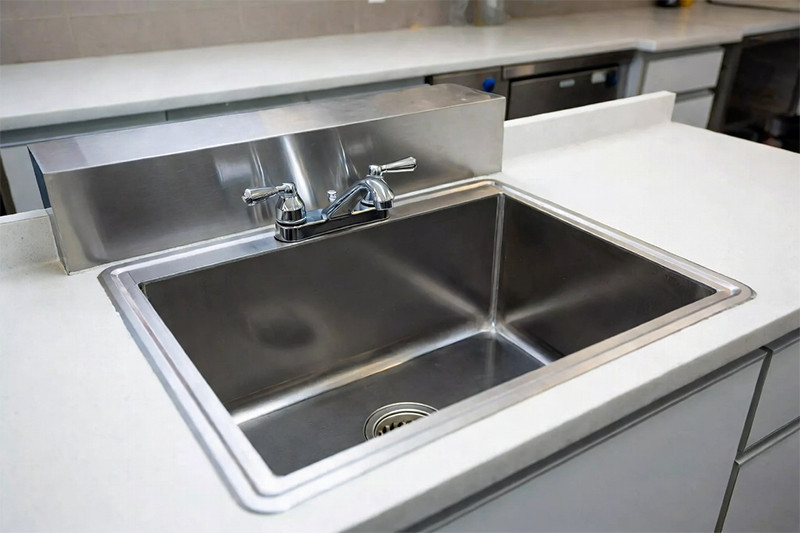
- Smooth Surfaces: Free of pits, cracks, or crevices where food particles can become trapped.
- Coved Corners: The interior corners of the sink bowls are rounded, allowing for thorough cleaning and preventing the buildup of bacteria that can occur in sharp, 90-degree corners.
- Hygienic Welds: Welds are ground smooth to be indistinguishable from the adjoining surfaces, eliminating another potential hiding spot for contaminants.
By choosing an NSF-certified sink, you are investing in a product designed to protect the food you serve from contamination, thereby safeguarding the health of your customers and the reputation of your business.
Key Features and Requirements for NSF-Certified Commercial Kitchen Sinks
The coveted NSF mark on a commercial sink isn't just a sticker; it's a testament to a specific set of design and material standards that are meticulously defined and enforced. These requirements, primarily outlined in NSF/ANSI 2: Food Equipment, are what separate a standard utility sink from a piece of professional, compliant foodservice equipment. Let's delve into the specific features that make a sink worthy of certification.
Design and Material Standards for Commercial Kitchen Sinks
The foundation of an NSF-certified sink lies in its materials and physical construction. The standard mandates that every aspect of the sink must contribute to hygiene and durability, leaving no room for compromise.
Smooth, Non-Porous, and Easy-to-Clean Surfaces for Your Commercial Kitchen Sink
The single most important principle in sanitary equipment design is the elimination of areas where food particles and microorganisms can accumulate. To meet this, NSF standards require that all surfaces within the "food zone"—areas that have direct contact with food or from which liquid can drip or splash onto food—must be smooth, non-porous, and easily cleanable.
A non-porous surface, like high-quality stainless steel, is critical because it gives bacteria absolutely nowhere to hide. The finish must be free of pits, crevices, and sharp angles. This ensures that residue can be completely removed with normal cleaning methods, preventing the formation of biofilms that can contaminate food and prove difficult to eradicate.
Corrosion Resistance for Long-Lasting Commercial Kitchen Sinks
Commercial kitchens are harsh environments. Sinks are constantly exposed to water, a wide variety of food acids (like citrus and vinegar), and aggressive cleaning and sanitizing chemicals. To withstand this daily assault, NSF requires materials to be corrosion-resistant.
This is why Type 304 stainless steel is the preferred material for most high-quality, NSF-certified sinks. This grade of stainless steel contains a high percentage of chromium (a minimum of 16% is required by NSF) and nickel, which gives it superior resistance to rust and corrosion compared to other steel types like Type 430. It ensures the sink maintains its original surface characteristics over time, preventing pitting that could harbor bacteria and compromise food safety. Furthermore, some manufacturers use a heavy 16-gauge or 18-gauge thickness, which adds to the sink's durability and resistance to dents and warping from heavy pots and pans.
| Stainless Steel Type | Key Characteristics | Common Application |
|---|---|---|
| Type 304 | Excellent corrosion resistance, high nickel content, durable. The industry standard for food equipment. | Food contact surfaces, sink bowls, drainboards. |
| Type 430 | Good corrosion resistance, but less than 304. Magnetic. Lower cost. | Non-food contact surfaces like legs or bracing. |
Rounded Corners and Tapered Bottoms in Commercial Kitchen Sinks
One of the most noticeable and critical features of an NSF-certified sink is the presence of coved corners. Instead of sharp, 90-degree angles where the bottom and sides of the sink meet, NSF requires these junctions to be rounded with a specific minimum radius.
This seemingly small design detail makes a massive difference in cleanability. Sponges and brushes can glide effortlessly across a curved surface, removing all food particles and grime. In contrast, sharp corners are notorious for trapping debris, making them nearly impossible to sanitize effectively and creating a perfect breeding ground for bacteria. Additionally, the bottoms of the sink bowls are often required to be tapered or sloped towards the drain. This ensures that water drains completely, leaving no standing pools that could promote microbial growth.
Crucial Components: Faucets and Side Splashes for Commercial Kitchen Sinks
A commercial sink is more than just the basin; its accompanying fixtures and accessories are equally important for maintaining a hygienic and compliant workstation. NSF and local health codes have specific requirements for these components as well.
NSF-Compliant Faucets for Your Commercial Kitchen Sink
Just like the sink itself, the faucet must also meet public health standards. For faucets, this often involves certification to NSF/ANSI 61: Drinking Water System Components. This standard is focused on ensuring that the faucet materials do not leach harmful contaminants, such as lead, into the potable water supply.
Commercial kitchen faucets must be built for durability, often using solid brass construction with chrome plating to resist corrosion. Features to look for include:
- High-arc, gooseneck spouts that provide ample clearance for washing large pots.
- Pre-rinse sprayers for high-pressure removal of food debris before washing.
- Durable handles, such as wrist blades, which allow for operation without using clean hands, further reducing cross-contamination risks.
- Hands-free, sensor-activated faucets, which are becoming increasingly popular for enhancing hygiene at handwashing and prep stations.
The Importance of Side Splashes for a Hygienic Commercial Kitchen Sink Area
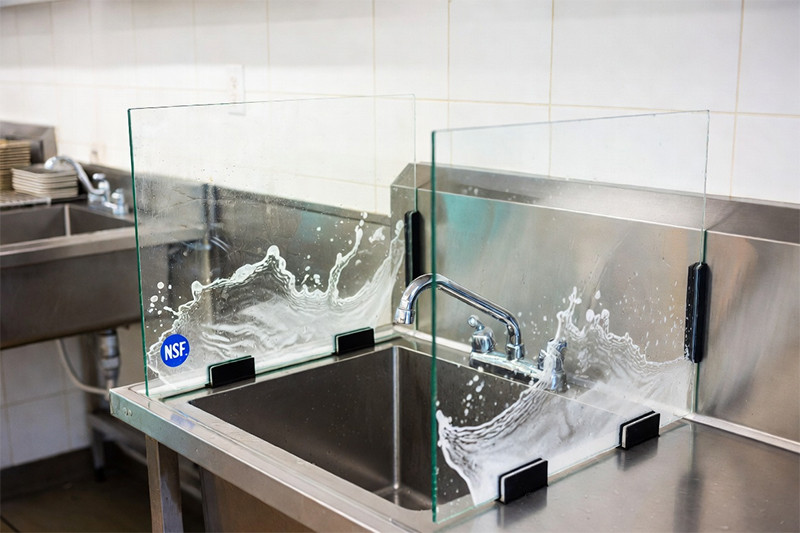
Side splashes are vertical panels attached to the sides of a sink unit. While they may seem like a minor addition, they play a critical role in preventing cross-contamination and are often required by local health departments.
Their primary purpose is to contain water and splashes within the sink area, preventing contaminated water from a dishwashing sink from splashing onto an adjacent food preparation surface, clean dishes, or walkways. Health codes often mandate that if a sink is installed within a certain distance (e.g., 18 inches) of a food prep area or another fixture, a splash guard must be installed as a protective barrier. By containing spills, they also help keep surrounding floors dry, reducing the risk of slips and falls in a busy kitchen environment.
Types of NSF-Certified Commercial Kitchen Sinks for Various Applications
NSF certification isn't limited to a single type of sink. The standards are applied across a range of sink designs, each tailored to a specific function within the commercial kitchen. Choosing the right type of certified sink is just as important as ensuring it has the NSF mark.
Three-Compartment Sinks: Essential for Commercial Kitchen Dishwashing
The three-compartment sink is the backbone of manual warewashing in any commercial kitchen and is explicitly required by most health departments. This setup is designed to follow the FDA-mandated Wash, Rinse, Sanitize procedure, which is the gold standard for preventing foodborne illness.
Here is the breakdown of the three-step method:
- Compartment 1: Wash. This basin is filled with a cleaning solution and hot water, which must be at least 110°F (43°C) according to FDA guidelines. Here, dishes are scrubbed to remove all visible food debris and grease.
- Compartment 2: Rinse. This basin is filled with clean, warm water to thoroughly rinse off all soap and detergent residue. If soap is left on the dishes, it can inactivate the sanitizer in the next step, rendering it useless.
- Compartment 3: Sanitize. In the final compartment, dishes are fully submerged in either a chemical sanitizing solution (like chlorine, iodine, or quaternary ammonium) mixed to the proper concentration or in water heated to at least 171°F (77°C) for a minimum of 30 seconds.
- Air Dry: After sanitizing, dishes must be placed on a drainboard or rack to air dry completely. Towel drying is prohibited as it can reintroduce bacteria to the clean surfaces.
NSF-certified three-compartment sinks are engineered with these steps in mind. They must be large enough to allow the biggest pots and pans to be fully submerged, feature coved corners for easy cleaning, and have integrated drainboards for both soiled and clean dishes.
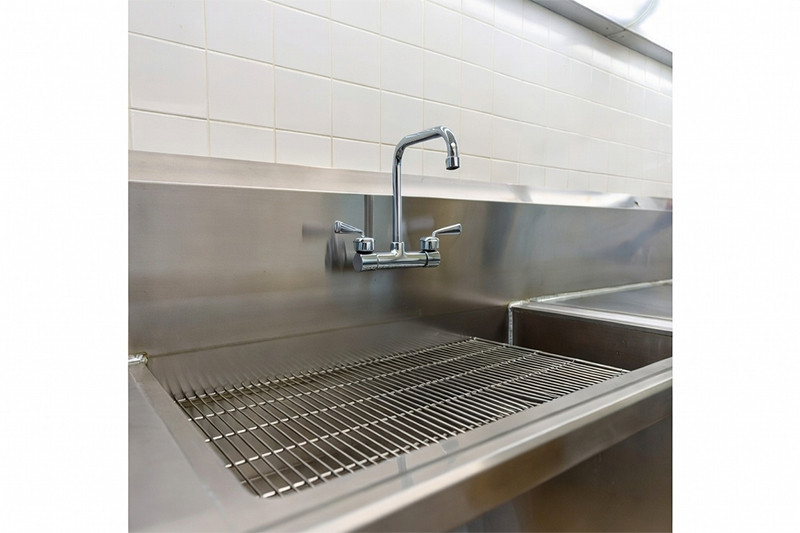
Handwashing Sinks: A Critical Component in Every Commercial Kitchen
Cross-contamination from unwashed hands is a leading cause of foodborne illness. To combat this, health codes strictly mandate that handwashing can only occur in a dedicated handwashing sink. It is a major violation to wash hands in a three-compartment, prep, or mop sink.
The FDA Food Code requires that handwashing sinks be conveniently located and easily accessible in all food preparation, food dispensing, and warewashing areas. NSF-certified hand sinks are designed to meet these codes and typically include:
- Hot and cold running water delivered through a mixing faucet.
- A basin size that is adequate for effective handwashing, often around 10x14 inches.
- Soap and a sanitary hand-drying method (like paper towels or an air dryer) must be provided at the station.
To further reduce contamination risk, many kitchens opt for faucets with foot pedals, knee valves, or electronic sensors, which allow for hands-free operation. Proper and frequent handwashing is a simple but powerful defense against pathogens, and having dedicated, compliant sinks makes it possible.
Specialty Commercial Kitchen Sinks: Prep, Mop, and Mobile Options
Beyond the two mainstays, kitchens often require other specialized sinks certified to NSF standards.
Prep Sinks: A food preparation sink is used exclusively for washing fruits and vegetables, thawing frozen foods under running water, or other food-related tasks. Having a separate prep sink is crucial for a safe workflow, preventing raw produce from being washed in the same basin used for dirty dishes or, even worse, raw meats. This physical separation is a key strategy in preventing cross-contamination between different types of food.
Mop Sinks (or Service Sinks): These are dedicated solely to janitorial tasks, such as filling mop buckets and disposing of used cleaning water. They should never be used for any food-related activity or for handwashing. A mop sink must be cleaned and serviced regularly to prevent odors and clogs, ensuring the cleaning tools themselves don't become a source of contamination.
Mobile Sinks: For food trucks, catering operations, or temporary festival booths, portable multi-compartment sinks are essential for compliance. These units, often requiring NSF certification under standards like NSF/ANSI 59 for Mobile Food Carts, must provide the same capabilities as their stationary counterparts, including hot and cold running water and separate basins for washing, rinsing, sanitizing, and handwashing. They must also have self-contained fresh and wastewater tanks, with the wastewater tank being larger than the freshwater tank to prevent overflow.
Beyond NSF: Additional Certifications and Regulations for Commercial Kitchen Sinks
While NSF certification is the most critical benchmark for sanitation, it's not the only standard you may encounter. Other certifications and local codes play a role in ensuring your commercial kitchen sink is fully compliant, safe, and environmentally responsible.
GREENGUARD™ Certification: Air Quality and Your Commercial Kitchen Sink
GREENGUARD Certification is focused on indoor air quality. This certification is issued by UL Solutions and signifies that a product has met stringent standards for low emissions of volatile organic compounds (VOCs). While this is more commonly associated with furniture, flooring, and building materials, some equipment, including certain sink components or related sealants and adhesives, may carry this certification.
In a commercial kitchen, where air quality can be affected by numerous sources, choosing low-VOC products can contribute to a healthier environment for your staff. GREENGUARD Certified products are scientifically proven to help reduce indoor air pollution, minimizing chemical exposure.
Local Health Department Regulations for Commercial Kitchen Sinks
NSF standards provide a national baseline, but your local health department has the final say on what is required in your specific jurisdiction. Health inspectors enforce regulations based on state and city codes, which can sometimes be stricter or more specific than the general guidelines.
For example, a local code might dictate:
- The exact number and location of handwashing sinks required based on your kitchen's size and layout.
- Specific requirements for splash guards, such as their height and placement, if a sink is near a food prep area.
- Mandatory use of a 3-compartment sink for manual warewashing, even if a commercial dishwasher is also present.
Always consult your local health department's plan review guide before purchasing or installing any sink. Getting their approval on your kitchen layout and equipment specifications is a critical step to avoid costly changes and ensure you pass your opening inspection.
Plumbing Codes and Your Commercial Kitchen Sink Installation
Proper installation is just as crucial as choosing the right sink. All plumbing work must comply with local and national plumbing codes, such as the Uniform Plumbing Code (UPC) or International Plumbing Code (IPC). These codes are designed to ensure safe and sanitary water supply and drainage.
Key plumbing considerations for a commercial kitchen sink include:
- Indirect Drainage: Many health codes require warewashing and food prep sinks to drain indirectly. This means the sink's drainpipe empties into a floor sink with an air gap, which is a physical space between the drainpipe and the rim of the floor sink. This air gap prevents potential backups from the sewer line from contaminating the sink basin.
- Grease Traps: Because commercial kitchens produce a significant amount of grease, which can clog municipal sewer lines, most are required to install a grease trap (or interceptor). This device captures fats, oils, and grease (FOG) from the sink wastewater before it enters the sewer system.
- Backflow Prevention: Water supply lines to fixtures like faucets and spray nozzles must be equipped with backflow prevention devices. These devices prevent non-potable water from being siphoned back into the clean water supply, which could cause widespread contamination.
Engaging a licensed plumber who is experienced with commercial kitchen installations is essential to ensure every connection, from the hot and cold water supply to the grease trap and final drain, is done correctly and to code.
Key Takeaways
For those managing a busy commercial kitchen, understanding the nuances of equipment certification is key to success. Here are the essential points to remember about NSF-certified commercial kitchen sinks:
- NSF Certification is the Gold Standard for Sanitation: The NSF mark is not just a suggestion; it is your assurance that a sink meets strict public health standards for design, materials, and cleanability. It is recognized and often required by health inspectors across the US.
- Design and Materials are Purpose-Driven: NSF-certified sinks are required to have smooth, non-porous surfaces (typically Type 304 stainless steel), coved (rounded) corners, and seamless welds. These features are specifically designed to eliminate crevices where bacteria can hide and grow, making the sink easier to clean and sanitize effectively.
- The Right Sink for the Right Job: Different tasks require different sinks. The three-compartment sink is essential for the wash-rinse-sanitize method of manual dishwashing. A separate, dedicated handwashing sink is mandatory in all food prep areas to prevent cross-contamination. Specialty sinks like prep sinks and mop sinks further segregate tasks to enhance food safety.
- Compliance Goes Beyond the Sink Itself: An NSF-certified sink must be paired with compliant components and proper installation. This includes using NSF-certified faucets (often to NSF/ANSI 61 for drinking water safety), installing side splashes as required by local codes to prevent contamination, and adhering to all local plumbing codes, including requirements for indirect drainage, grease traps, and backflow prevention.
Frequently Asked Questions (FAQ)
Q1: Is NSF certification mandatory for all commercial kitchen sinks? While there isn't a single federal law that mandates NSF certification for all equipment, it is so widely referenced in state and local health codes that it is a de facto requirement in most jurisdictions. Health inspectors look for the NSF mark as proof of compliance with sanitation standards. Attempting to operate a commercial kitchen without NSF-certified sinks is highly likely to result in failed inspections and costly, mandated replacements.
Q2: How can I tell if a sink is genuinely NSF-certified? A genuinely certified product will have the official NSF mark—a circle containing the letters "NSF"—permanently affixed to the product, often on a data plate or etched into the steel. Be wary of phrases like "NSF-compliant" or "built to NSF standards" without the official mark. To be absolutely sure, you can verify a product's certification by searching for the manufacturer or model number in the official NSF online listings database on the NSF International website.
Q3: Can I use a residential sink in my commercial kitchen to save money? No, this is strongly discouraged and will almost certainly lead to a health code violation. Residential sinks are not designed to meet the rigorous demands of a commercial environment. They typically lack the required NSF certification, are made from less durable materials (like thinner gauge steel), and feature designs with sharp corners and seams that are difficult to sanitize, creating a significant risk for bacterial growth and food contamination.
Q4: What is the difference between NSF and ETL Sanitation marks? Both NSF and ETL (Edison Testing Laboratories) are Nationally Recognized Testing Laboratories (NRTLs). The ETL Sanitation mark indicates that a product has been tested by Intertek (ETL's parent company) and complies with NSF/ANSI standards for food equipment sanitation. For a health inspector, both marks are generally considered acceptable proof that the equipment meets the required sanitary design standards. The key is that the equipment has been independently tested and certified to the relevant NSF food safety standard.
Q5: How deep should the bowls of a commercial kitchen sink be? The depth required depends on the sink's intended use. For a three-compartment sink, the bowls must be deep enough to fully submerge your largest pots, pans, and utensils for proper washing, rinsing, and sanitizing. A typical depth for these sinks is 12 to 14 inches. For handwashing sinks, the bowls can be shallower, often around 5 to 6 inches deep, as they only need to accommodate handwashing. Prep sinks vary, but a 10- or 12-inch depth is common to allow for washing produce without excessive splashing.
Conclusion
Selecting an NSF-certified commercial kitchen sink is more than just a matter of compliance; it is a foundational investment in the safety, efficiency, and reputation of your establishment. It demonstrates a commitment to upholding the highest standards of hygiene, protecting both your customers from foodborne illness and your business from the risks of non-compliance.
By understanding the rigorous criteria behind the NSF mark—from the corrosion-resistant materials and coved corners to the specific functions of three-compartment, handwashing, and prep sinks—you are now well-equipped to make an informed decision. This knowledge empowers you to choose equipment that not only passes inspections but actively contributes to a cleaner, safer, and more professional kitchen environment. We encourage you to share this guide with your peers and continue to prioritize safety in every equipment choice you make.