Self-Rimming Kitchen Sinks Explained: Styles, Materials, and Benefits
- Share
- Issue Time
- Jun 17,2026
Summary
Choosing the right kitchen sink is a pivotal decision for any home, and self-rimming sinks, also known as drop-in or top-mount sinks, offer a practical and classic solution. These sinks are characterized by a visible rim that rests on the countertop, supporting the basin and distinguishing them from undermount styles. Their primary advantages include straightforward installation, making them ideal for DIY projects and reducing labor costs. They are also budget-friendly and compatible with a wide
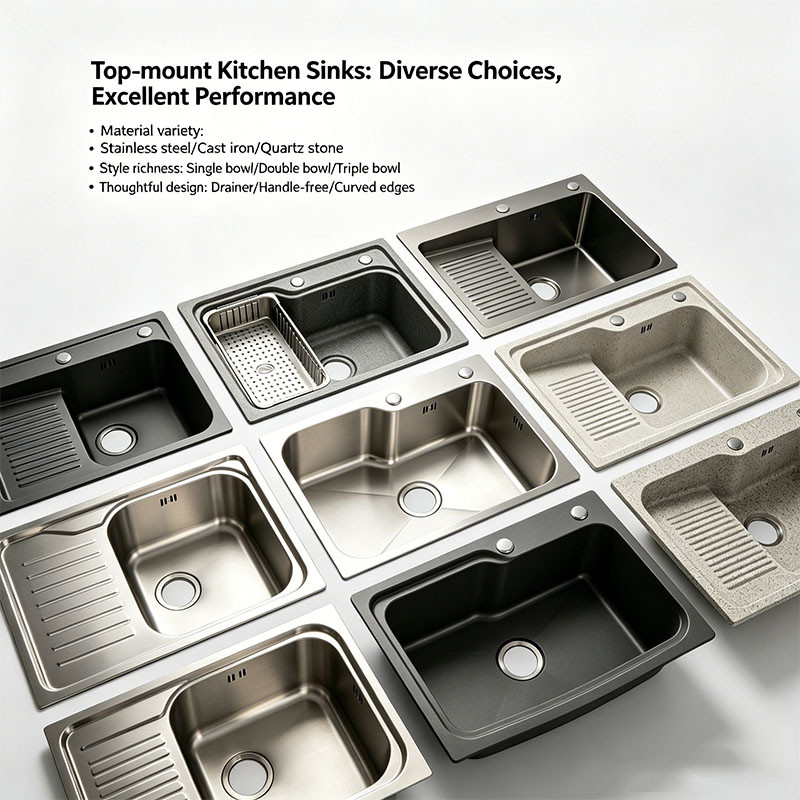
Choosing the right kitchen sink is a crucial decision for any home chef or renovator. It's more than just a basin; it's a central workstation that sees daily action. Today, we're diving deep into the world of self-rimming kitchen sinks. Often called 'drop-in' or 'top-mount' sinks, this style offers a fantastic blend of practicality, ease of installation, and a classic look that has been a mainstay in kitchens for decades. I want to help you understand their various styles, materials, and benefits so you can make an informed choice for your home.
Join me as we explore how these versatile sinks can fit into your kitchen design. We'll cover everything from understanding their dimensions and choosing the perfect material to ensuring your new sink makes your kitchen as functional as it is beautiful. Whether you're undertaking a full remodel or a simple, impactful upgrade, this guide will provide the clarity you need.
Key Takeaways
- What is a Self-Rimming Sink? A self-rimming sink, also known as a drop-in or top-mount sink, is installed by lowering it into a pre-cut hole in the countertop. Its defining feature is a visible rim that rests on the counter, supporting the sink's weight.
- Major Benefits: The primary advantages are ease of installation, affordability, and compatibility with all countertop materials, including laminate. This makes them an excellent choice for DIY projects and budget-conscious renovations.
- Key Considerations: The main drawback is the rim itself, which can trap food and grime, requiring more diligent cleaning compared to an undermount sink. Wiping down the rim after use can prevent buildup.
- Sizing is Crucial: Standard sink widths of 25", 33", and 36" are designed to fit common base cabinets. Always measure your cabinet's interior width before purchasing a sink to ensure a proper fit.
- Material Diversity: Self-rimming sinks are available in a wide array of materials, including durable stainless steel, aesthetic composite granite, and classic fireclay or cast iron, allowing you to match any kitchen style.
- Installation Simplicity: The installation process is straightforward: apply a bead of sealant under the rim, place the sink in the cutout, and secure it with clips from below.
Understanding Self-Rimming Kitchen Sinks: The Drop-In Difference
When you begin your search for a new kitchen sink, you'll quickly encounter two main installation types: undermount and drop-in. The self-rimming sink falls squarely into the "drop-in" category and remains one of the most popular choices for homeowners for several compelling reasons. Unlike an undermount sink which is installed from below the counter for a seamless look, a self-rimming sink is lowered into the countertop from above, making it a distinct and traditional feature in the kitchen.
What Makes a Self-Rimming Sink 'Self-Rimming'?
The name "self-rimming" perfectly describes the sink's design. It features a built-in, finished rim or lip that extends around the perimeter of the basin. When the sink is "dropped in" to a cutout in the countertop, this rim rests directly on the countertop's surface. This rim is the sink's primary support system, transferring the weight of the basin and its contents (like water and heavy dishes) onto the surrounding counter.
The installation is typically secured from underneath with mounting clips that clamp the sink tightly to the countertop, while a bead of silicone caulk applied under the rim creates a watertight seal. This visible edge is the hallmark characteristic that defines a self-rimming sink and distinguishes it from the hidden-edge design of an undermount sink.
Why I Might Choose Self-Rimming Kitchen Sinks
There are many practical and financial reasons why a self-rimming sink, like those offered by Samsink, might be the perfect choice for your kitchen renovation or update.
Top Benefits of Self-Rimming Sinks:
| Benefit | Description | Supporting Details |
|---|---|---|
| Ease of Installation | Self-rimming sinks are widely considered the easiest type to install. This makes them a favorite for DIY enthusiasts and can significantly reduce labor costs. The process involves simply lowering the sink into the opening and securing it. | |
| Cost-Effectiveness | Generally, drop-in sinks are more affordable than their undermount counterparts, both in terms of the unit price and installation expenses. This makes them an excellent option for budget-conscious projects. | |
| Countertop Compatibility | This is a major advantage. Self-rimming sinks work with virtually any countertop material, including laminate, tile, and wood, which are often not suitable for undermount sinks. The rim neatly covers the cutout edge, so an expensive polished finish isn't necessary. | |
| Simple Replacement | If you're looking to update an old sink without replacing your countertops, a self-rimming sink is the ideal solution. As long as the dimensions are similar, swapping an old drop-in for a new one is a straightforward process. |
While some may consider the look of a drop-in sink more traditional, modern designs with slim rims and innovative materials ensure they are by no means outdated. They offer a timeless appeal that can complement a wide range of kitchen styles.
Key Considerations for Self-Rimming Kitchen Sinks
Despite their many benefits, there are a few factors to consider before committing to a self-rimming sink. The primary challenge is related to cleaning.
- The Rim Edge: The raised lip of the sink, where it meets the counter, can trap food particles, water, and other debris. This requires more diligent cleaning to prevent grime and bacteria from building up in the seam. Unlike an undermount sink where you can wipe crumbs directly into the basin, you have to clean around this rim.
- Caulk Maintenance: The sealant around the sink's perimeter is crucial for preventing leaks. Over time, this caulk can discolor, degrade, or peel, and may need to be inspected and replaced to maintain a watertight and hygienic seal.
- Appearance: While many modern and beautiful designs exist, the visible rim does interrupt the smooth, continuous flow of the countertop. For those seeking a minimalist, seamless aesthetic, an undermount sink might be a better fit. The choice often comes down to balancing the sleek look of an undermount with the practicality and versatility of a drop-in.
Ultimately, choosing a self-rimming sink is a practical and stylish decision for many kitchens. By understanding what defines them and weighing their benefits against the maintenance considerations, you can confidently decide if this classic style is right for you.
Sizing Up Your Space: Dimensions for Self-Rimming Kitchen Sinks
Selecting the correct size for your self-rimming kitchen sink is one of the most critical steps in your kitchen design or renovation project. A sink that is too large can overwhelm your counter space, while one that is too small can be impractical for daily tasks. The right dimensions depend on three key factors: the size of your base cabinet, your cooking and cleaning habits, and the overall scale of your kitchen.
Standard Dimensions for Self-Rimming Kitchen Sinks
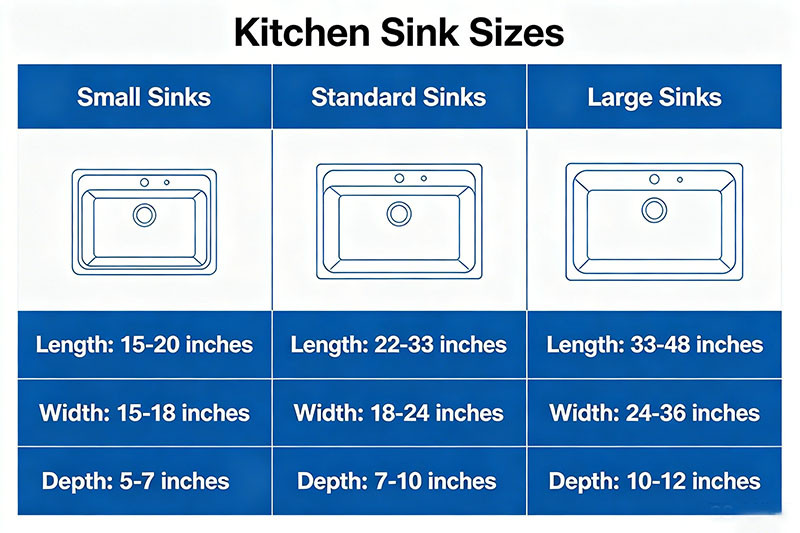
Kitchen sinks come in a variety of "standard" sizes designed to fit into common kitchen cabinet widths. When you see sink dimensions, they are typically listed as length (side-to-side) by width (front-to-back).
Length (Side-to-Side):
- Small Sinks: Sinks 25 inches or less in length are considered small and are suitable for compact kitchens, bar areas, or as a secondary prep sink.
- Standard Sinks: The most common length for a single-family home is between 27 and 33 inches. A 30-inch sink is a popular choice that offers a good balance of basin space and counter space.
- Large Sinks: Sinks that are 33 inches or longer are considered large and often feature double bowls. Oversized sinks can go up to 36 inches or more, but these are typically reserved for very large or professional-style kitchens.
Width (Front-to-Back): Standard kitchen sink width is typically around 22 inches. This measurement is designed to fit comfortably within a standard 24-inch deep countertop, leaving adequate space for the faucet installation behind the sink.
Depth (Top-to-Bottom): The average depth of a kitchen sink basin ranges from 7 to 10 inches. This measurement directly impacts the sink's usability and ergonomics, which we will explore further.
Finding the Right Depth for Your Self-Rimming Kitchen Sink
The depth of your sink bowl is a crucial decision that affects comfort and functionality. A vintage sink might be as shallow as 6 inches, while modern sinks can be 12 inches deep or more. Most standard options fall between 8 and 10 inches.
Deep Sinks (9 inches or more):
- Pros: Deep basins are excellent for washing large pots, pans, and baking sheets without splashing water all over the countertop. They are also great for hiding dirty dishes out of sight, helping to keep the kitchen looking tidy. This makes them a favorite for avid home cooks and large families.
- Cons: Reaching the bottom of a very deep sink can cause back strain for shorter individuals or even taller people who have to hunch over for extended periods. Additionally, a deeper bowl reduces the amount of storage space in the cabinet underneath, which can make it more challenging to fit a garbage disposal or tall cleaning supplies.
Shallow Sinks (8 inches or less):
- Pros: Shallow sinks are more ergonomic for many users, as they reduce the need to lean far over the sink. They leave more usable storage space in the base cabinet, making it easier to access plumbing and store items. They are also a good option for homes needing to meet ADA-compliance, which requires a sink to be no more than 6 inches deep.
- Cons: The primary drawback is that they can't accommodate very large cookware as easily. There is also a greater chance of water splashing onto the counter during vigorous washing tasks.
Ultimately, the best depth for you is a personal choice based on your height, how you use your sink, and your storage needs. An 8 to 10-inch depth is often the sweet spot for most households, offering a versatile balance of capacity and comfort.
Matching Your Self-Rimming Kitchen Sink to Your Base Cabinet
This is the most critical measurement to get right. A common and costly mistake is buying a sink that is too large for the cabinet it needs to fit into. The cabinet size refers to its exterior width, not the usable interior space.
The 3-Inch Rule: A reliable rule of thumb is to choose a sink that is about 3 inches smaller than the width of your sink's base cabinet. For example:
- A 36-inch base cabinet can comfortably accommodate a 33-inch sink.
- A 33-inch base cabinet should be paired with a 30-inch sink.
- A 30-inch base cabinet works best with a 27-inch sink.
This 3-inch clearance leaves enough room on either side for the mounting clips and hardware required to secure the sink to the countertop. Before you start shopping for your dream sink, always measure the interior width of your base cabinet first. For a self-rimming sink, the installation is more forgiving than an undermount, but adhering to this sizing rule will prevent installation headaches and ensure a secure, stable fit for your new sink.
By carefully considering standard dimensions, choosing a comfortable depth, and correctly matching the sink to your base cabinet, you can select a self-rimming sink that is a perfect fit for your kitchen in every way.
Basin Choices for Self-Rimming Kitchen Sinks: Single, Double, or Workstation?
Beyond size and material, the basin configuration is a defining feature of your kitchen sink that directly impacts your daily workflow. Self-rimming sinks are available in three primary styles: the expansive single basin, the multitasking double basin, and the hyper-functional workstation. Each offers unique advantages tailored to different cooking and cleaning habits.
The Efficiency of Single Basin Self-Rimming Kitchen Sinks
A single basin sink features one large, uninterrupted bowl. In recent years, this style has become a clear favorite for its simplicity and superior functionality when dealing with large items. The absence of a central divider creates a generous, open space that is perfect for today's kitchens.
Advantages of a Single Basin:
- Accommodates Large Items: The greatest benefit is the ability to easily wash oversized cookware. Baking sheets, large stockpots, roasting pans, and woks can lie flat for soaking and scrubbing, something that is often impossible in a divided sink.
- Space Efficiency: Because they lack a divider, single bowl sinks often provide more usable space within the same footprint. They can also fit into narrower cabinets, making them an excellent choice for smaller kitchens or galley layouts.
- Easier to Clean: With fewer corners and edges, a single basin is generally quicker and easier to clean.
- Modern Aesthetic: The clean, simple lines of a single bowl sink lend a modern and minimalist look to the kitchen.
Things to Consider: The main drawback is that you can't easily separate tasks. For instance, if the sink is full of dirty dishes, the garbage disposal becomes inaccessible. Likewise, you can't soak dishes on one side while rinsing vegetables on the other without using a separate plastic basin.
Multitasking with Double Basin Self-Rimming Kitchen Sinks
The classic double basin sink is designed for multitasking. It features two bowls separated by a divider, allowing you to dedicate each side to a different task simultaneously. This configuration has long been a staple in busy households.
Advantages of a Double Basin:
- Separation of Tasks: This is the primary appeal. You can soak dishes in one bowl while using the other for food preparation, washing hands, or rinsing. This separation helps maintain hygiene by keeping raw foods away from dirty dishwater.
- Organized Dishwashing: For those who wash dishes by hand, a double basin allows for a classic workflow: wash in the soapy-water side and rinse in the clean-water side.
- Garbage Disposal Access: If one bowl is full of soaking dishes, the other bowl—and its drain— remains accessible for using the garbage disposal.
Basin Configurations: Double bowl sinks are not all created equal. They come in several different size ratios:
- 50/50: The most traditional configuration, with two equally sized bowls. This provides versatility, as both sides are equally usable for various tasks.
- 60/40 or 70/30: An offset configuration with one larger bowl and one smaller one. The larger basin is ideal for washing bulky items, while the smaller one can be used for prep work, a drying rack, or the garbage disposal. This hybrid approach attempts to offer the best of both worlds.
Things to Consider: The main complaint about double bowl sinks is that each individual basin is smaller, which can make it difficult to wash large pots and baking sheets. They also require a wider base cabinet, typically 36 inches or more, making them less suitable for smaller kitchens.
Elevating Functionality with Workstation Self-Rimming Kitchen Sinks
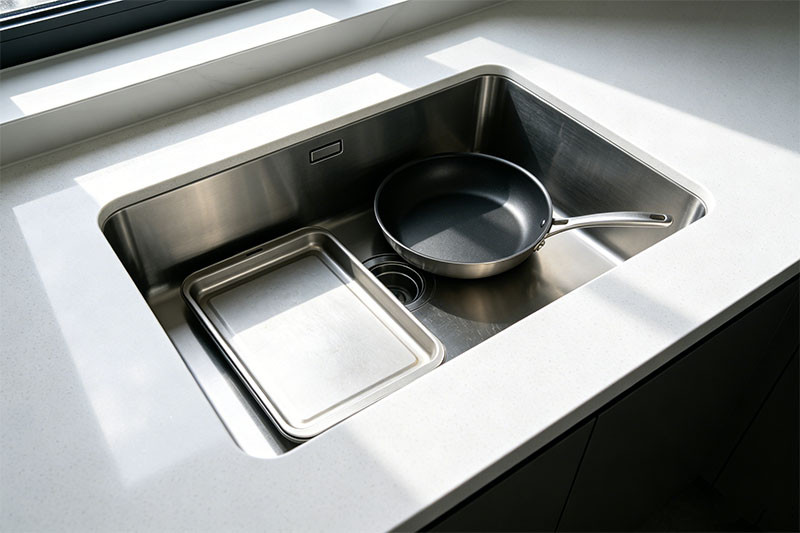
The workstation sink is the latest evolution in kitchen sink design, turning the basin into a complete, all-in-one food prep station. These sinks, like the innovative models from Samsink, are typically single-bowl designs that feature integrated ledges at the front and back. These ledges allow a variety of custom-fit accessories to slide across the top of the sink.
Common Workstation Accessories Include:
- Cutting Boards: Chop vegetables directly over the sink, allowing scraps to fall right into the disposal.
- Colanders: Rinse fruits, vegetables, and pasta over the sink without needing a separate bowl on the counter.
- Drying Racks: Create a space to air-dry dishes or washed produce, letting water drip directly into the sink.
- Mixing Bowls and Serving Trays: Some advanced systems include condiment trays or mixing bowls that fit securely on the ledges.
Advantages of a Workstation Sink:
- Maximizes Counter Space: This is a game-changer, especially in smaller kitchens. By enabling you to perform prep tasks over the sink, it effectively increases your usable counter space.
- Streamlines Workflow: It consolidates your workflow into one compact and organized area. Chopping, rinsing, and cleaning can all happen in one spot, making meal prep and cleanup faster and more efficient.
- Keeps Kitchens Cleaner: Containing all the prep work over the sink means messes like vegetable peels, meat juices, and water splashes are kept off the countertops.
Things to Consider: Workstation sinks are often more expensive than traditional models due to their specialized design and included accessories. The ledges and multiple components also require more detailed cleaning to maintain hygiene. However, for those who value maximum functionality and efficiency, the investment in a self-rimming workstation sink can completely transform the kitchen experience.
Choosing the right basin configuration is a personal decision that should align with your lifestyle. If you frequently battle large pans, a single bowl is your champion. If you're a master multitasker who washes by hand, a double bowl is a trusted ally. And if you want to turn your sink into the ultimate command center, a workstation model is the clear winner.