Stainless Steel Service Sinks Explained: Features, Benefits, and Installation Tips
- Share
- Issue Time
- May 18,2026
Summary
This comprehensive guide explores the critical role of stainless steel service sinks in demanding environments like workshops, hospitals, and commercial kitchens. These deep-basin fixtures, also known as mop or utility sinks, are engineered for heavy-duty cleaning and waste disposal, distinguishing them from standard household sinks. The article underscores stainless steel, particularly Type 304, as the ideal material choice, praised for its exceptional durability, resistance to corrosion, rust,
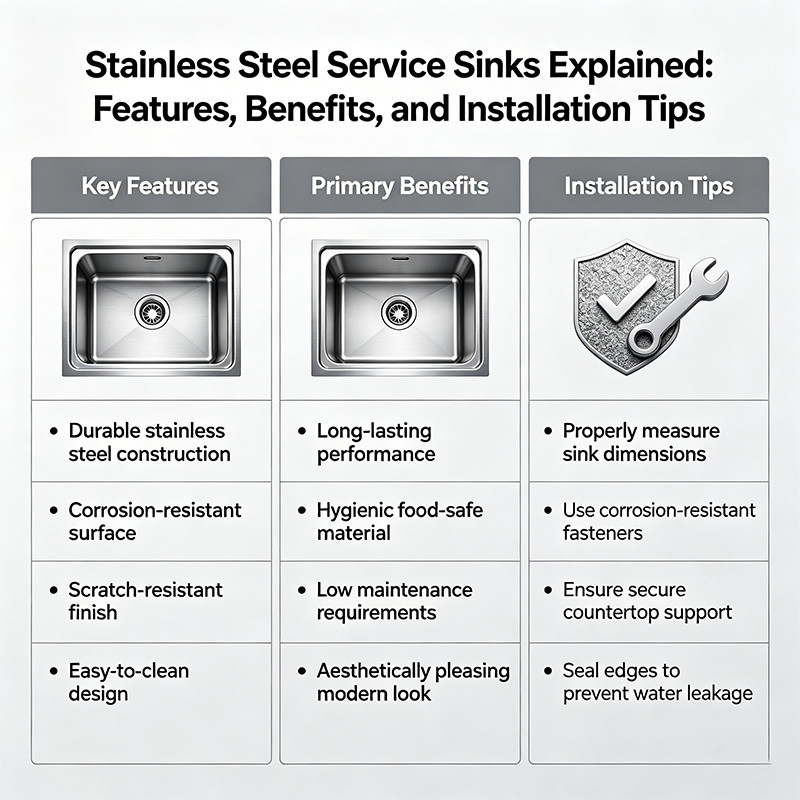
Ever wondered about those incredibly tough and practical sinks you see in workshops, hospitals, or even busy restaurants? They are the unsung heroes of clean, functional spaces. Today, we're diving deep into the world of stainless steel service sinks! We'll explore what makes these sinks so special, the many benefits they offer for demanding environments, and even share some straightforward tips for getting one installed correctly. Whether you're outfitting a commercial kitchen, a janitorial closet, a workshop, or even a home utility area, understanding these workhorses is key to making a smart investment.
Key Takeaways
- Definition and Purpose: A service sink, often called a mop sink or utility sink, is a deep-basin fixture designed for heavy-duty cleaning and disposal tasks. It's distinct from standard kitchen or bathroom sinks due to its size, durability, and utilitarian function, making it essential in commercial, industrial, and institutional settings.
- Material Superiority: Stainless steel, particularly Type 304, is the premier material for service sinks. Its unmatched durability, resistance to corrosion, rust, and stains, and non-porous surface make it incredibly hygienic and easy to clean, ensuring a long and reliable service life. Brands like Samsink often use high-quality stainless steel for their products.
- Essential Features: When selecting a service sink, key features to consider are the steel gauge (lower is thicker and better, with 14 or 16 gauge being ideal for heavy use), the grade (Type 304 is the industry standard), the basin depth, the presence of splash guards to protect surrounding areas, and the configuration of faucets and drains.
- Installation Best Practices: Proper installation is crucial for safety and functionality. This involves careful planning of the location, ensuring adequate structural support (especially for wall-mounted units), and correctly connecting the plumbing for both hot and cold water supply and waste drainage, adhering to local codes.
- Long-Term Value: While the initial cost might be higher than for a plastic or porcelain sink, a stainless steel service sink from a reputable brand like Samsink offers superior long-term value. Its longevity, minimal maintenance requirements, and contribution to a safer, more hygienic environment make it a cost-effective investment over its lifespan.
Understanding the Foundation of a Stainless Steel Service Sink
Before we can appreciate the full scope of benefits and features, it's essential to build a foundational understanding. What truly makes a service sink different from any other, and why is stainless steel the undisputed champion material for its construction? Let's break down the core components that define this essential utility fixture.
What exactly defines a 'service' sink?
A service sink, also commonly referred to as a mop sink or a janitor's sink, is specifically designed for utilitarian purposes rather than for hand washing or food preparation like a traditional lavatory or kitchen sink. Its primary role is to handle the dirty work—filling and emptying mop buckets, cleaning bulky equipment, disposing of cleaning water, and other heavy-duty janitorial or maintenance tasks.
Key defining characteristics include:
- Deep Basin: Unlike the shallow basins of residential sinks, service sinks feature a significantly deeper and larger bowl to accommodate bulky items like buckets and prevent splashing.
- Robust Construction: They are built from durable materials capable of withstanding rough use, harsh chemicals, and the impact of heavy equipment.
- Utilitarian Design: The focus is on function over form. They often have a simple, rugged appearance and may be installed on the floor (floor-mounted) or on a wall (wall-hung) depending on the specific application and cleaning needs of the space.
- Location: You'll typically find these sinks in janitor's closets, utility rooms, commercial kitchens, workshops, hospitals, schools, and other environments where heavy cleaning is a regular occurrence.
Essentially, a service sink is a dedicated workstation for cleaning and maintenance, engineered for durability and practicality above all else.
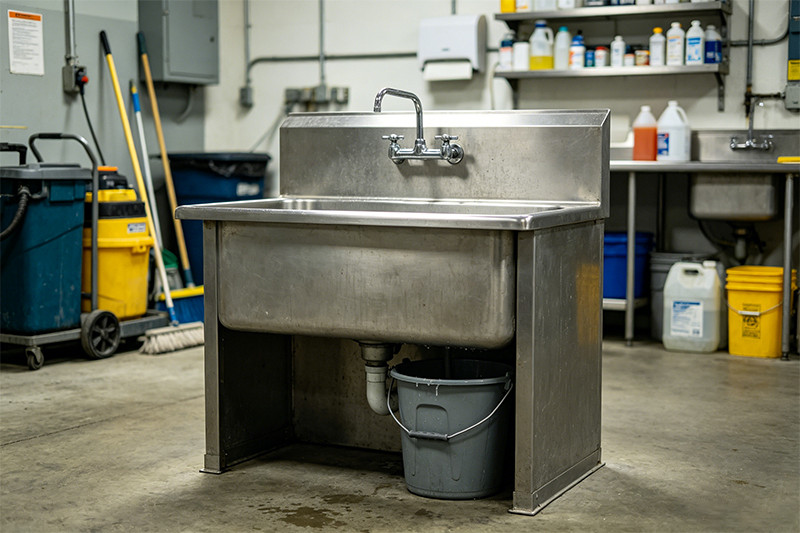
The magic behind stainless steel: Why it's perfect for a service sink.
The choice of material is what elevates a standard utility sink to a high-performance service sink, and stainless steel is the undisputed king in this category. Its unique combination of properties makes it perfectly suited for the demanding environments where these sinks are used.
The "magic" lies in its composition. Stainless steel is an iron alloy that includes a significant amount of chromium, typically a minimum of 10.5%. This chromium forms a passive, invisible, and self-healing layer of chromium oxide on the surface. It is this passive layer that gives stainless steel its renowned resistance to corrosion and rust. When scratched or damaged, the layer instantly reforms as long as oxygen is present, ensuring continuous protection.
Here’s why it’s the ideal material:
- Exceptional Durability: Stainless steel is incredibly tough and resistant to impact, dents, and scratches. It won't chip, crack, or break like porcelain or cast iron can under heavy use.
- Corrosion and Stain Resistance: It stands up brilliantly to the wide array of harsh cleaning chemicals, acids, and alkalis commonly used in commercial and industrial settings. This prevents staining and degradation of the material over time. High-quality models, like those from Samsink, often utilize Type 304 stainless steel, which offers superior corrosion resistance.
- Hygiene: The surface of stainless steel is non-porous. This means that bacteria, mold, and other microorganisms have nowhere to hide and grow, making it exceptionally easy to clean and sanitize. This is a critical feature in environments like hospitals and kitchens where maintaining sanitary conditions is paramount.
- Temperature Tolerance: It can handle extreme temperatures, from boiling hot water to icy cold liquids, without warping, cracking, or being damaged.
Common types and configurations we encounter with a stainless steel service sink.
Stainless steel service sinks are not a one-size-fits-all product. They come in various types and configurations, each designed to meet specific needs and space constraints. Choosing the right one depends largely on the intended use and the layout of the installation area.
Floor-Mounted (Mop Sinks):
- Description: These are the most common type, often simply called "mop sinks." They sit directly on the floor or are recessed into it, creating a very low threshold.
- Best For: Easily dumping large mop buckets without lifting them high. The floor-level design minimizes splashing and physical strain. They are the standard choice for janitorial closets and cleaning stations.
- Configuration: They are typically square or rectangular and feature very high sides or splash guards to contain water.
Wall-Mounted (Wall-Hung Sinks):
- Description: These sinks are bolted directly to the wall, elevated off the floor. They require a sturdy wall and proper support carriers for installation.
- Best For: Areas where cleaning the floor underneath the sink is a priority. Keeping the floor clear makes sanitation easier and faster. They are also a good solution when floor space is limited or when drainage needs to be routed above the floor.
- Configuration: They come in various sizes and depths and often include integrated backsplashes to protect the wall. Reputable brands like Samsink offer heavy-duty wall-mounted sinks with strong support brackets.
Freestanding/Leg-Supported Sinks:
- Description: These are self-contained units that stand on their own legs. They combine the basin and support structure into a single piece of equipment.
- Best For: Workshops, garages, art studios, and locations where wall mounting is impractical or not desired. They offer more flexibility in placement as they don't rely solely on wall strength.
- Configuration: They often feature one, two, or even three deep basins and may include integrated drainboards on one or both sides, providing valuable workspace for prepping or drying items.
Here is a table summarizing the common types:
| Sink Type | Installation | Primary Advantage | Common Applications |
|---|---|---|---|
| Floor-Mounted | Sits on or is recessed into the floor | Easy for dumping mop buckets; minimizes lifting | Janitor's closets, commercial cleaning stations |
| Wall-Mounted | Bolted to the wall, off the floor | Allows for easy cleaning of the floor beneath | Hospitals, kitchens, labs, modern utility rooms |
| Freestanding | Stands on its own legs | Placement flexibility; no wall support needed | Workshops, garages, art studios, laundry rooms |
The Unbeatable Benefits of Choosing a Stainless Steel Service Sink
When you're investing in equipment for a commercial or high-use environment, the decision goes beyond initial cost. You need fixtures that promise performance, longevity, and a solid return on investment. A stainless steel service sink checks all these boxes and more, offering a suite of benefits that make it the superior choice for any demanding application.
Why tough materials matter: The strength and longevity of your stainless steel service sink.
In a high-traffic utility setting, fixtures take a beating. From the impact of heavy buckets to the constant abrasion of equipment and the stress of thermal shock, a service sink must be built to last. This is where stainless steel truly excels. Its inherent strength provides an incredible level of durability that other materials simply cannot match.
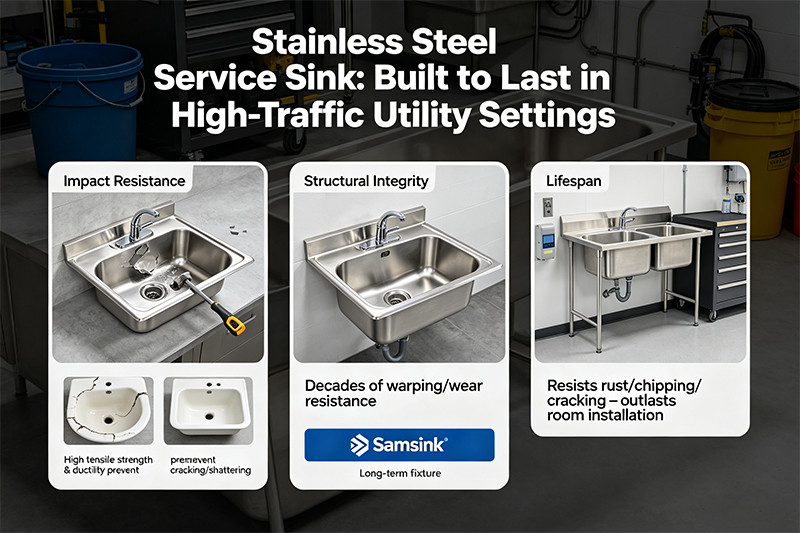
- Impact Resistance: Stainless steel has high tensile strength and ductility, meaning it can absorb significant impact without cracking or shattering. While a dropped tool might dent a stainless steel sink, it would likely chip or break a porcelain or enamel one, leading to costly replacement and downtime.
- Structural Integrity: Over time, materials can fatigue. Stainless steel, however, maintains its structural integrity for decades, resisting warping and wear even under constant, heavy use. A well-constructed sink from a quality manufacturer like Samsink is a long-term fixture, not a temporary solution.
- Lifespan: The longevity of stainless steel is one of its most compelling benefits. Its resistance to rust, chipping, and cracking means that a stainless steel service sink will often outlast the very room it's installed in. This "install it and forget it" quality provides peace of mind and proves its value year after year.
Keeping things clean: Hygiene and easy maintenance for every stainless steel service sink.
In any environment, but especially in commercial kitchens, hospitals, and schools, hygiene is non-negotiable. The material of your service sink plays a critical role in your ability to maintain a sanitary space. The non-porous nature of stainless steel is a game-changer for cleanliness and maintenance.
- A Hygienic Surface: Unlike porous materials like granite or even some plastics that can harbor bacteria and germs within microscopic crevices, stainless steel has a smooth, solid surface. This prevents germs from taking hold, making it one of the most hygienic materials available. This is why it is the universal standard in commercial food service and healthcare.
- Effortless Cleaning: The smooth surface not only wards off germs but also makes cleaning incredibly simple. Dirt, grime, and liquid waste wipe away easily with a cloth and mild detergent. There's no need for harsh, abrasive cleaners that can damage other materials.
- Chemical Resistance: Stainless steel stands up to a wide range of disinfectants and sanitizers without pitting or degrading. You can confidently use the necessary chemicals to ensure your space meets health and safety standards without worrying about damaging the sink itself. The passive chromium oxide layer protects the underlying steel from chemical attack, ensuring the sink's surface remains intact and easy to sterilize.
A smart investment: How a stainless steel service sink offers cost-effectiveness over time.
While a high-quality stainless steel service sink may have a higher upfront purchase price compared to a plastic or fiberglass alternative, it consistently proves to be the more cost-effective choice in the long run. The total cost of ownership extends far beyond the initial price tag.
Here's the breakdown of its long-term value:
- Reduced Replacement Costs: The exceptional durability and longevity mean you won't be replacing it. A cheaper plastic sink might crack or stain within a few years, requiring a full replacement—including the cost of the new unit and the labor for removal and installation. A stainless steel sink can easily last for 20-30 years or more, making that single initial investment far more economical.
- Lower Maintenance and Repair Costs: Stainless steel requires minimal maintenance. It doesn't need to be resurfaced, re-glazed, or patched like other materials. The money saved on repair kits, specialized cleaners, and labor over the life of the sink adds up significantly.
- Avoiding "Hidden Costs": A damaged or unhygienic sink can lead to other problems. A cracked sink can cause water damage to floors and walls. A sink that's difficult to sanitize can lead to health code violations or cross-contamination issues. The reliability of stainless steel helps you avoid these costly and stressful secondary problems.
Investing in a robust stainless steel service sink, such as one from the Samsink product line, is a strategic decision. It's an investment in durability, hygiene, and operational efficiency that pays dividends for years to come.
Important Features to Consider for Your Stainless Steel Service Sink
Once you've decided that a stainless steel service sink is the right choice, the next step is to select the perfect model for your specific needs. Not all stainless steel sinks are created equal. Several key features determine a sink's performance, durability, and suitability for a given task. Paying attention to these details will ensure you get a sink that works as hard as you do.
Gauge and grade explained: What do these numbers mean for your stainless steel service sink's toughness?
When browsing for stainless steel sinks, you'll inevitably encounter two important specifications: gauge and grade. Understanding these terms is crucial for choosing a high-quality, long-lasting product.
Gauge: The Thickness and Strength The gauge of stainless steel refers to its thickness. It's a bit counterintuitive, but the lower the gauge number, the thicker and stronger the steel. For service sinks that need to withstand heavy use, a lower gauge is always better.
- 14 Gauge: This is a premium, heavy-duty option. It's extremely resistant to dents and bowing and is ideal for the most demanding industrial, commercial kitchen, and institutional environments.
- 16 Gauge: This is the most common and highly recommended gauge for commercial and heavy-use service sinks. It offers an excellent balance of durability, performance, and cost, providing substantial resistance to dents and noise. A 16-gauge sink from a quality brand like Samsink is a reliable workhorse.
- 18 Gauge: This is a lighter-duty option. While still durable, it's more susceptible to denting and can be noisier than thicker gauges. It may be suitable for light-duty utility rooms or residential workshops but is generally not recommended for demanding commercial applications.
- 20 Gauge or Higher: Sinks in this range are typically found in light-duty residential settings and should be avoided for any true service or commercial application.
Grade: The Composition and Corrosion Resistance The grade of stainless steel refers to its composition, specifically the percentages of chromium and nickel in the alloy. This determines its corrosion resistance and overall quality.
- Type 304 (T-304): This is the gold standard for service sinks and nearly all food service equipment. It typically contains 18% chromium and 8% nickel (often referred to as 18/8 stainless steel). This composition provides excellent resistance to rust, corrosion, and a wide variety of chemicals. It is durable, hygienic, and the recommended grade for any application involving cleaning chemicals, food, or moisture.
- Type 316: This is a marine-grade stainless steel with added molybdenum for enhanced corrosion resistance, particularly against chlorides and salts. It's an excellent, albeit more expensive, choice for coastal areas, laboratories with harsh chemicals, or environments with high salt exposure.
- Type 430: This is a lower-cost, nickel-free grade. While it looks similar, its corrosion resistance is significantly lower than Type 304's. It is more susceptible to rust and staining and is not recommended for wet, demanding environments like a service sink.
| Feature | Lower Number is Better | Higher Number is Better | Recommended for Service Sinks |
|---|---|---|---|
| Gauge | ✔️ (Thicker, more durable) | 14 or 16 Gauge | |
| Grade | ✔️ (Higher quality, more resistant) | Type 304 or Type 316 |
Deep bowls and splash guards: Design features for maximum functionality in a stainless steel service sink.
The physical design of a service sink directly impacts its usability and effectiveness. Two of the most important design features are the depth of the bowl and the inclusion of splash guards.
Deep Bowls: A deep basin is a hallmark of a true service sink. Look for bowls that are at least 10-14 inches deep, or even deeper for specialized applications. This depth is essential for:
- Containing Splashes: A deep bowl keeps water and cleaning solutions contained within the sink, preventing messy and hazardous spills on the floor.
- Accommodating Large Items: It allows you to easily fit large mop buckets, pails, and other bulky equipment completely inside the sink for filling and cleaning.
- Increased Capacity: A deeper bowl simply holds more, which is useful when dealing with large volumes of liquid waste.
Splash Guards (Backsplash and Side Splashes): Splash guards are raised panels at the back and/or sides of the sink that provide a protective barrier.
- Backsplash: An integrated backsplash is crucial for protecting the wall behind the sink from water damage, mold, and mildew. Most commercial code requirements mandate a backsplash of a certain height.
- Side Splashes: In sinks that are placed next to a wall or another piece of equipment, side splashes serve the same protective function, containing water and preventing it from seeping into joints or damaging adjacent surfaces.
When selecting a sink, consider how it will be used. A freestanding sink in the middle of a workshop might not need side splashes, but a wall-mounted sink in a janitor's closet absolutely needs a tall backsplash to protect the drywall.
Faucet options and practical drain placement for your specific stainless steel service sink needs.
The functionality of your sink is completed by its faucet and drainage system. These components should be chosen with as much care as the sink itself.
Faucet Options:
- Wall-Mount vs. Deck-Mount: The faucet can be mounted on the wall above the sink or on the "deck" (the flat rim of the sink itself). Wall-mount faucets are common for service sinks as they leave the sink deck clear and make cleaning easier.
- Spout Height and Reach: Choose a faucet with a high, gooseneck-style spout to provide ample clearance for filling tall buckets. The spout should also have enough reach to direct water to the center of the basin.
- Nozzle Type: A threaded nozzle is a must-have feature for a service sink faucet. This allows you to attach a standard hose for rinsing the sink, cleaning equipment, or filling containers that don't fit in the basin. Some faucets also come with integrated sprayers.
- Handles: Robust lever or wrist-blade handles are often preferred in commercial settings as they can be operated with an elbow or wrist when hands are full or dirty, improving both convenience and hygiene.
Drain Placement and Size:
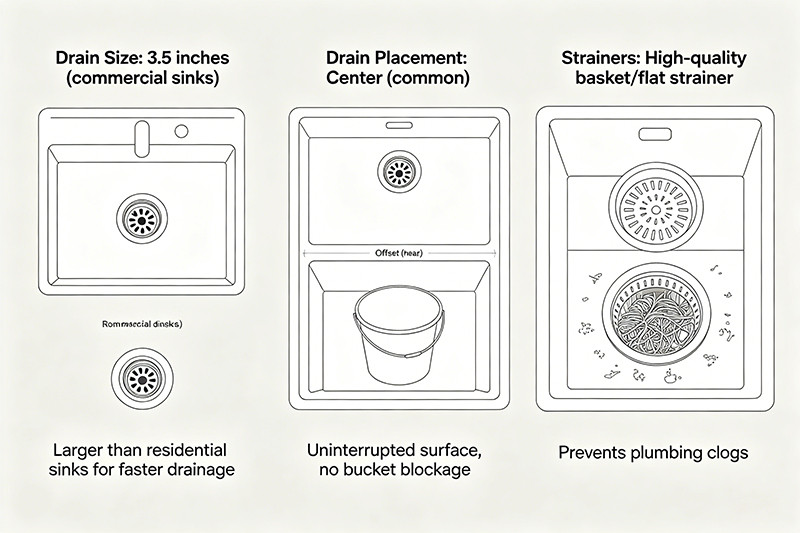
- Drain Size: Commercial service sinks should have a larger drain opening than residential sinks, typically 3.5 inches. This allows for faster drainage of large volumes of water and reduces the risk of clogging from debris.
- Drain Placement: The most common placement is in the center of the sink. However, some sinks feature an offset drain (placed toward the rear of the basin). An offset drain can be advantageous as it provides a larger, uninterrupted flat surface at the bottom of the sink and won't be blocked when a bucket is placed inside.
- Strainers: A high-quality basket strainer or flat strainer is essential to catch debris, mop strings, and other solids, preventing them from clogging the plumbing lines.
Tips for Successfully Installing Your Stainless Steel Service Sink
A top-quality stainless steel service sink can only perform at its best when it's installed correctly. A proper installation ensures safety, functionality, and longevity, while a poor one can lead to leaks, instability, and costly repairs. While hiring a licensed plumber is always the recommended route for ensuring compliance with local codes, understanding the key steps can help you plan your project effectively.
Planning is key: Where will your new stainless steel service sink fit best?
Before you even purchase your sink, careful planning of the location is the most critical step. This involves more than just finding an empty space; it requires thinking about workflow, accessibility, and the underlying structure of your building.
- Assess the Workflow: Where will the sink be most useful? For a mop sink, it should be in or near a janitor's closet with space for storing buckets and cleaning carts. For a workshop sink, it should be accessible to the main work area but perhaps away from sensitive electronics. Consider the path you'll take to and from the sink.
- Measure, Measure, Measure: Take precise measurements of the intended space. Account for the sink's overall dimensions, including its width, depth, and height (especially for freestanding units or sinks with tall backsplashes). Don't forget to leave adequate clearance around the sink for access and maintenance. Will you have enough room to comfortably stand and work in front of it?
- Check for Utilities: Identify the location of existing hot and cold water supply lines and the main drain/sewer line. The ideal location for your sink will be close to these existing plumbing connections to minimize the complexity and cost of the installation.
- Evaluate Structural Support: This is especially crucial for heavy wall-mounted sinks. The wall must have adequate internal blocking or support to handle the weight of the sink plus the water and any items inside it. Simply bolting a heavy sink to drywall is a recipe for disaster. A professional can help you assess if the wall structure is sufficient or if reinforcement is needed. For floor-mounted sinks, ensure the floor is level and capable of supporting the weight.
Making the connections: Plumbing essentials for a stainless steel service sink.
Connecting the water supply and drain is the heart of the installation. This is where precision and adherence to plumbing codes are paramount to prevent leaks and ensure proper function.
Water Supply:
- You will need to run both hot and cold water lines to the faucet. These are typically half-inch pipes.
- It is essential to install shut-off valves (angle stops) for both the hot and cold lines. These valves allow you to turn off the water supply to the sink for future repairs or faucet replacement without shutting off water to the entire building.
- Flexible, braided stainless steel supply lines are often used to connect the shut-off valves to the faucet inlets, as they offer flexibility and are easy to install.
Drainage System:
- The sink's drain must be connected to the building's main waste line. This involves installing a P-trap directly below the sink's strainer.
- The P-trap is a critical component. This U-shaped piece of pipe holds a small amount of water that acts as a barrier, preventing unpleasant sewer gases from rising up through the drain and into the room.
- The entire drain system must be properly sloped (a gradient of about 1/4 inch per foot is standard) to ensure gravity effectively pulls wastewater away and prevents clogs.
- Venting is another crucial aspect. The drain system must be connected to a vent pipe, which allows air to enter the system and prevents the water in the P-trap from being siphoned out. An improperly vented drain will be sluggish and gurgly.
Mounting and securing: Ensuring your heavy-duty stainless steel service sink is stable and safe.
The final step is to physically secure the sink in place. The method will depend on the type of sink you've chosen.
For Wall-Mounted Sinks:
- This is the most demanding installation in terms of security. The sink must be attached to solid structural support within the wall, not just the drywall or plaster.
- A wall carrier or heavy-duty mounting bracket (often supplied with the sink or sold separately by manufacturers like Samsink) is used. This bracket is bolted directly to the wall studs.
- The sink is then hung on or bolted to the bracket. Use stainless steel lag bolts or the hardware specified by the manufacturer. Ensure the sink is perfectly level before tightening the final bolts.
- After installation, caulk the seam where the top of the backsplash meets the wall with a high-quality, waterproof silicone sealant to prevent water from seeping behind the sink.
For Floor-Mounted Sinks:
- Set the sink in its final position, ensuring the floor beneath is clean and level.
- Some floor sinks are designed to be secured to the floor using bolts or clips, often through mounting tabs on the base. This prevents the sink from sliding or shifting.
- The primary method of securing these sinks is often by creating a sealed perimeter. Once all plumbing is connected, apply a thick bead of silicone caulk or a specialized sealant around the entire base of the sink where it meets the floor. This not only anchors the unit but also prevents water from getting trapped underneath it.
For Freestanding Sinks:
- Assembly is usually straightforward. Attach the legs to the basin following the manufacturer's instructions.
- Place the sink in its final location and adjust the feet (most models have adjustable feet) until the sink is perfectly level and stable, with no wobbling.
- For added safety, especially in high-traffic or seismically active areas, you may want to secure one or more of the legs to the wall or floor.
Conclusion
So, as we've seen, a stainless steel service sink is much more than just a place to wash up; it's a vital, hardworking fixture designed for ultimate durability, hygiene, and efficiency in demanding environments. From the rugged strength of 16-gauge, Type 304 steel to the practical necessity of deep basins and threaded faucets, every feature is engineered with purpose. By understanding the core components, appreciating the long-term benefits, and prioritizing a proper installation, you can ensure this workhorse becomes a reliable and indispensable asset to your space.
We truly believe that understanding their unique features, clear benefits, and straightforward installation steps can help you make the best choice, ensuring a reliable and long-lasting addition to your space. By investing in a quality product, like those offered by Samsink, you are investing in cleanliness, efficiency, and peace of mind for years to come. We encourage you to share this guide with others who might be planning a new utility space and to continue the conversation by leaving your questions or experiences below!
Frequently Asked Questions (FAQ)
1. What is the best way to clean and maintain a stainless steel service sink?
Maintaining a stainless steel service sink is surprisingly simple. For daily cleaning, use a soft cloth or sponge with warm water and a mild detergent. Rinse thoroughly and, for a streak-free shine, wipe dry with a microfiber cloth. For tougher grime, you can use a non-abrasive cleaner like Bon Ami or a paste of baking soda and water. Always clean in the direction of the steel's grain or polish lines. Avoid using steel wool, abrasive scouring pads, or cleaners containing chlorine bleach, as these can scratch the surface and compromise its passive layer, potentially leading to rust.
2. Can I install a stainless steel service sink in my home garage or laundry room?
Absolutely! A stainless steel service sink is an excellent and increasingly popular addition to residential settings like garages, workshops, laundry rooms, and mudrooms. A freestanding or wall-mounted utility sink provides a durable, deep-bowled station for everything from washing pets and cleaning garden tools to pre-soaking heavily soiled laundry or tackling messy hobby projects. Its durability and ease of cleaning make it far superior to a standard plastic laundry tub for these heavy-duty household tasks.
3. What is the difference between a service sink, a utility sink, and a mop sink?
These terms are often used interchangeably, but there can be subtle distinctions. A mop sink almost always refers to a floor-mounted basin with a low threshold, specifically for filling and emptying mop buckets. A utility sink is a more general term for a deep, functional sink used in a non-kitchen setting, like a laundry room or workshop; it can be freestanding, wall-mounted, or a drop-in model. A service sink is a broader commercial term that encompasses both mop sinks and heavy-duty wall-mounted or freestanding utility sinks used in professional, janitorial, or industrial environments. The key commonality is their focus on function and durability over aesthetics.
4. Why is my new stainless steel sink rusting?
True stainless steel, particularly Type 304, is highly resistant to rust. If you see what appears to be rust on a new sink, it is most likely not the sink itself that is rusting. The most common cause is "contact contamination," where small particles of regular steel or iron (from tools, a scouring pad, or even iron-rich water) are left on the sink's surface. These particles rust and can be mistaken for the sink rusting. This can usually be cleaned off with a non-abrasive cleaner. In rare cases, constant exposure to harsh chlorides or a defect in a very low-quality (e.g., Type 430) steel could cause actual rusting.
5. How high should I mount a wall-hung service sink?
There is no single "correct" height, as it depends on user comfort and application. However, a common and comfortable rim height for a wall-hung utility or service sink is between 34 and 38 inches from the finished floor. This places the sink at a similar height to a standard kitchen counter, which is ergonomically sound for most users. Before permanently fixing the sink, it's a good practice to hold it against the wall at your proposed height to see if it feels comfortable for the primary users. Always ensure you are mounting to a securely blocked wall that can support the weight.