Stainless Steel Sinks: Integrating Eco-Friendly Design in Commercial Spaces
- Share
- Issue Time
- Jan 4,2026
Summary
Discover how commercial stainless steel sinks support eco-friendly design through durability, hygiene, recyclability, and water-saving integration. Ideal for commercial kitchens, healthcare facilities, and public spaces seeking sustainable and efficient sink solutions.
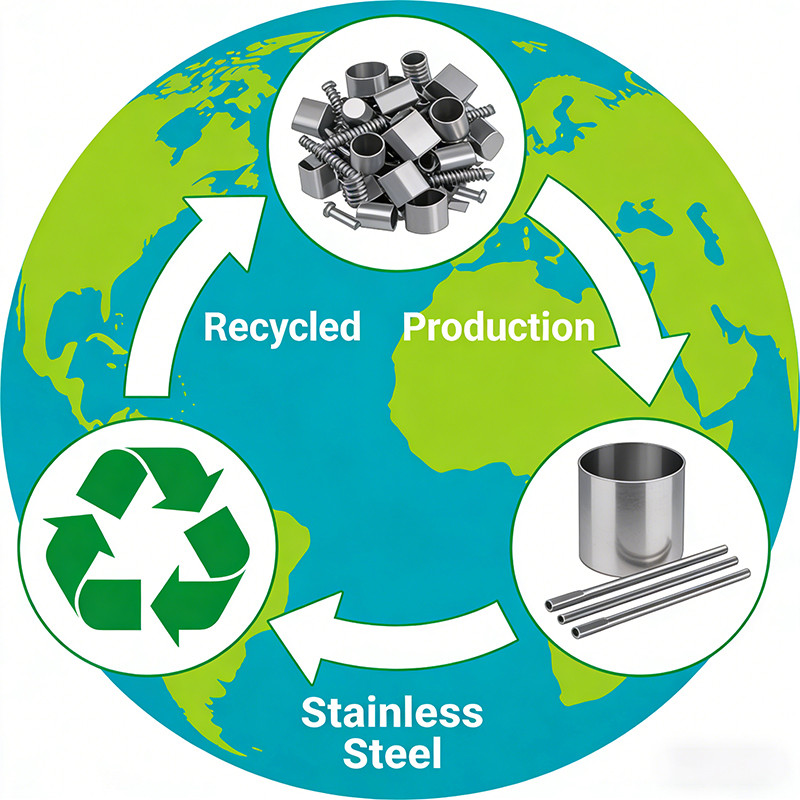
In the quest for a more sustainable future, the design of commercial spaces—especially high-traffic areas like kitchens and restrooms—plays a pivotal role. While we often focus on large-scale changes, even seemingly minor decisions, like the type of sink installed, can have a profound environmental impact. Sustainable design has become a necessity, aiming to reduce negative environmental effects by using resources efficiently and choosing eco-friendly materials. This approach is not just about being green; it's a strategic choice for businesses seeking long-term success and a positive brand image.
Welcome to our exploration of how stainless steel sinks are not just a functional necessity but a cornerstone of sustainable design in commercial applications. In the evolving landscape of environmentally conscious commercial design, every element counts. Join us as we uncover the many ways these essential fixtures contribute to a healthier planet, from their inherent recyclability and impressive durability to their role in enhancing operational efficiency and promoting a cleaner, safer environment.
Key Takeaways
- Durability and Longevity: Stainless steel sinks offer exceptional resistance to wear, tear, corrosion, and rust, making them a long-term, cost-effective investment that minimizes the need for replacements.
- Superior Hygiene: The non-porous surface of stainless steel prevents bacteria from harboring, ensuring a higher level of cleanliness that is crucial for food service, healthcare, and public-use facilities.
- Water Conservation: When paired with modern technologies like sensor faucets and low-flow aerators, stainless steel sinks become a central component in strategies to significantly reduce water consumption in commercial buildings.
- Eco-Friendly Lifecycle: Stainless steel is one of the most recycled materials on the planet. Its lifecycle, from production using recycled content to its end-of-life recyclability, results in a much lower environmental footprint compared to other materials.
- Design Versatility: Available in numerous sizes, configurations, and finishes, stainless steel sinks can be customized to fit any commercial environment, enhancing both the aesthetic appeal and the operational workflow of the space.
The Unbeatable Durability and Hygiene of Stainless Steel
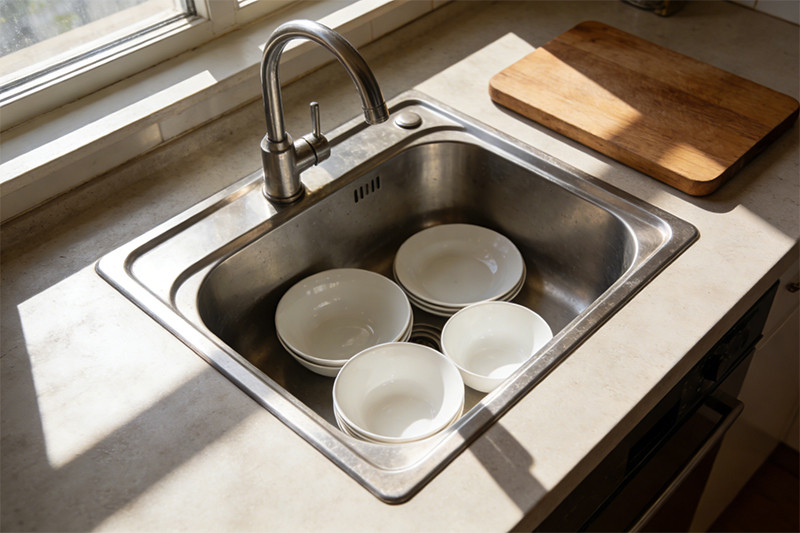
When selecting fixtures for commercial spaces, two factors stand paramount: durability and hygiene. Stainless steel excels in both categories, making it the gold standard for demanding environments like professional kitchens, hospitals, and public restrooms. Its intrinsic properties ensure not only a long service life but also a safer, cleaner space for employees and customers alike.
Built to Last: A Long-Term Investment
Choosing stainless steel is a decision that pays dividends over time. Its exceptional durability and resilience mean fewer replacements, less maintenance, and lower lifecycle costs, all of which are crucial for a sustainable and economically sound business operation. A well-maintained stainless steel sink can last anywhere from 15 to 30 years, making it a wise long-term investment.
Resisting Wear and Tear
Commercial environments are tough. Sinks must endure constant use, from the impact of heavy pots and pans to the scraping of utensils. Stainless steel is inherently strong and impact-resistant, capable of withstanding this daily abuse without chipping or cracking, unlike more brittle materials like ceramic. This toughness ensures the sink remains functional and maintains its appearance for years, even in the most high-pressure settings. Furthermore, specific grades of stainless steel are resistant to scaling and retain their strength even at high temperatures, a common condition in commercial kitchens.
Corrosion and Rust Resistance
The "stainless" in stainless steel is not just a name; it's a promise of performance. The magic lies in its composition, specifically a minimum of 10.5% chromium. When exposed to oxygen, the chromium forms a thin, invisible, and passive layer of chromium oxide on the surface. This layer acts as a protective shield, preventing rust and corrosion. What makes this layer truly remarkable is its ability to "self-heal"; if the surface is scratched or damaged, a new oxide layer will quickly form, maintaining the integrity of the protection. This resistance is vital in environments constantly exposed to water, food acids, and harsh cleaning chemicals.
Maintaining Pristine Cleanliness
In any commercial space, but especially in foodservice and healthcare, hygiene is non-negotiable. The material of your sink plays a critical role in your ability to control the spread of pathogens. The rise of foodborne illnesses, with an estimated 48 million cases annually, underscores the need for hygienic surfaces.
Non-Porous Surface for Superior Hygiene
The key to stainless steel's hygienic superiority is its non-porous surface. Unlike porous materials such as wood or some plastics, which have microscopic openings that can trap liquids, food particles, and bacteria, stainless steel has a smooth, sealed surface. This dense structure makes it nearly impossible for germs, bacteria, or mold to embed themselves, preventing contamination and the growth of harmful microorganisms. Since contaminants remain on the exterior, they can be easily and effectively removed, which is why non-porous surfaces are the standard in hospitals, labs, and professional kitchens.
Effortless Cleaning and Maintenance
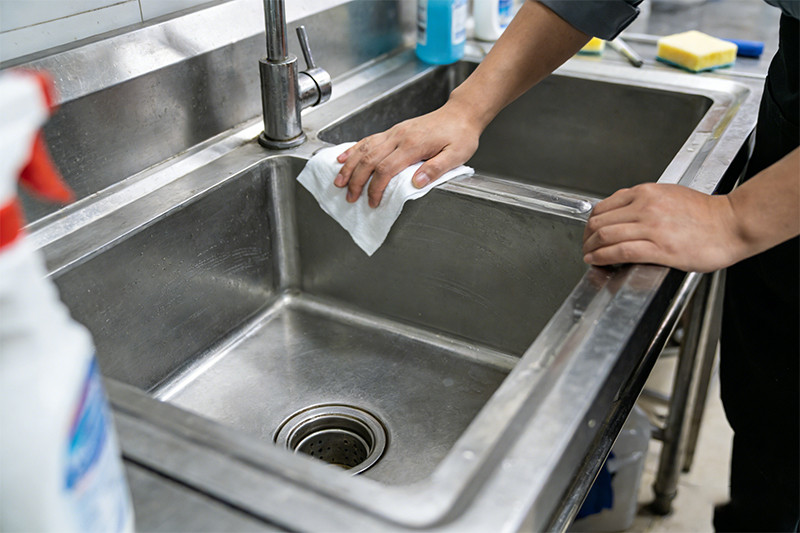
The smooth, non-porous nature of stainless steel also makes it incredibly easy to clean and sanitize. In most cases, a simple wipe-down with soap and warm water is sufficient to keep the surface sanitary and looking pristine. The material's ability to withstand harsh chemical cleaners without damage allows for rigorous sanitation protocols, helping businesses comply with health codes. Because it resists staining and doesn't harbor bacteria, cleaning is faster, more effective, and requires less intensive labor, contributing to operational efficiency and a safer environment for everyone.
Stainless Steel Sinks: A Key to Water Conservation
Beyond durability and hygiene, stainless steel sinks play a vital role in the broader strategy of water conservation—a critical priority for sustainable commercial operations. While the sink itself doesn't save water, its design and compatibility with modern water-saving technologies make it an essential part of an efficient system. By integrating water-efficient solutions, businesses can significantly lower utility costs, reduce their environmental footprint, and support corporate sustainability goals.
Addressing Water Waste in Commercial Spaces
Commercial buildings are significant consumers of water. A typical sit-down restaurant can use an average of 5,800 gallons of water per day, which amounts to over 2 million gallons per year. A large portion of this consumption occurs in kitchens and restrooms, where activities like dishwashing, food preparation, and handwashing are constant. Leaky faucets, inefficient fixtures, and outdated practices all contribute to substantial water waste. For instance, a single faucet dripping at one drip per second can waste over 3,000 gallons annually. Addressing this waste is not just an environmental imperative but also a financial one, as effective conservation measures can reduce water costs by 20-50%.
Integrating Water-Saving Technologies
A key advantage of stainless steel sinks is their seamless compatibility with a wide array of water-saving fixtures. Their standardized designs and robust construction allow for easy installation and retrofitting of technologies that dramatically cut down on water usage without compromising performance.
Low-Flow Fixtures and Sensor Faucets
One of the most effective strategies for reducing water consumption is upgrading to low-flow and sensor-activated faucets.
- Low-flow aerators are inexpensive devices that can be easily installed on existing faucets. They work by mixing air into the water stream, which maintains a feeling of strong pressure while reducing water flow by up to 50% or more. The EPA's WaterSense label helps identify bathroom faucets that use a maximum of 1.5 gallons per minute (GPM), a significant reduction from the standard 2.2 GPM.
- Sensor-activated faucets take conservation a step further by eliminating waste entirely. These touchless systems use infrared sensors to dispense water only when hands are detected, automatically shutting off when they are moved away. This technology is not only more hygienic by reducing the spread of germs, but it can also slash water consumption at the sink by as much as 70% compared to manual faucets.
| Technology | Standard Flow Rate | WaterSense Flow Rate | Potential Water Reduction |
|---|---|---|---|
| Traditional Faucet | 2.2 GPM or higher | N/A | 0% |
| Low-Flow Aerator | N/A | 1.5 GPM or less | 30% or more |
| Sensor Faucet | N/A | 0.5 GPM (typical) | Up to 70% |
Exploring Water Recycling and Reuse
For businesses committed to maximizing sustainability, stainless steel sinks can be part of a larger water reclamation strategy. Advanced systems can capture and treat "greywater"—the gently used water from sinks, showers, and laundry—for non-potable uses. This treated water can then be repurposed for toilet flushing, landscape irrigation, or replenishing cooling towers, significantly reducing a building's reliance on fresh, potable water. For example, a greywater system can cut a building's indoor water demand by up to 25% by recycling shower and bath water for toilet flushing. By integrating sinks into a dedicated greywater collection network, facilities can achieve a circular water economy, turning waste into a valuable resource.
The Eco-Friendly Lifecycle of Stainless Steel
Truly sustainable design requires a holistic view, considering a product's entire lifecycle from creation to disposal. In this regard, stainless steel stands out as a champion of the circular economy. Its longevity is just the beginning of its environmental story; its remarkable recyclability and the relatively low impact of its production process make it an exceptionally eco-friendly choice for commercial applications.
Highly Recyclable and Sustainable
Stainless steel is one of the most recycled materials on the planet, more so than paper or glass. A key environmental benefit is that it is 100% recyclable and can be recycled infinitely without any loss of quality or degradation of its inherent properties like strength, durability, or corrosion resistance. This closed-loop process means that at the end of a sink's long life, the metal can be melted down and reformed into a new high-quality product.
The recycling rate for stainless steel is impressively high.
- Globally, it is estimated that around 95% of stainless steel products are collected and recycled at their end-of-life.
- Any new stainless steel object has a global average recycled content of approximately 60%. In Europe and the USA, this figure is even higher, reaching up to 83-85%, though it is brought down by lower rates in regions where large-scale production is more recent.
- The main alloying elements—chromium, nickel, and molybdenum—are valuable and easily recovered, which makes the process economically viable and encourages widespread recycling.
This commitment to recycling significantly reduces the need to mine and process virgin raw materials, conserving natural resources and minimizing landfill waste.
Reduced Environmental Impact from Production to Disposal
While all industrial manufacturing has an environmental footprint, the stainless steel industry has made significant strides in reducing its impact, largely thanks to its reliance on recycling.
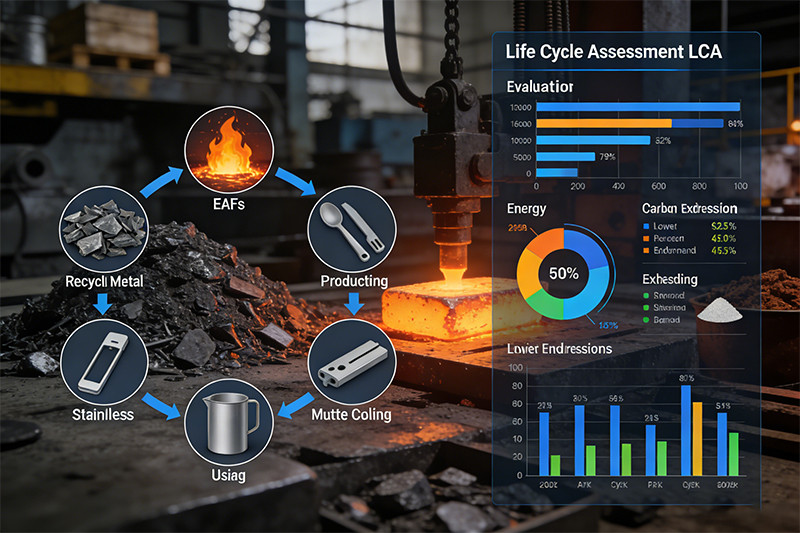
The production of stainless steel from recycled scrap requires significantly less energy compared to creating it from raw ore. Modern production facilities often use Electric Arc Furnaces (EAFs), which are highly efficient for melting down scrap metal and reduce carbon emissions compared to traditional steelmaking methods. This energy efficiency directly translates to a lower carbon footprint during the manufacturing stage.
Furthermore, stainless steel’s durability contributes to its sustainable profile. A long service life means fewer replacements are needed over time, which reduces the material production, transportation, and installation impacts associated with more frequent change-outs. Even if a stainless steel product were to end up in a landfill, its inert and non-toxic properties ensure it will not leach harmful chemicals or contaminate soil and water.
A comprehensive Life Cycle Assessment (LCA)—a tool used to evaluate a product's environmental impact from raw material extraction to end-of-life—confirms the strengths of stainless steel. When its long life, high recycled content, and end-of-life recovery rate are factored in, stainless steel emerges as a material with a lower overall environmental impact compared to many alternatives.
Versatility and Design for Modern Commercial Needs
Beyond its functional and environmental benefits, stainless steel offers remarkable versatility in design, allowing it to meet the diverse and evolving needs of modern commercial spaces. Its ability to be fabricated into nearly any shape or size, combined with its inherent aesthetic appeal, makes it a preferred material for architects and designers aiming to create spaces that are both efficient and visually striking.
Adapting to Diverse Commercial Environments
The needs of a bustling restaurant kitchen are vastly different from those of a sterile hospital laboratory or a high-end hotel restroom. Stainless steel's adaptability makes it an ideal choice across this wide spectrum of applications. Manufacturers offer an extensive range of commercial sinks, including:
- Multi-Compartment Sinks: Essential for the wash, rinse, and sanitize process in foodservice, these can be configured with one, two, three, or even four bowls.
- Hand Sinks: Compact, wall-mounted, or drop-in units designed for quick handwashing in kitchens and restrooms.
- Food Prep Sinks: Specialized sinks for washing vegetables and other food items, often designed to prevent cross-contamination.
- Utility and Mop Sinks: Deep, heavy-duty basins for janitorial and maintenance tasks.
Furthermore, stainless steel sinks can be designed to meet specific regulatory requirements, such as ADA (Americans with Disabilities Act) compliance. ADA-compliant sinks feature a shallower bowl depth and rear drain placement to provide sufficient knee clearance for wheelchair users, ensuring accessibility without sacrificing style or function. This level of customization ensures that every commercial space, from a hospital to a school, can be outfitted with sinks that are perfectly suited to its unique operational demands.
Enhancing Aesthetic Appeal and Workflow
Functionality does not have to come at the expense of style. Stainless steel offers a sleek, modern aesthetic that can elevate the look of any commercial property. Its clean lines and reflective surface complement a variety of architectural styles, from industrial and minimalist to sophisticated and contemporary.
The design versatility of stainless steel extends to its finishes. While the classic brushed satin look is popular, fabricators can provide a range of textures and polishes, from a highly reflective mirror finish to a muted matte look, and even patterned or colored options. This allows designers to use stainless steel as a key architectural element that can either blend in or stand out.
More importantly, custom fabrication allows for the creation of sinks that are tailored to a specific workflow, dramatically improving efficiency. Features that can be integrated include:
- Integrated Drainboards: Provide a convenient and hygienic space for air-drying dishes and tools.
- Seamless Countertops: Fabricating the sink and countertop from a single piece of stainless steel eliminates seams where dirt and bacteria can accumulate, promoting superior hygiene and a streamlined look.
- Custom Shapes and Sizes: Sinks can be crafted to fit into tight corners or unconventional spaces, maximizing the utility of every square inch.
By combining tailored designs with its inherent aesthetic qualities, stainless steel helps create commercial spaces that are not only sustainable and hygienic but also highly functional and beautiful.
Frequently Asked Questions (FAQs)
Q1: What is the best gauge of stainless steel for a commercial sink? The gauge refers to the thickness of the steel; a lower number indicates thicker steel. For most commercial applications, 16-gauge stainless steel is considered the industry standard. It provides an excellent balance of durability to resist dents and noise, without being excessively heavy or expensive. For very heavy-duty environments, 14-gauge is an even more robust option, while 18-gauge may be suitable for lighter use.
Q2: How can I prevent rust spots on a stainless steel sink? While stainless steel is highly resistant to rust, small spots can occasionally appear. This is usually not the steel itself rusting, but rather iron particles from other sources (like steel wool pads or metal cans) that have been left on the surface and have rusted. To prevent this, avoid using steel wool for cleaning and do not leave cast iron or other corrodible metal items in the sink for extended periods. If spots do appear, they can typically be removed with a non-abrasive cleaner.
Q3: Are stainless steel sinks noisy? The noise level of a stainless steel sink, often referred to as "reverberation," depends on its thickness and the quality of its sound-dampening features. High-quality commercial sinks are often equipped with sound-deadening pads and undercoating. These are applied to the underside of the sink to absorb vibrations from running water and dropped utensils, resulting in a much quieter operation. Thicker gauge steel (like 16-gauge) also naturally produces less noise than thinner steel.
Q4: What is the difference between 304 and 316 grade stainless steel? The main difference is the addition of molybdenum in 316-grade stainless steel. While 304 grade is the most common and offers excellent corrosion resistance for general use, 316 grade provides superior resistance, particularly against chlorides and other harsh chemicals. 316 grade is often specified for medical facilities, laboratories, and marine or coastal environments where exposure to salt and corrosive solutions is a concern.
Q5: Can stainless steel sinks be customized for a specific space? Absolutely. One of the greatest advantages of stainless steel is its versatility in fabrication. Sinks can be custom-built to nearly any dimension, shape, or configuration. This includes variations in the number and size of bowls, the length and placement of drainboards, the inclusion of backsplashes, and the specification of hole placements for faucets and other accessories, ensuring a perfect fit for any commercial kitchen or workspace layout.
Conclusion
In conclusion, the decision to install stainless steel sinks in a commercial space is a powerful and practical step towards embracing sustainability. It’s a choice that transcends mere functionality, reflecting a commitment to long-term value, operational excellence, and environmental stewardship. Their unparalleled durability ensures a long lifespan, reducing waste and replacement costs, while the non-porous, hygienic surface is fundamental to maintaining a safe and clean environment in high-traffic areas like kitchens and restrooms.
As we have seen, stainless steel sinks offer a compelling blend of practicality and eco-consciousness. From bustling restaurant kitchens and sterile healthcare facilities to modern office buildings, these fixtures exemplify how integrating sustainable design can lead to both significant operational efficiencies and a lighter planetary footprint. When combined with water-saving technologies, they become key components in water conservation efforts. Furthermore, their high recyclability and the use of recycled content in their production embody the principles of a circular economy. The future of commercial design is undeniably green, with a growing emphasis on materials and technologies that are not only efficient but also environmentally responsible.
Making a conscious choice for products like stainless steel sinks is more than an upgrade—it's an investment in a resilient and sustainable future. By prioritizing materials that offer longevity, hygiene, and recyclability, we can make a real and measurable difference, one sink at a time. Let's continue to champion these smart, sustainable choices in all our commercial endeavors and build spaces that are not only productive and profitable, but also healthy for people and the planet.