Stainless Utility Sinks Explained: Material, Gauge, and Resistance
- Share
- Issue Time
- May 7,2026
Summary
Utility sinks are indispensable fixtures in homes and workshops, designed to handle demanding, messy tasks unsuitable for kitchen or bathroom sinks. Stainless steel emerges as the premier material for these workhorse basins due to its exceptional durability, hygiene, and resistance.
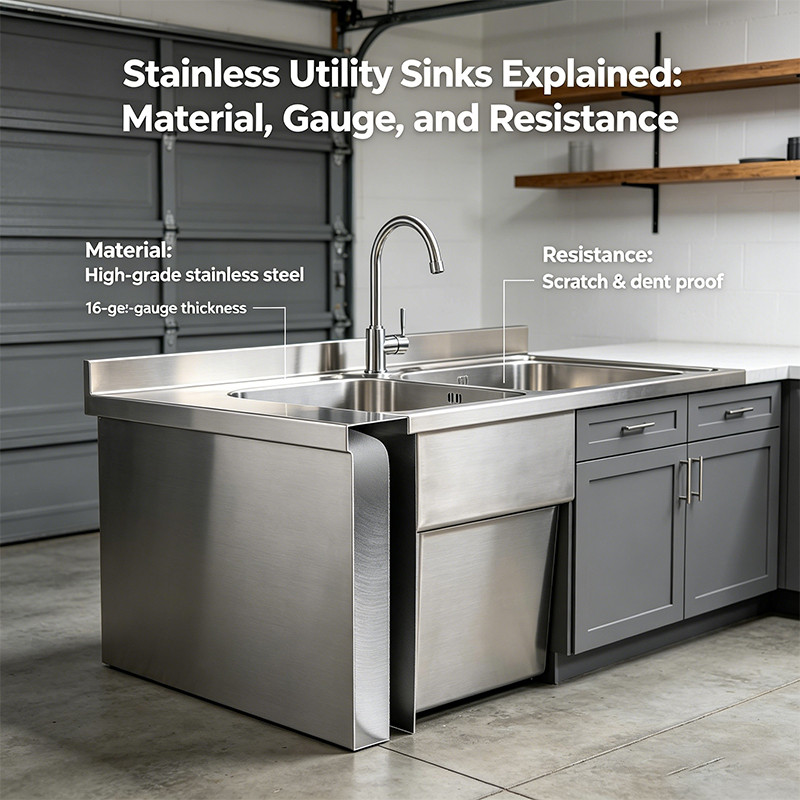
Hey everyone! Let's talk about something incredibly practical and often overlooked in our homes or workshops: the utility sink. These hardworking basins are essential for all the messy tasks, from washing paintbrushes to rinsing dirty garden tools. They are specifically designed to handle tough messes that you wouldn’t want in your kitchen or bathroom sink.
When it comes to choosing a utility sink that can truly stand up to anything, one material shines brightest: stainless steel. Today, I'm going to explain why the stainless utility sink is such a champion, focusing on its material, thickness (what we call gauge), and incredible resistance. Its combination of strength, hygiene, and durability makes it a top choice for laundry rooms, garages, basements, and workshops.
The Foundation of Durability: Understanding Your Stainless Utility Sink's Material
The core strength of a stainless utility sink lies, unsurprisingly, in its material. But not all stainless steel is created equal. The specific grade of steel used in a sink has a massive impact on its performance, longevity, and overall value. Understanding these differences is the first step to choosing a sink that will serve you well for decades.
Essential Grades for a Robust Stainless Utility Sink
When you see "stainless steel," it's usually referring to a family of steel alloys that contain a minimum of 10.5% chromium. This chromium is what gives the steel its famous "stainless" quality by forming a passive, self-repairing oxide layer on the surface that prevents rust and corrosion. For sinks, we are primarily concerned with the austenitic family of stainless steels, which are known for their exceptional formability, toughness, and corrosion resistance.
Here's a breakdown of the most common grades you'll encounter when shopping for a utility sink:
- Type 304 Stainless Steel: This is the most common and widely used grade for kitchen and utility sinks, often referred to as 18/8 stainless steel because it typically contains 18% chromium and 8% nickel. This composition provides an excellent balance of corrosion resistance, durability, and affordability, making it the ideal choice for most household applications. It's highly resistant to rust, staining, and can withstand the daily rigors of a busy utility area.
- Type 316 Stainless Steel: This is a premium-grade stainless steel that offers superior corrosion resistance compared to Type 304. The key difference is the addition of molybdenum (usually 2-3%), which significantly enhances its ability to resist corrosion from chlorides, such as salt and certain harsh chemicals. While more expensive, a Type 316 sink is the best choice for environments with high exposure to corrosive agents, like coastal areas (salt air) or workshops where strong chemicals are used.
- Type 201 Stainless Steel: You may also come across this grade, which is a more budget-friendly option. It substitutes some of the nickel with manganese and nitrogen. While it is still an austenitic stainless steel, its corrosion resistance is lower than that of Type 304. For a hardworking utility sink that will be frequently wet and exposed to various substances, investing in the superior durability of Type 304 or 316 is generally recommended.
For a brand you can trust to use high-quality materials, look no further than Samsink, which offers sinks in reliable grades like 304, ensuring long-lasting performance.
Inherent Strength: Why Stainless Steel is Key for Utility Sinks
Beyond just the grade, the inherent properties of austenitic stainless steel make it a uniquely suitable material for the demanding role of a utility sink.
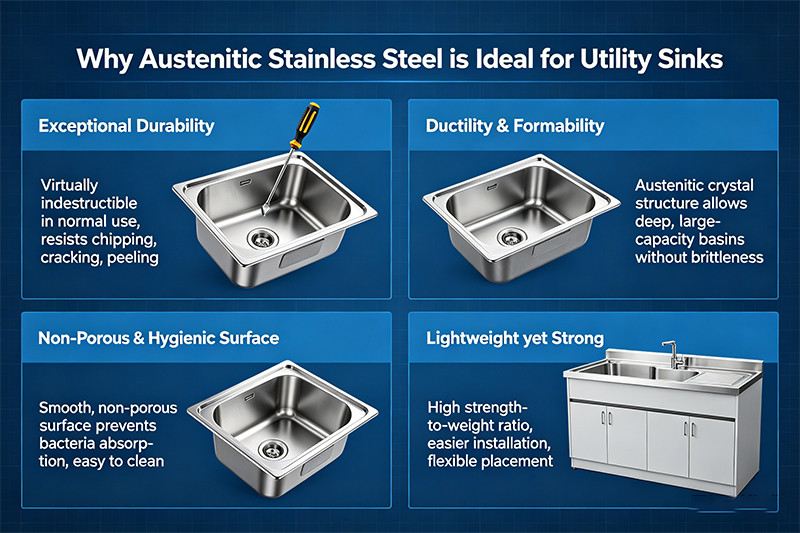
- Exceptional Durability: Stainless steel is incredibly tough and resilient. Unlike ceramic or enamel-coated cast iron which can chip or crack under impact, a stainless steel sink is virtually indestructible in normal use. It resists chipping, cracking, and peeling, meaning you don't have to worry about dropping a heavy tool or pot.
- Ductility and Formability: The austenitic crystal structure of these steels makes them highly ductile, meaning they can be bent, stretched, and formed into deep, large-capacity basins without becoming brittle. This is why stainless steel sinks can offer greater bowl capacity than sinks made from more rigid materials like cast iron.
- Non-Porous and Hygienic Surface: The surface of stainless steel is smooth and non-porous. This is a critical advantage for hygiene, as it prevents bacteria, dirt, and grime from getting absorbed into the material. A quick clean is usually all that's needed to keep the surface sanitary, making it a safe choice for everything from washing garden vegetables to cleaning pet supplies.
- Lightweight yet Strong: Compared to cast iron or stone alternatives, stainless steel offers an impressive strength-to-weight ratio. This makes installation easier and means it doesn't necessarily require specialized, heavily reinforced cabinetry for support, offering more flexibility in placement.
Gauge and Resistance: Powering the Performance of Your Stainless Utility Sink
While the grade of steel defines its chemical makeup and fundamental corrosion resistance, the "gauge" and its resulting physical properties are what you will see, feel, and hear every day. These factors directly influence how your sink performs under pressure—literally.
Deciphering Gauge: Thickness for Your Stainless Utility Sink
In the world of sheet metal, "gauge" is the standard used to measure thickness. It's a bit counterintuitive: the lower the gauge number, the thicker the steel. For stainless steel sinks, the most common gauges range from 16 to 22.
| Gauge Number | Thickness (Approx. Inches) | Characteristics & Best Use |
|---|---|---|
| 16 Gauge | 0.0625" | Heavy-Duty/Commercial Grade. This is a premium thickness that offers maximum durability. It's highly resistant to denting, has better sound dampening, and feels very solid. Ideal for workshops or for those who want the best quality. |
| 18 Gauge | 0.0500" | High-Quality Residential. This is an excellent choice for most homes, providing a great balance of durability and cost. It's noticeably more robust than higher gauges and is a common feature in quality sink brands like Samsink. |
| 20 Gauge | 0.0375" | Mid-Range/Standard. Often found in builder-grade or more budget-friendly sinks. It's functional but will be more prone to denting and may produce more noise from water and dropped items. |
| 22 Gauge | 0.0313" | Entry-Level/Light Use. This is a thinner steel and should generally be avoided for a utility sink that will see heavy use. It can dent easily and will be significantly louder. |
Generally, for a utility sink that needs to withstand rough treatment, 16 or 18 gauge is the ideal choice. A thicker gauge steel not only resists dents and damage from heavy objects but also vibrates less. This results in a quieter sink, reducing the "tinny" echo when the faucet is running or when you place items in the basin. While a 20-gauge sink might be functional, the upgrade to an 18-gauge or 16-gauge model is a worthwhile investment in long-term durability and a more pleasant user experience.
Unmatched Resistance to Corrosion, Stains, and Heat
The true power of a stainless utility sink comes from its triple-threat resistance, ensuring it looks good and functions perfectly for years.
- Corrosion Resistance: As mentioned, the chromium in the steel forms a passive layer of chromium oxide that protects the iron in the alloy from rusting when exposed to water and air. Even if the surface is scratched, the layer instantly reforms, "healing" itself and continuing to provide protection. This makes it the perfect material for a permanently wet environment.
- Stain Resistance: Stainless steel's non-porous surface means that common staining agents like paint, grease, mud, and even some chemicals have nowhere to seep in. While they might sit on the surface, they can't penetrate the material, allowing them to be wiped away easily without leaving a permanent mark. This is a significant advantage over porous materials like fireclay or enamel, which can stain over time.
- Heat Resistance: Stainless steel can handle extreme temperatures without being damaged. You can pour boiling water into the sink or place a hot pot on the surface without fear of cracking, discoloration, or warping—a feat not all materials can claim. Grade 304 stainless steel, for instance, can withstand temperatures up to 800°C (1472°F).
This powerful combination of resistance is why stainless steel is the undisputed material of choice for demanding environments, from professional kitchens to industrial workshops and, of course, the utility sink in your home.
Maximizing Life and Hygiene: The Practical Stainless Utility Sink
A major benefit of choosing a stainless steel utility sink is its incredibly low-maintenance nature. With just a little bit of simple care, you can ensure your sink remains hygienic, functional, and looking great for its entire lifespan.
Easy Cleaning and Preventing Bacteria in Your Stainless Utility Sink
The non-porous surface of stainless steel is its greatest asset when it comes to hygiene. Unlike materials with microscopic pores, stainless steel offers no refuge for bacteria, mold, or grime to grow, making it one of the most hygienic sink materials available.
Routine Cleaning: For daily cleaning, all you need is a soft cloth or sponge and mild soap and water. After washing, rinse the sink thoroughly to remove any soap residue. To prevent water spots and maintain the shine, it's best practice to wipe the sink dry with a soft cloth. This simple step is especially effective in areas with hard water, as it prevents mineral deposits from building up.
Deep Cleaning & Disinfecting: For a more thorough clean or to remove stubborn spots, you don't need harsh or abrasive chemicals. A paste of baking soda and water is an excellent, gentle abrasive that can scrub away residue without scratching the surface. You can also use a diluted solution of vinegar and water to help dissolve mineral deposits and disinfect the surface. Always remember to rinse thoroughly with water after using any cleaning solution.
What to Avoid: To protect the passive layer of your stainless steel, avoid using harsh abrasive cleaners, steel wool, or scouring pads. These can scratch the surface and, in the case of steel wool, can leave behind tiny particles of regular steel that can lead to rust spots. Also, avoid leaving corrosive chemicals like bleach or certain drain cleaners in contact with the sink for prolonged periods.
Simple Care for Enduring Performance and Value
Beyond cleaning, a few simple habits will ensure your stainless utility sink delivers enduring performance and proves to be a fantastic long-term investment.
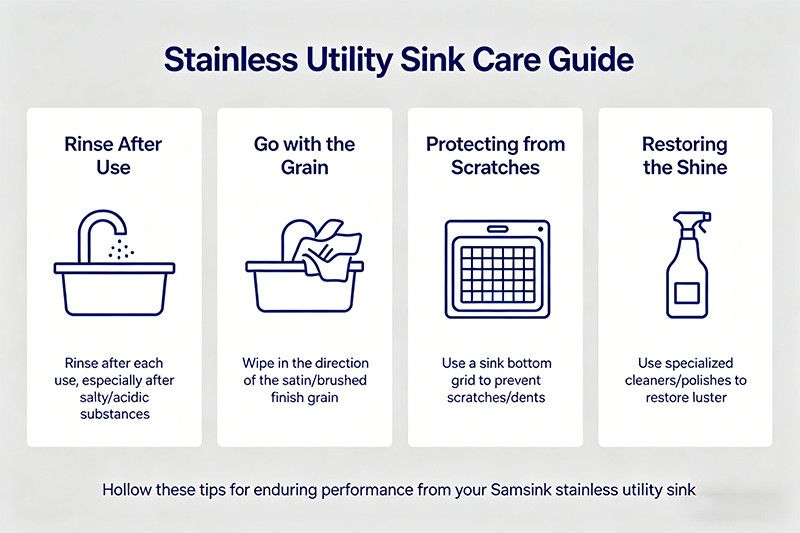
- Rinse After Use: Get into the habit of rinsing the sink after each use, especially after contact with salty or acidic substances. This prevents any potential for long-term exposure that could affect the finish.
- Go with the Grain: Most stainless steel sinks have a satin or brushed finish with very fine lines or "grain." When you're cleaning or scrubbing, always try to wipe in the direction of the grain. This helps maintain the original look of the finish and makes any minor scratches blend in more effectively.
- Protecting from Scratches: While stainless steel is durable, it's not scratch-proof. Thicker gauge steel is more resistant, but all stainless steel can be scratched. The good news is that over time, these small scratches tend to blend into the overall patina of the sink. A sink bottom grid is a fantastic accessory that protects the basin floor from scratches and dents while allowing water to drain freely.
- Restoring the Shine: If your sink starts to look a bit dull, there are many specialized stainless steel cleaners and polishes available that can restore its luster. These products can also help minimize the appearance of fine scratches and provide a protective layer that repels water.
By following these simple care and maintenance rules, your stainless utility sink from a quality manufacturer like Samsink will not only handle the toughest jobs you throw at it but will also remain a clean, functional, and valuable part of your home for many years to come.
Key Takeaways
For a comprehensive understanding of why a stainless steel utility sink is a superior choice, it's essential to grasp the core concepts of its material, construction, and inherent benefits. This section summarizes the most critical points, providing a detailed overview to guide your decision-making process.
Material Science is Paramount: The foundation of a great sink is the quality of its stainless steel. We primarily focus on austenitic stainless steels, prized for their corrosion resistance and formability. The most important takeaway is the difference between the grades. Type 304 stainless steel, also known as 18/8 for its 18% chromium and 8% nickel content, represents the industry standard and the best balance of performance and cost for most applications. It provides robust protection against rust and common household chemicals. For those in harsher environments, such as coastal regions with salt-laden air or workshops using aggressive chemicals, upgrading to Type 316 stainless steel is a wise investment. The addition of molybdenum in Type 316 offers a significant boost in corrosion resistance, especially against chlorides. Conversely, be cautious of Type 201 steel; while cheaper due to its lower nickel content, its reduced corrosion resistance makes it a less durable choice for a long-lasting, frequently wet utility sink.
Gauge Determines Durability and Experience: Sink thickness, measured by gauge, is a direct indicator of its quality and durability. Remember the inverse relationship: the lower the gauge number, the thicker and stronger the steel. A sink made from 16-gauge steel is a premium, commercial-quality product that offers the highest resistance to dents, vibrations, and noise. An 18-gauge sink is also an excellent, high-quality choice and a significant step up from thinner options, providing a solid feel and reliable durability for any home utility area. Sinks with gauges of 20 or higher, particularly 22-gauge, are noticeably thinner. They are more susceptible to denting from dropped tools or heavy pots and tend to be much noisier, creating a "tinny" sound from running water. For a "workhorse" sink, investing in a lower gauge (16 or 18) is one of the most important decisions you can make for long-term satisfaction.
A Trifecta of Resistance: The practical, day-to-day superiority of stainless steel lies in its powerful resistance to the three most common sources of damage: corrosion, stains, and heat. The chromium content creates a self-healing "passive layer" that provides continuous corrosion resistance. Its non-porous nature means it offers exceptional stain resistance, as liquids cannot penetrate the surface. Finally, its ability to withstand extreme temperatures without damage provides unmatched heat resistance, allowing you to pour boiling water or come in contact with hot items without fear of cracking or warping.
Hygiene and Maintenance are Effortless: One of the most practical advantages is how easy stainless steel is to keep clean and hygienic. Its smooth, non-porous surface naturally inhibits the growth of bacteria, mold, and other pathogens. Simple cleaning with soap, water, and a soft cloth is all that's required for daily maintenance. This inherent cleanliness makes it a safe and reliable choice for a wide range of tasks, from pre-soaking laundry to washing freshly picked vegetables. Avoiding abrasive steel wool and harsh chemicals like bleach will protect its passive layer and ensure it continues to resist rust effectively for its entire lifespan.
Frequently Asked Questions (FAQ)
Q1: What is the best gauge for a stainless steel utility sink? For a utility sink that will endure heavy-duty tasks, a lower gauge is always better as it signifies thicker steel. The ideal choice is 16-gauge, which provides maximum durability, resistance to dents, and excellent sound-dampening qualities. However, an 18-gauge sink is also a very strong and popular option that offers a fantastic balance of high-end performance and value for residential use. While you can find sinks in 20 or 22-gauge, they are significantly thinner and more prone to damage and noise. For a long-term investment in a functional work area, sticking to 18-gauge or, preferably, 16-gauge is highly recommended.
Q2: Will my stainless steel utility sink rust? High-quality stainless steel, like Type 304 or Type 316, is highly resistant to rust due to its chromium content, which forms a protective, passive layer on the surface. However, rust can occasionally appear under specific circumstances. The most common cause is when particles of regular (carbon) steel are left in the sink. This can happen from using steel wool for cleaning or from leaving wet metal tools or cans in the basin for an extended period. These external particles rust and can stain the sink's surface. True rusting of the sink itself is extremely rare with proper care. If you see rust spots, they can usually be cleaned off with a non-abrasive cleaner like a baking soda paste, as the rust is typically from an external source.
Q3: How do I remove scratches from a stainless steel sink? While stainless steel is tough, it can get scratched. For minor scratches, there are several methods. You can purchase a specialized stainless steel scratch removal kit, which often includes a series of abrasive pads and a polishing compound. It's crucial to always work in the direction of the steel's "grain" or finish lines to ensure the repair blends in. For very light scuffs, a paste of baking soda and water or a non-abrasive cleaner can sometimes minimize their appearance. Over time, a network of small scratches will develop a unique patina, which is a natural characteristic of a well-used stainless steel sink. Many users find this patina preferable to a perfect mirror finish.
Q4: Is a Type 304 or Type 316 stainless steel sink better for my utility room? For the vast majority of homeowners, a Type 304 stainless steel sink is more than sufficient and is the most common material for a reason. It provides excellent durability and corrosion resistance for typical household tasks. You should consider upgrading to the more expensive Type 316 only if your sink will be in a particularly harsh environment. This includes outdoor installations, especially in coastal areas where the air has a high salt content, or in workshops where the sink will be regularly exposed to strong acids, chlorides, or other corrosive chemicals. For indoor laundry rooms, basements, or garages in typical environments, Type 304 is the perfect choice, offering the best overall value.
Q5: Are stainless steel utility sinks noisy? The noise level of a stainless steel sink is largely determined by its gauge (thickness) and the quality of its sound-dampening features. Thinner sinks (20-gauge and up) will vibrate more, creating a louder, "tinny" sound when water hits the basin. Thicker sinks (16 and 18-gauge) are inherently quieter because the heavier metal doesn't vibrate as easily. Furthermore, high-quality manufacturers like Samsink include sound-dampening pads and undercoating. These are dense, rubber-like pads attached to the underside and a spray-on coating that deadens vibrations and insulates the sink, dramatically reducing noise from running water and dropped items. When buying a sink, always check for these sound-absorption features.
So, there you have it! The stainless utility sink is a fantastic choice, designed for tough jobs and built to last. Its special material, sturdy thickness, and amazing resistance make it a standout. From the rugged durability of 16-gauge steel to the rust-defying properties of Type 304 and 316 alloys, it's a product engineered for performance.
By understanding these key features—material grade, gauge, and inherent resistance—we can make smart choices for our homes and workshops, ensuring our utility areas are equipped with the best tools for cleanliness and efficiency. I hope this helped you learn more about these indispensable workhorses! We encourage you to share this guide with anyone planning a renovation or simply looking to upgrade their utility space.