The Essential Guide to 304 Stainless Steel Kitchen Sinks: From Material Grade to Thickness.
- Share
- Issue Time
- Sep 15,2026
Summary
Choosing a kitchen sink involves more than just aesthetics; it's a critical decision impacting hygiene, efficiency, and longevity. The 304 stainless steel kitchen sink stands out as the industry's gold standard, recognized for its exceptional strength, sanitary properties, and adaptable design. This guide highlights the key factors that contribute to its superior performance.
Primarily, the quality stems from its material grade. Type 304, also known as 18/8 stainless steel, features a compositi
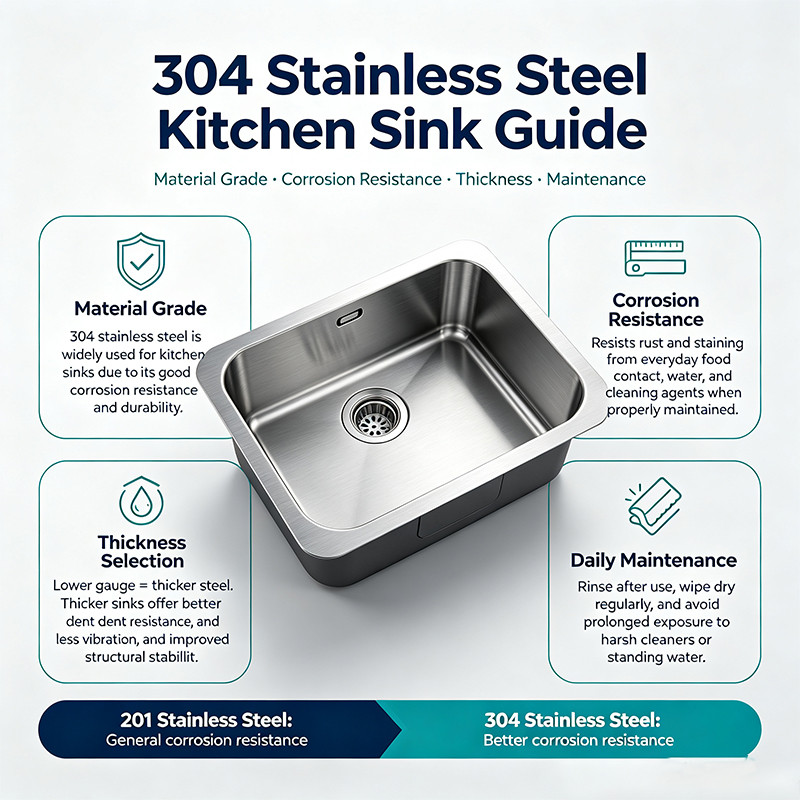
A kitchen sink is more than just a basin for washing dishes; it's a critical component of any well-designed kitchen, serving as a hub for cleaning, food preparation, and daily chores. The material and durability of a sink are paramount, directly impacting the hygiene and efficiency of your culinary space. When it comes to performance, the 304 stainless steel kitchen sink is often hailed as the gold standard, offering a unique combination of strength, hygiene, and aesthetic versatility.
This guide will delve into why 304 stainless steel has earned this reputation. We will explore its specific material grade, the crucial role of thickness (gauge), and other key manufacturing features that guarantee longevity and a clean, safe environment for your family. Join us as we unpack the essential factors that define a superior 304 stainless steel sink, empowering you to make a smart and lasting investment for your home.
Key Takeaways
Grade is Paramount (304 is the Standard): The quality of a stainless steel sink starts with its grade. Type 304, also known as 18/8 stainless steel, signifies a composition of 18% chromium and 8% nickel. This specific blend is the industry standard for kitchen sinks for good reason. The chromium content creates a passive, self-repairing oxide layer on the surface, which is the key to its exceptional rust and corrosion resistance. The nickel enhances this resistance, particularly against acids, while also adding ductility, toughness, and an appealing luster. This chemical makeup makes 304 stainless steel non-porous, highly durable, and inherently hygienic, preventing bacteria from harboring and ensuring it doesn't react with foods.
Gauge Determines Durability (Thicker is Better): "Gauge" refers to the thickness of the steel, and in a counterintuitive system, a lower gauge number means thicker and stronger steel. While budget sinks might use thinner 20 or 22-gauge steel, a high-quality residential sink should be 18-gauge or, ideally, 16-gauge. A thicker gauge provides superior resistance to denting from dropped pots and pans, reduces vibration, and minimizes the "tinny" noise often associated with thinner sinks. It feels more substantial and provides a stable base for heavy faucets. Investing in a 16-gauge sink, like those offered by premium brands such as Samsink, ensures maximum durability and a quieter kitchen experience.
Manufacturing and Design Details Matter: Beyond grade and gauge, the finishing touches separate a premium sink from a standard one. Look for features like sound-dampening pads and undercoating. These are large rubber pads and a sprayed-on coating applied to the sink's exterior to absorb noise from running water and clanging dishes, as well as to prevent condensation in the cabinet below. The corner radius is another key design element. While zero-radius corners offer a sharp, modern look, they can be difficult to clean. Gently rounded or "coved" corners provide a compromise that is both stylish and easy to maintain. Finally, a brushed or satin finish is often preferred over a mirror finish as it does a better job of hiding minor scratches and water spots, keeping the sink looking pristine with minimal effort.
Look for Certifications: To ensure you're getting a product that meets safety and performance standards, look for certifications like cUPC (Uniform Plumbing Code). This mark indicates that the sink has been tested and certified to meet the standards required for plumbing products in North America, giving you peace of mind about its quality and safety. Brands that prioritize these certifications, like Samsink, demonstrate a commitment to excellence.
Understanding the Foundation: What is a 304 Stainless Steel Kitchen Sink?
At its core, a 304 stainless steel kitchen sink is a basin crafted from a specific and highly regarded type of steel alloy. It is not just ordinary steel; it's a meticulously engineered material, recognized as the gold standard for food-grade applications due to its unique properties. This grade is the most common type used for kitchen sinks globally, striking an ideal balance between performance, durability, and value that makes it a trusted choice for both residential and demanding commercial kitchens.
The Chemical Composition: Unpacking the 18/8 Chrome-Nickel Ratio in Your 304 Stainless Steel Kitchen Sink
The secret to 304 stainless steel's success lies in its chemical makeup. It is often referred to as "18/8 stainless steel," a label that directly points to its two most critical alloying elements besides iron: 18% chromium and 8% nickel. This precise ratio is what elevates the material from simple steel to a high-performance alloy.
Chromium is the hero of corrosion resistance. When exposed to oxygen, the chromium in the alloy forms a thin, invisible, and incredibly durable layer of chromium oxide on the steel's surface. This "passive layer" acts as a shield, protecting the underlying iron from reacting with water and air, which is the process that causes rust. What makes this layer truly remarkable is its ability to self-repair; if the surface is scratched, the exposed chromium instantly reacts with the air to reform the protective shield.
Nickel plays a crucial supporting role. It enhances the corrosion resistance further, especially against acidic and alkaline solutions commonly found in the kitchen, from lemon juice to cleaning agents. Beyond that, nickel significantly improves the steel's toughness, ductility (formability), and strength, making the sink more resistant to impact and stress. This combination of chromium and nickel gives 18/8 stainless steel its signature durability and lasting shine.
Superior Corrosion Resistance for Your 304 Stainless Steel Kitchen Sink
The primary reason 304 stainless steel is a superstar in the kitchen is its exceptional ability to resist corrosion. In a high-moisture environment where the sink is constantly exposed to water, food acids, salts, and cleaning chemicals, this property is non-negotiable. The 18% chromium content ensures the formation of a robust passive layer that prevents rust and staining under normal use.
This makes 304 grade far superior to lower-cost alternatives like 201 or 430 grade stainless steel. For instance, 201 steel often substitutes more expensive nickel with manganese, which significantly reduces its corrosion resistance and makes it prone to rust, especially when in constant contact with moisture. Similarly, 430 grade contains chromium but has a negligible amount of nickel, making it less resistant to a wide range of corrosive agents. A 304 stainless steel sink, however, can easily handle daily encounters with acidic foods, salty liquids, and detergents without succumbing to rust or pitting. It's considered resistant to pitting corrosion in water with up to about 400 mg/L of chlorides at ambient temperatures.
Why 304 Grade is the Food-Safe Standard for Every Kitchen
A material's ability to resist corrosion is directly tied to its hygiene. 304 stainless steel is considered the industry standard for food and beverage applications because it is a "food-grade" material. This designation is based on several key characteristics.
First, 304 stainless steel is non-porous. Unlike materials that may have microscopic crevices, its smooth surface does not harbor bacteria, germs, or mold. This makes it incredibly easy to clean and sanitize, a critical feature for any surface that comes into contact with food.
Second, it is chemically stable and inert. This means it will not react with the acids or alkalis found in foods, so it won't leach harmful chemicals or metallic flavors into your ingredients. This is why you'll find 304 stainless steel used not just in sinks, but also in professional kitchens, food processing plants, breweries, and medical facilities where hygiene is paramount. Its proven track record in these demanding environments provides the ultimate assurance of its safety and suitability for your home kitchen.
Beyond the Basics: The Critical Role of Gauge in a 304 Stainless Steel Kitchen Sink
While the Grade (304) of the steel defines its chemical resistance and hygienic properties, the Gauge defines its physical strength and durability. The gauge of a stainless steel sink refers to the thickness of the steel sheet used to manufacture it. Understanding this single metric is one of the most crucial steps in selecting a sink that will stand up to the rigors of daily kitchen life. It directly impacts the sink's resistance to dents, its noise level, and its overall lifespan.
Decoding Gauge Numbers: Why Thicker is Better for Your 304 Stainless Steel Kitchen Sink
When it comes to steel gauge, the numbering system is counterintuitive: the lower the number, the thicker and stronger the steel. This inverse scale can be confusing, but it's a critical concept to grasp. A 16-gauge sink is thicker and more robust than an 18-gauge sink, which in turn is thicker than a 20- or 22-gauge sink.
Here is a simple breakdown of common gauges and their approximate thicknesses:
- 16 Gauge: 0.0625 inches (approx. 1.59 mm) - Premium Residential & Commercial
- 18 Gauge: 0.0500 inches (approx. 1.27 mm) - Standard High-Quality Residential
- 20 Gauge: 0.0375 inches (approx. 0.95 mm) - Budget/Economy
- 22 Gauge: 0.0313 inches (approx. 0.79 mm) - Entry-Level/Light-Duty
A thicker sink (lower gauge) offers several tangible benefits. It provides superior resistance to denting from accidentally dropped heavy pots and pans. Furthermore, thicker steel absorbs vibrations more effectively, resulting in a much quieter experience; the "tinny" or echoing sound of water hitting the basin is significantly reduced. This sturdier construction also means the sink is less likely to flex or bow under the weight of a heavy garbage disposal or a full basin of water.
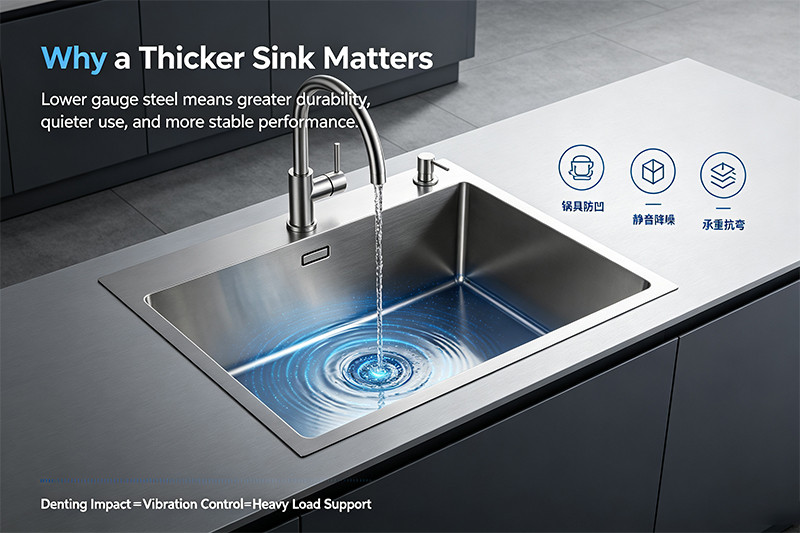
Recommended Thicknesses for Optimal Durability and Performance
For most residential kitchens, the sweet spot for durability, performance, and value is 16 to 18 gauge.
18-Gauge: This is widely considered the standard for a quality residential kitchen sink. It offers a good balance of durability and affordability, easily supporting daily use and common accessories like garbage disposals. For many households, a well-made 18-gauge sink is perfectly sufficient.
16-Gauge: This is the premium choice for residential applications and the standard for light commercial use. The added thickness makes a noticeable difference in dent resistance and noise reduction. If you have a busy kitchen, frequently use heavy cast-iron cookware, or simply want the most durable option available, a 16-gauge sink is an excellent investment. Brands like Samsink focus on this premium thickness to deliver a product that feels more solid and is built to last.
While even thicker gauges like 14-gauge exist, they are typically reserved for heavy-duty industrial or commercial settings and are often overkill for a home kitchen.
Avoiding Common Pitfalls: Why Thin Gauges Compromise Your 304 Stainless Steel Kitchen Sink
Opting for a sink with a higher gauge number (thinner steel), such as 20 or 22 gauge, is often a false economy. While the initial cost may be lower, these sinks come with significant compromises that can lead to frustration and a shorter lifespan.
The primary issues with thin-gauge sinks include:
- Increased Vulnerability to Damage: Thinner steel is far more susceptible to denting, dinging, and even warping from impacts or hot water. A single dropped pot can leave a permanent mark.
- More Noise: These sinks lack the mass to effectively dampen sound, resulting in loud, unpleasant "drumming" from running water and clanging dishes. While sound-dampening pads can help, the inherent thinness of the material is a major disadvantage.
- Vibration and Flexing: A thin-gauge sink may vibrate excessively when a garbage disposal is running and can flex under weight, creating an unstable feel. This flexing can also put stress on the countertop seals over time.
Ultimately, investing in a sink from a reputable brand that uses true 16 or 18-gauge T304 stainless steel, like Samsink, ensures you receive a product built for lasting performance, not just a low price tag. It's a choice that pays dividends in durability and satisfaction for years to come.
Manufacturing Excellence: Key Features of a Premium 304 Stainless Steel Kitchen Sink
While grade and gauge are foundational, the true quality of a 304 stainless steel kitchen sink is often revealed in the details of its manufacturing and design. Excellence in craftsmanship transforms a simple steel basin into a high-performance, durable, and user-friendly centerpiece of the kitchen. From the way it's shaped to the final finishes and "hidden" features, every detail matters.
The Art of Welding and Forming in 304 Stainless Steel Kitchen Sinks
There are two primary methods for manufacturing stainless steel sinks, each with its own characteristics:
Drawn or Pressed Sinks: In this highly automated process, a single sheet of stainless steel is placed in a large hydraulic press and "drawn" or stamped into shape using a mold. This method is efficient for mass production and creates a seamless basin with no welds. However, the stretching process can sometimes result in the steel being thinner at the corners and base compared to the rim, potentially creating weak points.
Handmade or Fabricated Sinks: This method involves more manual craftsmanship. Thick, uniform sheets of steel are precisely cut, then bent and welded together to form the sink's shape. This process allows for the creation of sharp, modern designs like zero-radius corners and ensures a consistent thickness throughout the entire sink, including the walls and corners. The quality of a handmade sink is heavily dependent on the skill of the welders and the finishing of the seams to be smooth and invisible. While often more expensive, a well-made fabricated sink offers superior strength and a distinct, high-end architectural look.
Essential Design Elements: Coved Corners and Finishes for Your 304 Stainless Steel Kitchen Sink
The design of a sink's corners and the type of finish applied to its surface have a significant impact on both its usability and aesthetic appeal.
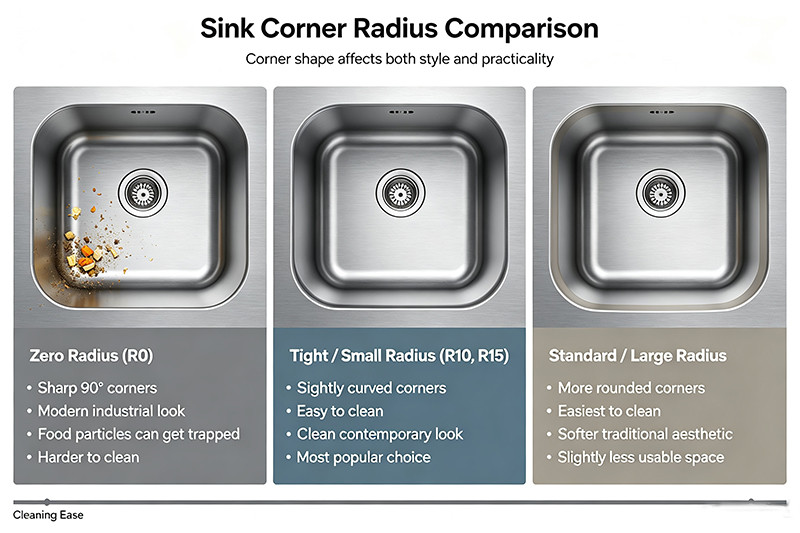
Corner Radius: This refers to how rounded the internal corners of the sink are.
- Zero Radius (R0): These sinks feature sharp, 90-degree corners, delivering a crisp, modern, and industrial look. While visually striking, food particles and grime can get trapped in these tight corners, making them more challenging to clean.
- Tight or Small Radius (e.g., R10, R15): This is the most popular modern choice, offering a perfect compromise. The corners are slightly curved—just enough to allow for easy cleaning with a sponge or cloth—while still maintaining a clean, contemporary and squared-off appearance.
- Standard or Large Radius: These traditional sinks have more noticeably rounded corners. They are the easiest to clean but have a softer, less modern aesthetic and can result in slightly less usable space at the bottom of the basin.
Surface Finish: The finish not only affects the sink's look but also its maintenance.
- Brushed or Satin Finish: This is the most practical and popular finish for kitchen sinks. It's created by lightly sanding the steel with a fine-bristle brush, creating a soft, non-reflective luster with very fine lines or "grain." This texture is excellent at concealing minor scratches, fingerprints, and water spots, keeping the sink looking cleaner with less effort.
- Polished or Mirror Finish: This finish is highly reflective and shiny. While it can look stunning when new, it is the most difficult to maintain. It shows every fingerprint, water spot, and scratch, requiring constant wiping to keep it looking pristine.
For a busy kitchen, a brushed or satin finish is almost always the superior choice for long-term satisfaction.
The Hidden Benefits: Sound Dampening and Quality Certifications for Your 304 Stainless Steel Kitchen Sink
The features you can't see are often what separates a high-quality sink from a basic one.
Sound Dampening: A common complaint about lower-quality stainless steel sinks is the loud, "tinny" noise they make. Premium manufacturers combat this in two ways:
- Sound-Dampening Pads: These are thick, rubberized pads bonded to the exterior of the sink's bottom and walls. They work by absorbing vibrations from running water, clanging dishes, and garbage disposals, turning a sharp ring into a dull, quiet thud.
- Undercoating: Many high-quality sinks also have a sprayed-on undercoating that covers the entire underside. This layer provides additional sound dampening and serves a second crucial purpose: thermal insulation. It helps prevent condensation from forming on the outside of the sink when it's filled with cold water, protecting your sink cabinet from moisture damage and mold.
Quality Certifications: A reliable indicator of a manufacturer's commitment to quality is third-party certification. Look for the cUPC mark, which stands for the Uniform Plumbing Code (with the "c" for Canada). This certification, issued by organizations like IAPMO, signifies that the product complies with the rigorous safety and performance standards for plumbing fixtures in both the United States and Canada. A cUPC-certified sink has been tested for material safety, durability, and proper drainage, giving you confidence that you are installing a safe and reliable product in your home. Samsink and other reputable brands proudly display this certification as a testament to their product's quality.
Beyond the Initial Investment: Long-Term Value of Your 304 Stainless Steel Kitchen Sink
Choosing a kitchen sink is not just a short-term design decision; it's a long-term investment in your home's functionality, hygiene, and overall value. While a high-quality 304 stainless steel sink may have a higher upfront cost than some alternatives, its exceptional durability and timeless appeal deliver unmatched value over decades of use. This is where the initial investment pays for itself through longevity, ease of maintenance, and enduring style.
Unmatched Durability and Cost-Effectiveness of a High-Quality 304 Stainless Steel Kitchen Sink
The primary long-term benefit of a premium 304 stainless steel sink is its incredible durability. Unlike materials such as porcelain or enameled cast iron that can chip or crack from heavy impacts, 304 stainless steel is remarkably resilient. It possesses good tensile strength and ductility, meaning it can withstand daily use—including impacts from heavy pots and pans—without breaking. A well-made, thick-gauge (16 or 18-gauge) stainless steel sink is highly resistant to dents and deformation.
This inherent toughness translates directly to cost-effectiveness. A quality stainless steel sink can easily last 15 to 30 years or even longer with proper care, whereas lower-grade sinks may need replacement in as little as 5 to 10 years. When you consider the cost of the sink plus the expense and hassle of replacement and re-installation, investing in a durable, high-grade model from the start proves to be the more economical choice over the life of your kitchen.
Elevating Hygiene and Design Flexibility with Your 304 Stainless Steel Kitchen Sink
Hygiene is a paramount concern in any kitchen, and 304 stainless steel excels in this area. Its surface is non-porous, meaning there are no microscopic holes or crevices where bacteria, mold, and germs can hide. This makes it incredibly easy to clean and sanitize, ensuring a safe environment for food preparation. While stainless steel doesn't have active sterilizing properties, its smooth, dense surface makes it difficult for bacteria to adhere and multiply, a significant advantage over other materials.
Beyond its practical benefits, the 304 stainless steel sink offers incredible design flexibility. Its neutral, sleek appearance complements virtually any kitchen style, from ultra-modern and industrial to traditional and farmhouse. It pairs beautifully with all countertop materials, including granite, quartz, and butcher block. This timeless aesthetic ensures that your sink will not look dated as design trends evolve, protecting your kitchen's visual appeal and resale value for years to come.
Maintaining the Pristine Condition of Your 304 Stainless Steel Kitchen Sink
One of the most appealing aspects of a 304 stainless steel sink is its low maintenance. Keeping it looking great requires only a few simple habits.
Daily Care:
- Rinse and Dry: After each use, rinse the sink thoroughly with water and wipe it dry with a soft cloth. This is the single most effective way to prevent water spots and mineral deposits from hard water.
- Mild Soap: For daily cleaning, a simple solution of mild dish soap and warm water applied with a soft sponge is all that is needed.
Weekly or as-needed Cleaning:
- Use the Right Cleaners: For a deeper clean, use a non-abrasive cleaner like Bar Keepers Friend or a paste of baking soda and water.
- Clean with the Grain: Always scrub in the direction of the steel's grain (the faint lines in the finish). This helps prevent noticeable scratches and maintains the original look of the finish.
What to Avoid:
- Harsh Abrasives: Never use steel wool, wire brushes, or abrasive scouring pads, as they will scratch and damage the surface. Small metal particles left behind can also lead to rust spots.
- Harsh Chemicals: Avoid cleaners containing chlorine bleach or other chlorides, as they can damage the steel's passive layer and lead to corrosion.
- Prolonged Contact: Do not leave wet sponges, cloths, rubber mats, or metal cookware (especially cast iron) sitting in the sink for long periods. This traps moisture and can lead to staining or surface rust.
While minor scratches are an inevitable part of a stainless steel sink's life, they tend to blend into the brushed finish over time, creating a unique patina. By following these simple maintenance tips, your 304 stainless steel sink will remain a durable, hygienic, and beautiful centerpiece in your kitchen for decades.
FAQs (Frequently Asked Questions)
1. Will a 304 stainless steel sink rust? A true 304 stainless steel sink is highly resistant to rust due to its 18% chromium and 8% nickel content. The chromium forms a protective "passive layer" that prevents rust. However, it's rust-resistant, not rust-proof. Rust spots can occasionally appear, but they are almost always caused by external factors, not the sink itself. The most common cause is leaving metal objects like steel wool, cast-iron pans, or "tin" cans in the sink for extended periods, which can transfer iron particles that then rust on the surface. These spots can typically be cleaned off with a non-abrasive cleaner like Bar Keepers Friend. To prevent this, simply avoid leaving other metals in contact with your sink basin.
2. What is the difference between 304 and 316 stainless steel? Should I get a 316-grade sink? The main difference is that 316 stainless steel contains molybdenum (usually 2-3%), in addition to chromium and a slightly higher percentage of nickel. This gives 316 grade superior resistance to corrosion, especially from chlorides like salt. For this reason, 316 stainless steel is considered "marine grade" and is recommended for outdoor kitchens, coastal environments with salt in the air, or areas where de-icing salts are used heavily. For the vast majority of indoor residential kitchens, 304 stainless steel provides more than enough corrosion resistance and is the industry standard for its excellent balance of performance and value.
3. How can I remove scratches from my stainless steel sink? Minor, light scratches are a normal part of a stainless steel sink's life and will eventually blend into the brushed finish, creating a patina. A brushed or satin finish is specifically designed to help hide these small marks. For small scratches, a gentle scrub with a non-abrasive pad and a paste of baking soda or a specialized cleaner like Bar Keepers Friend—always moving in the direction of the steel's grain—can help soften their appearance. For deeper scratches, commercially available scratch removal kits can be used, but it’s important to follow the instructions carefully to blend the repair with the surrounding finish. The best defense is prevention: using a sink bottom grid can significantly reduce contact with heavy pots and sharp utensils.
4. Is a thicker gauge (like 16-gauge) sink always better and quieter? Generally, yes. A thicker gauge sink (lower number) is inherently more rigid, which makes it more resistant to denting and less prone to vibrating. This reduction in vibration means less noise. A 16-gauge sink will almost always be quieter than a 22-gauge sink. However, gauge is only part of the story. The most effective noise reduction comes from sound-dampening technologies. A high-quality 18-gauge sink with excellent sound-dampening pads and a full undercoating can be quieter than a bare-bones 16-gauge sink with no soundproofing. For the absolute quietest experience, look for a thick gauge (16 is ideal) combined with extensive pad coverage and a thick undercoating.
5. Why should I consider a Samsink brand 304 stainless steel sink? When choosing a sink, the manufacturer's commitment to quality is as important as the specs themselves. Samsink stands out by consistently using premium, certified T304 18/8 stainless steel, ensuring you get the corrosion resistance and food-safe properties you expect. Furthermore, Samsink specializes in robust 16-gauge construction, providing the superior durability and dent resistance needed for a busy kitchen. They combine this thick steel with advanced sound-dampening pad systems and protective undercoating for a remarkably quiet user experience. By focusing on high-quality materials, superior manufacturing techniques, and thoughtful design features, a Samsink product is an investment in long-term performance and satisfaction.
Conclusion
Choosing the right 304 stainless steel kitchen sink is a crucial decision that profoundly impacts not just the aesthetic of your kitchen, but its daily efficiency and hygiene for years to come. It’s an investment in the heart of your home, and making an informed choice ensures that investment pays dividends in durability and satisfaction.
By understanding the fundamental difference between material grades, recognizing the critical importance of a thicker gauge, and appreciating the fine details of quality manufacturing, you can confidently select a sink that truly stands the test of time. A sink built from true 18/8 T304 stainless steel ensures exceptional corrosion resistance and food safety. Opting for a robust 16- or 18-gauge thickness protects against dents and noise, while features like sound-dampening pads, rounded corners, and a practical brushed finish elevate the daily user experience from a chore to a pleasure.
Invest wisely in a high-grade 304 stainless steel kitchen sink, and you will be rewarded with a durable, hygienic, and aesthetically pleasing centerpiece for all your culinary adventures. Ready to upgrade your kitchen with a sink that combines durability, hygiene, and timeless style? Explore the premium collection of 16-gauge, 304 stainless steel sinks from Samsink today and find the perfect centerpiece for your culinary space. We encourage you to share this guide with anyone embarking on a kitchen renovation and to share your own experiences in the comments below