The Technology Behind Handmade Stainless Steel Sinks: What You Need to Know
- Share
- Issue Time
- Dec 19,2025
Summary
Understand the advanced technology behind handmade stainless steel sinks, including material science, corrosion resistance, gauge thickness effects, and artisanal craftsmanship that deliver durability, performance, and timeless kitchen appeal.
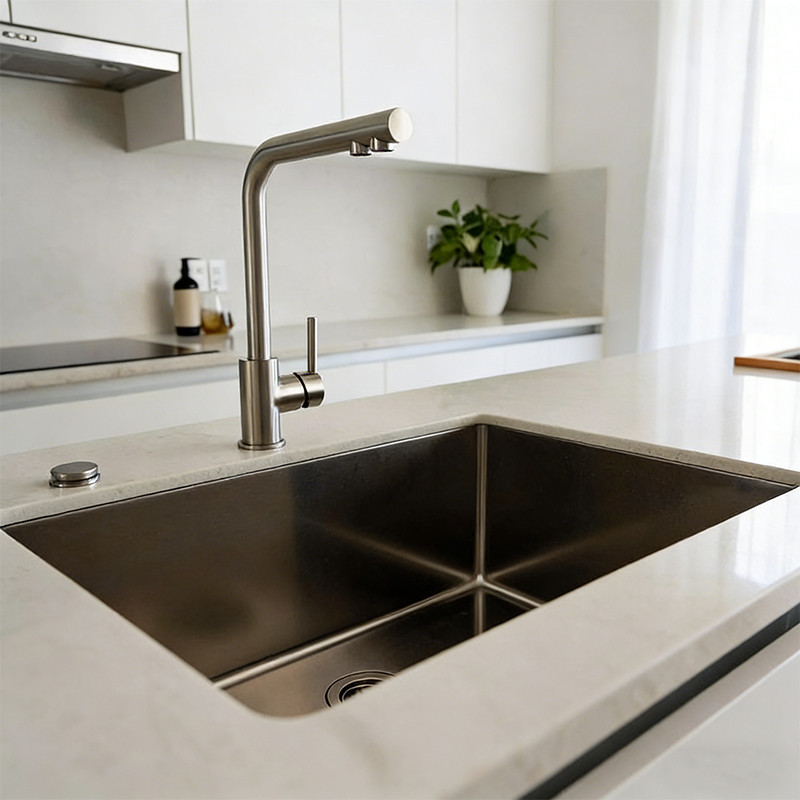
hen considering home improvements, especially in the kitchen, the choice of a sink is more than just about functionality. It's about blending durability, aesthetics, and long-term value. While you might automatically gravitate towards the familiar gleam of a stainless steel sink, it's worth exploring all options, including unique materials like concrete. To truly appreciate the differences, it's essential to understand the intricate craftsmanship and technology that go into creating a high-quality sink.
Today, we'll delve into a surprising comparison: concrete versus stainless steel sinks. While shedding light on why concrete can be a superior, sustainable, and aesthetically versatile option, we will also deeply examine the advanced technology behind handmade stainless steel sinks. Join us as we explore the advantages and disadvantages, the science of the materials, and the maintenance involved in both options, helping you make an informed decision for your kitchen.
Key Takeaways
- Material Science is Key: The durability of a sink is rooted in its material composition. Stainless steel's corrosion resistance comes from its chromium content, which forms a protective, self-healing chromium oxide layer. Concrete's strength comes from its dense, rock-like composition, often reinforced with glass fibers (GFRC) to enhance its durability and reduce weight.
- Durability Has Two Faces: Concrete sinks are exceptionally strong and can last for decades—up to 50-60 years with proper care—resisting heat and impact. Handmade stainless steel sinks are also highly durable, but their resilience is often defined by gauge (thickness) and grade (composition). Thicker 16-gauge steel is more resistant to dents and noise than thinner gauges.
- Aesthetics and Customization Differ Greatly: Concrete offers nearly limitless customization in shape, size, color, and texture, providing a unique, artisanal look. Stainless steel, while sleek and modern, has more limited design flexibility, with variations primarily in finish (brushed vs. mirror) and configuration.
- Cost vs. Value: Concrete sinks typically have a higher upfront cost due to custom craftsmanship but can add significant long-term home value. Stainless steel sinks are generally more affordable at the outset, but the price varies based on whether they are machine-pressed or handmade, with handmade sinks commanding a higher price for their superior build quality.
- Maintenance is a Trade-Off: Concrete sinks require periodic sealing to maintain their non-porous surface and prevent stains, a routine but necessary commitment. Stainless steel sinks are easier to clean and highly hygienic but are prone to scratching and showing water spots; however, these scratches often blend into a patina over time.
Unpacking the Durability: Stainless Steel vs. The "Built Like a Rock" Alternative
When selecting a kitchen sink, durability is often the primary concern. It’s a fixture that endures daily abuse—from scorching hot pans and heavy impacts to abrasive cleaners and constant moisture. Here, we'll dissect the inherent toughness of both concrete and handmade stainless steel, exploring the science that makes them resilient and the vulnerabilities that come with everyday use.
The Enduring Strength of Concrete: A Natural Advantage
Concrete sinks are often described as being "built like a rock," and for good reason. Their durability is inherent to the material itself—a hard, dense composite designed to withstand significant stress. High-quality concrete sinks, especially those made from Glass Fiber Reinforced Concrete (GFRC), possess incredible strength while being lighter than traditional concrete. This reinforcement provides flexibility and resistance to cracking.
With proper sealing, a concrete sink is highly resistant to heat, scratches, and stains. You can place a hot pan directly on the surface without fear of damage, a testament to its thermal resilience. When properly maintained, a concrete sink can last for 50 years or more, developing a unique patina over time that many homeowners find adds to its character. This graceful aging process, where small signs of wear enhance its beauty, is a feature unique to artisan materials.
Handmade Stainless Steel Sinks: Resilience and Vulnerabilities
Stainless steel is a classic choice for kitchens due to its proven resilience and ease of maintenance. However, not all stainless steel sinks are created equal. The technology behind its composition and the method of its construction—especially in handmade models—play a crucial role in its long-term performance.
The Technology of Stainless Steel's Robustness: Why it Resists Corrosion
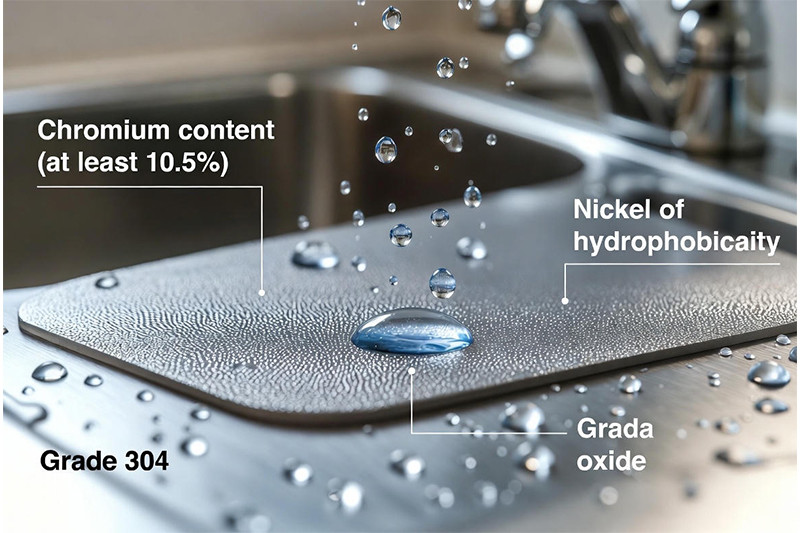
The "stainless" in stainless steel is not just a name; it's a scientific property. Stainless steel is an iron alloy that must contain a minimum of 10.5% chromium. This chromium content is the secret to its remarkable corrosion resistance. When exposed to oxygen, the chromium forms a thin, invisible, and incredibly stable layer of chromium oxide on the steel's surface.
This "passive layer" acts as a shield, protecting the iron underneath from reacting with water and air, which would otherwise cause rust. What makes this technology even more impressive is its self-healing nature. If the surface is scratched or damaged, the exposed chromium will immediately react with oxygen to reform the protective oxide layer, instantly repairing the shield. For most kitchen sinks, Grade 304 stainless steel is the industry standard, offering an excellent balance of durability and corrosion resistance with its typical composition of 18% chromium and 8% nickel. In highly corrosive environments, such as coastal homes, Grade 316, which includes molybdenum, offers even greater protection but at a higher cost.
Understanding the Challenges: Dents, Scratches, and Everyday Wear
Despite its robust nature, stainless steel is not invincible. Its primary vulnerabilities are dents and scratches. Dropping a heavy pot or tossing silverware into the sink can leave its mark. However, the technology and craftsmanship of handmade sinks offer solutions to mitigate these issues.
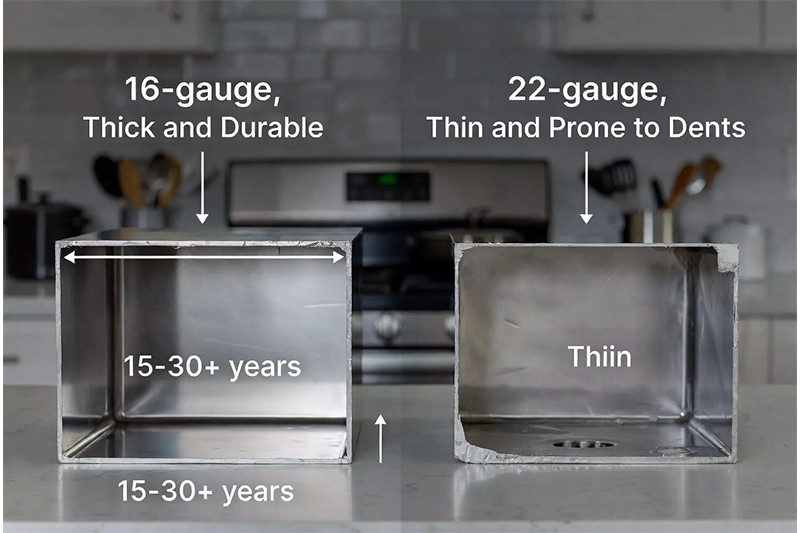
The most critical factor in resisting dents is the gauge, or thickness, of the steel. In a counterintuitive measurement system, a lower gauge number means thicker steel. While cheaper, mass-produced sinks might use thin 22- or 24-gauge steel, high-quality handmade sinks typically use heavier 16-gauge or 18-gauge steel. A 16-gauge sink is significantly thicker and more durable, making it much more resistant to denting, warping, and even noise from running water and clattering dishes.
Scratches are an almost unavoidable reality for stainless steel sinks. However, the finish of the steel can make a significant difference. Over time, these small scratches tend to blend together, creating a unique patina that can actually enhance the sink's look.
Longevity and Lifespan: Which Material Truly Stands the Test of Time?
Both materials offer impressive longevity, but their paths to a long life differ. A high-quality, well-maintained concrete sink can last for 50-60 years, aging gracefully and becoming a permanent, character-rich fixture in the home. Its lifespan is a testament to its raw, rock-like durability.
A top-tier 304-grade stainless steel sink can also have a very long service life, often between 15 and 30 years or more, depending on its use and maintenance. Its longevity relies on the quality of the steel (grade), its thickness (gauge), and the care it receives. While a cheap, thin-gauge sink may need replacement sooner due to damage, a premium 16-gauge handmade sink is a long-term investment that provides lasting performance and value. Ultimately, both materials can be considered lifetime purchases when you invest in quality craftsmanship from the start.
| Feature | Concrete Sink | Handmade Stainless Steel Sink (16-Gauge) |
|---|---|---|
| Primary Advantage | Extreme durability, heat resistance, and unique aesthetic. | Excellent corrosion resistance, hygiene, and modern look. |
| Material Composition | Cement, aggregates, and often glass-fiber reinforcement (GFRC). | 304-grade steel (18% chromium, 8% nickel). |
| Resistance to Impact | Highly resistant but can chip with extreme force. | Prone to denting, but significantly reduced with lower gauges (thicker steel). |
| Scratch Resistance | Very resistant when properly sealed. | Prone to scratching, but these often form a patina. |
| Corrosion Resistance | Dependent on the integrity of the sealer. | Excellent due to the self-healing chromium oxide layer. |
| Estimated Lifespan | 50+ years with proper maintenance. | 15-30+ years, depending on quality and care. |
Aesthetics and Design: Where Customization Meets Modernity
The kitchen sink is no longer just a utilitarian basin for washing dishes; it is a central design element that can define the character of the entire space. The choice between the bespoke, earthy appeal of concrete and the sleek, industrial look of stainless steel highlights a fundamental question in kitchen design: do you prioritize unique expression or clean neutrality?
Concrete's Unparalleled Design Freedom: Shapes, Sizes, and Earthy Tones
If a sink can be described as a piece of functional art, it is most likely made of concrete. The primary aesthetic advantage of concrete is its near-limitless customizability. Because it starts as a liquid, concrete can be cast into virtually any shape, size, or configuration imaginable. This allows for truly bespoke designs that are impossible to achieve with mass-produced materials.
Key aspects of concrete's design freedom include:
- Shapes and Forms: From geometric ramp sinks and elegant wave basins to classic round vessels and expansive trough sinks, concrete can be molded to fit any vision. It can be integrated seamlessly into a countertop, creating a monolithic, unified surface that is both stunning and easy to clean.
- Color Customization: Concrete can be tinted with a vast spectrum of colors, from subtle, earthy neutrals like sand and slate to bold, dramatic hues. This allows the sink to perfectly match or contrast with cabinetry, tile, and other design elements in the kitchen.
- Texture and Finish: The surface of a concrete sink can be finished to be silky smooth and polished, honed to a soft matte, or left more rugged for an industrial feel. Some artisans even incorporate recycled glass or other aggregates directly into the mix, creating a one-of-a-kind terrazzo-like appearance.
This ability to tailor every aspect of the sink means no two concrete sinks are exactly alike. They develop a natural patina over time, with subtle changes in tone and texture that tell a story and add warmth and character to the space—a feature celebrated by those who value materials that age gracefully.
The Technology Behind the Sleek Look of Handmade Stainless Steel Sinks
The aesthetic of a handmade stainless steel sink is one of precision, modernity, and functional elegance. While it may not offer the same chameleon-like versatility as concrete, the technology behind its finishes and the quality of its construction provide a different kind of visual appeal—one that is clean, professional, and timeless.
Mirror Finishes and Brushed Textures: Crafting Visual Appeal
The visual impact of a stainless steel sink is largely determined by its finish. This is not simply a matter of taste; the technology used to create the finish affects its appearance, durability, and maintenance.
- Brushed or Satin Finish: This is the most popular finish for a reason. It is created by mechanically brushing the steel with an abrasive belt to create fine, uniform lines in a single direction. This non-reflective, matte appearance is highly effective at concealing minor scratches, fingerprints, and water spots, making it a practical choice for a busy kitchen. The soft sheen diffuses light, creating a sophisticated and less industrial look.
- Mirror Polish Finish: Achieved through an intensive, multi-step polishing process using progressively finer abrasives, this finish creates a highly reflective, mirror-like surface. It delivers a look of pure luxury and can make a space feel brighter and larger. However, its flawlessness is also its biggest challenge—it shows every fingerprint, water spot, and scratch, requiring diligent maintenance to keep it looking pristine.
- PVD Colored Finishes: A cutting-edge technology known as Physical Vapor Deposition (PVD) has introduced color to the world of stainless steel sinks. This is not a paint or coating but a process where a thin film of metal or ceramic material is deposited onto the steel in a vacuum chamber. This creates stunning, durable finishes in colors like gold, copper, gunmetal, and black. The PVD layer is incredibly hard—often ten times harder than the steel itself—making it highly resistant to scratches and fading.
Limitations in Personalization: Neutrality vs. Unique Expression
The primary aesthetic limitation of stainless steel is its lack of personalization compared to concrete. While configurations like single-bowl, double-bowl, or apron-front sinks are widely available, the fundamental shape and color options are constrained. Standard stainless steel is always silver, and while PVD offers more colors, it doesn't match the infinite spectrum available with tinted concrete.
However, this neutrality is also one of its greatest strengths. Stainless steel's clean, metallic look is incredibly versatile, seamlessly blending with nearly any kitchen style, from ultra-modern to traditional farmhouse. It complements all appliance finishes and countertop materials without competing for attention, acting as a reliable and professional backdrop for the rest of the kitchen's design.
Choosing the Right Visual Impact for Your Kitchen
The choice between concrete and stainless steel is a choice between two different design philosophies.
-
Choose a concrete sink if you want:
- A unique, one-of-a-kind statement piece.
- Complete control over the shape, size, and color.
- An organic, textural element that adds warmth and character.
- A material that ages gracefully and develops a beautiful patina.
-
Choose a handmade stainless steel sink if you want:
- A sleek, modern, and professional aesthetic.
- A neutral material that complements any design style.
- A low-maintenance finish that is hygienic and timeless.
- The option for vibrant, durable color through advanced PVD technology.
Ultimately, the right choice depends on whether you envision your sink as the standout star of the kitchen or as a sophisticated and functional supporting player.
## Cost and Value: Understanding the Investment in Your Sink
Choosing a kitchen sink is an investment, not just a purchase. The final decision balances upfront costs with long-term value, durability, and the impact on your home's overall worth. Both concrete and handmade stainless steel sinks have distinct cost structures and value propositions that cater to different priorities and budgets.
The Upfront Cost of Concrete: Investing in Craftsmanship and Longevity
Concrete sinks typically carry a higher initial price tag than most stainless steel options. This cost is not due to the raw materials themselves, but to the intensive, skilled labor required to create a custom piece. The process involves designing molds, mixing and pouring the concrete, curing, and applying multiple layers of high-performance sealant. This artisan craftsmanship is what you are paying for—a unique, durable fixture tailored specifically to your space.
The installation can also add to the cost, as concrete is heavy and may require professional handling and reinforced cabinetry for support. While the initial outlay is significant, a concrete sink is often viewed as a long-term investment. Its durability, longevity, and one-of-a-kind aesthetic can add tangible value to your home.
Handmade Stainless Steel Sinks: Initial Affordability and Long-Term Considerations
Stainless steel sinks are widely known for being a cost-effective option, but this is a broad generalization. The price can vary dramatically based on several key factors, particularly the manufacturing process.
Manufacturing Processes and Their Impact on Pricing
The cost difference between stainless steel sinks is largely down to how they are made:
- Machine-Pressed (or Stamped) Sinks: These are the most affordable options. They are mass-produced by pressing a single sheet of thinner-gauge steel into a mold. This automated process is fast and efficient but can stretch and thin the metal at the corners, making it more susceptible to denting and noise.
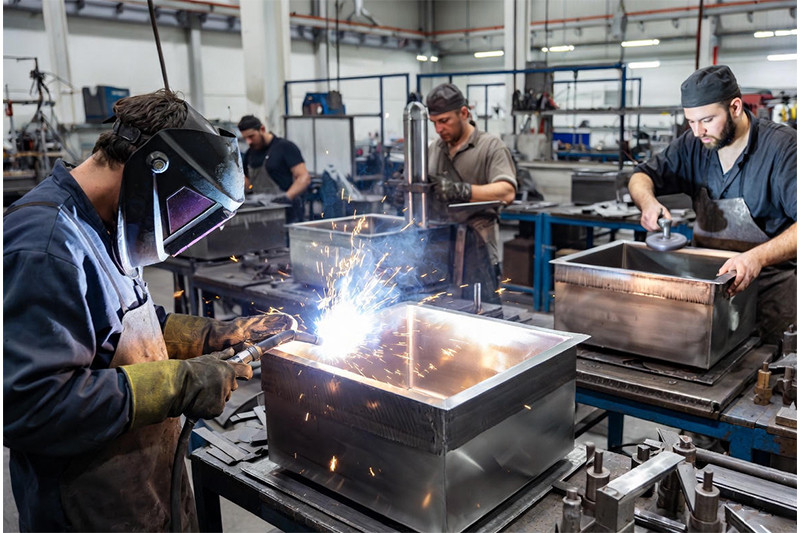
- Handmade Sinks: Representing a significant step up in quality and cost, handmade sinks are fabricated by skilled artisans. The process involves cutting thick-gauge (usually 16 or 18-gauge) stainless steel sheets, bending them into shape, and then welding the corners. This method preserves the uniform thickness and structural integrity of the steel, resulting in a much more durable, quieter, and aesthetically refined product with tight corner radii that maximize bowl space.
Because of the superior materials and labor-intensive process, a handmade stainless steel sink is more expensive than a pressed one but often proves to be a more economical choice over its lifespan due to its enhanced durability.
The Real Value Proposition: Beyond the Price Tag
The true value of a sink isn't just its purchase price; it's about what you get for your money.
- Stainless Steel: The value proposition of a high-quality handmade stainless steel sink lies in its balance of performance, durability, and classic style. It is corrosion-resistant, hygienic, and requires minimal maintenance. While it may not be a unique statement piece like concrete, its longevity and timeless appeal ensure it remains a practical and smart investment that won't go out of style.
- Concrete: The value here is in its uniqueness, durability, and role as a design centerpiece. A custom concrete sink adds a level of bespoke luxury that mass-produced products cannot match. For homeowners prioritizing personalized style and willing to invest in a feature that becomes an integral part of the home's character, the higher cost translates into long-term satisfaction and aesthetic value.
Enhancing Home Value: Which Sink Adds More?
The kitchen is a major selling point in any home, and high-quality fixtures can significantly increase its appeal and perceived value. An outdated or cheap sink can detract from an otherwise beautiful kitchen.
While a standard stainless steel sink is often seen as a safe and practical choice, a premium handmade model, especially a larger workstation style, can elevate the kitchen's look and functionality, making it more attractive to potential buyers. However, it is the custom, high-end materials that often make the biggest impact on resale value.
A well-designed and properly installed concrete sink can be a standout feature that adds a "wow" factor to your kitchen. Because it signifies luxury, craftsmanship, and a unique design vision, it is more likely to be seen as a significant upgrade that contributes directly to a higher home appraisal. Buyers are often willing to pay a premium for distinctive, high-quality features that offer both style and longevity.
Ultimately, a cheap sink of any material will do little to enhance your home's value. Investing in quality, whether it's the artisan craftsmanship of concrete or the superior construction of a handmade stainless steel sink, is what truly pays dividends in both daily enjoyment and long-term resale value.
## Maintenance: The Ongoing Commitment to Your Kitchen Fixture
Every kitchen sink, regardless of material, requires some level of upkeep to maintain its beauty and functionality. The maintenance routines for concrete and handmade stainless steel sinks differ significantly, reflecting their unique material properties. Your choice may ultimately depend on how much time you are willing to commit to caring for your sink.
Caring for Concrete: Sealing and Routine Upkeep for Lasting Beauty
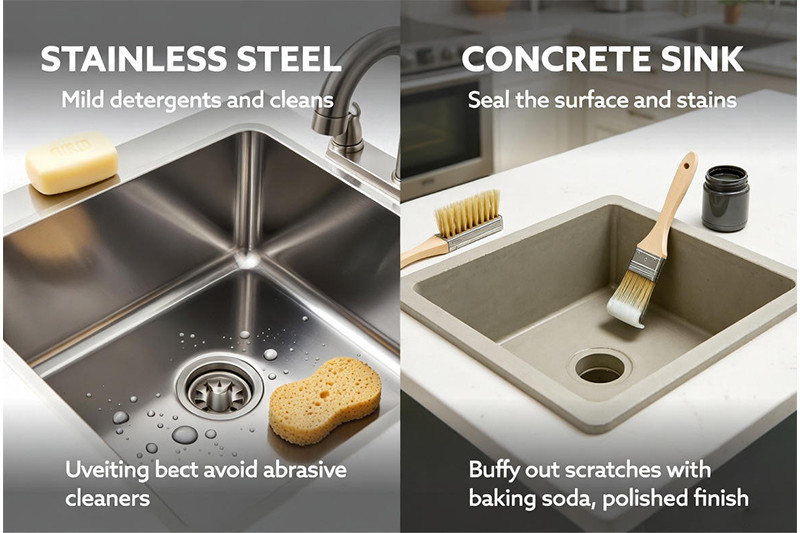
Concrete sinks are exceptionally durable but, by nature, are porous. This means they require a high-quality sealer to create a non-porous, waterproof surface that resists stains and bacteria. The ongoing commitment to a concrete sink revolves around maintaining this protective barrier.
Sealing is Essential:
- Initial Sealing: When crafted, a high-quality concrete sink undergoes an intensive sealing process. Artisans apply multiple coats of a penetrating or topical sealer that bonds with the concrete to make it food-safe and resistant to water, oils, and other common kitchen spills.
- Periodic Resealing: Over time and with use, this sealant will wear down. It's generally recommended to reseal a concrete sink every two to five years, though this can vary based on usage, the type of sealer initially applied, and cleaning habits. A simple test is to see if water beads on the surface; if it starts to absorb instead, it's time to reseal.
- The Resealing Process: Resealing is a manageable DIY task. It typically involves thoroughly cleaning and drying the surface, lightly sanding if necessary, and then applying a new coat of a food-safe concrete sealer with a cloth or roller, following the manufacturer's instructions.
Daily Cleaning: For daily care, gentle cleaning is key. Use a soft cloth or sponge with a mild, pH-neutral soap and warm water. Avoid harsh, acidic, or abrasive cleaners (like bleach or scouring powders) as they can strip the sealant and damage the concrete surface. Spills, especially from acidic substances like wine, lemon juice, or vinegar, should be wiped up promptly to prevent etching or staining.
Maintaining Handmade Stainless Steel Sinks: Simplicity with Considerations
Handmade stainless steel sinks are prized for their low-maintenance and hygienic properties. The non-porous surface naturally resists bacteria, making it an excellent choice for a clean kitchen environment. The maintenance is straightforward but involves a few key considerations, especially regarding scratches and dents.
Dealing with Scratches and Dents: Tips and Tricks
Scratches: Scratches are an inevitable part of a stainless steel sink's life, but they don't have to be a permanent eyesore.
- Embrace the Patina: Over time, fine, hairline scratches will blend together to create a soft, uniform patina. This is a natural evolution of the material, especially with a brushed or satin finish.
- Gentle Buffing: For minor scratches, a paste of baking soda and water can be gently rubbed in the direction of the steel's grain with a soft cloth to minimize their appearance. Commercial stainless steel polishing compounds can also be effective.
- Deeper Scratches: For more significant scratches, a fine-grit sandpaper (600-grit or higher) or a dedicated stainless steel scratch removal kit can be used. The key is to always work in the direction of the grain to avoid creating cross-hatch marks. After buffing, clean the sink and apply a bit of mineral or olive oil to restore the shine.
Dents: Dents are more challenging to fix than scratches, especially in thinner gauge sinks.
- Suction Method: For smaller, shallower dents, a strong suction cup, like a small plunger or a dent puller designed for auto bodies, can sometimes pop the dent out. Applying heat with a hairdryer followed by cold from a can of compressed air can also cause the metal to contract and pop the dent.
- Hammering Method: A more involved method requires removing the sink and gently hammering out the dent from the underside using a rubber mallet and a wood block to cushion the blows. This is often a job best left to professionals to avoid causing further damage.
The Ease of Cleaning and Hygiene
One of the most significant advantages of stainless steel is its ease of cleaning and inherent hygiene.
- Daily Cleaning: A simple wash with dish soap, warm water, and a soft sponge is usually all that's needed for daily maintenance. Rinsing and drying the sink after use will prevent water spots and mineral buildup.
- Deep Cleaning: For a deeper clean and to restore shine, sprinkle the sink with baking soda and scrub with a damp sponge. Spraying white vinegar over the baking soda can create a gentle fizzing reaction that helps lift stubborn stains and disinfect the surface.
- Hygiene: The non-porous surface of stainless steel does not harbor bacteria, germs, or odors, making it one of the most hygienic sink materials available.
Balancing Convenience with Unique Aesthetics
The ongoing maintenance commitment is a critical deciding factor.
-
Choose a Stainless Steel sink for:
- Convenience: If you prioritize easy, straightforward daily cleaning and a highly hygienic surface with minimal fuss, stainless steel is hard to beat.
- Resilience: You're comfortable with the idea of a developing patina of scratches and prefer a material that won't crack or chip.
-
Choose a Concrete sink for:
- Aesthetic Dedication: You are willing to perform periodic maintenance (resealing) to preserve a unique, handcrafted aesthetic.
- Character: You value a material that ages with character and are prepared to follow specific cleaning guidelines to protect its specialized surface.
Your choice reflects whether you view sink care as a quick daily chore or a periodic ritual to maintain a piece of functional art.
Frequently Asked Questions (FAQ)
1. What is the best gauge for a handmade stainless steel sink? For residential kitchens, 16-gauge or 18-gauge stainless steel is highly recommended. A lower gauge number signifies thicker steel. 16-gauge is considered the premium choice, offering superior resistance to dents, reduced noise, and a more substantial feel. 18-gauge offers a great balance of durability and affordability and is a significant upgrade from the thinner 20 or 22-gauge steel found in lower-quality sinks.
2. Can you put hot pans in a concrete sink? Yes, concrete has excellent heat resistance, and you can generally place hot pots and pans directly on the surface without causing damage. However, extreme and sudden temperature changes, like pouring boiling water directly into an ice-cold sink, could potentially cause thermal shock and hairline cracks, so it's always best practice to run a little cold water first.
3. How are handmade stainless steel sinks different from machine-pressed ones? Handmade sinks are fabricated by artisans who cut and weld thick sheets of stainless steel, maintaining a uniform thickness and creating strong, tight-radius corners. This results in a more durable, spacious, and modern-looking sink. Machine-pressed sinks are stamped from a single, often thinner, sheet of steel, which can stretch and weaken the corners, making them more prone to dents and giving them a more rounded, dated appearance.
4. Will a concrete sink crack or stain? A high-quality, properly sealed concrete sink is highly resistant to staining and cracking. The key is the sealant, which creates a protective, non-porous barrier. If the sealant is compromised or wears down, the concrete can become susceptible to stains from acidic foods or liquids. Hairline cracks may develop over time due to curing or settling but are typically cosmetic and do not affect the sink's structural integrity.
5. Do stainless steel sinks rust? High-quality stainless steel, like grade 304, is highly resistant to rust due to its chromium content, which forms a protective passive layer. However, rust spots can occasionally appear. This is usually not the sink itself rusting, but rather the result of "free iron" particles (from steel wool pads, certain utensils, or water pipes) being left on the surface and rusting. These spots can typically be cleaned off with a non-abrasive cleaner like Bar Keepers Friend or a baking soda paste.
6. Which sink is more environmentally friendly? Both materials have eco-friendly aspects. Concrete can be made with locally sourced materials like sand and gravel, reducing its carbon footprint from transportation. Recycled materials can also be incorporated. Stainless steel is also a sustainable choice as it is 100% recyclable. When a stainless steel sink reaches the end of its long life, it can be fully recycled without losing any of its quality.
Conclusion
Ultimately, the decision between a concrete sink and a handmade stainless steel sink comes down to your priorities. Both are viable, high-quality options, but they cater to very different preferences in design, maintenance, and budget.
Do you value the unique, customizable, and long-lasting charm of concrete that adds substantial value and personal style to your space? A concrete sink is a statement piece, a work of functional art that ages with character. Or do you lean towards the convenient, efficient, and modern appeal of stainless steel, appreciating its hygienic properties and timeless look? A handmade stainless steel sink offers professional-grade performance and durability, representing a smart and lasting investment.
My hope is that this in-depth guide has equipped you with the knowledge to make the choice that best suits your lifestyle, design aspirations, and how you truly live in your kitchen. Whether you're drawn to the artisan quality of concrete or the functional elegance of a handmade stainless steel sink, the right choice will serve you well for decades to come. We encourage you to share this article to help others in their decision-making process and feel free to leave a comment below with your own experiences or questions