The Ultimate Guide to Commercial Kitchen Hand Wash Basins: Selection, Hygiene, and Design Essentials
- Share
- Issue Time
- Sep 1,2026
Summary
In commercial kitchens, paramount importance is placed on impeccable cleanliness to safeguard food safety, customer health, and business reputation. A dedicated hand wash basin serves as the primary line of defense against pathogen spread and is crucial for regulatory compliance. Health codes, such as the FDA Food Code, unequivocally mandate that handwashing be conducted in a separate sink, distinct from those used for food preparation or dishwashing, to actively prevent cross-contamination. Com
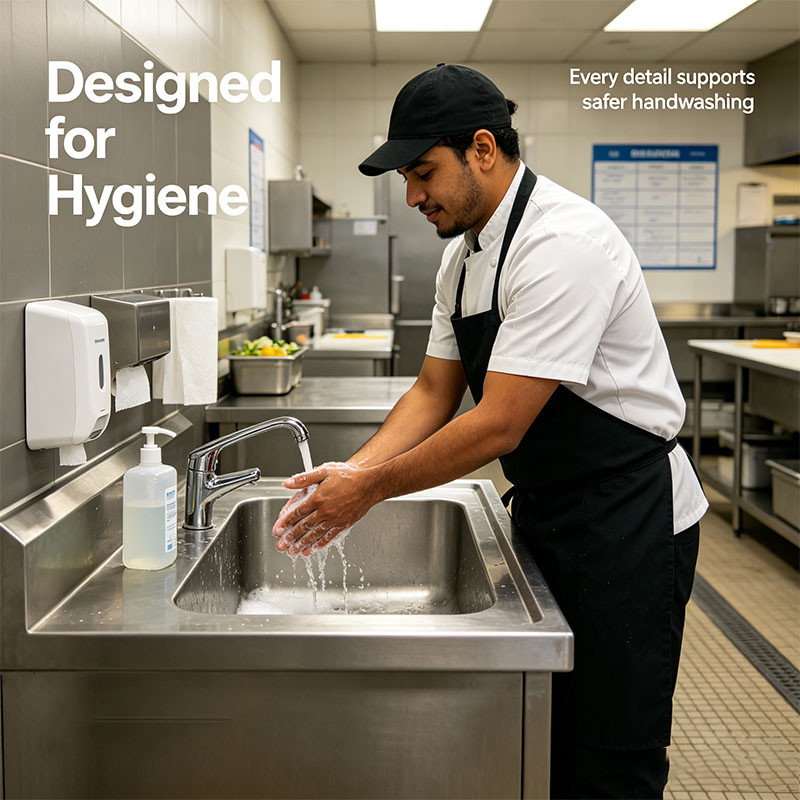
In the high-stakes environment of a commercial kitchen, impeccable cleanliness isn't just a best practice—it's a non-negotiable cornerstone of your business. The safety of your food, the health of your customers, and the reputation you've worked so hard to build all depend on rigorous hygiene standards.
At the heart of this critical effort lies a seemingly simple fixture: the hand wash basin. But to view it as merely a place to rinse is to underestimate its power. A dedicated, well-equipped hand wash basin is your first and most important line of defense against the spread of harmful pathogens, a vital tool for ensuring food safety and regulatory compliance.
Join us as we take a deep dive into the world of commercial kitchen hand wash basins. This guide will walk you through everything you need to know, from selecting the perfect model to mastering hygiene protocols and navigating complex health codes. Let's build a kitchen that's not only productive but exceptionally clean and safe.
Key Takeaways
Choosing the right hand wash basin is a critical decision that impacts food safety, operational efficiency, and legal compliance in any commercial kitchen. This guide explores the essential factors to consider, but here are the most important takeaways for busy professionals:
- Dedicated Sinks are Non-Negotiable: Health codes, including the FDA Food Code, strictly mandate that hand washing must occur in a dedicated sink, used for no other purpose. Using a three-compartment sink, a food preparation sink, or a utility sink for washing hands is a direct violation that can lead to severe penalties, including fines and business closure. This separation is crucial to prevent cross-contamination, where germs from hands could contaminate food, or chemicals and food waste from other sinks could contaminate hands.
- Compliance is a Multi-Faceted Issue: Simply having a sink is not enough. To be compliant, a hand wash station must be fully equipped and accessible. This includes providing both hot and cold running water, soap, and a sanitary drying method like single-use paper towels or an air dryer. Furthermore, the sink must be located in an area that is convenient and easily accessible to employees in food preparation, food dispensing, and warewashing areas to encourage frequent use. Clear, visible signage instructing staff on proper handwashing procedures is also a mandatory requirement in most jurisdictions.
- Material and Design Dictate Hygiene: The construction of the hand wash basin itself plays a significant role in sanitation. Stainless steel is the industry standard due to its durability, non-porous surface, and resistance to corrosion. Look for models with coved corners (rounded edges) where the sink bowl meets the backsplash and countertop. These seamless designs eliminate crevices where bacteria and grime can accumulate, making them significantly easier to clean and sanitize. Always prioritize sinks that are NSF-certified, as this indicates they have been tested and approved to meet public health and safety standards.
- Touchless Technology Enhances Safety: The purpose of hand washing is to remove germs, but a contaminated faucet handle can reintroduce them onto freshly cleaned hands. This is why touchless, sensor-activated faucets are highly recommended for commercial kitchens. They minimize cross-contamination by eliminating a common touchpoint. Similarly, hands-free soap dispensers and paper towel dispensers further reduce the risk of pathogen spread. While hands-on controls are acceptable, hands-free options represent a superior investment in hygiene.
- Portable Sinks Offer Critical Flexibility: For operations without access to fixed plumbing, such as food trucks, outdoor events, catering services, or temporary setups, portable hand wash stations are an essential solution. These self-contained units come with their own fresh and wastewater tanks, providing a compliant handwashing facility anywhere it's needed. When choosing a portable sink, consider tank capacity (which determines the number of washes before service is needed), whether it provides hot water (often a legal requirement), and its durability. Brands like Samsnik offer robust, easy-to-maintain portable solutions designed for the rigors of commercial use.
Investing in a high-quality, compliant hand wash basin from a trusted brand like Samsnik is not an expense—it's a fundamental investment in the safety, longevity, and success of your foodservice business. By prioritizing these key takeaways, you can ensure your kitchen meets the highest standards of hygiene and is always prepared for a health inspection.
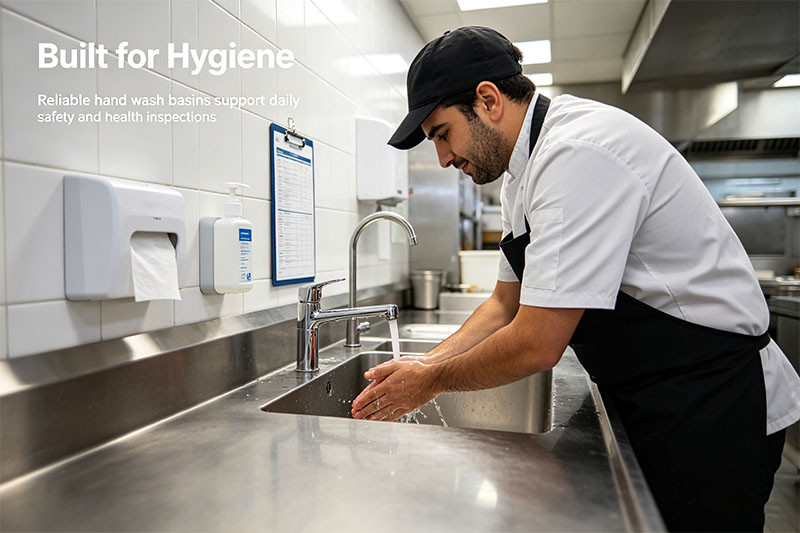
Why a Dedicated Hand Wash Basin is a Must-Have in Your Commercial Kitchen
In the fast-paced world of foodservice, the importance of a dedicated hand washing station cannot be overstated. It's the bedrock of your food safety program and a clear indicator of your commitment to professionalism and public health.
Protecting Health and Reputation
Unwashed hands spread germs, causing illnesses.
The primary reason for strict hand hygiene is to prevent the transmission of foodborne illnesses. The hands of kitchen staff can become vehicles for a host of dangerous pathogens, including Norovirus, E. coli, Salmonella, and Staphylococcus aureus. These microorganisms can be transferred from raw meats, contaminated surfaces, or even a person's own body to ready-to-eat foods, leading to outbreaks that can sicken customers. The Centers for Disease Control and Prevention (CDC) estimates that foodborne diseases cause about 48 million illnesses, 128,000 hospitalizations, and 3,000 deaths in the United States each year, with a significant portion linked to poor personal hygiene in food handling. A single outbreak can be devastating, leading to loss of customers, legal liability, and irreparable damage to your brand's reputation.
Proper hand washing is our strongest defense.
Amidst these risks, proper hand washing stands as the single most effective and simple preventive measure. Thoroughly washing hands with soap and water can eliminate transient pathogens acquired during work. When executed correctly and at critical moments—such as after handling raw food, after using the restroom, or before putting on gloves—it creates a crucial barrier that stops the chain of contamination. Implementing and enforcing a strict handwashing protocol demonstrates a proactive approach to food safety, protecting both your patrons and your business.
Meeting Health Department Rules
FDA rules require separate sinks; fines for non-compliance.
Regulatory bodies like the U.S. Food and Drug Administration (FDA) leave no room for ambiguity. The FDA Food Code, which serves as a model for most local and state health regulations, explicitly requires dedicated hand washing sinks. These sinks are to be used exclusively for hand washing and must not be used for any other purpose, such as food preparation or dishwashing. This rule exists to prevent cross-contamination. Using a utility or prep sink for handwashing could transfer pathogens from hands to food, or conversely, soil hands with food waste and chemicals. Health inspectors take this requirement very seriously, and non-compliance can result in significant fines, lowered health grades, or even temporary closure of the establishment until the violation is corrected.
Hand wash sinks must be easy to reach.
The law also dictates the placement of these sinks. The FDA Code mandates that hand washing facilities must be "located to allow convenient use by employees in food preparation, food dispensing, and warewashing areas." The logic is simple: if a sink is inconvenient to access, staff will be less likely to use it as frequently as required. Sinks should be strategically placed at the entrances to prep areas and in other key locations to ensure they are always within easy reach, promoting consistent and compliant hygiene practices.
The Simple Five Steps to Clean Hands
To ensure effectiveness, hand washing must follow a specific procedure. The CDC outlines five simple but critical steps for food handlers:
- Wet: Wet your hands with clean, running water. The temperature can be warm or cold.
- Lather: Apply soap and lather well, ensuring you cover the entire surface of your hands, including the backs, between your fingers, and under your nails.
- Scrub: Vigorously scrub your hands for at least 20 seconds. A helpful tip is to hum the "Happy Birthday" song from beginning to end twice. This duration is critical for the soap and friction to effectively remove germs.
- Rinse: Rinse your hands thoroughly under clean, running water to wash away all soap and germs.
- Dry: Dry your hands using a clean, single-use paper towel or an air dryer. Using a communal cloth towel is prohibited as it can re-contaminate hands.
Key Features for Your Ideal Hand Wash Basin in a Commercial Kitchen
Selecting the right hand wash basin goes beyond just meeting regulations; it's about choosing a durable, efficient, and hygienic tool that supports your kitchen's workflow. Focus on materials, functionality, and accessories to find the perfect fit.
Built Strong and Clean
Look for tough stainless steel (22-gauge) or durable plastic.
The material of your hand wash basin is a primary consideration for longevity and sanitation. Stainless steel is the gold standard for commercial kitchens for several compelling reasons. It is non-porous, meaning it won't harbor bacteria, and it is highly resistant to rust, corrosion, and stains from chemicals or food products. When selecting a stainless steel sink, pay attention to the gauge, which indicates its thickness. A lower gauge number means thicker steel. While 14- or 16-gauge steel is common for heavy-duty three-compartment sinks, a 18- or even 20-gauge sink is typically sufficient and durable for a dedicated hand wash basin. For portable units, high-density polyethylene (HDPE) or other durable plastics are often used. These materials are lightweight, impact-resistant, and easy to clean, making them ideal for mobile applications.
Smooth, rounded corners prevent germ buildup; NSF certification is essential.
Design plays a critical role in cleanability. Look for sinks with coved corners, which are rounded, seamless transitions where the sink bowls meet the countertop and backsplash. Sharp, 90-degree angles are difficult to clean and can easily trap food debris, grease, and bacteria. The smooth, curved surface of a coved corner allows for quick and thorough wiping, preventing pathogen buildup.
Crucially, always ensure your chosen sink is NSF Certified. NSF International is an independent organization that tests and certifies products to ensure they meet strict standards for public health and safety. An NSF mark on a sink guarantees that it is made from safe materials, is designed to be easily cleaned, and has passed rigorous performance tests, giving you and your health inspector confidence in your equipment.
Smart Water and Power Options
No-touch faucets reduce germ spread. Hot and cold water often required.
The faucet is one of the most frequently touched parts of a sink, making it a hotspot for cross-contamination. After washing, turning off a manual faucet handle can reintroduce germs onto clean hands. To combat this, touchless, sensor-activated faucets are the superior choice. These motion-activated fixtures eliminate the need to touch faucet handles, significantly reducing the spread of pathogens.
Regulations almost universally require hand wash sinks to provide running water at a specific temperature. The FDA Food Code, for instance, mandates water at a minimum of 100°F (38°C) to ensure effective removal of soils and fats from hands. This typically means the sink must be connected to both hot and cold water lines with a mixing valve to deliver tempered water.
Portable units: foot pumps (cold) or electricity (hot, 110V).
For portable hand wash stations where plumbing isn't available, there are two primary operating methods. The simplest models use a foot pump to dispense cold water. The user steps on a pump to create water pressure, which provides a hands-free (foot-operated) stream of water. While excellent for basic hygiene, these models may not meet health codes that require hot water.
For hot water compliance, electric portable units are necessary. These sinks are equipped with a small, on-demand water heater and an electric pump. They plug into a standard 110V or 120V outlet to power both the heater and the pump, providing fully compliant hot and cold running water. These are the ideal choice for most professional food truck and event applications.
Enough Water and Useful Add-Ons
Water tank size: small (15-50 washes) to large (300-600 washes).
The capacity of a portable sink is a crucial logistical factor. This is determined by the size of its onboard freshwater and wastewater tanks. A small unit with a 5-gallon fresh tank might provide approximately 60-70 brief hand washes. Larger, high-capacity models can hold 20 gallons or more, accommodating hundreds of washes before needing to be refilled and drained. When choosing, consider your expected traffic and the length of your service. A busy all-day festival will require a much larger capacity than a small, three-hour event. The wastewater tank must also be larger than the freshwater tank (typically by 15-50%) to prevent overflow.
Integrated soap and paper towel dispensers keep supplies handy.
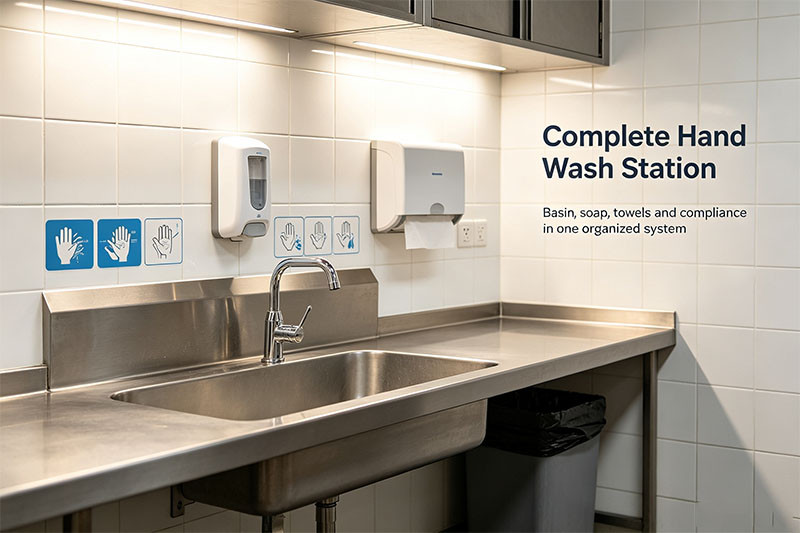
A compliant hand wash station is more than just a sink; it's a complete system. To ensure staff always have what they need, choose a basin that features integrated accessories. Many wall-mounted and portable sinks come with built-in soap dispensers and paper towel holders. This design keeps essential supplies organized, clean, and consistently available right at the point of use. It prevents staff from having to walk away from the sink with wet hands to find soap or towels, streamlining the handwashing process and minimizing mess. Look for a complete solution, like those offered by Samsnik, to ensure your station is always ready and compliant.
Ensuring Compliance: Your Hand Wash Basin and Regulations
Navigating the web of health codes and regulations is one of the most critical aspects of managing a commercial kitchen. Your hand wash basin is a major focus during health inspections, so understanding the rules is essential for avoiding violations.
Understanding Local Rules
Check local health department rules (vary on sink size, hot water).
While the FDA Food Code provides a federal model, it's crucial to understand that specific requirements are enforced at the state, county, or city level. Your local health department has the final say. Regulations can vary on details such as the minimum required size of the sink bowl, the exact water temperature, and whether a portable sink is acceptable for your type of operation. For example, some jurisdictions may have stricter temperature requirements or mandate a larger basin size than others. Always consult your local health authority directly or visit their website to obtain the most current regulations for your area before purchasing or installing any equipment.
Hot water is key for top hygiene; possible with 13-amp outlet.
The requirement for heated water is nearly universal. Hot water is more effective at emulsifying fats and oils, helping the soap to remove stubborn, greasy soils from hands more efficiently. For plumbed sinks, this is achieved by connecting to the building's hot water line. For portable units, an internal, on-demand water heater is needed. These heaters typically require a standard electrical connection, such as a 120V, 13-amp outlet, which is readily available in most commercial settings. When planning for a portable hot water sink, ensure you have a dedicated and accessible power source nearby.
Dedicated Sinks Are Critical
Dishwashing sinks (three-compartment) are NOT for hand washing.
This is one of the most common and serious violations found by health inspectors. A three-compartment sink is designated for the wash-rinse-sanitize process of dishwashing. A food preparation sink is for washing produce and other food items. A utility mop sink is for cleaning and mop water disposal. None of these are legally permitted for hand washing. Using them for such a purpose introduces a high risk of cross-contamination. Imagine an employee washing their hands in the same basin where raw chicken was just rinsed, or where dirty, chemical-laden mop water is discarded. To prevent this, health codes strictly forbid this practice, mandating a completely separate and dedicated sink for hand hygiene only.
Multi-basin stations offer full hygiene with separate sinks.
For larger operations or those needing to accommodate multiple staff members at once, multi-basin hand wash stations are an excellent solution. These units feature two or more sinks on a single frame, allowing several employees to wash their hands simultaneously without waiting. This improves efficiency and workflow, especially during peak hours. Some advanced portable models even combine a dedicated hand wash sink with a full three-compartment sink system on one portable cart, providing a complete, code-compliant hygiene and dishwashing solution for mobile vendors and caterers. This all-in-one approach ensures that the distinct functions of handwashing and warewashing remain properly separated.
Must-Have Compliance Features
Contact-free use, soap, paper towels, and clear handwashing signs are required.
To pass a health inspection, your hand wash station must be a complete, fully stocked system. This includes:
- Hot & Cold Water: As discussed, delivered through a mixing faucet.
- Soap: A dispenser filled with hand soap must be present. Bar soap is generally not permitted as it can harbor bacteria.
- Sanitary Drying Method: A dispenser for single-use paper towels or a heated air dryer must be provided. Reusable cloth towels are forbidden.
- Signage: A conspicuous sign or poster must be clearly visible to all employees near the hand washing sink, instructing them to wash their hands. Many health departments provide official signs that list the proper handwashing steps.
- Touchless Fixtures: While not always mandatory, hands-free faucets and dispensers are highly recommended and are becoming the expected standard in modern kitchens to minimize re-contamination.
Ensuring every one of these components is in place and functional is key to maintaining a compliant and hygienic kitchen.
Choosing the Right Type of Hand Wash Basin for Your Commercial Kitchen
With a clear understanding of the features and compliance requirements, you can now select the type of hand wash basin that best suits your specific operational needs, whether you're running a bustling restaurant, a mobile food truck, or a large-scale catering event.
Fixed vs. Portable Solutions
Fixed for permanent kitchens; portable for food trucks/events.
The most fundamental choice is between a fixed, plumbed-in sink and a self-contained portable unit.
- Fixed Hand Wash Basins: These are permanently installed and connected to your building's plumbing and drainage systems. They are the standard for any permanent establishment like a restaurant, hospital, or school kitchen. Typically made of stainless steel and wall-mounted or set into a countertop, they offer a highly durable and reliable solution.
- Portable Hand Wash Stations: These self-contained units are the essential choice for mobile operations or temporary setups. They are perfect for food trucks, concession stands, farmers' market stalls, caterers, and outdoor festivals where direct plumbing access is not available. A high-quality portable sink provides a fully compliant handwashing station that can be positioned anywhere it's needed.
Portable units offer quick setup (<10 min) and easy movement (lockable wheels).
Modern portable sinks are designed for convenience and rapid deployment. Most units can be set up in under 10 minutes: simply fill the freshwater tank, plug it in (if it's a hot water model), and it's ready to go. Many models, including those from leading brands like Samsnik, are equipped with durable, heavy-duty casters (wheels) that allow the unit to be easily moved into position. Lockable wheels ensure the station remains stable and secure during use. This mobility is invaluable for adjusting kitchen layouts, moving between event locations, or storing the unit when not in use.
Space-Saving and Easy Maintenance
Compact designs fit small spaces, maximize function.
Kitchen space is always at a premium. Whether in a cramped food truck or a narrow galley kitchen, every square inch counts. Hand wash basins are available in a wide range of compact designs to address this. Look for slim-profile portable units or small-footprint wall-mounted sinks that provide full functionality without occupying excessive space. Corner-mounted sinks can also be an excellent way to utilize awkward spaces efficiently. The goal is to integrate the sink seamlessly into the workflow without creating a bottleneck.
Easy-to-clean surfaces, front-access tanks simplify upkeep.
Maintenance is a key consideration for any kitchen equipment. A well-designed hand wash basin simplifies cleaning and servicing. As mentioned, stainless steel and high-grade plastics with smooth, non-porous surfaces are easy to wipe down and sanitize. For portable units, look for designs that provide convenient, front-facing access to the fresh and wastewater tanks. This allows for quick and easy refilling and draining without having to move the entire unit or reach around to the back, saving valuable time and effort during a busy service.
Handling High Demand with Your Hand Wash Basin
High-volume requires large tanks, continuous hot water for smooth operation.
For high-traffic environments like large festivals, arenas, or busy ghost kitchens, your hand wash station must be able to keep up with demand. This means selecting a portable sink with a large water capacity to minimize the frequency of service interruptions for refilling and draining. Furthermore, a robust, continuous hot water system is critical. The unit's internal heater must be powerful enough to provide a consistent supply of hot water even with back-to-back use, ensuring every employee can wash their hands effectively without having to wait for the water to heat up.
Good units help manage supplies and staff training.
An effective hand wash station does more than dispense water; it supports your entire hygiene program. A well-designed unit with integrated dispensers helps you manage inventory by keeping soap and paper towels in one predictable location. It also serves as a physical focal point for staff training. You can use the station to actively demonstrate the correct five-step handwashing procedure and reinforce its importance. Clear signage and an accessible, fully-stocked station empower your team to take ownership of food safety, turning a regulatory requirement into an ingrained part of your kitchen's culture. For a reliable and efficient solution that can handle high demand, explore the range of commercial hand wash basins from Samsnik. Their products are built to withstand the rigors of a busy kitchen while ensuring you remain compliant and your staff stays safe.
Frequently Asked Questions (FAQs)
1. What is the legal minimum water temperature for a hand washing sink in a commercial kitchen?
Most health codes, modeling the FDA Food Code, require that hand washing sinks provide water at a minimum temperature of 100°F (38°C). This is achieved by using a mixing valve that combines hot and cold water to reach this tempered level. The purpose of this temperature is not to kill germs—that's the job of the soap and the friction from scrubbing—but rather to help emulsify and lift away grease and oily soils from the hands, which allows the soap to work more effectively. It's crucial to check with your local health department, as some jurisdictions may have slightly different requirements, potentially specifying a temperature range (e.g., 100°F to 110°F). For portable sinks with on-demand heaters, you must ensure the unit is capable of consistently reaching and maintaining this legally mandated temperature.
2. Can I use a hand sanitizer instead of a hand washing sink?
No, hand sanitizer is not a substitute for proper hand washing in a commercial kitchen. While alcohol-based hand sanitizers can be effective at reducing the number of germs in some situations, they are not effective against all types of pathogens, such as Norovirus. More importantly, sanitizers do not remove physical dirt, food residue, or grease from hands, which can harbor germs and reduce the sanitizer's effectiveness. Health codes are clear: hand washing with soap and water is mandatory. Hand sanitizers may only be used after proper hand washing as an additional safety step, but never in place of it. An accessible, fully-functional hand wash sink is always required.
3. What is NSF certification and why is it important for a hand wash basin?
NSF International is an accredited, independent third-party organization that tests and certifies products to verify they comply with specific standards for safety, quality, and performance. When a hand wash basin is "NSF Certified," it means it has been rigorously evaluated to meet public health standards for foodservice equipment. This certification ensures the sink is made from materials that are safe, non-toxic, and resistant to corrosion. It also verifies that the design itself is easy to clean and sanitize, free of hard-to-reach crevices or sharp corners where bacteria could accumulate (often requiring coved corners). Purchasing an NSF-certified sink gives you confidence that the product is durable, hygienic, and will be accepted by health inspectors, who look for the NSF mark as proof of compliance.
4. How often do I need to clean and sanitize the hand wash sink itself?
The hand wash sink, despite being used for cleaning, needs to be cleaned and sanitized regularly itself to prevent it from becoming a source of contamination. A biofilm of bacteria can build up in the sink basin and around the drain over time. The recommended frequency depends on its usage, but a good practice is to clean and sanitize it at least once a day, and more often in very high-volume kitchens. The cleaning procedure should involve scrubbing the basin, faucet, and handles with a suitable detergent to remove soils, rinsing it thoroughly, and then applying a food-safe sanitizer according to the manufacturer's instructions. This should be part of your kitchen's master cleaning schedule.
5. I have a food truck. What are the key things to look for in a portable hand sink to ensure I pass inspection?
For food truck operators, a portable hand sink is one of the most critical pieces of equipment. To ensure compliance, here are the absolute must-haves:
- Hot AND Cold Water: Your unit must have an electric heater and pump to provide hot water (minimum 100°F). A cold-water-only, foot-pump model is rarely sufficient for a food truck permit.
- Adequate Tank Capacity: Ensure the freshwater tank is large enough for your expected service period and that the wastewater tank is significantly larger (at least 15% bigger) than the freshwater tank to prevent sewage overflows.
- Separate from the 3-Compartment Sink: You must have a completely separate sink dedicated only to hand washing. Many food trucks use an all-in-one system that has four basins: three for dishwashing and a fourth, smaller one for hands. This is an excellent, space-saving, and compliant solution.
- Integrated Supplies: The sink should have built-in dispensers for soap and paper towels.
- Durable Construction: Look for a robust unit made from stainless steel or food-grade plastic that can withstand the vibrations and demands of a mobile environment. Investing in a quality brand like Samsnik can save you from failed inspections and costly replacements down the line.
Finally, picking the best hand wash basin for your commercial kitchen is a key decision for your business's success and reputation. It's an investment in safety, professionalism, and peace of mind.
By focusing on strong materials like NSF-certified stainless steel, smart designs such as touchless faucets and coved corners, and ensuring you meet all local health rules, you can create a kitchen that is both highly productive and exceptionally hygienic. This commitment to sanitation protects your customers and enhances your brand's credibility.
Remember, clean hands are crucial in the mission to serve safe, delicious food. The perfect hand wash basin a non-negotiable ally in that vital health mission. Take the time to choose wisely, and empower your team with the tools they need to uphold the highest standards of cleanliness.