The Ultimate Guide to Industrial Hand Wash Sinks: Selection for Hygiene & Durability
- Share
- Issue Time
- Sep 28,2026
Summary
This comprehensive guide highlights the critical importance of specialized industrial hand wash sinks in maintaining hygiene, ensuring safety, and achieving regulatory compliance across various sectors, including food processing, healthcare, and manufacturing. These professional-grade fixtures are vital for preventing cross-contamination and foodborne illnesses, offering a level of durability and sanitary design far superior to standard residential sinks. Key features and considerations include
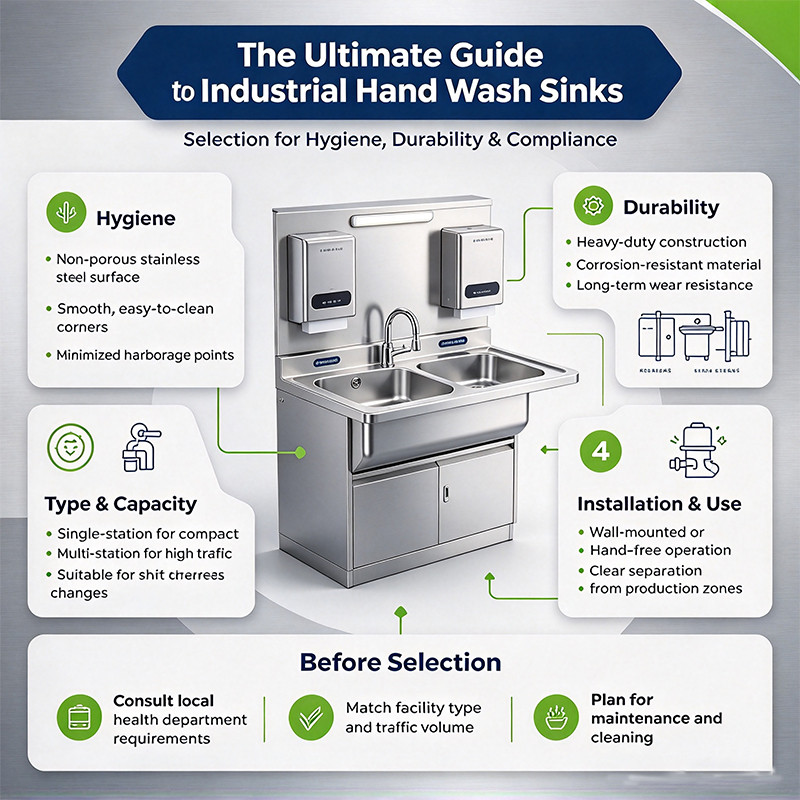
As business owners, we understand that keeping our workplaces clean and safe is a top priority, especially when it comes to hygiene. That’s why selecting the right industrial hand wash sinks for our facilities isn't just about buying equipment; it's about building a foundation for health, compliance, and lasting durability. In environments where cleanliness is non-negotiable—such as food processing, healthcare, and manufacturing—the simple act of handwashing is the single most effective barrier against the spread of contaminants and foodborne illness.
This guide will explore the key factors to help us choose the ultimate industrial hand wash sinks that fulfill all our hygiene and operational needs. We'll delve into everything from the robust materials and innovative features that define these essential fixtures to the complex web of regulations that govern their use. By the end, you'll be equipped with the expertise to invest in a solution that protects your team, your product, and your reputation.
Key Takeaways
- Hygiene is Paramount: Specialized industrial hand wash sinks are not a luxury but a regulatory necessity designed to prevent cross-contamination and ensure compliance with health codes like the FDA Food Code. Using dedicated sinks for handwashing is critical, as using food prep or janitorial sinks for this purpose can lead to severe violations.
- Material Matters: Stainless steel is the industry standard for industrial sinks due to its durability, non-porous surface, and resistance to corrosion and bacteria. The choice between 304 and 316 grade stainless steel depends on the specific environment, with 316 offering superior resistance to harsh chemicals and saline conditions.
- Technology Enhances Safety: Touchless, sensor-operated faucets are a crucial feature in modern industrial sinks. They significantly reduce the risk of cross-contamination by eliminating the need to touch handles, while also conserving water and improving operational efficiency.
- Compliance is Non-Negotiable: Industrial hand wash sinks must meet strict regulatory standards. NSF certification is a benchmark, ensuring the sink's materials, design, and construction are safe for commercial use. Proper sink placement and accessibility are also mandated by health codes to align with HACCP and ISO 22000 food safety systems.
- Design and Features Drive Effectiveness: Beyond the basic basin, features like integrated hygiene stations, which combine washing, soap dispensing, and drying, create a standardized and efficient hygiene process. The sink's gauge (thickness) also plays a vital role in its longevity and resistance to dents and damage, with lower gauges like 14 or 16 being preferable for heavy-duty use.
Why We Need Specialized Industrial Hand Wash Sinks in Our Operations
In any commercial or industrial setting, maintaining a sterile and hygienic environment is not just good practice—it's a critical operational requirement. The first line of defense in this ongoing battle against contamination is effective handwashing. However, not just any sink will do. Specialized industrial hand wash sinks are engineered to meet the rigorous demands of professional environments, providing a level of safety and durability that residential fixtures simply cannot match.
Understanding the critical role handwashing plays in commercial hygiene.
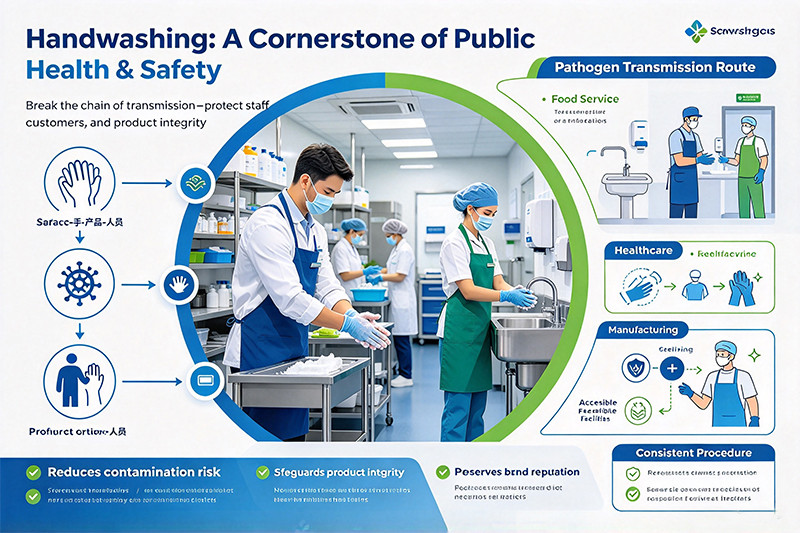
Handwashing is globally recognized as one of the most effective measures to prevent the spread of pathogens. In a commercial context, particularly in food service, healthcare, and manufacturing, this simple action is a cornerstone of public health and safety. The hands of employees can become a primary vehicle for transferring bacteria and viruses from surfaces to products, or from one person to another. The spread of germs from food workers' hands is a leading cause of foodborne illness outbreaks. Therefore, providing accessible and properly designed handwashing facilities is a fundamental requirement to break the chain of transmission and ensure a safe environment for both staff and consumers. Following a consistent and thorough handwashing procedure can dramatically reduce the risk of contamination, safeguarding product integrity and brand reputation.
What truly sets industrial hand wash sinks apart from regular home fixtures?
While a residential sink is designed for occasional use, an industrial hand wash sink is built to withstand constant, heavy-duty operation in demanding environments. The distinctions go far beyond aesthetics, focusing on material robustness, functional design, and regulatory compliance.
| Feature | Industrial Hand Wash Sink | Residential Sink |
|---|---|---|
| Material | Primarily high-grade stainless steel (e.g., 304 or 316) for durability and hygiene. | Various materials including porcelain, ceramic, or lower-grade stainless steel, often chosen for aesthetics. |
| Construction | Built with thicker gauge steel (typically 14-16 gauge) to resist dents, warping, and heavy impacts. | Thinner gauge steel (18-22 gauge) which is more susceptible to damage and noise. |
| Design Focus | Function-driven: a non-porous, easy-to-clean surface with features like large splashbacks and hands-free operation to maximize hygiene. | Form-driven: focused on complementing home decor, with less emphasis on sanitation standards. |
| Compliance | Must meet strict standards from bodies like the NSF and adhere to local health codes and HACCP guidelines. | Generally not subject to public health regulations. |
| Durability | Engineered for a lifespan of 15-30 years in a high-traffic commercial setting. | Designed for light, intermittent use with a shorter lifespan under heavy demand. |
Ultimately, industrial sinks are an investment in operational resilience and safety.
How dedicated industrial hand wash sinks contribute to preventing contamination.
The design and placement of dedicated industrial hand wash sinks are strategic tools in contamination control. Health codes, such as the FDA Food Code, mandate that handwashing must occur in a separate, dedicated sink, not in those used for food preparation, dishwashing, or janitorial services. This strict separation is crucial to prevent cross-contamination, where pathogens from raw foods, dirty dishes, or cleaning chemicals could be transferred to hands, and subsequently to clean surfaces or ready-to-eat food.
By providing conveniently located and clearly designated handwashing stations, businesses ensure that employees can adhere to hygiene protocols without leaving their workflow. This accessibility encourages the frequent handwashing required by HACCP and other food safety systems—for instance, after using the restroom, before handling food, and after touching any potential contaminant. Furthermore, features like touchless faucets and soap dispensers minimize contact with the fixture itself, further reducing the opportunity for germs to spread from one user to another. In essence, a dedicated industrial hand wash sink is an engineered control point that transforms a hygiene policy into a consistent, verifiable practice.
The Mechanics and Features of Effective Industrial Hand Wash Sinks and Hygiene Stations
A truly effective industrial hand wash sink is more than just a basin for water; it is a meticulously engineered system designed for optimal hygiene, durability, and user efficiency. From its core components to advanced technological integrations, every aspect serves the critical purpose of ensuring a reliable and contamination-free handwashing process. Understanding these mechanics and features is key to selecting a system that not only meets compliance but also enhances the safety culture of your operation.
Exploring the core components and essential functions of industrial hand wash sinks.
An industrial hand wash sink is an assembly of several key components, each chosen for performance in a high-demand environment.
- Basin: The heart of the sink is its basin, almost invariably fabricated from stainless steel for its hygienic, non-porous surface. The design often features coved corners (rounded edges) which are easier to clean and prevent the buildup of bacteria compared to sharp 90-degree corners. The size and depth are calculated to be sufficient for handwashing without causing excessive splashing.
- Faucet and Water Supply: The faucet must deliver both hot and cold running water, adjustable to a temperature of at least 100°F (38°C) as required by many health codes. The design is critical; increasingly, regulations and best practices favor hands-free operation.
- Drainage System: An industrial-grade drain efficiently removes wastewater and is designed to prevent clogging. It must connect to a proper plumbing system that includes a trap to prevent sewer gases from entering the facility. Backflow prevention is also a critical safety feature.
- Splash Guards / Backsplash: Most wall-mounted industrial sinks feature an integrated backsplash. This metal panel extends up the wall behind the sink to protect it from water splashes, making the area easier to clean and preventing water damage and mold growth. Side splash guards may also be required depending on the sink's location.
- Support Structure: Whether wall-mounted or freestanding, the sink's supports must be robust. Wall-mount brackets must be securely fastened to carry the weight of the sink and withstand the pressure of daily use. Freestanding models rely on sturdy legs often made from the same durable stainless steel as the basin.
These components work in concert to provide a reliable and sanitary station for the essential task of handwashing.
How hygiene stations, equipped with industrial hand wash sinks, ensure a consistent washing process.
A hygiene station, or hygiene entrance, elevates the concept of handwashing by integrating it into a controlled, multi-step process. These systems are designed to physically guide personnel through a mandatory hygiene protocol before they can enter a sensitive production area. A hygiene station typically combines an industrial hand wash sink with other automated components in a single unit.
The process often works as follows:
- Entry and Boot Cleaning: An employee steps onto the station, which may have automated brushes to scrub and sanitize the soles and sides of their footwear.
- Automated Handwashing: The user places their hands into a chamber, which activates sensors for a touchless sequence of soap dispensing, water flow for washing, and rinsing.
- Hand Sanitization: Following the wash, another sensor dispenses a hand sanitizing agent.
- Controlled Access: A turnstile or gate at the end of the station remains locked until sensors verify that all preceding hygiene steps have been completed correctly.
This system removes human discretion from the equation, ensuring every single person entering a high-care area adheres to the exact same, auditable hygiene standard. This level of process control is invaluable in industries like food processing and pharmaceuticals where contamination risks are exceptionally high.
The benefits of touchless technology in our industrial hand wash sinks.
The move towards touchless technology in commercial fixtures is one of the most significant advancements in public and industrial hygiene. Sensor-activated faucets, soap dispensers, and paper towel dispensers are no longer a luxury but a best-practice standard.
The primary benefits are clear:
- Reduced Cross-Contamination: The single greatest advantage is the elimination of shared touchpoints. Faucet handles are a notorious breeding ground for bacteria; by removing the need to touch them, touchless systems break a key link in the chain of contamination. Clean hands remain clean.
- Water and Resource Conservation: Sensor faucets run only when hands are detected, automatically shutting off when they are moved away. This simple function can drastically reduce water consumption and waste, leading to significant utility savings, especially in high-traffic facilities. Pre-measured soap and towel dispensers also minimize waste and reduce operational costs.
- Improved Compliance and User Experience: Touchless fixtures are convenient and easy to use, which can encourage more frequent and proper handwashing. Forcing a 15-second run time can also help employees meet the recommended scrubbing duration. They also lend a modern, clean aesthetic to a facility.
- Lower Maintenance: With fewer moving parts being manually operated and surfaces staying cleaner, touchless fixtures can often require less cleaning and maintenance than their traditional counterparts.
By investing in touchless technology from a trusted brand like Samsink, businesses can significantly enhance their hygiene protocols, reduce operational costs, and demonstrate a clear commitment to safety and modernity.
Selecting the Best Materials for Our Durable Industrial Hand Wash Sinks
The material of an industrial hand wash sink is the foundation of its performance. It dictates not only the sink's lifespan and resistance to physical damage but also its ability to be properly sanitized, which is paramount in any hygiene-critical environment. While various materials exist, one stands out as the undisputed industry standard for its unique combination of strength, cleanability, and value. Making an informed material choice is crucial for ensuring long-term durability and compliance.
Why stainless steel is the preferred material for industrial hand wash sinks.
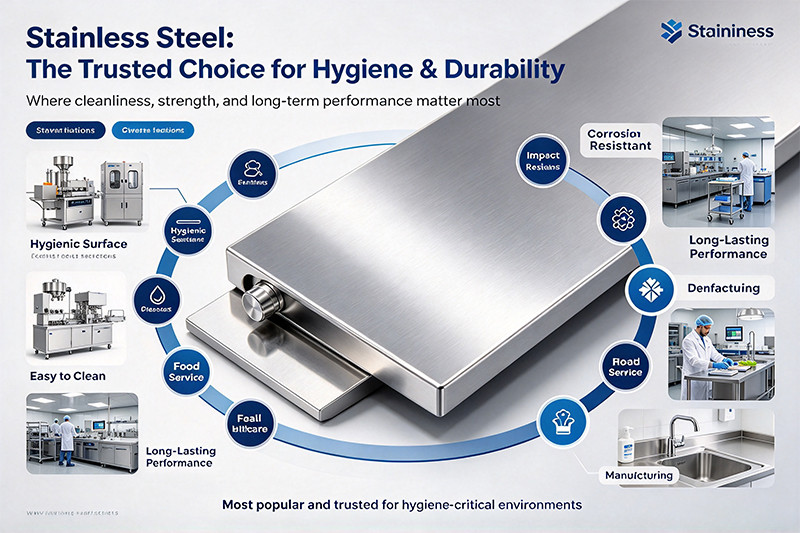
Stainless steel is the benchmark material for commercial sinks, and for a host of compelling reasons. Its properties are uniquely suited to the harsh realities of industrial environments, from bustling restaurant kitchens to sterile pharmaceutical labs.
- Superior Hygiene: Stainless steel has a non-porous surface, which means it does not harbor bacteria, mold, or other microorganisms. This makes it incredibly easy to clean and sanitize, a non-negotiable trait for meeting health standards.
- Unmatched Durability: It is highly resistant to impacts, scratches, and the general wear and tear of a high-traffic setting. Unlike materials like porcelain or cast iron, which can chip or crack, stainless steel maintains its structural integrity even when subjected to heavy pots, pans, and equipment.
- Corrosion and Stain Resistance: The chromium content in stainless steel creates a passive, self-repairing layer that protects it from rust and corrosion caused by water, food acids, and most cleaning chemicals.
- Temperature Tolerance: It can withstand extreme temperatures, from boiling hot water to sanitizing chemicals, without warping, cracking, or degrading.
- Longevity and Value: While the initial cost may be higher than some alternatives, a well-maintained stainless steel sink can last for 15 to 30 years, offering exceptional long-term value and reducing the need for costly replacements.
These combined advantages make stainless steel the most popular and trusted choice for any application where hygiene and durability are top priorities.
Choosing wisely: When to pick 304 versus 316 stainless steel for industrial hand wash sinks.
Not all stainless steel is created equal. The "grade" of the steel refers to its specific chemical composition, which affects its performance. The two most common grades used for commercial sinks are 304 and 316.
Type 304 Stainless Steel: This is the workhorse of the industry and the most widely used grade for food-grade applications. Often referred to as "18/8" for its composition of 18% chromium and 8% nickel, it offers excellent corrosion resistance against a wide variety of food acids and cleaning solutions. For most general-purpose industrial kitchens, food processing areas, and standard commercial facilities, Type 304 provides the perfect balance of performance and cost-effectiveness.
Type 316 Stainless Steel: This is a premium-grade steel, often called "marine grade." The key difference is the addition of 2-3% molybdenum to its alloy. This small addition provides a significant boost in corrosion resistance, especially against chlorides (like salt) and harsh industrial chemicals or solvents.
The decision hinges on the environment:
- Choose 304 grade for standard kitchens, beverage stations, and general manufacturing facilities. It is more than adequate for daily use and represents a better value for these applications.
- Choose 316 grade if the sink will be located in coastal or marine environments with salt in the air, or in facilities that use aggressive, chloride-based cleaning agents, strong acids, or de-icing salts. Pharmaceutical labs and some chemical processing plants often specify 316 for its superior chemical resistance. While it is more expensive, the investment is justified by the prevention of premature corrosion and failure in these harsh conditions.
The importance of gauge (thickness) for the longevity of our industrial hand wash sinks.
Gauge refers to the thickness of the stainless steel sheet used to construct the sink. It's a critical factor that directly impacts the sink's strength, durability, and even its sound-dampening qualities.
A crucial point to remember is that the gauge numbering system is counter-intuitive: the lower the gauge number, the thicker and stronger the steel.
- 20-22 Gauge: This is a thinner steel, often found in residential sinks or very light-duty commercial applications. It is more prone to denting, flexing, and can be noisier when water or items hit the basin.
- 18 Gauge: Often considered the minimum standard for light commercial use, it provides a good balance of durability and affordability for many applications.
- 16 Gauge: This is a significantly thicker, more robust steel. A 16-gauge sink offers superior resistance to dents and warping, feels more solid, and does a better job of dampening noise. It is the recommended choice for most medium to heavy-duty commercial and industrial environments.
- 14 Gauge: This is extremely thick and heavy-duty steel, typically reserved for the most demanding industrial settings where the sink will be subject to extreme abuse. It offers maximum durability and longevity.
For a long-lasting investment that can withstand the rigors of a busy operation, opting for a lower gauge (thicker) steel like 16-gauge is highly recommended. A thicker gauge sink from a reputable manufacturer like Samsink ensures the fixture will maintain its form and function for years, providing better resistance to damage and a quieter, more pleasant working environment.
Ensuring Compliance: Regulations and Certifications for Our Industrial Hand Wash Sinks
Investing in an industrial hand wash sink is not just a practical decision; it is a legal and regulatory one. Public health authorities and international standards organizations have established strict requirements for the design, installation, and use of these fixtures to protect public health. Navigating these regulations is essential for passing inspections, avoiding fines, and maintaining a safe operation. From local health department codes to globally recognized certifications, understanding the compliance landscape is a non-negotiable part of the selection process.
Navigating health department requirements for industrial hand wash sinks.
Local and state health departments are the primary enforcement bodies for food safety regulations, largely basing their rules on the FDA Food Code. These requirements are specific and must be followed meticulously.
Key requirements typically include:
- Dedicated Use: A sink designated for handwashing must be used exclusively for that purpose. Washing hands in a food prep, dishwashing, or janitorial sink is a critical violation.
- Strategic Placement: Handwashing sinks must be conveniently located to be effective. Regulations demand they be placed in or at the entrance to food preparation areas, warewashing areas, and within or immediately adjacent to restrooms. A common rule is that a sink should be accessible within a 25-foot radius of workstations.
- Accessibility: The sinks must be unobstructed at all times. Placing carts, trash cans, or equipment in front of a hand sink is a violation because it discourages use.
- Proper Supplies: A compliant handwashing station must be stocked with hot (at least 100°F) and cold running water, dispensed soap, a hygienic hand-drying method (such as single-use paper towels or an air dryer), and a waste receptacle.
- Signage: A clear and visible sign instructing employees to wash their hands must be posted at every handwashing sink.
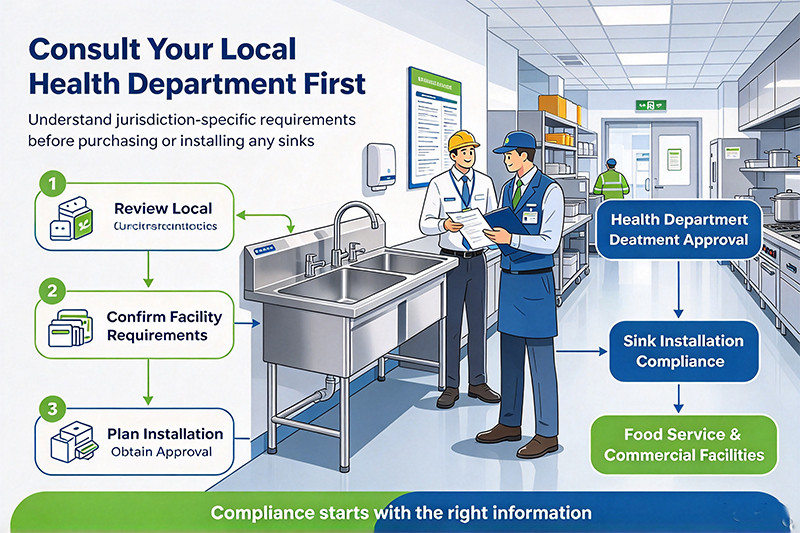
Before purchasing or installing any sinks, it is imperative to consult with your local health department to understand the specific requirements for your jurisdiction.
Why NSF certification is a non-negotiable standard for industrial hand wash sinks.
When you see the NSF mark on a piece of foodservice equipment, it signifies a commitment to public health and safety. NSF International (originally the National Sanitation Foundation) is an independent organization that develops standards and certifies products for commercial food settings. Its certification is the benchmark by which all commercial equipment is measured.
For an industrial hand wash sink to earn NSF certification, it must undergo rigorous testing and evaluation covering several key areas:
- Material Safety: The materials used, particularly the stainless steel, are tested to ensure they are non-toxic and will not leach harmful chemicals into the water or onto hands.
- Design and Construction: The sink must be designed to be easily cleanable. This means smooth surfaces, coved corners, and the absence of crevices or fasteners where bacteria could accumulate.
- Performance: The equipment must perform as intended in a commercial environment.
In the United States, requirements for NSF-certified equipment are so prevalent that it is almost impossible to open a new commercial kitchen without it. Health inspectors specifically look for the NSF mark as proof that the equipment is designed and built to meet stringent sanitation standards. Choosing an NSF-certified sink is the surest way to guarantee it meets public health requirements and is built for safe, commercial use.
Our industrial hand wash sinks and their role in meeting HACCP and ISO 22000.
Hazard Analysis and Critical Control Points (HACCP) and ISO 22000 are systematic, science-based food safety management systems designed to prevent food safety hazards. They don't just focus on the final product; they analyze the entire production process to identify "critical control points" (CCPs) where hazards can be prevented or eliminated.
Proper handwashing is universally considered a fundamental prerequisite program and a critical control point within these systems. An industrial hand wash station is the physical tool that enables this CCP to be managed effectively.
Here's how they connect:
- Hazard Control: Inadequate hand hygiene is a significant biological hazard (e.g., spread of Salmonella, E. coli). Properly located and equipped hand wash stations are the primary control measure for this hazard.
- Monitoring and Verification: A well-designed hygiene station, especially an automated one, allows for the monitoring of this CCP. For example, a turnstile that only opens after a complete wash cycle provides verifiable proof that the hygiene step was completed.
- Documentation: As part of a HACCP or ISO 22000 plan, a facility must document its procedures. This includes detailing the location of hand wash sinks, the handwashing procedure itself, and the schedule for cleaning and restocking the stations.
- Compliance: Implementing these systems helps facilities comply with international food safety standards, which is often a requirement for suppliers in the global food market.
Therefore, investing in compliant industrial hand wash sinks is not just about meeting local codes; it is a foundational step in building a comprehensive, globally recognized food safety management system that protects consumers and the brand.
Innovative Industrial Hand Wash Sinks: Types, Sizing, and Modern Alternatives
The world of industrial hand hygiene extends beyond the standard single-basin, wall-mounted sink. As facilities grow in complexity and operational needs diversify, so too have the solutions for handwashing. From multi-user stations designed for high-traffic shift changes to portable units that bring hygiene to any location, innovation is driving more effective and flexible options. Understanding these different types, how to properly size and place them, and even considering advanced automated alternatives is key to designing a truly comprehensive hygiene infrastructure.
Optimal sizing and strategic placement for our industrial hand wash sinks.
The effectiveness of a hand wash sink is determined as much by its location as its features. Strategic placement is not just a suggestion; it is mandated by health codes to ensure sinks are convenient and used frequently.
Placement Strategy:
- Proximity to Critical Zones: The fundamental rule is to place sinks where they are needed most. This includes at the entrance to all food preparation areas, within dishwashing (warewashing) zones, inside or adjacent to bar service areas, and immediately accessible from restrooms.
- Workflow Integration: Sinks should be positioned to naturally fit into the employee workflow. An employee should not have to walk across a busy line or around equipment to wash their hands after handling raw meat or before starting a new task.
- The 25-Foot Rule: Many health jurisdictions follow a guideline that a hand sink should be located within 25 feet of key workstations. This ensures it is always within a few steps, eliminating any excuse for not using it.
- Avoiding Obstructions: It is a critical violation to block access to a hand sink. The area must be kept clear of mobile carts, trash bins, boxes, and other materials.
Sizing and Quantity:
- Number of Employees: The number of sinks required is often tied to the number of employees working at a given time. A common guideline for large kitchens is to install one hand sink for every 4 to 6 line cooks.
- Number of Prep Areas: At a minimum, most codes require at least one dedicated hand wash sink per food prep area. If you have distinct stations for raw and ready-to-eat foods, each may need its own sink to prevent cross-contamination.
- Consult Local Codes: The ultimate authority on the required number and placement of sinks is your local health department. Always confirm their specific requirements before any installation.
Exploring multi-station and portable industrial hand wash sinks for diverse needs.
While single-basin sinks are common, many situations call for more specialized configurations.
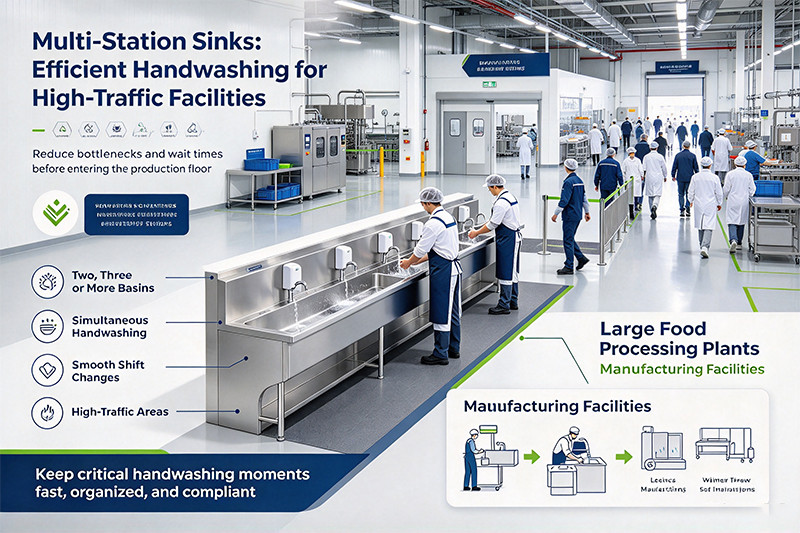
Multi-Station Sinks: For high-traffic areas or facilities with large-scale shift changes, a multi-station sink is an efficient solution. These units combine two, three, or even more basins into a single, long fixture. They allow multiple employees to wash their hands simultaneously, reducing bottlenecks and wait times at critical moments, such as before entering a main production floor. They are commonly found in large food processing plants and manufacturing facilities.
Portable Hand Wash Sinks: When permanent plumbing is not feasible, portable hand wash stations provide a compliant and flexible solution. These self-contained units are essential for:
- Outdoor events, festivals, and farmers' markets
- Construction sites
- Agricultural field work
- Emergency response and disaster relief sites
- Temporary or seasonal operational areas within a facility
A compliant portable sink replicates the function of a fixed one. It must have separate tanks for fresh (potable) water and for collecting waste (greywater). To prevent overflow and hazardous spills, the wastewater tank is typically required to be larger than the freshwater tank. They must also be equipped with soap and paper towel dispensers to provide a complete handwashing experience.
Considering automated washing systems as advanced options beyond traditional industrial hand wash sinks.
For operations demanding the absolute highest level of hygiene and process control, fully automated handwashing systems represent the pinnacle of current technology. These systems go far beyond a simple sink and faucet, offering a completely touchless, highly standardized, and verifiable hand hygiene event.
A typical automated system works by having the user insert their hands into cylinders or a chamber. Sensors then trigger a precisely timed and executed cycle:
- A spray of water and a cleaning/sanitizing solution is dispensed.
- Rotating cylinders or high-pressure jets clean all surfaces of the hands, including fingertips and between fingers.
- A clean water rinse follows.
- A final application of hand sanitizer may occur.
- A high-speed air dryer completes the cycle.
The entire process takes as little as 12 seconds and is guaranteed to be consistent every single time, removing all human error and variability. Many of these systems can be integrated with access control turnstiles, physically preventing entry to a clean room or production area until the hygiene cycle is successfully completed. While they represent a significant initial investment, automated systems offer unparalleled pathogen removal, water and resource savings, and auditable proof of compliance for the most sensitive industrial applications.
Frequently Asked Questions (FAQ)
1. How many industrial hand wash sinks do I need for my commercial kitchen? The exact number depends on your local health code, but general guidelines from the FDA Food Code suggest you need at least one dedicated hand sink in every food preparation area, one in each warewashing (dish) area, one in or adjacent to every restroom, and one inside any bar service area. A common rule of thumb is one sink per 4-6 employees on a line in larger kitchens. Always verify the specific requirements with your local health inspector.
2. Can I use a three-compartment sink for handwashing? No. It is a critical violation in nearly every US jurisdiction to wash hands in a sink used for food prep, dishwashing (like a three-compartment sink), or janitorial duties. Handwashing must be done in a sink that is designated and used exclusively for that purpose to prevent cross-contamination.
3. What is the difference between 304 and 316 stainless steel, and which do I need? 304 stainless steel is the industry standard for most food service applications, offering excellent durability and corrosion resistance at a good value. 316 stainless steel contains molybdenum, which gives it superior resistance to corrosion from salt, chlorides, and harsh chemicals. You should choose 316 grade if your facility is in a coastal area with salt air or if you use aggressive, chloride-based sanitizers.
4. Is a touchless faucet really necessary? While not always legally mandated (though some codes require them to run for 15 seconds), touchless faucets are considered a best practice and a worthwhile investment. They dramatically reduce the risk of cross-contamination by eliminating a common touchpoint, conserve water, and improve overall hygiene. Upgrading to touchless fixtures is one of the most effective ways to enhance the safety of your handwashing stations.
5. What does NSF certification mean for a sink? NSF (National Sanitation Foundation) certification means the sink has been independently tested and verified to meet stringent standards for public health and safety. This includes ensuring the materials are non-toxic, and the design is smooth, durable, and easily cleanable to prevent bacteria from harboring. Health inspectors look for the NSF mark as a guarantee of a piece of equipment's suitability for a commercial environment.
6. What is the ideal gauge for an industrial sink? Gauge measures the thickness of the steel; a lower number means thicker, more durable steel. For most commercial and industrial uses, a 16-gauge sink is highly recommended as it provides excellent resistance to dents, damage, and noise. While 18-gauge might be acceptable for very light use, 14- or 16-gauge steel is the standard for a long-lasting, heavy-duty installation.
7. How should I place hand wash sinks in my facility? Sinks must be convenient and easily accessible to encourage use. Place them directly within or at the entrance to food prep and dishwashing areas. They should be integrated into the natural workflow so an employee doesn't have to go out of their way to use them. Crucially, they must always be unobstructed and kept clear of any equipment or supplies.
Conclusion
The journey to selecting the perfect industrial hand wash sinks is a crucial one, deeply intertwined with the core principles of safety, compliance, and operational excellence. As we've explored, this decision goes far beyond simply picking a fixture. By thoughtfully considering the material, features, and regulatory compliance, we can make informed decisions about our industrial hand wash sinks. A sink made from durable, low-gauge 304 or 316 stainless steel will provide the longevity needed for a demanding environment, while features like touchless faucets and integrated hygiene stations elevate safety and efficiency to modern standards.
Investing in the right industrial hand wash sinks is an investment in our team's health, our business's reputation, and compliance with essential safety standards. It is a tangible demonstration of a commitment to quality that resonates from the production floor to the final consumer. When you prioritize hygiene with high-quality equipment from a trusted provider like Samsink, you are building a stronger, safer, and more resilient business. We encourage you to use this guide as a resource, to ask critical questions of your suppliers, and to make an investment that will pay dividends in safety and confidence for years to come.