The Ultimate Guide to Selecting Your Perfect Stainless Steel Barn Sink.
- Share
- Issue Time
- Jul 14,2026
Summary
The article presents stainless steel barn sinks, also known as farmhouse or apron-front sinks, as a highly popular and practical choice for modern kitchens, serving as both a utility and a focal point. It highlights their timeless appeal and versatility, enabling them to seamlessly integrate into various kitchen styles, from rustic to contemporary. A key advantage emphasized is their superior durability, with 16-gauge T-304 stainless steel being the recommended standard for optimal resistance to
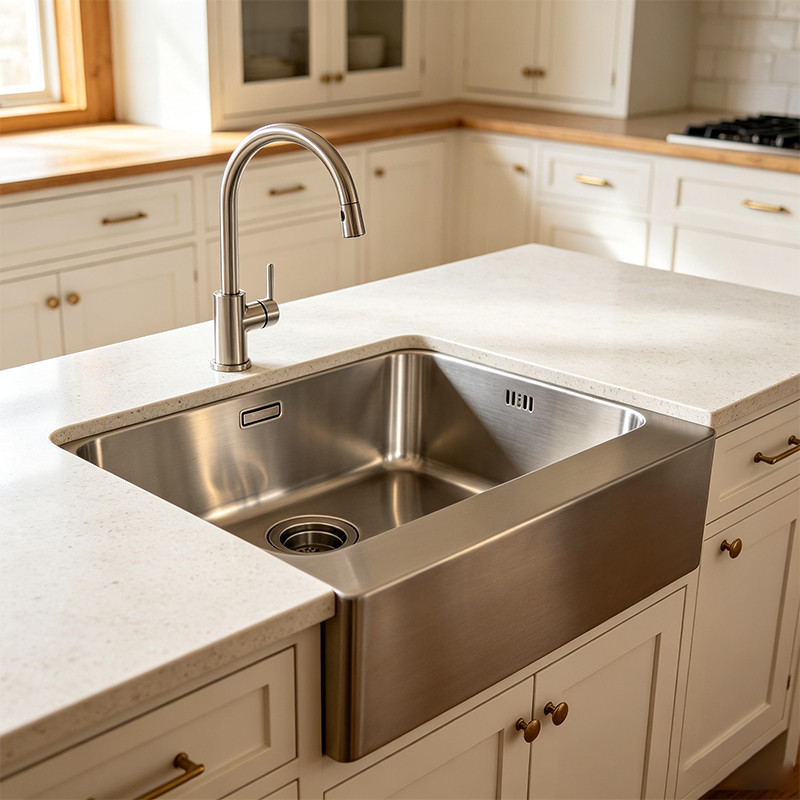
As a kitchen enthusiast, I know the sink is more than just a basin; it's the heart of our kitchen, where most of the action happens. The right sink isn't just a utility—it's often a focal point that ties the room together. Choosing the perfect one can truly transform your space, making everyday tasks from food prep to cleanup easier and more enjoyable.
Today, I'm here to guide you through one of the most popular and practical options on the market: the stainless steel barn sink, also known as a farmhouse or apron-front sink. This style has seen a major resurgence in recent years, evolving from its rustic origins to fit seamlessly into modern homes. Research shows that stainless steel remains the top-selling kitchen sink material in the US, prized for its blend of style, function, and durability that's perfect for any home.
Join me as we explore everything you need to know—from design advantages and configurations to installation and maintenance—to select the perfect stainless steel barn sink that will serve as your family's beautiful and functional kitchen centerpiece for years to come.
Key Takeaways
- Timeless Appeal & Versatility: Stainless steel barn sinks, or apron-front sinks, are not going out of style; they have evolved with slimmer profiles and modern finishes to fit rustic, transitional, and contemporary kitchens alike.
- Superior Durability: Look for 16-gauge T-304 stainless steel. This thickness offers the best resistance to dents, corrosion, and noise, ensuring a long-lasting and high-performing sink.
- Functional Design: The large, deep single-bowl design is a hallmark of the farmhouse style, providing ample space for washing large pots, pans, and even bathing small children, making it incredibly practical for busy households.
- Hygienic & Easy to Clean: The non-porous surface of stainless steel prevents bacteria buildup, making it one of the most hygienic materials for a kitchen sink. Simple cleaning with soap and water is usually all that's needed to maintain its look.
- Smart Investment: Stainless steel is generally more affordable and lighter than other farmhouse sink materials like fireclay or cast iron, which can simplify installation and reduce overall costs.
Unlock the Advantages of a Stainless Steel Barn Sink
When you're designing a kitchen that’s both beautiful and hardworking, the sink is a critical decision. A stainless steel barn sink offers a compelling combination of features that make it a top contender for any home. Its advantages go far beyond its well-known durability, touching on aesthetics, hygiene, and even environmental responsibility. Let's delve into why this style remains a favorite for homeowners and designers alike.
The Modern Aesthetic: Sleek Design and Versatility
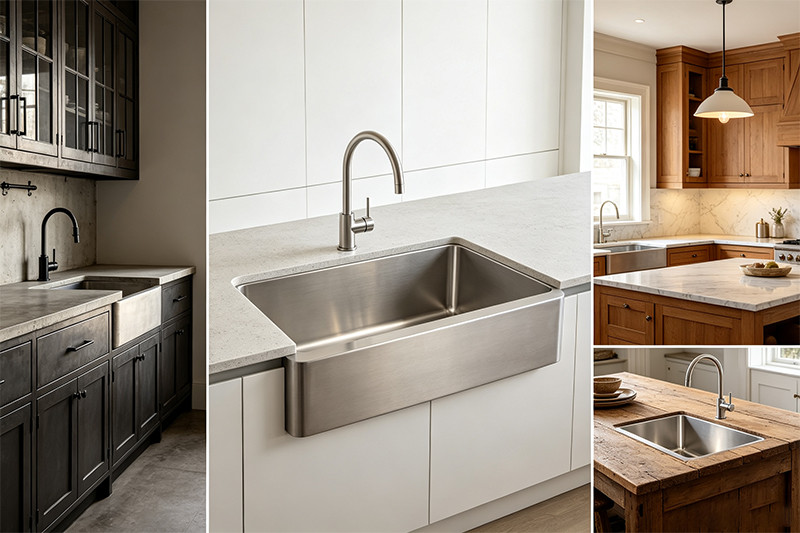
I find that stainless steel barn sinks bring a clean, polished look to any kitchen. Their sleek, modern design can make your kitchen feel brighter and more spacious. They are incredibly versatile and can fit in with many styles, from industrial to traditional. You can choose different shapes and sizes, and they pair well with almost any countertop, like marble or wood.
The stainless steel barn sink is a design chameleon. Its clean lines and cool textures can complement virtually any kitchen aesthetic long after trendy colors have faded. While it is a natural fit for industrial-chic or minimalist modern designs, it also pairs beautifully with traditional or rustic settings, especially when matched with countertops like marble, quartz, or wood. The reflective nature of stainless steel brightens the room by bouncing light, which can make smaller kitchens feel more spacious and open.
Modern iterations have evolved far beyond the basic basin. Look for models from brands like Samsink that feature contemporary finishes such as brushed or matte textures, which help hide fingerprints and water spots. Some designs even incorporate advanced PVD coatings for colors like matte black, gunmetal, or brushed gold, adding a personalized, high-end feel while increasing scratch resistance. The versatility extends to configuration, with options for undermount, top-mount, and distinctive farmhouse styles with sleek, flat apron fronts that create a striking focal point. This adaptability allows the stainless steel barn sink to act as a quiet, minimalist anchor or a bold statement piece, depending on your vision.
Built to Last: Unmatched Durability and Hygiene
When I think about a kitchen sink, durability is key. Stainless steel barn sinks are incredibly tough. They resist rust, stains, and high heat, meaning they can handle all the daily cooking and cleaning without showing wear. The best ones are made from high-quality 304-grade stainless steel. Plus, their smooth, non-porous surface makes them super hygienic because germs can't easily hide there.
A key reason stainless steel remains the number one choice for both residential and commercial kitchens is its exceptional durability. These sinks are built to withstand the rigors of a busy household, from handling boiling water and hot pans without damage to resisting impacts from dropped cookware. High-quality models are crafted from 304-grade stainless steel, which contains approximately 18% chromium and 8% nickel. This composition creates a passive, corrosion-resistant chromium oxide layer on the surface, making the sink highly resistant to rust and stains from acidic foods. While not completely immune to scratches, a quality brushed or satin finish will develop a patina over time, helping to blend and hide minor surface marks.
Beyond toughness, hygiene is paramount in the kitchen. Stainless steel’s non-porous surface is a major advantage. It prevents bacteria, mold, and germs from finding a place to thrive, making it one of the easiest surfaces to keep sanitary. While the material itself doesn't kill bacteria, its smooth finish means that contaminants, grease, and food residue are difficult to stick to and can be easily wiped away with simple soap and water. This ensures a clean and safe environment for all your food preparation needs.
Smart Choice: Affordability and Eco-Friendliness
Another great benefit I appreciate is that stainless steel barn sinks are generally more budget-friendly than some other materials. They are also lighter, which can make installation easier and sometimes less costly. If you care about the environment, I'm happy to tell you that stainless steel is a recyclable material, making it an eco-friendly choice for your home.
When planning a kitchen renovation, budget is always a key consideration. Stainless steel provides an excellent balance of cost and performance. Compared to other popular farmhouse sink materials like fireclay, cast iron, or natural stone, stainless steel is often more affordable. For example, a quality 16-gauge stainless steel apron-front sink can be significantly less expensive than a comparable fireclay model, which often starts at a much higher price point. This allows you to achieve the coveted farmhouse look without allocating a disproportionate amount of your budget to the sink alone.
Furthermore, stainless steel sinks are much lighter than their fireclay or cast iron counterparts. A typical fireclay sink can weigh over 100 pounds, often requiring custom-built, reinforced cabinet support. The lightweight nature of stainless steel simplifies the installation process, potentially reducing labor costs and making it a more manageable project for DIY enthusiasts.
Finally, for the environmentally-conscious homeowner, stainless steel is an outstanding choice. It is one of the most recycled materials in the world. Unlike materials that degrade, stainless steel maintains all its essential properties through unlimited recycling cycles, making it a cornerstone of a circular economy. Choosing a stainless steel sink, especially one made from recycled materials, helps conserve natural resources and reduces energy consumption associated with producing new steel.
Choosing the Right Size and Configuration for Your Perfect Stainless Steel Barn Sink
Selecting the right size and layout for your sink is just as important as choosing the material. This decision will directly impact your kitchen’s workflow, functionality, and aesthetic balance. A sink that is too small can be frustrating, while one that is too large might overwhelm your space. Let’s break down the key factors to consider.
Finding Your Fit: Standard Sizes (30, 33, 36 Inches)
When picking your stainless steel barn sink, size really matters! I've learned that standard sizes usually come in 30, 33, and 36 inches. A 30-inch sink is great if you have a smaller kitchen, fitting most standard cabinets. The 33-inch sink is often the most popular choice, offering a good balance of workspace and cabinet fit. If you're a serious cook and need maximum space, a 36-inch sink might be for you, but be ready for a larger cabinet requirement.
Choosing the right width for your stainless steel barn sink is a crucial first step that balances your kitchen's scale, your cabinet size, and your daily needs. The most common sizes you'll encounter are 30, 33, and 36 inches.
- 30-Inch Sinks: A 30-inch sink is an excellent choice for smaller kitchens, apartments, or as a secondary prep sink. It provides the classic farmhouse look without overwhelming a compact space and generally fits well within a standard 33-inch base cabinet.
- 33-Inch Sinks: This is often considered the "sweet spot" and is the most popular size for average family kitchens. It offers a generous basin for washing large pots and pans while still fitting comfortably into a standard 36-inch base cabinet, which is a common size in many homes. This balance makes it a versatile and highly functional option.
- 36-Inch Sinks: For those with large kitchens, big families, or a passion for cooking, a 36-inch sink is the ultimate choice. It provides maximum capacity for handling oversized cookware, extensive meal prep, and heavy-duty cleanup. However, a sink this large requires a wider base cabinet—typically 39 inches or more—and can reduce available counter space, so it's best suited for generous layouts.
A critical rule of thumb when sizing your sink is to ensure your base cabinet is at least 3 inches wider than the sink itself. This provides the necessary space on each side for installation supports and plumbing, ensuring a secure and proper fit.
Bowl Preference: Single vs. Double Bowl Considerations
I usually recommend a single-bowl stainless steel barn sink for most homeowners. It provides a larger, uninterrupted space, which is perfect for washing big pots and baking sheets. Single bowls are also easier to clean because there's no divider. However, if you like to multitask, say, soaking dishes on one side and prepping food on the other, a double-bowl might be more convenient.
The debate between a single or double bowl sink ultimately comes down to your personal workflow and kitchen habits. Each configuration offers distinct advantages.
Single-Bowl Sinks: A single-bowl configuration has become the clear favorite for modern farmhouse sinks, largely because of its immense practicality. The large, uninterrupted basin is exceptionally well-suited for the way many people cook and clean today.
- Pros: The primary benefit is the ample space it provides for washing oversized items like stockpots, roasting pans, and baking sheets that simply won't fit in a divided sink. Soaking large cookware becomes effortless. With no divider, single-bowl sinks are also simpler to clean, as there are fewer corners and edges for grime to accumulate. They are a great fit for smaller kitchens where maximizing every inch of usable space is a priority.
- Cons: The main drawback is the lack of separation for multitasking. Washing and rinsing have to happen in the same space, and if the sink is full of dirty dishes, the garbage disposal can become inaccessible.
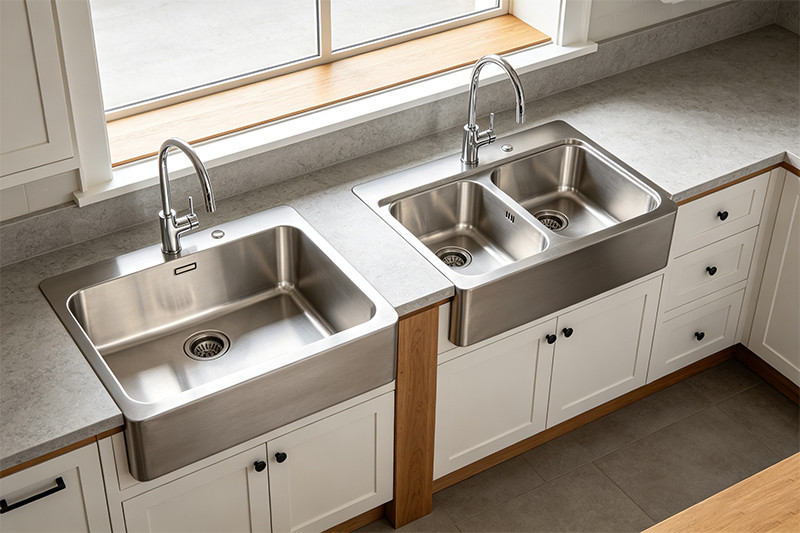
Double-Bowl Sinks: A double-bowl sink caters to those who prefer a more traditional, organized approach to their kitchen tasks.
- Pros: The separation allows for efficient multitasking. You can dedicate one bowl to soaking greasy pans while keeping the other free for rinsing vegetables or washing your hands. This separation can also promote better hygiene by keeping raw food prep away from dirty dishes. For households that hand-wash dishes frequently, the two bowls facilitate a classic wash-and-rinse system.
- Cons: The biggest disadvantage is that each individual basin is smaller, making it difficult or impossible to wash large cookware. The divider also creates more surfaces and crevices to clean. Additionally, double-bowl sinks typically require a wider base cabinet (often 36 inches or more) to be functional.
Ultimately, if you frequently use large cookware and value open space, a single bowl is likely your best bet. If you prioritize multitasking and separating tasks, a double bowl may suit your style better.
Gauge Matters: Understanding Sink Thickness
You might hear about "gauge" when looking at stainless steel barn sinks. I want you to know that the gauge number tells you how thick the steel is – a lower number means a thicker, more durable sink. I suggest looking for 16 or 18-gauge steel because it's stronger and helps to reduce noise. Thicker sinks tend to perform better and last longer.
When shopping for a stainless steel sink, the term "gauge" refers to the thickness of the steel. It's a crucial factor that directly impacts durability, noise level, and overall quality. Confusingly, a lower gauge number means thicker, more robust steel.
Here’s a simple breakdown of the most common gauges:
16-Gauge: This is considered a premium, heavy-duty option. A 16-gauge sink is thicker, making it significantly more resistant to dents and damage from heavy pots and pans. The added mass also provides excellent sound dampening, reducing the "tinny" noise of running water and clanging dishes. A quality brand like Samsink often uses 16-gauge steel for its superior performance and longevity.
18-Gauge: This is a very popular and reliable choice for residential kitchens. While slightly thinner than 16-gauge, it still offers a great balance of durability, performance, and affordability. It's a solid upgrade from the higher-gauge sinks often found in builder-grade homes.
20-Gauge and Higher: Sinks with a gauge of 20 or higher are thinner and more prone to denting, flexing, and noise. While they are more budget-friendly, they tend to have a shorter lifespan and can feel less substantial. For a fixture that gets as much use as a kitchen sink, investing in a lower gauge is highly recommended.
Why Thickness Matters:
| Feature | 16-Gauge (Thicker) | 18-Gauge (Standard) | 20+ Gauge (Thinner) |
|---|---|---|---|
| Durability | Excellent dent & bow resistance | Good resistance | Prone to denting |
| Noise Level | Quieter, better sound absorption | Moderate noise | Louder, more "tinny" |
| Cost | Higher | Mid-range | Lower |
| Best For | Busy kitchens, heavy cookware | Most residential homes | Light use, budget projects |
For the best long-term investment, I strongly suggest choosing a 16-gauge stainless steel barn sink. The added thickness ensures your sink will stand up to years of daily use while providing a quieter and more pleasant kitchen experience.
Seamless Installation and Maintenance for Your Stainless Steel Barn Sink
A beautiful new sink is an exciting addition to any kitchen, but ensuring it’s installed correctly and cared for properly is key to its longevity. While stainless steel barn sinks are incredibly resilient, a little planning during installation and a simple maintenance routine will keep your sink looking pristine for years to come.
Installation Essentials: Cabinet Modifications and Countertop Coordination
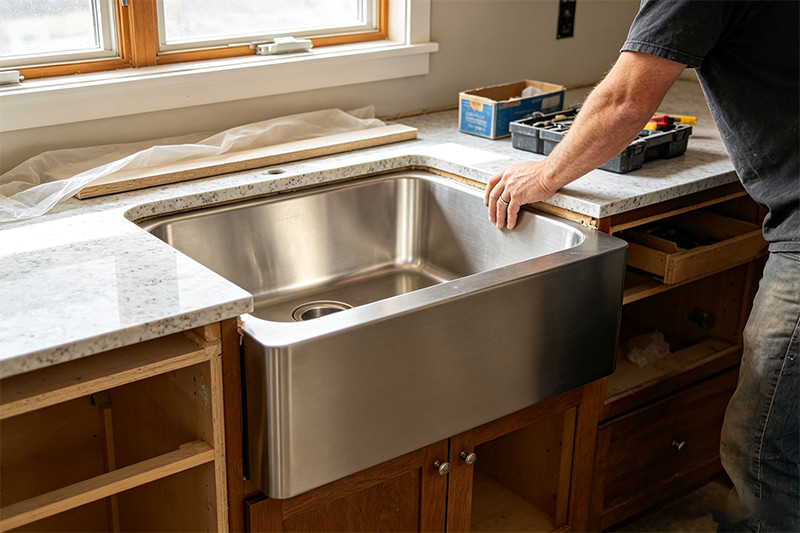
Installing a stainless steel barn sink requires a bit of planning. I've found that most farmhouse style sinks need special cabinet modifications, especially for the apron front. This might involve custom cuts or even strengthening the cabinet to support the sink's weight. If you're getting new countertops, I always recommend coordinating the sink delivery with your countertop fabrication to ensure a perfect fit. It's often easier and more cost-effective to install a barn sink when you're replacing your countertops entirely.
Unlike a simple drop-in sink, installing a farmhouse sink is a more involved process that requires careful planning, especially regarding your cabinetry and countertops.
Cabinet Modifications: The defining feature of a barn or apron-front sink is its exposed front, which means the sink base cabinet needs to be modified.
- Cutting the Cabinet Front: The face of the cabinet (where false drawer fronts usually are) must be cut to accommodate the height and width of the sink's apron. It is crucial to use the sink's physical dimensions or the provided template for this cut, as measurements can vary slightly.
- Building Support: Farmhouse sinks are not supported by the countertop; they must be supported from below. While stainless steel models are much lighter than fireclay or cast iron options, a sturdy support frame is still essential for a secure, level installation. This typically involves building a frame inside the cabinet using 2x4s and a plywood platform for the sink to rest on. This frame must be built to a precise height to ensure the top of the sink aligns correctly with the future countertop.
Countertop Coordination: Proper coordination with your countertop fabricator is non-negotiable for a seamless result.
- Have the Sink On-Site: Never allow a fabricator to cut your countertop based on the manufacturer's printed specifications alone. Always have the physical sink on-site for them to take precise measurements. This prevents costly errors and ensures the cutout is perfect.
- Determine the Reveal: You'll need to decide on the "reveal"—how the countertop edge interacts with the sink opening. You can have a slight overhang (negative reveal), a flush mount, or a slight step-back (positive reveal). Discuss these options with your installer to achieve your desired look.
- Sealing: Once the countertop is placed over the sink, a waterproof silicone sealant is applied to fill the gap between the sink and the underside of the counter, creating a watertight seal.
Because of these requirements, installing a farmhouse sink is most efficiently done during a full kitchen remodel when cabinets and countertops are being replaced simultaneously. While retrofit installations are possible, they often present more challenges.
Keeping it Pristine: Simple Care and Cleaning Tips
Maintaining your stainless steel barn sink is surprisingly easy, which I love! To prevent water spots, I always wipe down my sink after each use. For regular cleaning, a gentle soap and water solution is all you need. Sometimes, I use a 50/50 mix of vinegar and water weekly for extra shine. Just remember to avoid harsh abrasive cleaners or steel wool, as these can scratch the beautiful finish.
One of the great advantages of a stainless steel sink is its low-maintenance nature. With a few simple habits, you can keep it looking new for decades.
Daily Care:
- Rinse and Dry: The most effective habit is to rinse your sink with warm water and wipe it completely dry with a soft microfiber cloth after each use. This simple step is the #1 way to prevent water spots and mineral deposits from forming, especially in areas with hard water.
- Gentle Soap: For daily cleaning, all you need is a soft sponge or cloth and a mild dish soap solution. Be sure to scrub in the direction of the steel's grain lines to avoid creating micro-scratches.
Weekly Deep Clean: For a more thorough cleaning once a week, you can use natural and effective solutions you likely already have at home.
- Baking Soda Scrub: Sprinkle a generous layer of baking soda across the entire damp sink. Its mild abrasive quality lifts stains and grime without scratching the surface.
- Vinegar Spray: Lightly spray white vinegar over the baking soda. The fizzing reaction helps to loosen stubborn residue, soap scum, and mineral deposits. Let it bubble for a few minutes.
- Gentle Scrub and Rinse: Use a soft sponge to gently scrub the paste around the sink, again, following the grain. Rinse thoroughly with warm water.
- Dry and Polish (Optional): For an extra sparkle, dry the sink completely and then apply a few drops of olive oil or mineral oil to a clean cloth and buff the surface. This not only adds shine but helps repel water.
What to Avoid: To protect your sink's finish, never use the following:
- Abrasive Cleaners or Scouring Powders: These can scratch and dull the finish.
- Steel Wool or Abrasive Scrub Pads: These will scratch the surface of the steel.
- Chlorine Bleach or Cleaners Containing Chloride: These chemicals can damage the protective layer of stainless steel and lead to corrosion or discoloration.
- Leaving Wet Sponges or Metal Cookware in the Sink: Prolonged contact can trap moisture and lead to rust stains or pitting.
By following this simple routine, your stainless steel barn sink will remain a hygienic and beautiful centerpiece of your kitchen.
Stainless Steel Barn Sink vs. The Alternatives: A Comparison
While stainless steel is a fantastic all-around choice, it’s not the only material available for farmhouse sinks. Understanding how it stacks up against popular alternatives like porcelain and granite composite can help solidify your decision. Each material offers a different blend of aesthetics, durability, and maintenance requirements.
Strength and Cost: Stainless Steel vs. Porcelain Farmhouse Sinks
When I compare stainless steel barn sinks to porcelain ones, I notice a few key differences. Stainless steel sinks are generally more popular and also more affordable. They're lighter, which makes installation easier. Porcelain sinks are much heavier, often requiring professional installation and reinforced cabinets. While both can last over 15 years, porcelain can be prone to chipping and staining from dried food or acids, whereas my stainless steel sink handles heavy impact well.
This is a classic matchup in the world of farmhouse sinks, pitting modern functionality against traditional charm. Both materials can last for well over 15 years with proper care, but they offer very different ownership experiences.
Here's a head-to-head comparison:
| Feature | Stainless Steel | Porcelain |
|---|---|---|
| Durability | Highly resistant to impact, heat, and cracking. Less prone to chipping. Can be susceptible to scratches, though these can blend into a patina over time. | Can be very durable, but the enamel surface is susceptible to chipping or cracking from heavy impacts, which can expose the cast iron or steel base to rust. |
| Maintenance | Easy to clean with soap and water. Prone to showing water spots and fingerprints if not wiped dry. | The glossy surface is easy to clean, but it can stain from things like coffee or wine if not rinsed promptly. Harsh, abrasive cleaners can damage the enamel finish. |
| Weight & Installation | Lightweight, making installation easier and اغلب cheaper. Does not typically require cabinet reinforcement. | Extremely heavy, often requiring two or more people to install. Mandatory cabinet reinforcement is needed to support the weight, increasing complexity and cost. |
| Cost | Generally the more affordable option. A basic stainless steel farmhouse sink is significantly less expensive than a porcelain one. | More expensive. The material, weight, and complex installation contribute to a higher overall cost. |
| Aesthetics | Offers a sleek, modern, and professional look. Complements a wide range of kitchen styles, from industrial to contemporary. | Provides a classic, warm, and traditional "country kitchen" look. Often seen as the centerpiece in vintage-inspired designs. |
| Sound | Thinner material can be noisier, though quality sinks include sound-dampening pads to mitigate this. | The thick, dense material naturally muffles the sound of water and dishes. |
Verdict: Choose stainless steel if your priorities are durability against impact, a lower budget, easier installation, and a modern aesthetic. It's the more forgiving and practical option for a busy, high-traffic kitchen. Choose porcelain if you're aiming for a classic, traditional look, a quieter sink is important to you, and you are prepared for the higher cost and more complex installation.
Looks and Durability: Stainless Steel vs. Granite Composite Barn Sinks
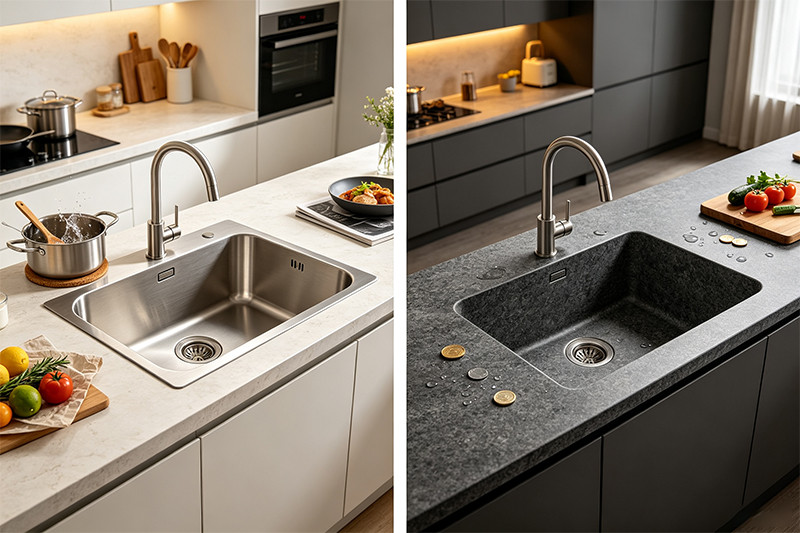
Granite composite barn sinks offer a different look, often warmer to the touch and quieter due to their density. They are very durable and scratch-resistant, but I've found they can chip if heavy objects are dropped on their edges. My stainless steel barn sink, on the other hand, excels in impact resistance, meaning it's less likely to chip, though it might get minor surface scratches over time. Visually, stainless steel provides a clean, professional look that brightens the kitchen, while granite composite might offer more color and a heavier, design-focused aesthetic.
Granite composite sinks, made from a mix of crushed granite and acrylic resins, have become a popular modern alternative. They present a different set of trade-offs when compared to the classic stainless steel barn sink.
Here’s how they compare:
| Feature | Stainless Steel | Granite Composite |
|---|---|---|
| Durability | Won't chip or crack, but can be susceptible to dents and scratches depending on the gauge. Very resistant to thermal shock. | Extremely resistant to scratches, stains, and heat (up to ~535°F). However, it can potentially chip or crack if a very heavy object is dropped on an edge or corner. |
| Maintenance | Easy to clean but prone to showing water spots and fingerprints, requiring regular wiping to maintain its shine. | Very low maintenance. The matte, non-porous surface hides water spots well and is easy to clean with soap and water. Darker colors are especially forgiving. |
| Aesthetics | Provides a sleek, reflective, and professional look. Its neutral silver tone blends with nearly any kitchen decor and appliance. | Offers the look and feel of natural stone with a matte finish. Available in a wide range of uniform colors (black, gray, white, beige) for a more cohesive, design-forward look. |
| Sound | Can be noisy, though high-quality 16-gauge sinks with sound-dampening pads significantly reduce noise. | Naturally quiet due to its dense material composition. It absorbs the sound of running water and clattering dishes for a much quieter kitchen experience. |
| Cost | Generally more affordable, making it a budget-friendly and practical choice. | More expensive than stainless steel, reflecting its premium look and performance characteristics. |
Verdict: Choose stainless steel for its unmatched impact resistance, versatility, and affordability. It's a reliable workhorse that fits any budget and style. Brands like Samsink offer excellent 16-gauge options that provide a great balance of durability and performance. Choose granite composite if your priorities are a quiet kitchen, superior scratch resistance, a specific color palette, and a low-maintenance finish. It is an excellent upgrade for design-focused kitchens where aesthetics and acoustics are paramount.
Key Takeaways
- Timeless Appeal & Versatility: Stainless steel barn sinks, or apron-front sinks, are not going out of style; they have evolved with slimmer profiles and modern finishes to fit rustic, transitional, and contemporary kitchens alike.
- Superior Durability: Look for 16-gauge T-304 stainless steel. This thickness offers the best resistance to dents, corrosion, and noise, ensuring a long-lasting and high-performing sink.
- Functional Design: The large, deep single-bowl design is a hallmark of the farmhouse style, providing ample space for washing large pots, pans, and even bathing small children, making it incredibly practical for busy households.
- Hygienic & Easy to Clean: The non-porous surface of stainless steel prevents bacteria buildup, making it one of the most hygienic materials for a kitchen sink. Simple cleaning with soap and water is usually all that's needed to maintain its look.
- Smart Investment: Stainless steel is generally more affordable and lighter than other farmhouse sink materials like fireclay or cast iron, which can simplify installation and reduce overall costs.
Frequently Asked Questions (FAQs)
1. Are stainless steel farmhouse sinks noisy? Thinner, lower-quality stainless steel sinks (20-gauge or higher) can be noisy. However, high-quality 16-gauge or 18-gauge sinks, especially from reputable brands like Samsink, are constructed with thick steel and feature sound-dampening pads on the underside. This technology absorbs vibrations from running water and clanging dishes, making for a much quieter kitchen experience.
2. How do you prevent scratches on a stainless steel sink? While stainless steel is very durable, it can get surface scratches. To minimize them, always clean in the direction of the steel's grain. Avoid using abrasive materials like steel wool or scouring powders. The best defense is a sink bottom grid—a custom-fit rack that sits on the bottom of the basin, preventing direct contact with heavy pots and sharp utensils. Over time, minor scratches will blend into a uniform patina.
3. What is the best finish for a stainless steel sink? The most practical and popular finish is a brushed or satin finish. Unlike a mirror or highly polished finish, a brushed texture is much better at concealing minor scratches, fingerprints, and water spots, making it easier to maintain a clean look in a busy kitchen.
4. Can I replace my existing drop-in sink with a farmhouse sink? Yes, it is possible, but it requires significant modification. You will need to cut the front of your existing cabinet to accommodate the apron front and build an internal support frame for the sink. Some companies offer "retrofit" or "short apron" farmhouse sinks designed specifically for this purpose, which can make the process easier. However, it's generally most straightforward to install a farmhouse sink during a full cabinet and countertop replacement.
5. How deep should a farmhouse sink be? Most stainless steel barn sinks have a depth between 8 to 10 inches. A 10-inch deep basin is very popular as it offers ample space to hide dirty dishes and prevent splashing when washing large items. However, a very deep sink might cause some back strain for shorter individuals, so consider what depth feels most comfortable for your use.
In my experience, choosing the perfect stainless steel barn sink is an exciting step towards building your dream kitchen. It's a choice that reflects a blend of smart design, lasting quality, and everyday practicality. By weighing the options in size, configuration, and material, you are investing in a feature that is central to your home's daily rhythm.
I hope this guide has empowered you with the knowledge to make an informed decision, ensuring your new stainless steel barn sink not only looks fantastic but also effortlessly handles the demands of your busy household for years to come. Now is the time to take the next step. Explore the collection of high-quality stainless steel sinks from Samsink to find the perfect model that will become your kitchen’s new centerpiece.
Enjoy your beautiful, functional new sink