The Ultimate Guide to Top Mount Kitchen Sinks: Materials, Gauge, and Installation
- Share
- Issue Time
- May 15,2026
Summary
Choosing the ideal kitchen sink significantly influences daily routines, aesthetic appeal, and overall kitchen functionality. Among various options, the top mount kitchen sink, also known as a drop-in or self-rimming sink, is favored for its practicality and versatility. This type of sink is installed from above, with its rim sitting on the countertop, offering straightforward installation, lower costs, and compatibility with diverse countertop materials, including laminate. The rim also provide
Choosing the right kitchen sink is a significant decision that impacts your daily routine, kitchen style, and overall satisfaction. As an essential focal point, it needs to be both functional and aesthetically pleasing. Among the numerous options available, the top mount kitchen sink consistently stands out as a practical and versatile choice for many homeowners. It's known for its straightforward installation and compatibility with various countertop materials. In this ultimate guide, I'll walk you through everything you need to know about materials, gauge, and installation to help you confidently select the perfect top mount kitchen sink that meets your needs and enhances your kitchen.
Key Takeaways
- What is a Top Mount Sink?: Also known as a drop-in or self-rimming sink, it is installed from above into a pre-cut hole in the countertop. Its visible rim rests on the counter, supporting the sink's weight. This design makes it highly versatile and easy to install.
- Key Advantages: The primary benefits of a top mount sink include ease of installation, lower installation costs, and compatibility with any countertop material, including laminate. The rim provides a protective barrier for the countertop edge.
- Material Matters: Stainless steel is the most popular choice due to its durability, affordability, and ease of maintenance. Other excellent options include granite composite for its modern look and quietness, fireclay for its classic, robust nature, and cast iron for its enameled, glossy finish.
- Understanding Gauge: In stainless steel sinks, the gauge refers to the thickness of the steel. A lower gauge number means thicker, more durable steel. For residential kitchens, 16 to 18 gauge is the recommended sweet spot, offering excellent resistance to dents and reducing noise.
- Installation and Maintenance: Top mount sinks are renowned for their DIY-friendly installation process. Maintenance is generally straightforward, though the cleaning method depends on the material. A persistent challenge is cleaning the seam where the sink's rim meets the countertop, which can trap grime.
- Choosing the Best Fit: Your final decision should balance budget, kitchen style, and functional needs. Consider the sink's configuration (single or double bowl), size, and how it complements your faucet and other kitchen fixtures. High-quality brands like Samsink offer a wide range of top mount sinks that combine performance with sophisticated design.
Understanding Your Top Mount Kitchen Sink: What It Offers
The top mount kitchen sink holds a classic, revered spot in kitchen design for good reason. It balances history with modern practicality, offering a reliable, stylish, and user-friendly centerpiece for any culinary space. Before diving into the specifics of materials and installation, it’s essential to grasp the fundamental characteristics and benefits that make this sink type a persistent favorite among homeowners and designers alike.
What Defines a Top Mount Kitchen Sink?
A top mount sink, also widely known as a "drop-in" or "self-rimming" sink, is defined by its installation method. The sink is lowered from above into a pre-cut hole in the countertop. Its most distinctive feature is the visible rim or lip that rests on the countertop's surface, supporting the entire weight of the sink. This rim is then sealed to the counter with silicone caulk to prevent water leakage.
This design is one of the most traditional and common sink styles, familiar in kitchens for decades. The structure is straightforward:
- Rim/Lip: The outer edge that sits on top of the counter, providing support and helping to contain splashes.
- Basin: The main bowl or compartment for holding water, available in single, double, or even triple bowl configurations.
- Mounting Clips: Metal fasteners under the counter that clamp the sink securely to the countertop.
This simple yet effective construction is a primary reason for its enduring popularity in both residential and commercial settings.
Advantages of Choosing a Top Mount Kitchen Sink
The practical benefits of a top mount sink are numerous, making it a compelling choice for a wide range of kitchen projects, from budget-friendly remodels to high-end new builds.
- Ease and Affordability of Installation: This is perhaps the most significant advantage. Top mount sinks are famously easy to install, often making them a suitable project for a confident DIYer. The process doesn't require the complex support structures or precision cutting associated with undermount sinks, which translates to lower labor costs if you hire a professional.
- Countertop Compatibility: Top mount sinks are the chameleons of the sink world; they work with virtually any countertop material. This includes laminate and tile, which are not suitable for undermount sinks because they lack a finished, water-resistant edge.
- Budget-Friendly: Generally, top mount sinks are more affordable than their undermount counterparts, both in terms of the unit itself and the cost of installation. This makes them an excellent option for homeowners looking to maximize their renovation budget.
- Structural Support and Protection: The sink's rim naturally protects the countertop cutout's edges from chipping and other damage that can occur from daily use, especially with pots and pans. This added layer of protection is particularly beneficial for more delicate countertop materials.
- Simple Replacement: Because they are not permanently bonded to the countertop in the same way as undermount sinks, replacing a top mount sink is a much more straightforward process. If your sink becomes damaged or you simply want to update your kitchen's style, you can often find a new sink that fits the existing cutout.
Key Considerations for Top Mount Kitchen Sink Aesthetics
While often lauded for their practicality, top mount sinks do not fall short on style. Modern designs offer a plethora of aesthetic options to suit any kitchen décor, from the traditional to the ultra-contemporary.
- Rim Profile: The look of the rim has evolved significantly. While classic models have a noticeable, rounded edge, many modern top mount sinks, including those from premium brands like Samsink, feature a low-profile or even a micro-thin rim. This creates a more streamlined, almost-flush appearance that minimizes the transition from counter to sink and makes cleaning easier.
- Material and Finish: The aesthetic of a top mount sink is largely defined by its material. A gleaming stainless steel sink lends a professional, contemporary feel. A white fireclay sink can evoke a charming farmhouse aesthetic, while a dark granite composite sink offers a sleek, modern look. The range of available materials ensures you can find a sink that perfectly complements your cabinetry, countertops, and overall kitchen design.
- Configuration and Shape: Top mount sinks are available in countless configurations. You can choose from a large single bowl, a versatile double bowl (often in 50/50, 60/40, or 70/30 splits), or even a triple bowl for maximum multitasking. Shapes range from the standard rectangle to squares, rounds, and corner-specific designs, allowing you to optimize both style and function.
The main aesthetic drawback for some is the visible rim, which can be seen as less sleek than the seamless look of an undermount sink. This rim can also trap food particles and grime, requiring diligent cleaning. However, for many, the vast array of modern designs and the undeniable practical advantages far outweigh these considerations.
Choosing the Right Material for Your Top Mount Kitchen Sink
The material of your kitchen sink is arguably the most critical decision you'll make. It dictates not only the sink's appearance and style but also its durability, maintenance requirements, and longevity. From the industrial gleam of stainless steel to the rustic charm of fireclay, the material you choose will define your daily interaction with this kitchen workhorse.
The Enduring Appeal of Stainless Steel Top Mount Kitchen Sinks
Stainless steel is, without a doubt, the most popular material for kitchen sinks, and its dominance is well-deserved. It offers a fantastic combination of durability, affordability, and a timeless, professional aesthetic that fits seamlessly into nearly any kitchen design. Brands like Samsink have perfected the art of stainless steel sinks, offering models that are both beautiful and built to withstand the rigors of a busy kitchen.
Benefits: Durability and Easy Maintenance
The primary advantage of a stainless steel sink is its exceptional durability. This robust material is resistant to corrosion, rust, stains, and heat, ensuring it can handle the daily onslaught of hot pans, sharp utensils, and heavy pots without chipping or cracking. Unlike more brittle materials, stainless steel has a degree of flexibility, which means it can absorb impacts better, potentially saving a dropped dish from shattering.
Maintenance is another key selling point. The non-porous surface of stainless steel is hygienic and prevents the growth of bacteria. Cleaning is straightforward, usually requiring just a simple wipe-down with mild soap and water to keep it looking pristine. While they can show water spots, especially in areas with hard water, regular drying with a soft cloth can easily prevent this.
Key Properties: Grade (18/10, 304) and Chromium/Nickel Content
Not all stainless steel is created equal. When shopping, you will encounter terms like "grade" and specific number ratios. These are crucial indicators of quality.
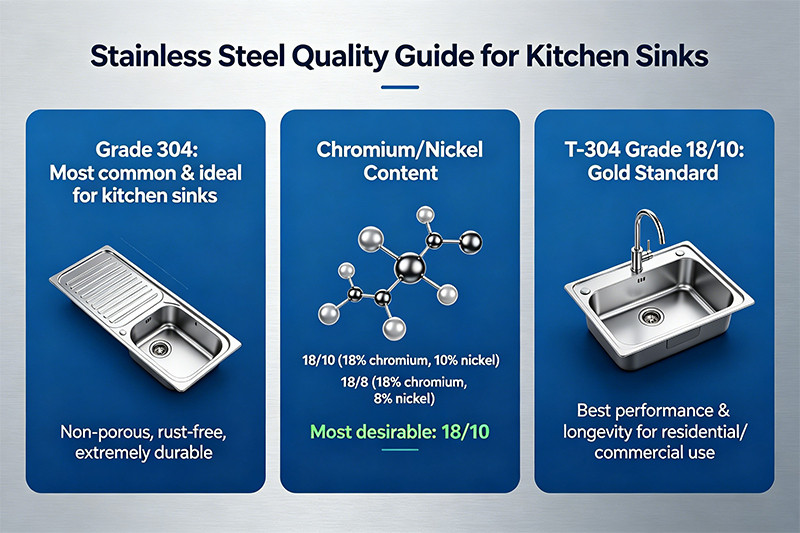
- Grade 304: This is the most common and ideal grade for kitchen sinks. It's a surgical-grade stainless steel known for being non-porous, rust-free, and extremely durable.
- Chromium/Nickel Content (18/10 or 18/8): This ratio refers to the percentage of chromium and nickel in the steel alloy. The most desirable composition for kitchen sinks is 18/10, meaning 18% chromium and 10% nickel. The chromium provides resistance to rust and corrosion, while the nickel enhances the steel's hardness and gives it a lustrous shine.
A sink made from T-304 grade, 18/10 stainless steel is considered the gold standard for residential and commercial installations, offering the best performance and longevity.
Addressing Common Concerns: Scratches and Noise
Two common concerns with stainless steel sinks are their susceptibility to scratches and the noise they can make.
- Scratches: It's true that stainless steel can scratch, especially in the first few weeks of use. Most scratches, however, are superficial and tend to blend into the sink's overall finish over time, developing a unique patina. To minimize their appearance, opt for a brushed or satin finish, which helps to hide minor marks. You can also use a protective sink grid at the bottom, which prevents direct contact with heavy pots and sharp utensils. Avoid using abrasive cleaners like steel wool, which can damage the surface.
- Noise: Thinner stainless steel can produce a "drumming" sound from running water or when placing dishes in the basin. High-quality sinks address this issue with sound-dampening technology. Look for sinks that have thick rubber pads applied to the underside and a protective undercoating. These features absorb vibrations and noise, making for a much quieter kitchen experience.
Exploring Diverse Materials for Your Top Mount Kitchen Sink
While stainless steel is a fantastic all-rounder, several other materials offer unique aesthetic qualities and functional benefits.
Fireclay and Cast Iron: Classic and Robust Choices
For those seeking a more traditional or farmhouse look, fireclay and cast iron sinks are premier choices. Both are exceptionally durable but have distinct characteristics.
- Fireclay: Made from clay fired at extremely high temperatures, fireclay sinks are known for their bright, clean, non-porous surface that is resistant to stains, scratches, and heat. Because the color is consistent throughout the material, a chip will be less noticeable than on an enameled sink. However, they are heavy, requiring sturdy cabinet support, and can be more prone to cracking from a severe impact compared to cast iron.
- Cast Iron: These sinks are made from a solid iron core coated in a thick layer of smooth, glossy porcelain enamel. This makes them incredibly durable and resistant to chipping from heavy cookware. Cast iron sinks retain heat well, which is great for washing dishes, and are available in a wide array of colors. Their main vulnerability is the enamel; if it chips, the iron underneath can be exposed to rust. They are also extremely heavy.
| Feature | Fireclay Sink | Enameled Cast Iron Sink |
|---|---|---|
| Aesthetic | Smooth, glossy, classic farmhouse | Very glossy, wide range of colors |
| Durability | Highly resistant to stains and scratches | Enamel is very hard, but can chip |
| Heat Resistance | Excellent | Excellent, retains heat well |
| Maintenance | Easy to clean; can show mineral deposits | Easy to clean; chips require prompt repair |
| Weight | Very Heavy | Extremely Heavy |
| Cost | Premium | Premium |
Granite Composite: Quiet Strength and Modern Look
Granite composite sinks have surged in popularity for their modern aesthetic and robust performance. They are made from a blend of crushed granite or quartz stone (about 80%) and acrylic resins (about 20%).
- Benefits: This composition results in a material that is incredibly durable, highly scratch-resistant, and heat-resistant up to around 536°F (280°C). The dense material naturally absorbs sound, making composite sinks much quieter than stainless steel. They are available in a wide range of matte finishes and colors (blacks, grays, whites, browns), allowing for seamless coordination with countertops. The surface is non-porous, resisting stains and bacteria.
- Considerations: While very durable, they are not as forgiving as stainless steel; a dropped glass is more likely to break. Lighter colors can be more susceptible to staining from highly pigmented liquids if not cleaned promptly. They are also heavier than stainless steel sinks.
Acrylic and Copper: Specific Perks and Considerations
- Acrylic: As a budget-friendly and lightweight option, acrylic sinks are easy to install. They come in various colors and shapes, and their surface is non-porous and easy to clean. However, acrylic is the least durable of these options. It scratches easily and is susceptible to damage from high heat (hot pans) and certain chemicals. While initially affordable, they may not have the longevity of other materials.
- Copper: A copper sink is a luxurious statement piece. It is naturally antimicrobial, meaning it kills bacteria on its surface. Over time, copper develops a unique "living finish" or patina, an evolving pattern of light and dark tones that many find beautiful. This also means it can be high-maintenance if you want to keep it looking shiny and new. Acidic foods can strip the patina, creating bright spots, though these will re-patina over time. They are a beautiful but often expensive choice requiring specific care routines.
The Importance of Gauge in Your Top Mount Kitchen Sink
When selecting a stainless steel sink, the term "gauge" will come up frequently. This single attribute has a significant impact on the sink's durability, performance, and even its sound level. Understanding what gauge means and how it affects your sink is crucial for making a wise, long-term investment in your kitchen.
Decoding Gauge: Thickness Explained
In the world of metal, gauge is the standard measurement of a material's thickness. When it comes to stainless steel sinks, this concept operates on an inverse scale, which can be counterintuitive at first.
A lower gauge number means thicker steel, while a higher gauge number means thinner steel.
For example, a 16-gauge stainless steel sink is thicker and more robust than a 22-gauge sink. The common range for residential kitchen sinks is typically between 16 and 22 gauge. Sinks with a gauge higher than 22 are generally too thin for kitchen applications and are more suited for bars or utility areas with very light use.
Here’s a quick reference for common gauges and their approximate thickness:
- 16 Gauge: ~1.59 mm (0.0625 inches) - Thickest, premium quality.
- 18 Gauge: ~1.27 mm (0.0500 inches) - Standard, good quality.
- 20 Gauge: ~0.95 mm (0.0375 inches) - Thinner, budget-friendly.
- 22 Gauge: ~0.79 mm (0.0313 inches) - Thinnest, often found in low-end models.
Why a Lower Gauge is Better for Top Mount Kitchen Sinks
For a hardworking fixture like a kitchen sink, thicker steel is almost always the better choice. A lower gauge number brings several tangible benefits that directly impact the sink's daily performance and longevity.
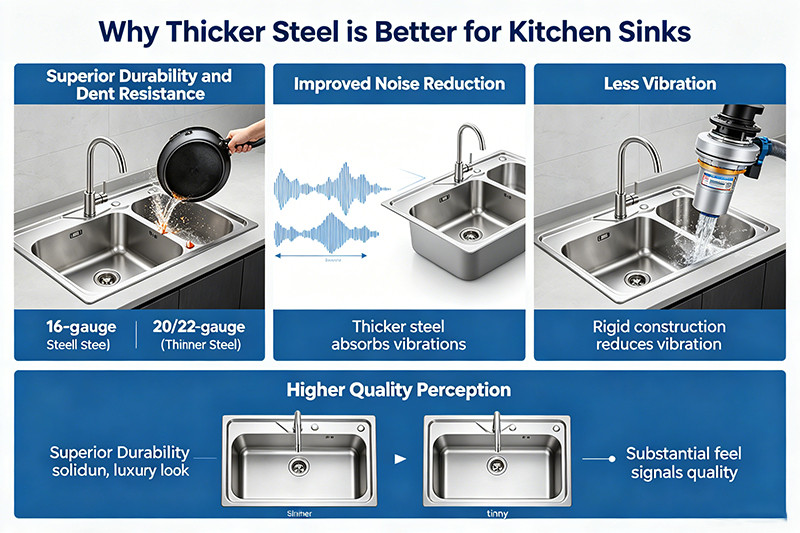
- Superior Durability and Dent Resistance: Thicker steel is inherently stronger and more resistant to denting and warping. A 16-gauge sink can withstand the impact of heavy cast iron pots, pans, and other cookware much better than a thinner 20- or 22-gauge model. This superior strength ensures the sink maintains its shape and integrity over years of heavy use.
- Improved Noise Reduction: The "drumming" or "clanging" sound often associated with stainless steel sinks is much more pronounced in thinner models. Thicker steel has more mass, which naturally absorbs vibrations from running water and clattering dishes. When combined with sound-dampening pads and undercoating, a lower-gauge sink provides a significantly quieter and more pleasant kitchen experience.
- Less Vibration: A thicker, more rigid sink is less prone to vibration when a heavy-duty garbage disposal is running. This not only reduces noise but also contributes to the overall stability and solid feel of the sink installation.
- Higher Quality Perception: A lower-gauge sink simply feels more substantial and luxurious. The solid construction eliminates the "tinny" feel that can be present in higher-gauge models, signaling a higher level of quality and craftsmanship.
Finding the Sweet Spot: Recommended Gauge for Durability and Performance
So, what is the best gauge for your top mount kitchen sink? The answer depends on balancing performance, budget, and usage.
For most residential kitchens, 16-gauge or 18-gauge stainless steel is the recommended sweet spot.
- 16-Gauge: This is considered the premium, professional-grade option. It offers the best-in-class durability, dent resistance, and sound insulation. If your budget allows, and you have a busy kitchen with heavy daily use (lots of large pots, frequent use of a garbage disposal), a 16-gauge sink is an excellent long-term investment that will provide superior performance for decades.
- 18-Gauge: This is the most popular choice for residential kitchens because it offers a fantastic balance of quality, durability, and affordability. An 18-gauge sink is still strong and resilient enough for regular daily use and is a significant step up from the thinner 20- and 22-gauge options. For the average household, an 18-gauge sink from a reputable brand like Samsink, which incorporates quality materials and sound-dampening features, is a reliable and cost-effective choice.
While 20- and 22-gauge sinks are more budget-friendly, they represent a compromise in durability and performance. They are more susceptible to denting, can be noisier, and may not withstand the demands of a busy kitchen over the long run. Investing in a 16- or 18-gauge sink ensures you get a product that not only looks great but also performs reliably day in and day out.
Installing and Maintaining Your Top Mount Kitchen Sink
Once you’ve selected the perfect top mount sink based on material and gauge, the final steps are installation and establishing a simple maintenance routine. One of the top mount sink’s greatest strengths lies in its straightforward nature for both of these tasks. By understanding the process and committing to some easy care habits, you can ensure your sink remains a durable and attractive feature in your kitchen for years to come.
Effortless Installation: The Top Mount Advantage
The installation process for a top mount sink is one of its most celebrated features, making it a popular choice for DIY enthusiasts and a cost-effective option when hiring a professional.
The General DIY Installation Process:
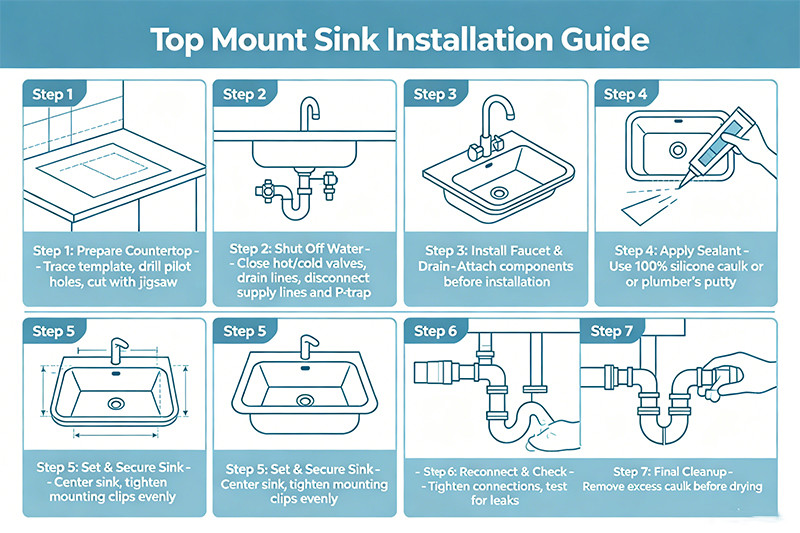
- Preparation and Cutout: The first step is preparing the countertop. If you're installing a sink in a new countertop, you'll use the paper template provided by the manufacturer to trace the cutout line. Drill pilot holes at the corners and use a jigsaw to cut the opening. If you are replacing an old sink, you need to ensure the new sink's dimensions are compatible with the existing hole.
- Shut Off Water and Disconnect Plumbing: Before removing an old sink or installing a new one, always shut off the hot and cold water supply valves under the sink. Turn on the faucet to drain any remaining water from the lines. Use a wrench to disconnect the supply lines and the P-trap drain assembly.
- Install Faucet and Drain: It is often much easier to install the faucet and drain strainer assembly onto the new sink before dropping it into the countertop. Flip the sink upside down on a protected surface and follow the manufacturer's instructions for attaching these components.
- Apply Sealant: With the sink right-side up, apply a continuous bead of 100% silicone caulk or plumber's putty around the underside of the sink's rim. This will create a watertight seal between the sink and the countertop.
- Set and Secure the Sink: Carefully lower the sink into the countertop cutout, ensuring it is centered and aligned correctly. From underneath the counter, attach the provided mounting clips. These clips hook onto the underside of the counter and are tightened with screws to clamp the sink down securely. Tighten them evenly around the sink to ensure uniform pressure.
- Reconnect Plumbing and Check for Leaks: Reattach the water supply lines to the faucet and connect the P-trap to the sink's drain. Once everything is securely tightened, slowly turn the water supply back on. Run water into the sink and thoroughly check all connections for any drips or leaks.
- Final Cleanup: Wipe away any excess silicone caulk that may have squeezed out from under the sink's rim before it dries.
This relatively simple process makes top mount sinks accessible for many homeowners to install themselves, saving significant time and money.
Simple Care for Your Top Mount Kitchen Sink
Maintaining your top mount sink is straightforward, but the specific care routine will vary depending on the material. The goal is always to use non-abrasive methods to preserve the sink's finish.
General Maintenance Tips for All Materials:
- Daily Rinsing and Wiping: The single best habit for sink maintenance is to rinse it with water and wipe it dry with a soft cloth after each use. This prevents food particles from sticking and, more importantly, stops mineral deposits from hard water from leaving unsightly spots.
- Avoid Harsh Chemicals: Steer clear of abrasive cleaners, scouring powders, steel wool, and harsh chemicals like bleach or ammonia, as these can scratch or damage the sink's surface. Opt for mild dish soap and a soft sponge or microfiber cloth for daily cleaning.
- Clean the Rim: The seam where the sink's rim meets the countertop can trap food and grime. Be sure to clean this area regularly to maintain hygiene and the appearance of the installation.
Material-Specific Cleaning:
- Stainless Steel: For tougher spots, a paste of baking soda and water can be used. Always scrub in the direction of the steel's grain to avoid creating visible scratches.
- Granite Composite: A mixture of equal parts water and white vinegar can help remove tough stains. The non-porous surface is generally very stain-resistant.
- Fireclay/Cast Iron: A baking soda paste can effectively remove stains without scratching the glossy surface. For fireclay, occasional cleaning with a diluted bleach solution can help maintain its brightness.
- Copper: Use only mild soap and water. Acidic foods will temporarily lighten the patina, but it will return naturally over time. Waxing the sink can help protect the finish.
Factors for Your Best Top Mount Kitchen Sink Choice: Budget, Style, and Function
Choosing the best top mount kitchen sink comes down to a thoughtful balance of three key factors:
- Budget: This is often the starting point. Top mount sinks are available at a wide range of price points. Acrylic and thinner gauge stainless steel sinks are the most affordable, while thick-gauge stainless steel, fireclay, granite composite, and copper sit at the higher end. Remember to factor in the potential cost of installation if you aren't doing it yourself.
- Style: The sink should be a cohesive part of your kitchen's overall design.
- Modern/Contemporary: Sleek stainless steel, especially with a low-profile rim, or a dark-colored granite composite sink works beautifully. High-quality brands like Samsink offer designs that perfectly complement a modern aesthetic.
- Traditional/Farmhouse: A white fireclay or enameled cast iron sink is a classic choice that evokes a timeless, cozy feel.
- Industrial: A robust, thick-gauge stainless steel sink is right at home in an industrial-style kitchen.
- Rustic/Eclectic: A copper sink can serve as a stunning, unique centerpiece.
- Function: Think about how you use your sink on a daily basis.
- Bowl Configuration: Do you prefer one large, open basin for washing big pots and pans (single bowl), or do you like the versatility of separating tasks like washing and rinsing (double bowl)?
- Size and Depth: Ensure the sink is large enough for your needs but proportional to your countertop space. A standard depth of 8-10 inches is usually sufficient for most households, though deeper bowls are available for those who need extra capacity.
- Accessories: Consider if you want built-in accessories, which are common in modern workstation sinks. These can include integrated cutting boards, colanders, and drying racks that slide over the sink, turning it into a highly efficient prep area.
By carefully weighing these three elements, you can confidently select a top mount kitchen sink that not only meets your practical needs but also enhances the beauty and value of your kitchen for years to come.
Frequently Asked Questions (FAQ)
1. What is the main difference between a top mount and an undermount sink? A top mount (or drop-in) sink is installed from above, with its rim resting on the countertop. An undermount sink is installed from below, creating a seamless transition from the counter to the sink basin with no visible rim on the surface.
2. What is the most durable material for a top mount kitchen sink? For overall durability, 16-gauge T-304 stainless steel, fireclay, and granite composite are all excellent choices. Stainless steel is resistant to chipping and impact, fireclay is highly resistant to scratches and stains, and granite composite is exceptionally resistant to scratches, heat, and chipping. Cast iron is also extremely durable, though its enamel coating can chip under severe impact.
3. Is a 16-gauge or 18-gauge sink better? A 16-gauge sink is thicker, more durable, and quieter than an 18-gauge sink. It is considered a premium, professional-grade option. However, an 18-gauge sink is the most popular choice for residential kitchens as it offers an excellent balance of durability, performance, and affordability, making it a great value for most households.
4. Can I replace an existing top mount sink with a new one myself? Yes, replacing a top mount sink is a common DIY project. The process involves shutting off the water, disconnecting the plumbing, removing the old sink, and dropping in the new one with a fresh seal of caulk. As long as the new sink fits the existing countertop cutout, the installation is generally straightforward.
5. How do I prevent my stainless steel sink from scratching? While all stainless steel sinks will develop fine scratches over time, you can minimize them by using a sink bottom grid to protect the surface. Always clean in the direction of the steel's grain and avoid using abrasive materials like steel wool or harsh scouring pads. A brushed or satin finish also helps to conceal minor scratches.
Choosing the ultimate top mount kitchen sink involves balancing aesthetics with practical features like material, gauge, and ease of installation. By understanding these key elements, you can make an informed decision. Investing in a high-quality top mount kitchen sink is an investment in your home's functionality and enduring style. I hope this guide empowers you to select a sink from a trusted brand like Samsink that not only looks great but also performs flawlessly for years to come.