Ultimate Guide: Choosing a Stainless Steel Ice Bin for Your Bar Setup
- Share
- Issue Time
- Jul 31,2026
Summary
Setting up an efficient and hygienic bar hinges on many details, with the ice bin being a crucial, yet often overlooked, component. A high-quality stainless steel ice bin serves not just as a container, but as the central hub of a professional beverage station, ensuring consistent drink quality and streamlined operations. Key considerations for selection include durability, with 304-grade stainless steel highly recommended for its superior corrosion resistance against moisture and acidic substan
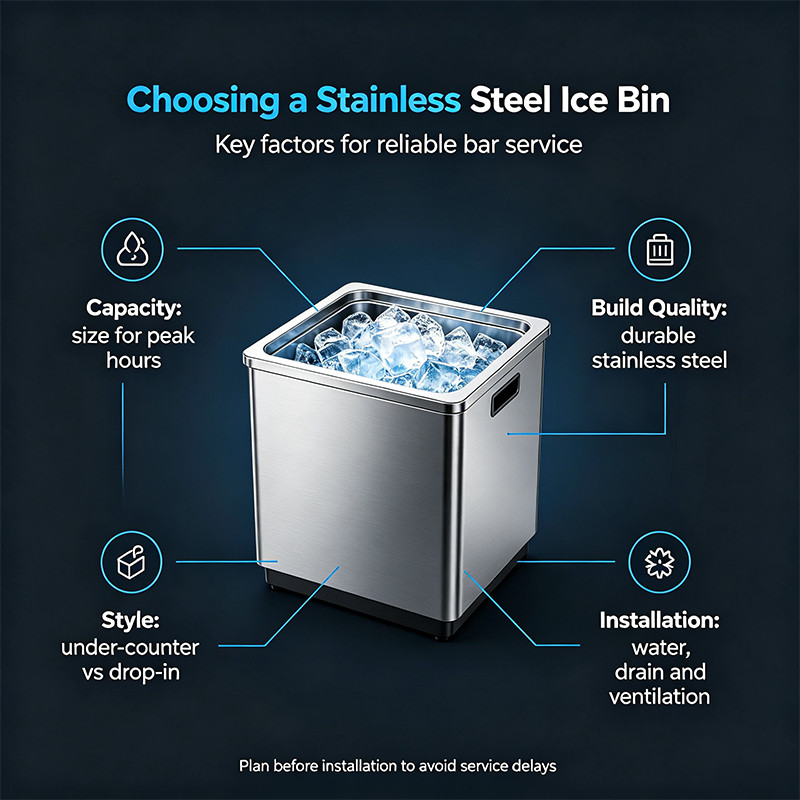
Hey there, fellow bar enthusiast! Setting up a fantastic bar, whether it's for your bustling business or your ultimate home entertaining space, means thinking about every detail. One of the most crucial, yet often overlooked, elements is your ice storage. We're here to tell you that a high-quality stainless steel ice bin for bar use isn't just a luxury; it's an absolute necessity for smooth service, perfectly chilled drinks, and maintaining hygiene. A premium ice bin isn't just a container; it's the heart of your beverage station, ensuring every drink you serve meets a standard of excellence.
Join us as we explore how to choose the ideal stainless steel ice bin to keep your drinks cold, your operations efficient, and your bar looking its best. From understanding the nuances of stainless steel grades to calculating your exact ice needs, this guide will equip you with the knowledge to make a confident and lasting investment for your bar.
Key Takeaways
- Durability is Non-Negotiable: Opt for 304-grade stainless steel for your ice bin. Its superior corrosion resistance and strength ensure a long lifespan in a demanding bar environment, protecting your investment against rust and wear.
- Insulation Determines Efficiency: High-quality, foamed-in-place polyurethane insulation is critical. It minimizes ice melt, reducing waste and operational costs while ensuring you always have a ready supply of quality ice, even during peak hours.
- Hygiene and Aesthetics Go Hand-in-Hand: The non-porous surface of stainless steel makes it incredibly easy to clean and sanitize, which is essential for health code compliance. Its sleek, modern look also enhances the professional appearance of your bar setup.
- Size and Capacity Matter: Accurately calculate your bar's daily ice needs by considering drink volume, glass size, and peak business hours. A properly sized bin prevents service bottlenecks and ensures you never run out of ice when you need it most.
- Smart Integration Maximizes Workflow: Choose between under-counter and drop-in models based on your bar's layout. Proper placement and integration with accessories like cold plates and bottle holders can drastically improve your bartenders' speed and efficiency.
- Maintenance is Key to Longevity: Implement a strict daily and weekly cleaning schedule. Regular sanitation not only extends the life of your stainless steel ice bin but also guarantees the quality and safety of the ice you serve to customers.
Why a Stainless Steel Ice Bin is the Ultimate Choice for Your Bar Setup
When designing a functional and stylish bar, the equipment you choose forms the backbone of your operation. While flashy cocktail shakers and high-tech POS systems often steal the spotlight, the humble ice bin is a workhorse that can make or break your service efficiency and beverage quality. Among the materials available, stainless steel stands out as the undisputed champion for commercial and high-end home bars. Its unique combination of durability, thermal performance, and hygienic properties makes it an indispensable asset. Let's delve into why a stainless steel ice bin is not just a good choice, but the only choice for a serious bar setup.
Unmatched Durability and Longevity for Your Busy Bar
A bar is a demanding environment. Equipment is subjected to constant use, moisture, impacts, and a variety of chemical substances from cleaners to acidic citrus juices. In this setting, durability isn't a luxury—it's a requirement for a positive return on investment.
The Power of 304-Grade Stainless Steel
Not all stainless steel is created equal. For bar equipment, the gold standard is 304-grade, also known as 18/8 stainless steel. This designation refers to its composition: 18% chromium and 8% nickel. This specific alloy provides a host of benefits crucial for a bar setting:
- Superior Corrosion Resistance: The high chromium content creates a passive, self-repairing oxide layer on the steel's surface. This layer prevents rust and corrosion, even when exposed to moisture and acidic substances like lemon juice or soda syrups. Cheaper alternatives, like 430-grade stainless steel, lack significant nickel content, making them far more susceptible to rust and cracking over time, especially in a constantly wet environment. For any equipment in frequent contact with ice and beverages, 304-grade is the minimum requirement for longevity.
- Exceptional Strength and Impact Resistance: Bar operations are fast-paced. Ice scoops, bottles, and tools can be dropped into the bin, requiring a material that can withstand impacts without denting or breaking. 304 stainless steel offers excellent tensile strength and durability, ensuring it can handle the rigors of a busy shift for years to come.
- Longevity: While the upfront cost may be higher than plastic or lower-grade steel, a 304-grade stainless steel ice bin is a long-term investment. A well-maintained commercial ice machine and bin can be expected to last from 7 to 10 years, with premium models lasting even longer. Investing in a high-quality material from the start, like those used in Samsink ice bins, means avoiding the frequent replacement costs and service disruptions associated with inferior products.
To visualize the difference, consider the common steel grades used in food service equipment:
| Steel Grade | Key Composition | Corrosion Resistance | Best Use Case | Magnetic? |
|---|---|---|---|---|
| 304 (18/8) | 18% Chromium, 8% Nickel | Excellent, especially against acids and chlorides. | Ice Bins, food prep surfaces, sinks, tanks. | No. |
| 316 | Higher Nickel, Molybdenum | Superior. Best for salty or high-chloride environments. | Marine applications, processing high-salt foods. | No. |
| 430 | 16-18% Chromium, No Nickel | Good, but vulnerable to acids and pitting corrosion. | Decorative trim, paneling, dry environments. | Yes. |
| 201 | Lower Nickel & Chromium | Poor. Prone to rust, especially at weld points. | Low-cost, non-food-contact applications. | No. |
As the table shows, for the wet, demanding, and acidic environment of a bar's ice well, 304-grade steel offers the perfect balance of performance and value.
Superior Insulation for Consistently Cold Drinks
Ice is your bar's most critical ingredient, and its quality directly impacts the taste, temperature, and presentation of every drink. The primary enemy of quality ice is heat. An uninsulated or poorly insulated ice bin will cause ice to melt quickly, leading to several problems:
- Watered-Down Drinks: Using wet, melting ice chills a drink less effectively and dilutes it faster, ruining the balance of a carefully crafted cocktail.
- Increased Costs: Melted ice is wasted product. Constantly replenishing a bin that can't hold its temperature means higher water and energy bills from your ice machine working overtime.
- Service Inefficiency: Running out of ice during a peak service period is a nightmare scenario that brings operations to a halt.
This is where the insulation in a stainless steel ice bin becomes paramount. High-quality commercial ice bins are not just single-walled containers; they are sophisticated thermal units designed to resist heat transfer.
Foamed-in-Place Polyurethane: The Gold Standard
The most effective insulation used in premium ice bins is foamed-in-place polyurethane. This process involves injecting a liquid polyurethane mixture between the inner and outer stainless steel walls of the bin. The mixture then expands into a dense, solid foam, completely filling the cavity.
This method is superior for several reasons:
- High R-Value: R-value measures thermal resistance; the higher the number, the better the insulation. Polyurethane foam has one of the highest R-values per inch of any common insulation material, effectively blocking ambient heat from reaching the ice. Some walk-in freezers using polyurethane can achieve an R-value of over 8 per inch.
- Structural Integrity: The hardened foam adds significant rigidity to the ice bin, making it more robust and resistant to dents and warping.
- Complete Coverage: Unlike rigid foam boards that can leave small gaps, foamed-in-place polyurethane creates a seamless barrier, eliminating thermal bridges where cold can escape or heat can enter.
- Moisture Resistance: It is a "closed-cell" foam, meaning it does not absorb water. This is critical in a wet environment, as moisture saturation can destroy the insulating properties of other materials like fiberglass or open-cell foams.
A well-insulated bin, like those offered by leading brands, can reduce the energy consumption of an ice machine by around 10% by preventing the ice maker from needing to constantly replace melted ice. This efficiency translates directly into lower operating costs and a more sustainable bar program. Double-wall insulated steel buckets have been shown to maintain solid ice for over six hours, a stark contrast to the 30-60 minutes for a single-wall plastic bucket.
Sleek Aesthetics and Easy Hygiene: Benefits of a Stainless Steel Ice Bin
Beyond its functional superiority, a stainless steel ice bin contributes to two other essential aspects of a successful bar: cleanliness and professional presentation.
The Hygienic Choice
Ice is legally classified as a food product, and its handling is subject to strict health and safety regulations. The material of your ice bin plays a huge role in maintaining sanitary conditions. Stainless steel's non-porous surface is its greatest asset in this regard.
- Prevents Bacterial Growth: Unlike materials like plastic or wood, stainless steel has no microscopic pores where bacteria, mold, or odors can become trapped.
- Easy to Clean and Sanitize: The smooth surface can be wiped down quickly and is resistant to the harsh chemicals used in commercial-grade sanitizers, ensuring you can maintain a sterile environment for your ice.
- NSF Certification: Reputable commercial ice bins are certified by NSF International (National Sanitation Foundation). This certification guarantees that the product is designed and constructed in a way that promotes food safety, using materials that are safe, durable, and easy to clean. Look for the NSF mark as a sign of quality and compliance.
Enhancing Your Bar's Aesthetic
The look and feel of your bar are crucial to the customer experience. A sleek, clean, and professional setup inspires confidence and enhances the perceived value of your offerings. Stainless steel provides a timeless, modern aesthetic that integrates seamlessly into any bar design. Its bright, reflective surface contributes to a sense of cleanliness and can make a space feel more open. A well-maintained stainless steel ice bin, free of the stains and scratches that plague plastic models, signals a commitment to quality that customers will notice.
Sizing Your Stainless Steel Ice Bin for Optimal Bar Performance
Choosing the right size ice bin is a critical decision that directly impacts your bar's workflow, efficiency, and profitability. An undersized bin leads to frantic mid-shift refills, service delays, and potentially running out of ice altogether—a catastrophic failure for any beverage-focused business. Conversely, an oversized bin consumes valuable underbar space, can lead to stale, old ice if not cycled through quickly enough, and represents an unnecessary capital expense. The goal is to find the perfect balance by accurately forecasting your needs and planning for your busiest moments.
Calculating Daily Ice Needs for Your Bar
The first step in sizing your ice bin is to get a realistic estimate of your daily ice consumption. This calculation is part science, part art, but starting with established industry benchmarks can give you a solid foundation.
Industry Standard Formulas
Different types of establishments have different ice usage patterns. Here are some widely accepted rules of thumb to begin your calculation:
- Restaurants: A standard full-service restaurant typically uses about 1.5 to 2 pounds of ice per customer per day. This covers ice for water glasses, soft drinks, and some basic mixed drinks.
- Cocktail Bars: A bar that focuses on cocktails and mixed drinks will use significantly more ice. The industry benchmark for a cocktail-heavy bar is 3 pounds of ice per customer per day. Shaken drinks, stirred drinks, and drinks served "on the rocks" all require substantial amounts of ice.
- Self-Service Stations: Venues with self-service soda fountains see higher consumption, as customers tend to get refills. For these, you should also plan for around 3 pounds of ice per person.
A More Detailed Calculation
While the per-person estimate is a good starting point, a more precise calculation will factor in your specific menu and service style. Consider the following:
- Drink Menu Breakdown: Analyze your sales data. How many drinks do you sell that require ice?
- Soft Drinks/Iced Tea: A 16-ounce soft drink typically uses about 6-8 ounces of ice.
- Water Glasses: A standard water glass needs about 4 ounces of ice.
- Standard Cocktails (e.g., on the rocks): These can use 1/4 lb (4 ounces) of ice or more per drink.
- Shaken/Blended Cocktails: These are very ice-intensive, potentially using 1/2 lb to 3/4 lb (8-12 ounces) of ice per drink.
- Number of Seats & Turnover: Determine the total number of seats in your bar and estimate the average customer turnover on a typical day versus a busy day.
- Kitchen & Service Use: Don't forget non-drink uses for ice. This includes chilling wine bottles, use in salad bars (which can consume 35 lbs per cubic foot), or for back-of-house food prep. One chef might go through 100 lbs of ice per day just for cooling and chilling products.
Example Calculation for a 50-Seat Cocktail Bar:
- Assumptions:
- 50 seats
- Average 3 turns per seat on a busy night = 150 customers
- Cocktail-heavy menu
- Basic Formula:
- 150 customers × 3 lbs of ice per customer = 450 lbs of ice per day
This 450 lbs figure represents your total daily ice production need. The next step is to translate this into the required storage capacity for your ice bin.
Factoring in Peak Demand and Storage Capacity
Your ice machine produces ice over a 24-hour period, but your ice bin needs to hold enough to get you through your busiest service window without running empty. You can't rely on the ice machine to keep up with demand in real-time during a Saturday night rush. The bin acts as your buffer.
The 50% Rule for Bin Sizing
A common industry guideline is to have an ice bin that can store at least 50% of your ice machine's 24-hour production capacity.
- Continuing the example above, for a daily need of 450 lbs of ice, you would need an ice machine that produces at least 450 lbs per day.
- Your ice bin should therefore be able to hold a minimum of: 450 lbs × 50% = 225 lbs of ice.
Planning for the Unexpected: The 20% Buffer
It is always wise to build a buffer into your calculations to account for unforeseen circumstances. These might include:
- An unexpectedly busy night
- A heatwave driving up demand for cold drinks
- Ice spillage and waste
- The need to fill coolers or do extra chilling for an event
A smart rule is to add a 20% buffer to your initial calculation.
- Revised Daily Need: 450 lbs × 1.20 = 540 lbs of ice per day
- Revised Bin Capacity: A 540 lb capacity ice machine would require an ice bin that holds at least 270 lbs.
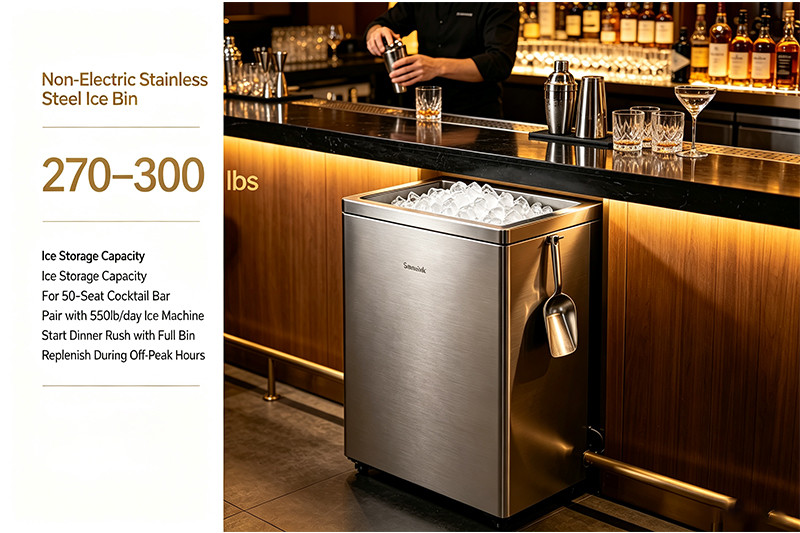
Therefore, for our 50-seat cocktail bar, a combination of a 550lb/day ice machine and an ice bin with a storage capacity of 270-300 lbs would be an appropriate and safe choice. This ensures that even if you start the dinner rush with a full bin, you will have more than enough ice to last through the busiest period until the ice machine has time to replenish the supply during slower hours. Investing in adequate capacity from a trusted brand like Samsink will prevent service disruptions and ensure you are always prepared.
Integrating Your Stainless Steel Ice Bin: Installation and Workflow for Your Bar
Once you've determined the right size for your ice bin, the next critical step is deciding how it will be integrated into your bar. The placement and type of installation can have a massive impact on your bartender's efficiency, speed of service, and even their physical comfort over a long shift. A well-placed ice bin is central to an ergonomic and high-performance "cocktail station," the bartender's primary workspace.
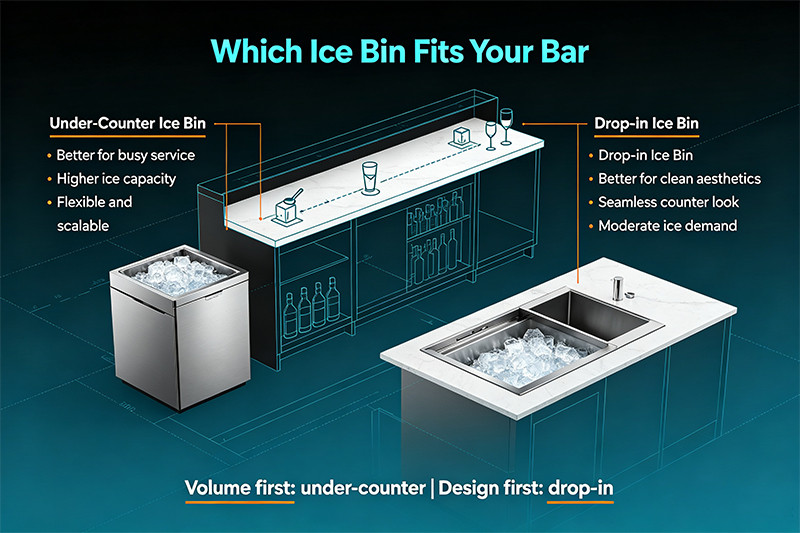
Under-Counter vs. Drop-In: Finding the Right Fit
The two primary styles of ice bins for a commercial bar are under-counter and drop-in. Each has distinct advantages and is suited for different layouts and operational needs.
Under-Counter Ice Bins
These are self-contained, freestanding units designed to slide neatly under a standard-height bar. They are the most common choice for many bars due to their practicality and ease of installation.
Advantages:
- Maximum Capacity: Under-counter models utilize the full vertical space from floor to counter, offering the largest possible ice storage capacity for their footprint. This is essential for high-volume bars.
- Flexibility: Because they are freestanding, these units can be moved or replaced with relative ease if you decide to reconfigure your bar layout in the future.
- Easy Installation: Installation is straightforward. The unit is simply positioned, and a drain line is connected. Many under-counter ice machines are self-contained, with the bin integrated, simplifying the setup even further.
Disadvantages:
- Less Integrated Look: They don't offer the completely seamless appearance of a drop-in model, as there will be visible seams between the unit and the adjacent countertops.
- Cleaning Behind the Unit: While the unit itself is easy to clean, cleaning the floor and walls behind it can require pulling the unit out.
Drop-In Ice Bins
Drop-in ice bins are installed directly into a custom-cut opening in your countertop. The flange of the bin rests on the counter's surface, creating a sleek, integrated look.
Advantages:
- Seamless Aesthetics: Drop-in bins provide a clean, built-in appearance that is highly desirable in modern, design-focused bars. The smooth transition from counter to bin is elegant and professional.
- Easy Surface Cleaning: With no seams or crevices around the top, the countertop and bin edge can be wiped clean effortlessly, which is excellent for sanitation.
Disadvantages:
- Permanent Installation: Once installed, a drop-in bin is a permanent fixture. Moving it requires significant countertop work, making it an inflexible choice.
- Lower Capacity: Drop-in bins do not extend to the floor, meaning they have a significantly lower ice capacity than an under-counter model of the same width. This makes them better suited for lower-volume bars or as a secondary service station.
- Complex Installation: Installation is more involved and expensive. It requires precise cutting of your countertop material and careful sealing to prevent leaks. The cost of countertop fabrication must be factored into the total expense.
Which is Right for You?
| Feature | Under-Counter Ice Bin | Drop-In Ice Bin |
|---|---|---|
| Capacity | High | Lower |
| Installation | Simple, less expensive | Complex, requires countertop cutting |
| Flexibility | High (can be moved) | Low (permanent installation) |
| Aesthetics | Functional, standard look | Sleek, custom, seamless look |
| Best For | High-volume bars, primary ice station | Moderate-volume bars, secondary stations, design-focused spaces |
For most busy bars, an under-counter ice bin is the more practical and scalable choice, offering the capacity and flexibility needed for demanding service. A drop-in bin excels in situations where aesthetic integration is the top priority and ice volume requirements are more modest.
Essential Installation Considerations and Utilities for a Stainless Steel Ice Bin
Proper installation is non-negotiable for the functionality and longevity of your ice bin. While seemingly simple, a few key details related to plumbing and placement can prevent major headaches down the line. Whether you hire a professional or undertake a DIY installation, understanding these points is crucial.
1. Drainage: The Most Critical Utility
Every ice bin will produce meltwater, and this water must be drained away efficiently and safely. Improper drainage can lead to standing water, unsanitary conditions, water damage to your bar structure, and a hazardous slipping risk for staff.
- Gravity Drain: The simplest and most reliable method is a gravity drain. The drain fitting on the ice bin (typically 1" or 1.5" FPT) should be connected to a nearby floor drain. For this to work, the drain line must have a continuous downward slope.
- Air Gap Requirement: Local health codes almost universally require an air gap between the end of the drain line and the floor drain itself. This physical space (usually 1-2 inches) prevents contaminated water from the floor drain from ever backing up into the ice bin, which is a critical food safety measure.
- Drain Pumps: If a floor drain is not located conveniently for a gravity-fed line, a drain pump will be necessary. A condensate or commercial-grade drain pump can move the meltwater uphill or horizontally to a distant drain. However, this adds a mechanical component that can fail, so a gravity drain is always the preferred option where possible.
- Material Considerations: To prevent condensation from forming on the outside of metal drain pipes ("sweating"), it's often recommended or required to use a PVC tailpiece to connect to the bin's drain fitting. This thermal break stops the cold from transferring down the plumbing line.
2. Leveling and Securing the Unit
An ice bin must be perfectly level to ensure proper drainage. Meltwater should flow evenly toward the drain and not pool in one corner.
- Adjustable Feet: Under-counter models come with adjustable bullet feet. Use a level to ensure the bin is perfectly flat from front-to-back and side-to-side after it's in its final position.
- Securing Drop-In Bins: For drop-in models, after cutting the countertop, a bead of food-grade silicone caulk should be applied around the perimeter of the cutout. This creates a watertight seal. The bin is then secured from below using the supplied mounting brackets and nuts to clamp it firmly to the countertop.
3. Water Lines (for Integrated Units)
If you have an ice machine/bin combination unit or a bin with a water station or cold plate, you'll need a water line.
- Dedicated Shut-Off: Always install a dedicated shut-off valve for the water line near the unit. This allows you to easily turn off the water for maintenance or in case of a leak without shutting off water to the entire bar.
- Water Filtration: It is highly recommended to install a water filtration system on the line feeding your ice machine. This removes sediment, chlorine, and minerals that can cause scale buildup, damage the machine's components, and produce cloudy, off-tasting ice.
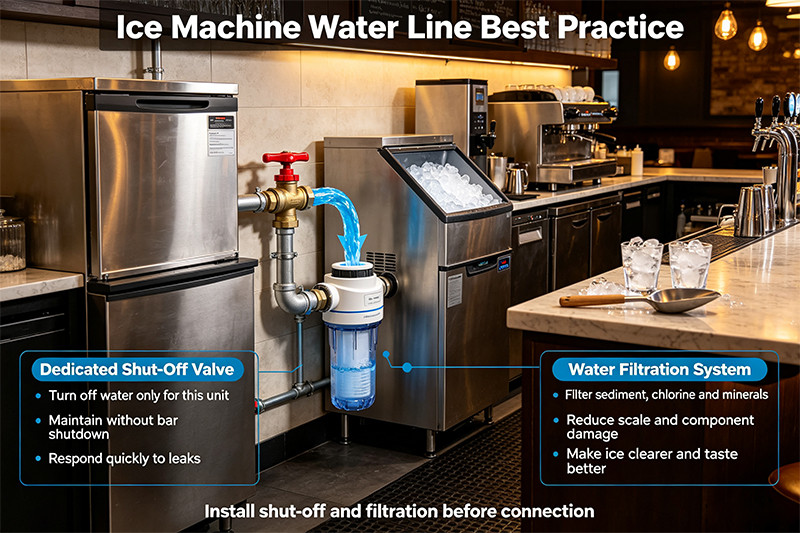
By carefully planning these utility connections, you ensure your ice bin operates safely, hygienically, and efficiently from day one.
Enhancing Efficiency: Cold Plates and Accessories for Your Ice Bin
A modern stainless steel ice bin is more than just a box for holding ice. It's the central hub of the bartender's workstation, and integrating key accessories can dramatically enhance workflow, speed, and organization. When selecting your bin, consider these powerful additions.
Cold Plates: The Secret to Perfectly Chilled Sodas
If your bar uses a post-mix soda system (where syrup and carbonated water are mixed at the dispenser, a.k.a. a "soda gun"), a cold plate is an essential component.
- What it is: A cold plate is a flat block of aluminum or stainless steel that sits at the bottom of the ice bin. It contains a network of sealed stainless steel tubes through which the soda water and syrup lines run.
- How it works: The plate is buried in ice, which chills the metal to near-freezing temperatures. As the warm syrup and water travel through the tubing inside the plate, the liquid is rapidly chilled just before it reaches the soda gun nozzle.
- The Benefits:
- Better Carbonation: Cold liquids hold CO2 gas more effectively. Chilling the components ensures a fizzier, more refreshing final product and prevents the "flat" taste that comes from mixing room-temperature ingredients.
- Slower Ice Melt in Drinks: When you dispense an already-chilled soda into a glass of ice, the ice melts much slower, preventing rapid dilution of the drink.
- Improved Ice Longevity in the Bin: The cold plate itself acts as a massive thermal battery, helping to keep the entire volume of ice in the bin colder for longer.
Most commercial ice bins from brands like Samsink are available with a factory-installed cold plate, typically with 7 to 10 circuits (separate lines for different syrups and water). If you have a soda gun, an ice bin with a cold plate is not an option—it's a necessity.
Speed Rails: Keeping Key Bottles at Your Fingertips
A speed rail is a stainless steel rack that mounts to the front of the ice bin, designed to hold your most frequently used liquor bottles ("well" liquors).
- Function: It keeps your primary spirits—vodka, gin, rum, tequila, whiskey—within immediate reach of the bartender, eliminating the need to turn around or walk to a back bar. Every step saved is time gained during a busy service.
- Integration: Most under-bar equipment is designed with pre-drilled holes or mounting points for easy installation of single or double-tier speed rails. Welded-on speed rails offer the most durability, as they will never loosen over time.
- Workflow: The ideal ergonomic setup places the speed rail directly in front of the ice bin. This allows a bartender to grab a glass, scoop ice, and retrieve a bottle in one seamless, efficient motion without moving their feet.
Bottle Racks and Dividers
To further organize your workspace, consider internal accessories for the ice bin itself:
- Bottle Holders: These are plastic or metal racks that hang inside the ice bin. They are perfect for chilling wine, beer bottles, or pre-mixed juices, keeping them submerged in ice but separate from the ice used for drinks, preventing cross-contamination. This also saves countless trips to a back bar refrigerator.
- Partitions/Dividers: Stainless steel dividers can be placed inside the bin to separate different types of ice. This is crucial for high-end cocktail bars that may use large format cubes for spirits alongside standard cubes for shaking or high-volume drinks. Keeping them separate ensures the right ice is used for the right purpose and maintains its integrity.
By thoughtfully combining these accessories with a high-quality stainless steel ice bin, you transform a simple storage unit into a highly efficient, organized, and profitable cocktail production station.
Maintaining Your Stainless Steel Ice Bin for Bar Hygiene and Ice Quality
Investing in a premium stainless steel ice bin is the first step; maintaining it properly is the key to protecting that investment and ensuring the long-term safety and quality of your beverage program. Ice is food, and the bin it's stored in must be treated with the same hygienic rigor as any other food preparation surface. Fortunately, the properties of stainless steel make this a straightforward process.
Effortless Cleaning and Sanitation for Your Stainless Steel Ice Bin
The dark, damp environment of an ice bin is an ideal breeding ground for mold, slime, and bacteria if not cleaned regularly. A strict cleaning protocol is essential for passing health inspections and serving a safe product.
Daily & Weekly Cleaning Routine
A simple, consistent cleaning schedule is the best defense against contamination.
- Daily Tasks (End of Shift):
- Wipe down the exterior of the bin, including the lid and handle, with a soft cloth and a gentle, food-safe cleanser.
- Clean and sanitize the ice scoop and store it in a dedicated, clean holder—never inside the ice bin. The scoop handle is a major point of cross-contamination.
- Ensure the lid is closed when the bin is not in use to protect from airborne contaminants.
- Weekly Deep Cleaning (or more often in high-volume settings):
- Safety First: Unplug the ice machine and shut off the water supply.
- Empty the Bin: Remove all remaining ice and discard it. Never put old ice back into a clean bin.
- Clean: Prepare a cleaning solution using a food-safe detergent or a specialized ice machine cleaner. Using a soft-bristle brush or cloth, thoroughly scrub all interior surfaces, paying close attention to corners, seams, the door/lid gasket, and the drain area.
- Rinse: Rinse all interior surfaces meticulously with clean, warm water to remove all traces of the cleaning solution.
- Sanitize: Prepare a new, EPA-approved sanitizing solution that is safe for food-contact surfaces. Common options include solutions of chlorine bleach (e.g., 1/2 oz bleach per gallon of water) or quaternary ammonium ("quat") sanitizer. Always follow the manufacturer's directions for dilution.
- Apply & Air Dry: Using a spray bottle or clean cloth, apply the sanitizing solution to all interior surfaces. Allow the solution to air dry completely. Do not rinse it off unless the product specifically instructs you to; the contact time is what kills the microorganisms.
- Return to Service: Once the bin is completely dry, you can turn the ice machine back on.
Important "Don'ts" of Ice Bin Hygiene:
- NEVER use your hands or a glass to scoop ice. Always use a dedicated, sanitized scoop.
- NEVER store anything other than ice in the bin (e.g., bottles, cans, food). This is a major health code violation.
- NEVER use abrasive scrubbers like steel wool or chlorine-based cleaners on stainless steel, as they can damage the protective surface and lead to corrosion.
- NEVER return unused ice from a customer's drink or a service station back into the main bin.
By making this cleaning process a non-negotiable part of your bar's routine, you'll ensure your Samsink ice bin remains a safe, hygienic, and high-performing asset for years.
Choosing the Right Ice Types for Your Bar's Offerings
Not all ice is created equal, and the type of ice you use is just as important as the drink it goes into. The shape, size, and clarity of an ice cube affect two critical factors: the rate of dilution and the temperature of the drink. A well-stocked bar, especially one focused on craft cocktails, will often use multiple types of ice to suit different purposes.
Common Ice Types and Their Best Uses
Here’s a breakdown of the most common ice forms and where they excel:
Standard Cubes (1" x 1"):
- Description: These are the workhorse cubes, typically 1x1 inch. They are the most common type produced by commercial ice machines.
- Best For: Shaking and stirring cocktails, serving soft drinks, and general high-volume use. They offer a good balance between cooling power and a moderate melt rate.
Large Format Cubes & Spheres (2" or larger):
- Description: These are large, dense cubes or spheres, often crystal-clear. They have a low surface-area-to-volume ratio.
- Best For: Serving spirits neat or "on the rocks" (like an Old Fashioned or Negroni). The slow melt rate chills the drink effectively with minimal dilution, allowing the consumer to savor the complex flavors of the spirit as it slowly evolves in the glass. For a high-end whiskey, a single large, clear cube or sphere is the gold standard.
- How to Get: These typically require specialized molds or dedicated ice machines (gourmet ice makers). Clear ice is achieved through directional freezing.
Nugget Ice (Pebble or "Chewable" Ice):
- Description: Small, soft, and chewable chunks of ice. It's made by compressing flaked ice together.
- Best For: Tiki drinks (like a Mai Tai), Juleps, and specialty soft drinks. Its porous texture allows it to absorb the flavors of the drink, and it packs tightly in a glass for excellent chilling. It is a customer favorite in many establishments.
Crushed Ice:
- Description: Irregularly shaped, small pieces of ice. Smaller than nugget ice.
- Best For: Similar to nugget ice, it's perfect for drinks that require rapid chilling and a frosty presentation, such as Juleps, Cobblers, and Swizzles. It produces that desirable frost on the outside of a metal julep cup.
Collins Spears:
- Description: Long, rectangular spears of ice designed to fit perfectly in a highball or Collins glass.
- Best For: Highball cocktails like a Gin & Tonic, Scotch & Soda, or Tom Collins. Like a large cube, it melts slowly, preserving the carbonation and flavor balance of the drink.
Balancing Needs with Practicality
While it may be tempting to offer every type of ice, you must consider the practicalities of production and storage.
- For most bars: A primary ice machine producing standard full or half cubes is sufficient for the majority of drinks.
- For craft cocktail bars: Supplementing a standard ice machine with a plan for large-format ice is crucial. This can be done by:
- Using silicone molds for large cubes and spheres.
- Investing in a secondary, smaller under-counter gourmet ice maker.
- Purchasing large format ice from a specialty supplier.
Having a dedicated space or a divider in your stainless steel ice bin to keep these different ice types separate is essential to maintaining an organized and efficient service. Matching the right ice to the right drink is a detail that elevates your beverage program from good to exceptional.
Frequently Asked Questions (FAQ)
1. What is the best grade of stainless steel for a commercial ice bin?
The best and most recommended grade is 304 stainless steel, also known as 18/8. Its composition of 18% chromium and 8% nickel gives it superior resistance to rust and corrosion from moisture and acidic ingredients, making it ideal for the demanding, wet environment of a bar. Cheaper grades like 430 stainless steel lack nickel and are much more prone to rust and degradation over time.
2. How often should I clean and sanitize my stainless steel ice bin?
You should follow a two-part schedule. Daily, the exterior, lid, and scoop should be wiped and sanitized. The scoop should be stored in a clean holder, never in the ice. Weekly, a deep clean is necessary. This involves emptying all ice, cleaning the interior with a food-safe detergent, rinsing thoroughly, and then sanitizing with an EPA-approved solution, allowing it to air dry completely. Some local health codes may require more frequent deep cleaning.
3. What is an NSF certification and why is it important for an ice bin?
NSF stands for the National Sanitation Foundation, an independent organization that sets public health standards for commercial foodservice equipment. An NSF certification on an ice bin means it has been rigorously tested and verified to have been designed and constructed with food safety in mind. This includes using materials that are safe and non-porous (like 304 stainless steel), and having a design that is easy to clean and sanitize, without cracks or crevices where bacteria can hide. Many health departments require foodservice equipment to be NSF-certified.
4. Can I use a residential ice bin in my commercial bar?
It is strongly discouraged. Residential units are not built to withstand the constant, heavy use of a commercial environment. They often lack the robust 304 stainless steel construction, high-density insulation, and NSF certification required for food safety and durability. A residential bin will fail much sooner and will likely not meet local health code requirements, putting your business at risk.
5. What is a cold plate, and do I need one in my ice bin?
A cold plate is a metal block (usually aluminum or stainless steel) with internal tubing that sits at the bottom of the ice bin. If you use a post-mix soda gun system, a cold plate is essential. The soda and syrup lines run through it, and the surrounding ice chills the liquids just before dispensing. This ensures your drinks are cold and properly carbonated. If you do not use a soda gun, you do not need a cold plate.
6. How can I reduce the amount of ice that melts in my bin?
First, ensure you have a high-quality, well-insulated bin, preferably with foamed-in-place polyurethane insulation. Second, always keep the lid closed when not in use. Third, if your bin has a cold plate for a soda system, ensuring it is always completely buried in ice will help maintain the overall cold temperature of the entire bin, slowing melt. Finally, position the bin away from heat-generating equipment like dishwashers or ovens.
7. Should I get an under-counter or drop-in ice bin?
This depends on your priorities. For high-volume bars, an under-counter bin is generally the better choice as it offers maximum ice capacity and installation flexibility. For bars where a seamless, integrated aesthetic is paramount and ice needs are more moderate, a drop-in bin provides a sleek, custom look. However, it offers less capacity and is a permanent installation.
For a reliable, high-performance solution that meets the rigorous demands of any commercial bar, explore the range of stainless steel ice bins from Samsink. Our products are engineered for durability, efficiency, and hygiene to support your business's success.
Conclusion
Choosing the perfect stainless steel ice bin for your bar is a key decision that impacts durability, drinks quality, and operational flow. By carefully considering its material construction—insisting on 304-grade steel—ensuring it has high-performance polyurethane insulation, and accurately calculating your capacity needs, you are making a crucial investment in the long-term success and efficiency of your beverage service. The right bin is the foundation of a clean, fast, and profitable bar station.
We hope this guide has illuminated the path to a colder, cleaner, and more stylish bar setup. By integrating the right type of bin with workflow-enhancing accessories like cold plates and speed rails, you empower your staff to work at their best and deliver consistently excellent drinks. Don't overlook this fundamental piece of equipment; a top-tier ice bin from a trusted brand like Samsink is an asset that pays for itself in reduced waste, improved hygiene, and flawless service. Cheers to perfectly chilled drinks and happy customers! We encourage you to share this guide with fellow bar owners and managers to help everyone elevate their ice game.