Understanding Cleanroom Sinks: Why Solid Surfaces and Secure Wall Installation are Crucial for Healthcare
- Share
- Issue Time
- Jun 26,2026
Summary
In the critical realm of healthcare, specialized cleanroom sinks are not merely fixtures but essential components in the ongoing battle against Healthcare-Associated Infections (HAIs). Unlike standard residential sinks, medical environments demand rigorously engineered solutions to safeguard patient health and maintain sterility. These specialized sinks feature non-porous materials, seamless construction, and design elements like deep basins to prevent splash-related pathogen dispersal, crucial
In healthcare, keeping things clean is non-negotiable. We understand that preventing infections is a top priority for hospitals and clinics everywhere, deeply affecting patient health and overarching safety. Healthcare-associated infections (HAIs) are a serious risk, and the physical environment plays a massive role in either preventing or propagating them.
That's where cleanroom sinks come in. They aren't just any sinks; they are specialized fixtures engineered to meet the stringent hygiene demands of medical environments. Unlike the sinks in your home, which are designed for general use, medical sinks serve specific, critical functions related to patient care, infection control, and overall sterility. We'll explore why choosing the right cleanroom sinks, especially those with solid surfaces and secure wall installation, is not just a detail but a decision that makes all the difference in safeguarding health.
Why Specialized Cleanroom Sinks Are Essential for Healthcare Facilities
The journey from a standard sink to a specialized cleanroom sink involves a deep understanding of the unique challenges posed by healthcare settings. These environments demand more than just a place to wash hands; they require a scientifically designed tool that actively contributes to a sterile field.
Beyond Standard Sinks: The Unique Demands of Medical Settings for Cleanroom Sinks
If you walk into a hospital or a modern clinic, you'll immediately notice the sinks are different from residential ones. This is by design. A standard sink, with its potential for porous materials, seams, and difficult-to-clean crevices, can become a reservoir for dangerous pathogens. Healthcare settings require sinks that can withstand aggressive cleaning protocols, prevent the aerosolization of contaminated water, and support the demanding workflows of medical professionals.
The demands are multifaceted:
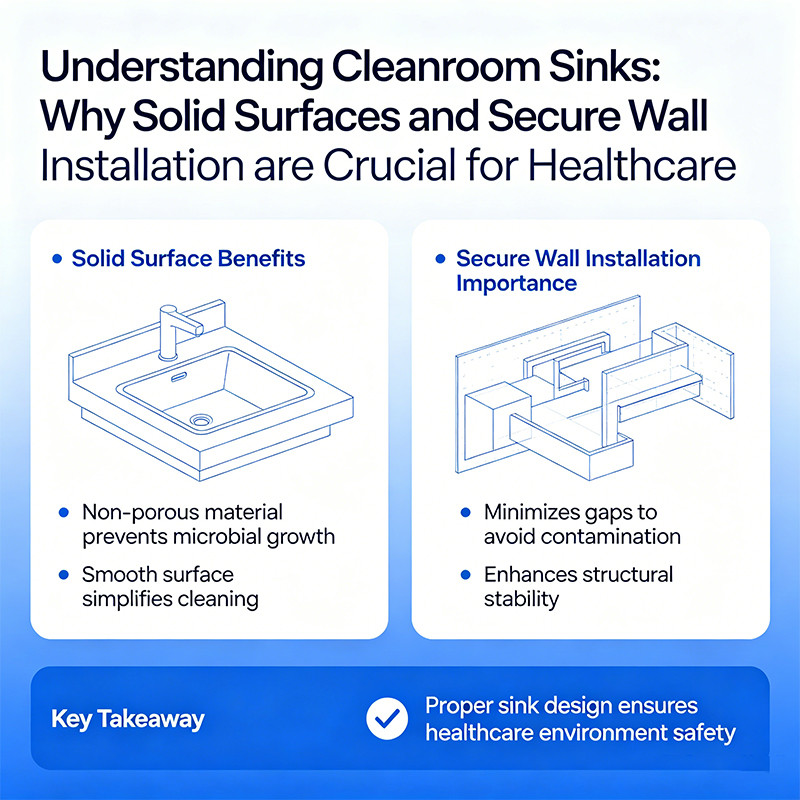
- Material Integrity: The sink's material must be non-porous to prevent bacteria from seeping into the surface itself.
- Hygienic Design: They must feature smooth, seamless surfaces, free of the joints and cracks that can harbor microbes.
- Functional Shape: Basins need to be deep enough to prevent splashing, which can spread contaminated droplets onto nearby surfaces, a key concern highlighted by the CDC.
- Hands-Free Operation: To minimize cross-contamination, touchless controls like sensors, knee pedals, or foot pedals are often required, especially in surgical and critical care areas.
These specialized features are not optional upgrades; they are fundamental requirements for creating an environment that protects vulnerable patients.
Fighting Germs: How Cleanroom Sinks Act as a Critical Barrier in Infection Control
Sinks and their drains in healthcare facilities can become contaminated with multidrug-resistant organisms (MDROs). These pathogens can form biofilms—slimy, resilient colonies of bacteria—that are notoriously difficult to eliminate. When water from a faucet hits a contaminated drain, it can create a fine spray, aerosolizing these germs and spreading them onto countertops, medical equipment, and even people.
This is where the design of a cleanroom sink becomes a powerful defense. Key infection control features include:
- Splash-Preventing Basins: Deep basins and specific faucet placements that direct water flow away from the drain help contain water and prevent the spread of microbes.
- Antimicrobial Surfaces: While not a substitute for cleaning, some materials used in high-end sinks have properties that inhibit the growth of bacteria and other microorganisms.
- Strategic Placement: Guidelines often dictate the precise location of handwashing stations to ensure they are conveniently accessible for staff, promoting better hand hygiene compliance. For instance, the Facility Guidelines Institute (FGI) first mandated in-room handwashing stations in 2001 to encourage this practice.
A well-designed sink is an active participant in the fight against HAIs, acting as a crucial control point in the chain of infection.
Compliance and Safety: Meeting Healthcare Regulations with High-Quality Cleanroom Sinks
Adhering to strict health and safety regulations is not just about avoiding fines; it's about ensuring a facility is fundamentally safe for patients and staff. Regulatory bodies and standards organizations set clear expectations for clinical sinks.
Notable authorities and their guidelines include:
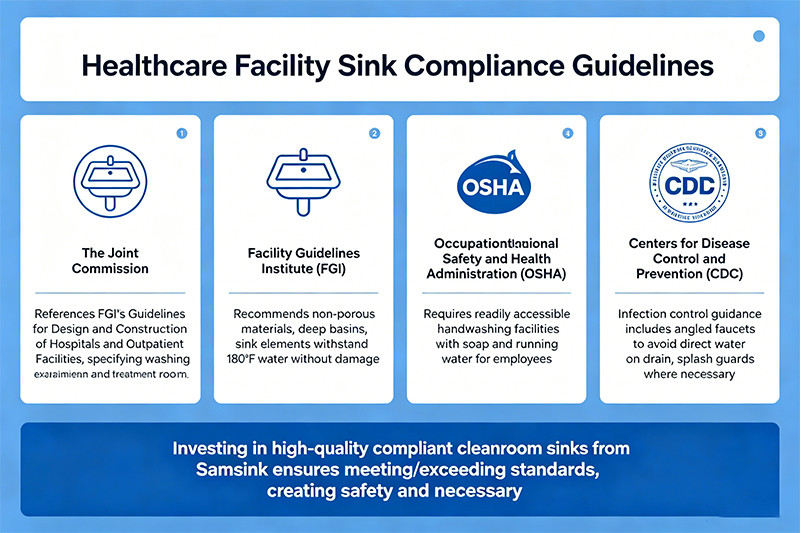
- The Joint Commission: This body often references the FGI's Guidelines for Design and Construction of Hospitals and Outpatient Facilities, which specify requirements for hand-washing sinks in examination and treatment rooms.
- Facility Guidelines Institute (FGI): FGI guidelines are a cornerstone of healthcare design, recommending non-porous materials, deep basins, and even stipulating that sink elements should withstand high-temperature water (180°F) without damage.
- Occupational Safety and Health Administration (OSHA): OSHA requires that employers provide readily accessible handwashing facilities for all employees, emphasizing the need for soap and running water as the primary method of hand hygiene.
- Centers for Disease Control and Prevention (CDC): The CDC provides extensive guidance on infection control, including sink design recommendations like angling faucets to avoid pouring water directly onto the drain and using splash guards where necessary.
Investing in high-quality, compliant cleanroom sinks from a trusted provider like Samsink ensures that a facility not only meets but exceeds these critical standards, creating a foundation of safety and trust.
The Power of Solid Surfaces in Cleanroom Sinks: A Hygienic Advantage
The material of a sink is arguably its most important feature in a healthcare context. While stainless steel has long been a common choice, modern solid surface materials offer a superior combination of hygiene, durability, and reparability, making them the new gold standard for cleanroom environments.
Non-Porous Perfection: Why Solid Materials Prevent Bacterial Growth in Cleanroom Sinks
The term "non-porous" is critical in infection control. Porous materials, like some ceramics or laminates, have microscopic voids where water can penetrate and bacteria can hide, forming protected colonies. Solid surface materials, such as those made from 100% acrylic resin, are completely non-porous.
This means:
- No Place to Hide: Bacteria, mold, and viruses cannot penetrate the surface. They remain on top, where they can be effectively removed through standard cleaning and disinfection protocols.
- Prevention of Biofilm: Biofilms, which are a major hazard in sink drains and on sink surfaces, struggle to anchor themselves to a truly non-porous material.
- Seamless Construction: Solid surface sinks can be fabricated with seamless integration between the basin and the countertop, eliminating the joints and grout lines that are notorious for trapping dirt and germs. This "virtually seamless" quality is a hallmark of superior hygienic design.
This inherent resistance to microbial colonization makes solid surfaces an ideal first line of defense in a sterile setting.
Easy to Clean and Sanitize: Maintaining Sterility with Solid Surface Cleanroom Sinks
A sink is only as hygienic as its cleaning protocol. The smooth, seamless nature of a solid surface sink makes cleaning remarkably efficient and effective. Unlike materials with crevices or textures, a solid surface presents a uniform plane that is easy to wipe down.
Furthermore, these materials are exceptionally resilient. They are designed to withstand the harsh disinfectants commonly used in hospitals, such as bleach-based solutions, without discoloring, degrading, or becoming damaged over time. This chemical resistance ensures that facilities can adhere to rigorous sanitization schedules without compromising the integrity or appearance of the sink. In contrast, even high-quality stainless steel can be susceptible to damage from certain chemical agents.
Durability and Chemical Resistance for Long-lasting Performance of Cleanroom Sinks
Healthcare facilities are demanding environments. Sinks are subjected to constant use, harsh cleaning chemicals, and the occasional impact from medical equipment. Durability is not just a matter of longevity but also of sustained hygienic performance.
Solid surface sinks offer several key advantages in this regard:
- Incredible Toughness: They are resistant to chipping, cracking, and staining, ensuring they maintain their smooth, cleanable surface for years.
- Renewable Surface: One of the most remarkable features of solid surface material is that it is renewable. Minor scratches or surface damage can often be buffed out and restored on-site, eliminating the need for a full replacement and extending the sink's functional lifespan.
- Consistent Integrity: Materials like 100% acrylic resin are solid all the way through, meaning their performance and appearance are not just a thin top layer. This robust construction is essential for long-term reliability in a 24/7 operational environment.
Choosing a durable, chemically resistant solid surface sink is a wise investment that pays dividends in both performance and cost-effectiveness over the life of the facility.
Secure Wall Installation for Cleanroom Sinks: Stability Meets Sterility
How a sink is installed is just as important as the sink itself. A poorly mounted sink can create hidden, inaccessible areas that become breeding grounds for contamination, completely negating the benefits of a hygienic sink design. Secure, seamless wall installation is crucial for maintaining a sterile envelope.
Preventing Movement and Leaks: The Importance of a Firm Mount for Cleanroom Sinks
A sink that is not securely anchored to the wall can shift or move over time, even slightly. This movement can break the seal between the sink and the wall, creating gaps. These gaps are a major hygiene risk for two reasons:
- Water Intrusion: Water can seep behind the sink, leading to moisture buildup, mold growth, and structural damage to the wall itself. This hidden moisture creates an ideal environment for microbial proliferation.
- Contamination Havens: The gaps become traps for dust, dirt, and organic matter, providing a food source for bacteria. Because these areas are inaccessible, they cannot be cleaned or disinfected properly.
A firm, robust wall-mounting system ensures the sink remains completely stable, preventing the formation of these hazardous gaps and protecting the integrity of the building structure.
Seamless Integration with Walls to Eliminate Contamination Traps Around Cleanroom Sinks
Traditional sink installations often rely on a bead of silicone caulk to seal the joint between the sink and the wall. While this may seem effective initially, caulk degrades over time. It can shrink, crack, peel, and become discolored, creating a perfect crevice for bacteria and mold to flourish. Cleaning this degraded caulk is nearly impossible, and it eventually needs to be scraped out and reapplied—a maintenance headache that poses its own contamination risks.
Modern cleanroom sink installations, particularly with solid surface models, aim for a seamless transition. This can be achieved through:
- Integral Backsplashes: Many solid surface sinks are fabricated with an integral, coved backsplash. This creates a continuous, curved surface that flows directly from the sink deck to the wall, leaving no seam or corner for germs to hide.
- Advanced Sealing Methods: Using high-grade, permanent bonding agents instead of traditional caulk ensures a durable, waterproof, and crevice-free seal that lasts for the life of the sink.
Eliminating these contamination traps at the point of installation is a fundamental principle of hygienic design.
Safety and Ergonomics for Healthcare Staff Using Wall-Mounted Cleanroom Sinks
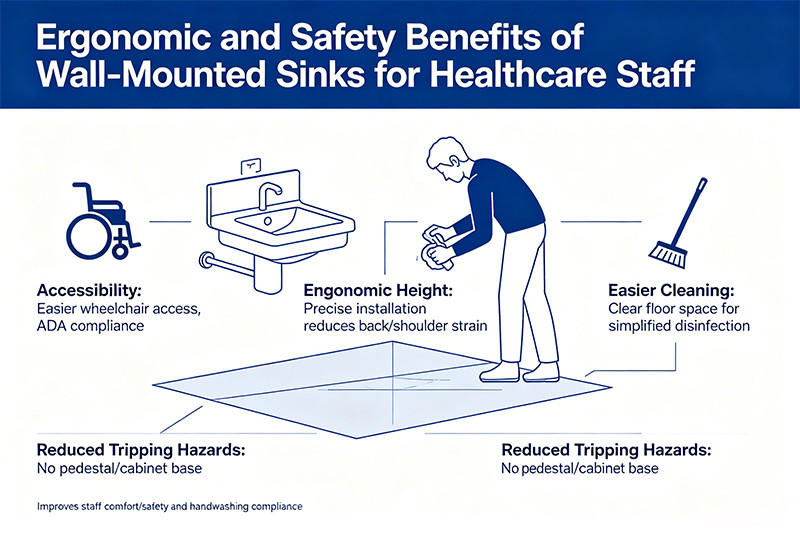
Wall-mounted sinks offer significant ergonomic and safety benefits for healthcare staff. By lifting the sink off the floor, valuable space is created underneath.
This has several advantages:
- Accessibility: It allows for easier wheelchair access, helping facilities meet ADA (Americans with Disabilities Act) compliance standards.
- Easier Cleaning: The clear floor space makes it much simpler to clean and disinfect the floor area around and under the sink, a common site for contamination.
- Ergonomic Height: Wall-mounted sinks can be installed at a precise, ergonomic height that reduces strain on the backs and shoulders of staff who use them frequently. This is especially important for surgical scrub sinks where staff spend extended periods of time.
- Reduced Tripping Hazards: Eliminating a pedestal or cabinet base removes potential tripping hazards, contributing to a safer work environment.
These ergonomic considerations not only improve staff comfort and safety but can also lead to better compliance with handwashing protocols.
Choosing the Right Cleanroom Sinks: Key Considerations for Healthcare Facilities
Selecting the appropriate cleanroom sink requires a careful evaluation of materials, design features, and certifications. Making an informed decision is critical to ensuring long-term hygiene, compliance, and functionality.
Material Matters: Opting for Certified Solid Surfaces in Cleanroom Sinks
When choosing a sink, the material should be your first consideration. While stainless steel is a common option, certified solid surfaces are often superior for clinical applications. Look for materials like 100% acrylic solid surface that are explicitly designed for healthcare environments.
Crucially, check for certifications that validate the material's safety and performance:
- NSF/ANSI 51: This certification indicates that the material is safe for food contact, which translates to a high standard of non-toxicity and cleanability relevant to healthcare.
- GREENGUARD Gold: This certification ensures the material has low chemical emissions, contributing to healthier indoor air quality for patients and staff.
- CSA B45/IAPMO Z125: These are plumbing standards that certify the durability and structural integrity of the sink itself.
Providers like Samsink specialize in solid surface solutions that carry these critical certifications, offering peace of mind that you are investing in a product that has been rigorously tested for the healthcare environment.
Design Features: Coved Corners and Hands-Free Faucets for Optimal Cleanroom Sinks
Beyond the material, specific design details can dramatically enhance a sink's hygienic performance.
Two of the most important features are:
- Coved Corners: Sinks with sharp 90-degree corners are difficult to clean thoroughly. A swab or cloth can't easily reach into the very corner, allowing biofilm and bacteria to accumulate. Sinks with large, rounded, or "coved" corners make cleaning simple and effective, as a cleaning tool can wipe the entire surface in one smooth motion.
- Hands-Free Faucets: Every time a person touches a faucet handle, there is a risk of cross-contamination. Hands-free faucets—operated by sensors, knee pedals, or foot pedals—eliminate this touchpoint entirely. They are considered essential in hygiene-critical areas like operating rooms and are a best practice in all patient care zones to reduce the spread of pathogens.
Other beneficial design features include gooseneck faucets that provide ample clearance for washing hands and forearms, and sink designs that are specifically shaped to minimize splashing.
Meeting Industry Standards: What to Look for in Cleanroom Sink Specifications
When reviewing sink specifications, create a checklist to ensure you are meeting all necessary requirements. This will help you compare different models and make a choice based on holistic performance rather than a single feature.
Cleanroom Sink Specification Checklist:
| Feature | Specification to Look For | Why It's Important |
|---|---|---|
| Material | Certified non-porous solid surface (e.g., 100% acrylic) | Prevents bacterial growth, durable, and repairable. |
| Certifications | NSF/ANSI 51, GREENGUARD Gold, CSA B45.5/IAPMO Z124 | Verifies safety, low emissions, and structural integrity. |
| Installation | Wall-mount with integral backsplash option | Ensures stability, eliminates seams, and improves cleanability. |
| Basin Design | Deep basin with coved/rounded corners | Minimizes splashing and makes cleaning easier and more effective. |
| Faucet Operation | Hands-free compatible (sensor, knee, or foot activation) | Drastically reduces the risk of cross-contamination. |
| Overflow | Overflow-free design | Eliminates a common, hard-to-clean breeding ground for bacteria. |
| Compliance | Meets FGI and ADA guidelines | Ensures the sink is compliant with major healthcare design and accessibility standards. |
By using a comprehensive checklist, healthcare facilities can confidently select sinks that provide the highest level of infection control and long-term value.
Key Takeaways
In the complex ecosystem of a healthcare facility, every detail matters in the mission to protect patient and staff health. The selection of a seemingly simple fixture like a sink has profound implications for infection control and operational efficiency. This article has detailed why specialized cleanroom sinks, particularly those featuring solid surfaces and secure wall installation, are not a luxury but a fundamental necessity.
Here’s a summary of the most critical points to remember:
Healthcare Demands are Unique: Standard residential or commercial sinks are inadequate for clinical settings. Medical environments require sinks specifically engineered to be non-porous, seamlessly constructed, and capable of withstanding aggressive disinfection protocols to prevent them from becoming reservoirs for dangerous pathogens.
Sinks are an Active Defense Against HAIs: Healthcare-Associated Infections (HAIs) are a persistent threat, and sink design plays a direct role in mitigation. Features like deep basins to prevent splashing contaminated water, faucets angled away from the drain, and hands-free operation are all active measures that disrupt the chain of infection. Drains themselves can harbor resilient biofilms of multidrug-resistant organisms, making splash control a paramount concern.
Solid Surfaces are the Gold Standard for Hygiene: The material of a sink is its most important hygienic feature. Non-porous solid surfaces, like 100% acrylic resin, offer a seamless, impenetrable barrier against bacteria, mold, and viruses. Unlike porous materials, they leave no microscopic voids for microbes to hide, ensuring that what you see on the surface is all there is—and it can be easily cleaned away.
Durability and Reparability Ensure Long-Term Value: Solid surface sinks are built to last. They are highly resistant to the harsh chemicals and disinfectants used daily in hospitals and are difficult to chip or crack. A key advantage is their renewability; minor scratches or damage can be buffed out and repaired on-site, extending the sink's lifespan and ensuring it remains hygienic and aesthetically pleasing without costly replacement.
Secure Wall-Mounting is Crucial for Sterility: The installation method is as vital as the sink itself. Securely wall-mounting a sink eliminates the space underneath, making floor cleaning more effective and improving accessibility. Most importantly, using designs with integral backsplashes or advanced sealing methods creates a seamless transition to the wall, eradicating the caulk joints and hidden gaps that traditionally harbor moisture and microbial growth.
Compliance is Non-Negotiable: Adherence to guidelines from bodies like the FGI, CDC, and OSHA is essential for patient safety and regulatory compliance. Choosing certified sinks—those tested against standards like NSF/ANSI 51 for cleanability and GREENGUARD Gold for low emissions—validates their suitability for high-stakes healthcare environments.
Design Details Magnify Hygienic Performance: Features like coved (rounded) corners for easier cleaning, overflow-free designs to eliminate a key bacterial breeding ground, and compatibility with hands-free faucets collectively create a sink that is optimized for infection control from top to bottom.
Investing in a superior sink system from a knowledgeable provider like Samsink is an investment in your facility's core mission: to provide the safest possible care. These fixtures are a cornerstone of a comprehensive infection prevention strategy.
Frequently Asked Questions (FAQ)
1. What is the best material for a cleanroom or hospital sink?
While stainless steel has been traditionally used, the superior choice for modern healthcare environments is a non-porous solid surface, often made from 100% acrylic resin. This material is completely impenetrable to bacteria, mold, and viruses, meaning microbes cannot hide within the material itself. It allows for seamless construction, eliminating joints that trap germs. Furthermore, it is highly resistant to the harsh chemical disinfectants used in hospitals and can be easily repaired if scratched, giving it a long and hygienic lifespan.
2. Are stainless steel sinks a bad choice for healthcare?
Stainless steel is not necessarily a "bad" choice and is still widely used. It is non-porous and durable. However, it has some disadvantages compared to solid surfaces. Stainless steel sinks often have seams, especially where the bowl meets the counter, which can trap contaminants. They are also susceptible to scratching, and these scratches can harbor bacteria. Finally, certain chemical cleaners can damage or discolor stainless steel over time. Solid surface sinks from a brand like Samsink are often considered a more advanced and hygienic solution because they can be truly seamless and their surface is renewable.
3. Why is a wall-mounted sink better than a floor-mounted or drop-in sink?
Wall-mounted sinks offer three key advantages in a healthcare setting:
- Hygiene: They eliminate the cabinet or pedestal base, creating clear floor space that is much easier to clean and disinfect thoroughly. This removes hidden corners and surfaces where dust and pathogens can accumulate.
- Accessibility: They can be installed at specific heights to comply with ADA guidelines, ensuring access for all patients and staff, including those in wheelchairs.
- Safety & Ergonomics: Clearing the floor reduces tripping hazards. Furthermore, mounting them at an ergonomic height can reduce physical strain on healthcare workers who use them frequently throughout the day.
4. What does it mean for a sink to be "seamless," and why is it important?
A seamless design means there are no gaps, joints, or crevices where the sink bowl meets the countertop or where the countertop meets the backsplash. In traditional installations, these joints are filled with caulk, which degrades over time and becomes a prime location for bacterial and mold growth. Solid surface sinks can be fabricated as a single continuous piece, including an integral coved backsplash. This seamless construction provides a smooth, uninterrupted surface that is incredibly easy to clean and leaves no place for germs to hide.
5. Do I really need a hands-free faucet?
In any hygiene-critical area, the answer is yes. Every time a person touches a faucet handle, they can either pick up germs left by a previous user or deposit germs from their own unwashed hands. This single touchpoint can undermine the entire handwashing process. Hands-free faucets, operated by sensors or foot/knee pedals, eliminate this risk of cross-contamination. Regulatory guidelines increasingly recommend or mandate them for critical care and surgical areas, and they are considered a best practice for all clinical handwashing stations to maximize infection control.
6. What is a sink overflow and why should it be avoided in healthcare?
An overflow is the small hole near the top of the sink basin designed to prevent water from spilling onto the floor if the tap is left running. While useful in a home, in a hospital, this feature is a significant hygiene hazard. The overflow channel is dark, damp, and impossible to clean thoroughly, making it an ideal breeding ground for biofilm and bacteria. Water splashing inside this channel can aerosolize these germs back into the environment. For this reason, high-quality cleanroom and healthcare sinks are designed without an overflow, eliminating this hidden contamination zone.
7. How can I be sure a sink meets healthcare standards?
Look for certifications from recognized third-party organizations. Certifications like NSF/ANSI 51 confirm the material is non-toxic and cleanable, GREENGUARD Gold ensures it has low chemical emissions for better air quality, and plumbing standards like CSA B45/IAPMO Z124 verify its structural durability. Additionally, ensure the sink's design aligns with guidelines from the Facility Guidelines Institute (FGI) and the recommendations of the CDC. Working with a specialized supplier like Samsink, which focuses on compliant healthcare solutions, is the best way to ensure you're getting a product engineered for safety and performance.
Conclusion
We've seen that choosing the right cleanroom sinks—specifically those with solid surfaces and secure wall installation—is not just a preference, but a fundamental requirement for maintaining sterile environments in healthcare. This decision goes far beyond simple plumbing; it is an active and critical component of a facility's infection prevention and control strategy. From the impenetrable, non-porous nature of a solid surface to the seamless, easy-to-clean design of a wall-mounted unit, every feature is engineered to combat the persistent threat of healthcare-associated infections.
By investing in superior cleanroom sink solutions, such as those expertly crafted by Samsink, healthcare facilities can take a definitive step toward ensuring patient safety, protecting dedicated healthcare workers, and upholding the overall integrity of the medical environment. These choices are vital investments in building a healthier, safer tomorrow for everyone. If you are looking to elevate the standard of hygiene and safety in your facility, we encourage you to explore the advanced solid surface solutions that set the benchmark for clinical excellence.