Understanding Commercial Kitchen Sinks: A Comprehensive Guide
- Share
- Issue Time
- Dec 12,2025
Summary
Selecting the appropriate commercial kitchen sink is vital for ensuring efficiency, hygiene, and compliance in any food service establishment. Sinks are not merely basins; they are critical components that prevent cross-contamination and facilitate a smooth workflow. Health codes, such as the FDA Food Code, mandate specific sink configurations, including three-compartment sinks for washing, rinsing, and sanitizing, and dedicated handwashing sinks, emphasizing that compliance is non-negotiable to

As we delve into the world of commercial kitchens, we recognize the sink as more than just a basin; it's a cornerstone of efficiency, hygiene, and compliance. Choosing the right commercial kitchen sink is crucial for any food service operation. Join me as I explore the diverse types, essential features, and critical considerations for selecting the perfect commercial kitchen sink to elevate your establishment's functionality.
Key Takeaways
- Compliance is Non-Negotiable: Health codes, such as the FDA Food Code, mandate specific sink setups to prevent foodborne illness. Three-compartment sinks for wash-rinse-sanitize procedures and dedicated handwashing sinks are fundamental requirements, not suggestions. Failure to comply can lead to fines or even closure.
- Specialization Prevents Cross-Contamination: Using the right sink for the right job is critical. A three-compartment sink is for warewashing only and should never be used for handwashing or food prep. Dedicated hand sinks, prep sinks for food, and bar sinks for glassware are essential for creating a safe and efficient workflow by creating clear zones for different tasks.
- Material and Construction Matter: The vast majority of commercial sinks are made from stainless steel for its durability, hygiene, and resistance to corrosion. The grade of steel (e.g., 304 vs. 316) and its gauge (thickness) are key indicators of quality and longevity. Lower gauge numbers mean thicker, more durable steel, with 16-gauge being a robust choice for heavy-use environments.
- Certifications Signal Quality and Safety: Look for certifications like NSF (National Sanitation Foundation) to ensure a sink meets public health standards. Other marks, such as cUPC and CE, indicate compliance with North American and European plumbing and safety standards, respectively, while ISO 9001 speaks to the manufacturer's commitment to quality control.
- Strategic Sourcing Impacts Budget and Quality: While cost is a major factor, the total cost of ownership—including durability and lifespan—is more important than the initial price. Exploring sourcing from manufacturing hubs in Asia, such as Vietnam, can offer cost efficiencies, but it's crucial to partner with suppliers who demonstrate adherence to international quality and material standards.
- Design Influences Workflow and Cleanliness: The choice between an undermount sink (installed below the counter) and a top-mount sink (dropped in from above) affects both aesthetics and daily maintenance. Undermount sinks provide a seamless look and make it easy to wipe counters directly into the basin, while top-mount sinks are often simpler and cheaper to install.
Understanding the Essential Types of Commercial Kitchen Sinks
In any professional foodservice operation, the sink is far more than a simple basin for washing. It is a critical control point for hygiene, a hub of daily workflow, and a piece of equipment heavily regulated by health authorities. Selecting the correct types of commercial sinks and implementing them properly is fundamental to preventing cross-contamination, ensuring efficiency, and complying with legal standards. From multi-compartment units that form the backbone of sanitation to specialized sinks for specific tasks, each has a designated role that must be respected to maintain a safe and productive kitchen environment.
Multi-Compartment Commercial Kitchen Sinks: The Backbone of Sanitation
Multi-compartment sinks are the workhorses of the warewashing area, designed to handle the rigorous process of cleaning and sanitizing everything from pots and pans to utensils and cutting boards. Their segmented design is not for convenience but is a specific requirement by health codes to ensure a methodical and effective cleaning process.
Why Three-Compartment Sinks are Non-Negotiable for Health Regulations
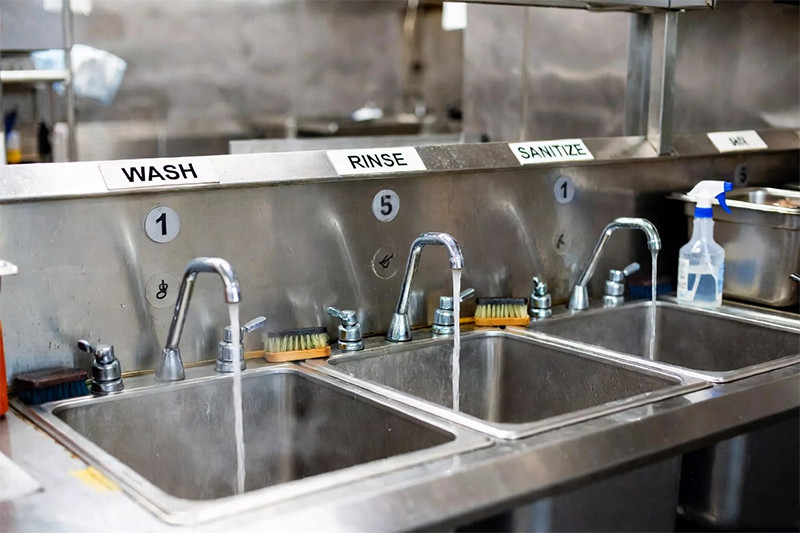
The three-compartment sink is a cornerstone of commercial kitchen sanitation, mandated by most health departments, including regulations based on the FDA Food Code. It facilitates the essential wash-rinse-sanitize method, a systematic process that ensures all food-contact surfaces are free of both visible debris and harmful microorganisms. Failure to follow this procedure can lead to the spread of foodborne illnesses, resulting in significant fines or even the suspension of operations.
The process is broken down into a clear, sequential flow:
- Preparation: Before the process begins, all items must be scraped or pre-soaked to remove gross food particles.
- Compartment 1: Wash: This basin is filled with a cleaning solution and hot water, which must be maintained at a minimum temperature of 110°F (43°C) as per FDA guidelines. The detergent helps to remove grease and remaining food residue.
- Compartment 2: Rinse: The second basin contains clean, hot water, also typically at least 110°F (43°C), to thoroughly rinse away all detergent from the washed items. Soap residue can neutralize the sanitizer in the next step, so a a complete rinse is crucial.
- Compartment 3: Sanitize: The final compartment holds either a chemical sanitizing solution (like chlorine, iodine, or quaternary ammonium) mixed to the proper concentration or water heated to at least 171°F (77°C) for a minimum of 30 seconds. This step kills remaining invisible bacteria.
- Air Dry: After sanitizing, all items must be placed on a clean drainboard or rack to air dry completely. Towel drying is prohibited as it can reintroduce contaminants.
For this system to be effective, three-compartment sinks must be used exclusively for warewashing—never for handwashing, food prep, or mop water disposal.

Specialized Commercial Kitchen Sinks: Preventing Cross-Contamination
While the three-compartment sink handles warewashing, other critical tasks require their own dedicated sinks to prevent the dangerous transfer of pathogens. Health codes are strict about this separation to ensure that germs from raw meat, unwashed hands, or dirty barware don't find their way into fresh food or clean glasses.
Handwash Sinks, Food Prep Sinks, and Bar Service Sinks Explained
Each of these specialized sinks serves a unique and vital function in the kitchen ecosystem:
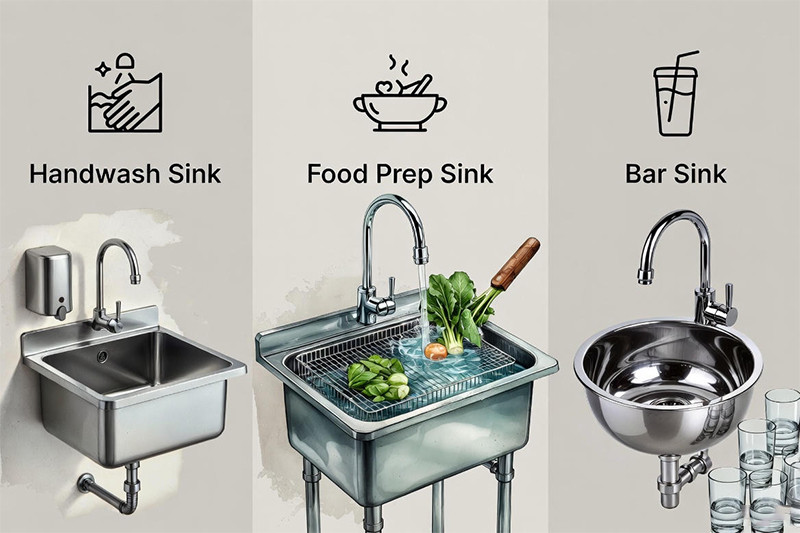
Handwash Sinks: These are arguably the most critical sinks for food safety. Health regulations mandate that dedicated handwash sinks be conveniently located in all food preparation, service, and dishwashing areas, as well as in or near restrooms. These sinks must be used only for washing hands and must be stocked with soap, single-use paper towels, and a sign instructing employees on proper handwashing. The water must reach at least 100°F (38°C) to be effective. Using a food prep or warewashing sink for handwashing is a major health code violation.
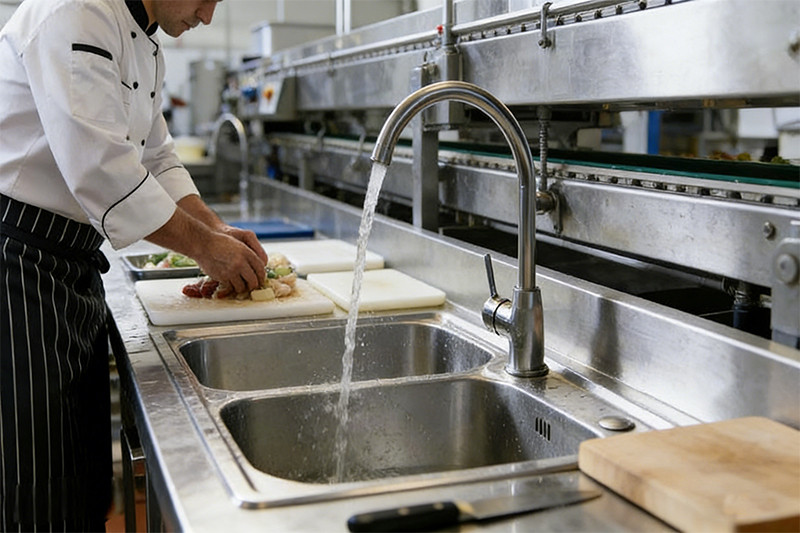
Food Prep Sinks: Often referred to simply as prep sinks, these basins are used for washing fruits and vegetables, thawing meats under running water, and other tasks related to preparing ingredients. They are a crucial buffer, ensuring that raw produce is cleaned of soil and contaminants before being cut or cooked. To maintain workflow, prep sinks are typically located in the food preparation area, separate from the primary cleanup and warewashing stations. Some models are integrated into work tables and may include accessories like cutting boards that fit over the basin.
Bar Sinks: A bar sink, also known as an underbar sink or entertainment sink, is specifically designed for the needs of a bar area. They are typically smaller than kitchen sinks and are often configured with multiple compartments to handle the rapid turnover of glassware. A common setup allows a bartender to dump old drinks, wash glasses with a brush in a dedicated basin, rinse them, and sanitize them in separate compartments, ensuring a clean glass for every new drink. They may also feature drainboards for drying or be used for preparing garnishes and handwashing by bar staff.
| Sink Type | Primary Function | Typical Location | Key Feature |
|---|---|---|---|
| Handwash Sink | Washing hands only | Prep areas, dish rooms, restrooms | Small, dedicated, must have soap/towels |
| Food Prep Sink | Washing produce, thawing meat | Main kitchen prep line | Large enough for bulk produce |
| Bar Sink | Washing glassware, drink prep | Behind the bar | Often multi-compartment for efficiency |
Stainless Steel Commercial Kitchen Sinks: Durability Meets Design
Stainless steel is the undisputed material of choice for nearly all commercial kitchen equipment, and sinks are no exception. Its popularity stems from a powerful combination of durability, hygiene, and corrosion resistance. Unlike porous materials, stainless steel's non-porous surface doesn't harbor bacteria, is easy to clean and sanitize, and can withstand the harsh chemicals, constant moisture, and temperature shocks of a commercial environment.
Exploring Professional-Grade Stainless Steel Ranges and Farmhouse Styles
While utility is king in a commercial kitchen, design trends are beginning to influence even these workhorse fixtures.
Professional-Grade Stainless Steel: This refers to sinks built to withstand the rigors of a commercial setting. Key identifiers of a professional-grade sink are the gauge and grade of the stainless steel. The gauge indicates thickness—the lower the number, the thicker and more durable the steel. While 18-gauge is common, higher-end and heavy-duty sinks use 16-gauge or even 14-gauge steel for superior dent resistance and noise dampening. The grade, most commonly 304 stainless steel, contains 18% chromium and 8% nickel (often denoted as 18/8), offering excellent corrosion resistance for most applications.
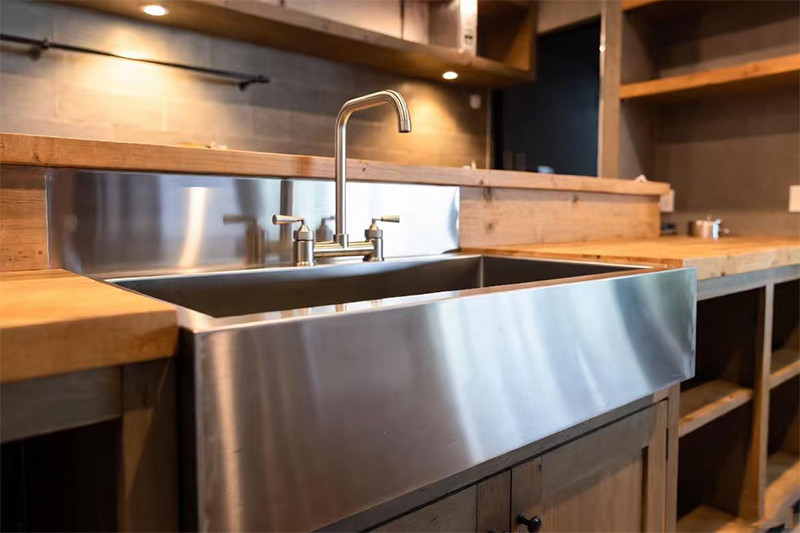
Farmhouse Styles: Once confined to residential kitchens, the farmhouse or "apron-front" sink is gaining traction in certain commercial spaces, especially in open-kitchen concepts, cafes, and bakeries where aesthetics are important. These sinks feature a large, deep single basin and an exposed front panel, blending rustic charm with modern functionality. Manufacturers now offer commercial-grade farmhouse sinks made from heavy-duty 16-gauge stainless steel, and some even come in "workstation" models with integrated ledges for accessories like cutting boards and drying racks, merging style with the efficiency needed in a professional setting.
Crucial Certifications and Standards for Your Commercial Kitchen Sink
When procuring a commercial kitchen sink, it's not enough to simply choose the right size and style. A host of certifications and standards exist to provide assurance about a product's quality, safety, and compliance with regulations. These marks are not just suggestions; they are critical indicators that a sink is built to last, safe for contact with food and water, and legally saleable in your region. Understanding these certifications helps you make an informed investment that protects your customers, your staff, and your business.
Navigating ISO and SGS Standards for Commercial Kitchen Sink Quality
International standards provide a framework for quality and reliability in manufacturing. For commercial kitchen sinks, two of the most relevant are ISO 9001 and material-specific standards like ASTM A240.
ISO 9001: Ensuring Consistent Quality in Commercial Kitchen Sink Manufacturing
ISO 9001 is a globally recognized standard for Quality Management Systems (QMS). When a manufacturer is ISO 9001 certified, it indicates that they have implemented a robust system to ensure their products consistently meet customer and regulatory requirements. This certification doesn't apply to the sink itself, but to the processes the manufacturer uses to design, produce, and deliver it. For a buyer, an ISO 9001 certified supplier offers a higher degree of confidence in product consistency, traceability, and the company's commitment to continuous improvement and customer satisfaction. It provides assurance that from one production run to the next, the sinks will adhere to the same high standards.
ASTM A240/A240M: Understanding Material Properties and Stainless Steel Grades for Commercial Kitchen Sinks
The American Society for Testing and Materials (ASTM) develops and publishes technical standards for a wide range of materials. ASTM A240/A240M is the standard specification for "Chromium and Chromium-Nickel Stainless Steel Plate, Sheet, and Strip for Pressure Vessels and for General Applications"—the raw material used to fabricate most commercial sinks. This standard is crucial because it defines the specific chemical composition and mechanical properties (like tensile strength and hardness) for various stainless steel grades, including the widely used 304 and 316 types.
When a sink manufacturer states their product is made from ASTM A240-compliant 304 stainless steel, they are guaranteeing that the material meets internationally recognized benchmarks for corrosion resistance, strength, and durability. This ensures the material is what it claims to be, providing a reliable basis for the sink's performance in a demanding kitchen environment.
Additional Key Certifications for Commercial Kitchen Sinks
Beyond general quality and material standards, several other certifications address specific health, safety, and environmental concerns.
NSF/ANSI 61: Preventing Toxic Contaminants in Your Commercial Kitchen Sink Water
NSF International, formerly the National Sanitation Foundation, develops public health standards and certification programs. While many are familiar with the NSF food equipment certification, NSF/ANSI 61 is specifically for "Drinking Water System Components." This standard sets strict limits on the amount of impurities that a product can leach into the water it comes into contact with, including lead, heavy metals, and organic chemicals.
For a commercial kitchen sink and its faucet, NSF/ANSI 61 certification ensures that the materials used will not contaminate the potable water supply. This is a critical safety consideration, particularly for prep sinks used for washing produce and faucets that supply water for cooking and drinking. In many jurisdictions across the US, certification to NSF/ANSI 61 is a legal requirement for plumbing components.
cUPC and CE Certification: Meeting North American and European Safety Standards for Commercial Kitchen Sinks
These marks indicate compliance with regional plumbing and safety codes, making them essential for a product to be legally sold and installed.
cUPC (Uniform Plumbing Code) Certification: Issued by the International Association of Plumbing and Mechanical Officials (IAPMO), the cUPC mark signifies that a plumbing product complies with both the Uniform Plumbing Code (UPC) used widely in the United States and the Canadian National Plumbing Code. To earn this certification, a sink must undergo rigorous testing for performance, material safety, and durability. For builders and restaurant owners in North America, specifying cUPC-certified sinks is critical for passing plumbing inspections and ensuring regulatory compliance.
CE Marking: The CE mark (Conformité Européenne) indicates that a product meets the European Union's standards for health, safety, and environmental protection. It is mandatory for most products sold within the European Economic Area (EEA). For kitchen sinks, the relevant standard is EN 13310. A CE mark on a sink declares that it meets these requirements and can be legally traded within the EU.
LEED/BREEAM: Choosing Environmentally Responsible Commercial Kitchen Sinks
For businesses focused on sustainability, green building certifications like LEED (Leadership in Energy and Environmental Design) and BREEAM (Building Research Establishment Environmental Assessment Method) are increasingly important. While a sink itself isn't "LEED certified," its features can contribute points toward a building's overall certification.
Key contributions include:
- Water Efficiency: Both LEED and BREEAM award points for reducing a building's potable water consumption. This can be achieved by installing low-flow faucets on sinks that meet EPA WaterSense criteria (e.g., flow rates of 1.5 GPM or less).
- Recycled Content: Sinks made from a high percentage of recycled materials, which is common for stainless steel, can contribute to credits in the Materials and Resources category of LEED. Some manufacturers explicitly state their products contain over 80% recycled material.
- Material Transparency: Programs like LEED also reward the use of products with Environmental Product Declarations (EPDs) and other transparency documents, which report on a product's life-cycle environmental impact.
Choosing sinks and faucets with these sustainable attributes helps a business reduce its environmental footprint and can lead to significant operational cost savings through lower water bills.
Strategic Sourcing: Procuring Cost-Effective Commercial Kitchen Sinks
For any business, from a single restaurant to a multinational hotel chain, procurement is a strategic function that directly impacts the bottom line. When it comes to essential equipment like commercial kitchen sinks, the goal is to acquire durable, compliant products at a competitive price. This requires a deep understanding of manufacturing cost drivers, a careful approach to supplier selection, and an awareness of the global sourcing landscape.
Achieving Cost-Efficiency in Commercial Kitchen Sink Manufacturing for B2B Procurement
The final price of a commercial kitchen sink is influenced by a combination of factors including raw material costs, labor, and manufacturing efficiency. For B2B purchasers buying in quantity, understanding these elements is key to negotiating favorable terms.
The Role of Volume Production and Automation in Reducing Commercial Kitchen Sink Costs
Manufacturing efficiency is arguably the most significant controllable factor in the cost of a stainless steel sink. Economies of scale play a massive role; producing a large volume of sinks in a single run dramatically lowers the per-unit cost. This is because the fixed costs of setting up machinery and programming are distributed across more items.
Furthermore, automation is a game-changer in modern metal fabrication. Automated systems can handle tasks like laser cutting, stamping, bending, welding, and polishing with incredible speed and precision. This provides several key advantages:
- Reduced Labor Costs: Automated machinery can operate 24/7 with minimal human supervision, significantly lowering labor expenses.
- Increased Productivity: An automated bending press or laser cutter can perform tasks much faster than a human operator, reducing lead times.
- Consistent Quality: Automation eliminates the human error inherent in manual processes, resulting in higher consistency and fewer defects, which reduces waste and rework costs.
For a B2B buyer, sourcing from a manufacturer that has heavily invested in high-volume production lines and automation will almost always result in a more competitive price point without sacrificing quality.
Selecting the Right Stainless Steel Commercial Kitchen Sink Supplier for Chain Hotels
Chain hotels and large restaurant groups have unique procurement needs. They require a supplier who can deliver consistent quality across numerous locations, manage complex logistics, and offer pricing that supports their business model.
Balancing Quality, Durability, and Cost-Effectiveness for Commercial Kitchen Sinks
While the initial purchase price is a major consideration, it is only one part of the equation. A savvier approach is to evaluate the Total Cost of Ownership (TCO), which is a financial estimate that includes the purchase price plus all costs incurred over the product's lifespan.
Factors to consider when calculating TCO for a commercial sink include:
- Initial Purchase Price: The upfront cost of the sink itself.
- Installation Costs: Labor and materials required for installation.
- Maintenance & Repair Costs: Cheaper, lower-quality sinks made from thinner gauge steel are more prone to dents and weld failures, leading to higher repair bills and more frequent replacements. A well-made sink from heavy-gauge stainless steel may last 15 to 30 years with proper care.
- Downtime Costs: A failed sink can disrupt kitchen operations, leading to lost revenue.
- Lifespan & Residual Value: A higher-quality sink will last longer, deferring replacement costs.
A supplier who emphasizes durability and uses premium materials like 16-gauge, Type 304 stainless steel may have a higher initial price, but often presents a much better long-term value and lower TCO.
Exploring Asia as a Key Sourcing Destination for Commercial Kitchen Sinks: Focus on Vietnam
For decades, China has been the "factory of the world," but the global sourcing landscape is shifting. Vietnam has rapidly emerged as a highly attractive alternative for manufacturing and sourcing, especially for products like stainless steel sinks.
Advantages of Sourcing from Vietnam:
- Competitive Labor Costs: Labor costs in Vietnam are significantly lower than in China, often by 30-50%, which directly translates to lower production costs for labor-intensive goods.
- Favorable Trade Agreements: Vietnam is a member of several free trade agreements, such as the Comprehensive and Progressive Agreement for Trans-Pacific Partnership (CPTPP) and the EU-Vietnam Free Trade Agreement (EVFTA). These can result in lower or zero tariffs compared to goods sourced from China, especially for non-U.S. markets.
- Growing Infrastructure: Vietnam has been investing heavily in its manufacturing infrastructure, including modern sea ports, industrial zones, and transportation networks, to support its growing export economy.
- Diversification of Supply Chain: Relying on a single country for sourcing creates risk. Moving some production to Vietnam allows companies to build a more resilient and diversified supply chain.
However, challenges remain. Vietnam's supply chain is less mature than China's, and many manufacturers still rely on importing raw materials and components, which can add complexity. Despite this, for many businesses, Vietnam’s combination of low costs and growing capabilities makes it a top sourcing destination.
Spotlight on Leading Commercial Kitchen Sink Manufacturers: The Samsink Example
When evaluating potential suppliers, it’s helpful to look at manufacturers who exemplify the qualities of a reliable partner. Samsink, a manufacturer with facilities in both China and Thailand, serves as a strong example of a company catering to the global B2B market.
Samsink's Expertise in Custom Commercial Stainless Steel Sinks and International Standards Adherence
A manufacturer like Samsink demonstrates key capabilities that B2B buyers should look for:
- Commitment to Quality Materials: They explicitly state the use of premium materials like T304 and offer T316 stainless steel for more demanding applications, ensuring durability and corrosion resistance.
- Adherence to International Standards: A trustworthy supplier will have their products certified to key international standards. Samsink highlights its cUPC and NSF certifications for the North American market, as well as its ISO 9001 quality management certification, signaling a commitment to quality, safety, and regulatory compliance.
- Advanced and Flexible Manufacturing: They leverage advanced manufacturing technologies while also offering deep customization (OEM/ODM) capabilities. This allows them to produce not only standard models efficiently but also create custom-shaped sinks (L-shaped, curved, etc.) tailored to a client's specific needs.
- Global Production Footprint: With production bases in multiple countries (e.g., China and Thailand), they can offer a diversified and flexible supply chain, potentially mitigating risks associated with relying on a single region.
By partnering with manufacturers who can demonstrate this combination of quality control, compliance, and flexible production, businesses can strategically source commercial kitchen sinks that meet their performance needs and budget.
The Impact of Material Selection on Your Commercial Kitchen Sink's Longevity
The material from which a commercial kitchen sink is constructed is the single most important factor determining its lifespan, performance, and long-term value. In the high-demand environment of a professional kitchen, a sink must endure constant use and abuse, from the impact of heavy pots and the scrape of utensils to exposure to high temperatures and harsh cleaning chemicals. Making an informed material choice is critical to ensuring your investment lasts.
Why Stainless Steel is the Premier Choice for Commercial Kitchen Sinks
Stainless steel is the undisputed champion and industry standard for commercial kitchens, and for good reason. It offers an unparalleled combination of properties that make it uniquely suited for environments where hygiene and durability are paramount.
- Exceptional Durability: Stainless steel is a robust and resilient material that can withstand the daily rigors of a commercial kitchen. It resists dents, chips, and cracks, ensuring it can handle the impact of heavy cookware. A well-maintained stainless steel sink can last for 15 to 30 years, making it a sound long-term investment.
- Superior Hygiene: Hygiene is non-negotiable in foodservice. Stainless steel has a non-porous surface, which means there are no microscopic cracks or openings where bacteria, mold, and other germs can hide and multiply. This makes the surface incredibly easy to clean and sanitize, a crucial factor in preventing cross-contamination and complying with health codes.
- Corrosion Resistance: Thanks to its chromium content (typically 18% or more), stainless steel forms a passive, invisible layer of chromium oxide on its surface. This layer protects the metal from rust and corrosion, even when frequently exposed to water, food acids, and aggressive cleaning chemicals.
- Heat and Chemical Resistance: Commercial sinks must handle extreme temperatures, from boiling water to hot pans placed directly in the basin. Stainless steel can tolerate high heat without warping or being damaged. It is also non-reactive and does not react with acidic or alkaline foods, ensuring that it will not alter the flavor of ingredients.
- Cost-Effectiveness: While the initial investment may be higher than some other materials, the long lifespan and low maintenance requirements of stainless steel make it the most cost-effective choice in the long run. Its durability means fewer repairs and replacements over the life of the kitchen.
Exploring Different Stainless Steel Grades for Commercial Kitchen Sinks
Not all stainless steel is created equal. The "grade" of the steel refers to its chemical composition, which determines its specific properties, particularly its resistance to corrosion. For commercial kitchen sinks, the two most relevant grades are SUS304 and SUS316.
SUS304 vs. SUS316: Which is Best for Your Commercial Kitchen Sink?
The choice between 304 and 316 stainless steel depends on the specific application and environment of the sink.
SUS304 (or Type 304) Stainless Steel is the most widely used grade for commercial kitchen sinks and equipment. It is typically composed of 18% chromium and 8% nickel, often referred to as "18/8" stainless steel. This composition provides excellent corrosion resistance against a wide range of kitchen acids and cleaning solutions, making it a reliable and cost-effective choice for the vast majority of food service applications.
SUS316 (or Type 316) Stainless Steel is a premium grade that contains the same elements as 304 but with the crucial addition of 2-3% molybdenum. This addition significantly enhances its resistance to corrosion, particularly from chlorides (like salt) and other harsh chemicals. As a result, 316 is often called "marine grade" stainless steel.
The following table breaks down the key differences:
| Feature | SUS304 Stainless Steel | SUS316 Stainless Steel |
|---|---|---|
| Key Composition | 18% Chromium, 8% Nickel | 16-18% Chromium, 10% Nickel, 2-3% Molybdenum |
| Corrosion Resistance | Excellent for general use; resists most food acids and standard cleaning agents. | Superior; highly resistant to chlorides, salts, and harsh industrial chemicals. |
| Best For | The vast majority of commercial kitchens, restaurants, and food service operations. | Environments with high salt exposure (coastal areas), medical labs, or facilities using aggressive sterilizing agents. |
| Cost | More affordable and provides the best value for most applications. | Generally 30-75% more expensive due to the addition of molybdenum. |
The Verdict: For most commercial kitchen sinks, SUS304 is the ideal choice, offering the perfect balance of durability, hygiene, and cost. However, investing in a SUS316 sink is a wise decision for businesses located in coastal regions where salty air can accelerate corrosion, or for specialized facilities like laboratories and medical centers that regularly use harsh chemical cleaners.
Design Considerations: Undermount vs. Top Mount Commercial Kitchen Sinks
Beyond material and type, the installation style of a commercial kitchen sink profoundly impacts both its daily functionality and the overall aesthetic of the workspace. The two primary installation methods are undermount and top mount (also known as drop-in). Each has distinct advantages and disadvantages related to cleaning, installation complexity, cost, and visual appeal.
Aesthetic and Functional Differences for Your Commercial Kitchen Sink Installation
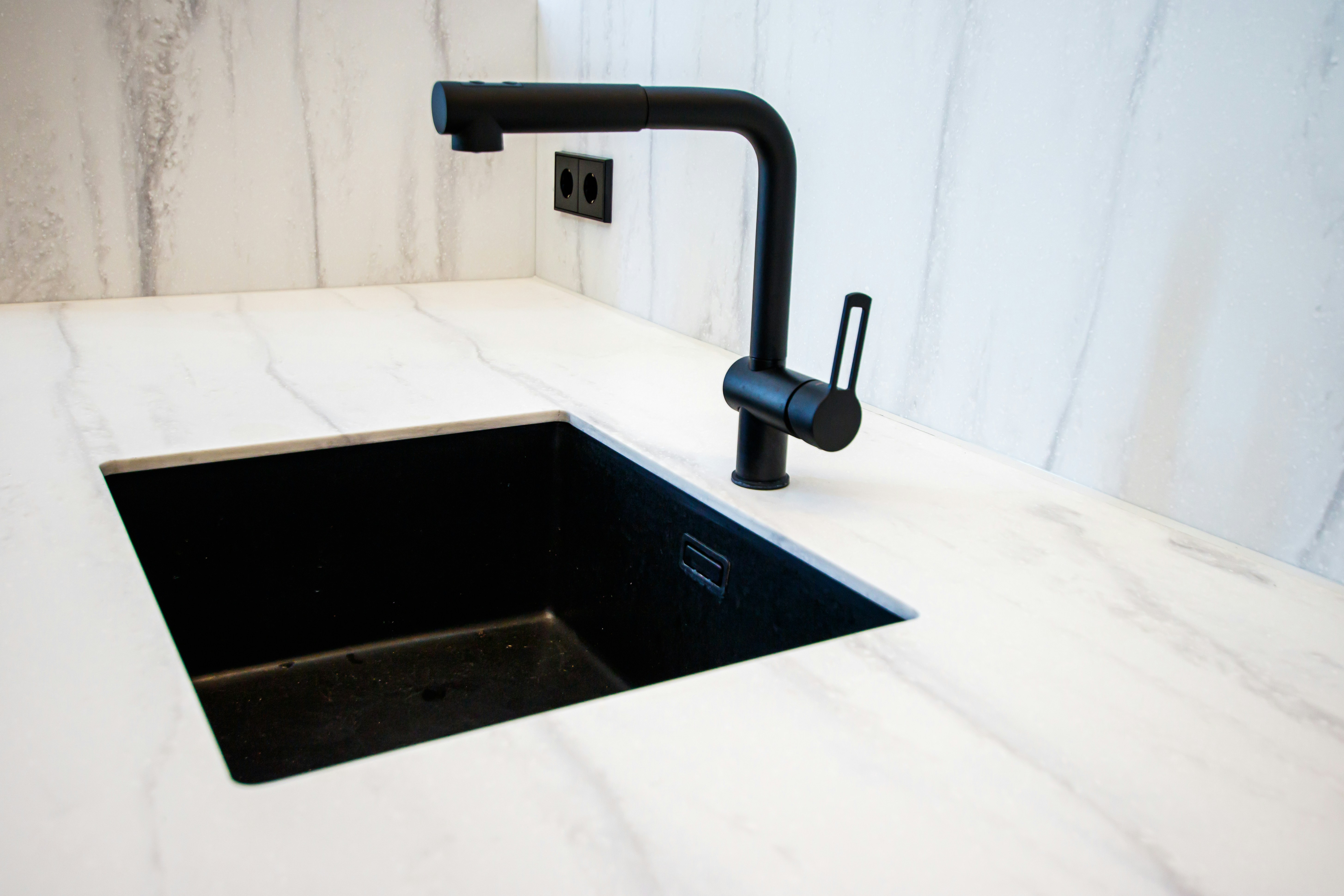
The fundamental difference lies in how the sink sits in relation to the countertop. A top-mount sink has a visible rim that rests on top of the counter, supporting its weight. In contrast, an undermount sink is installed from below, with the countertop material forming a clean edge that drops directly into the basin.
This distinction creates two very different looks:
- Top Mount: Offers a more traditional appearance. The visible rim creates a clear border between the sink and the counter.
- Undermount: Provides a sleek, modern, and seamless aesthetic that is popular in high-end and contemporary kitchen designs. It allows the countertop material to be the star.
Functionally, this difference primarily affects cleaning and installation.
The Seamless Look and Easy Cleaning of Undermount Commercial Kitchen Sinks
Undermount sinks are highly favored for their clean look and significant functional benefits, especially when it comes to hygiene and maintenance.
Advantages:
- Effortless Cleaning: The number one benefit of an undermount sink is the ease of cleaning. With no lip or rim to act as a barrier, you can wipe water, crumbs, and other food debris directly from the countertop into the sink. This prevents the buildup of grime and bacteria that often gets trapped around the edge of a top-mount sink.
- Sleek, Modern Aesthetic: The seamless transition from countertop to sink creates a clean, sophisticated, and minimalist appearance. This is particularly desirable in open-concept kitchens or establishments where customers can see the food prep areas.
- Maximizes Usable Counter Space: By eliminating the sink's rim, you gain a small amount of additional, fully functional counter space right up to the edge of the sink.
Disadvantages:
- More Complex Installation: Undermount sinks require more skill to install. They must be perfectly sealed and supported from below with clips and strong adhesive to handle the weight of the sink when full. Professional installation is highly recommended.
- Higher Cost: Both the sink itself and the labor for installation are typically more expensive than for top-mount models.
- Countertop Compatibility: This style is only suitable for solid-surface countertops like granite, quartz, or stainless steel. They cannot be installed with laminate countertops, as the exposed cut edge would be susceptible to water damage.
Traditional Appeal and Simpler Installation of Top Mount Commercial Kitchen Sinks
Top-mount, or drop-in, sinks have been the standard for decades and remain a practical and popular choice for many commercial applications due to their simplicity and cost-effectiveness.
Advantages:
- Easy and Affordable Installation: Installing a top-mount sink is a far simpler process. A hole is cut in the countertop, and the sink is "dropped" in, with its weight supported by the rim. This makes it a much faster and less expensive installation, even suitable for DIY projects.
- Protects Countertop Edges: The sink's rim covers the rough edge of the cutout, which can help protect more fragile countertop materials, like laminate, from chipping or water damage.
- Wide Compatibility: Top-mount sinks can be installed on virtually any type of countertop material, including laminate, which is a major advantage in budget-conscious projects.
Disadvantages:
- Cleaning Challenges: The primary drawback is the rim. This edge creates a crevice where food particles, grime, and water can collect, requiring diligent cleaning to prevent bacteria buildup. It is impossible to wipe debris directly from the counter into the sink.
- Less Modern Appearance: While functional, the visible rim can look dated compared to the seamless appearance of an undermount sink. It disrupts the smooth line of the countertop.
| Feature | Undermount Sink | Top Mount (Drop-In) Sink |
|---|---|---|
| Installation | Complex; requires professional installation. | Simple and fast; DIY-friendly. |
| Cost | Generally more expensive (sink and labor). | More affordable option. |
| Aesthetics | Sleek, modern, and seamless look. | Traditional appearance with a visible rim. |
| Cleaning | Very easy; debris can be wiped directly into the sink. | More difficult; rim traps dirt and grime. |
| Countertop Compatibility | Solid surfaces only (granite, quartz, steel, etc.). | Compatible with all materials, including laminate. |
Ultimately, the choice between an undermount and a top-mount sink depends on balancing your budget, aesthetic preferences, and the practical demands of your kitchen's cleaning protocols.