Understanding Household Sink Drain Outlet Sizes: A Global Analysis
- Share
- Issue Time
- Jan 7,2026
Summary
A three-compartment stainless steel sink for commercial kitchens, equipped with durable drainboards, designed for efficient assembly-line dishwashing.
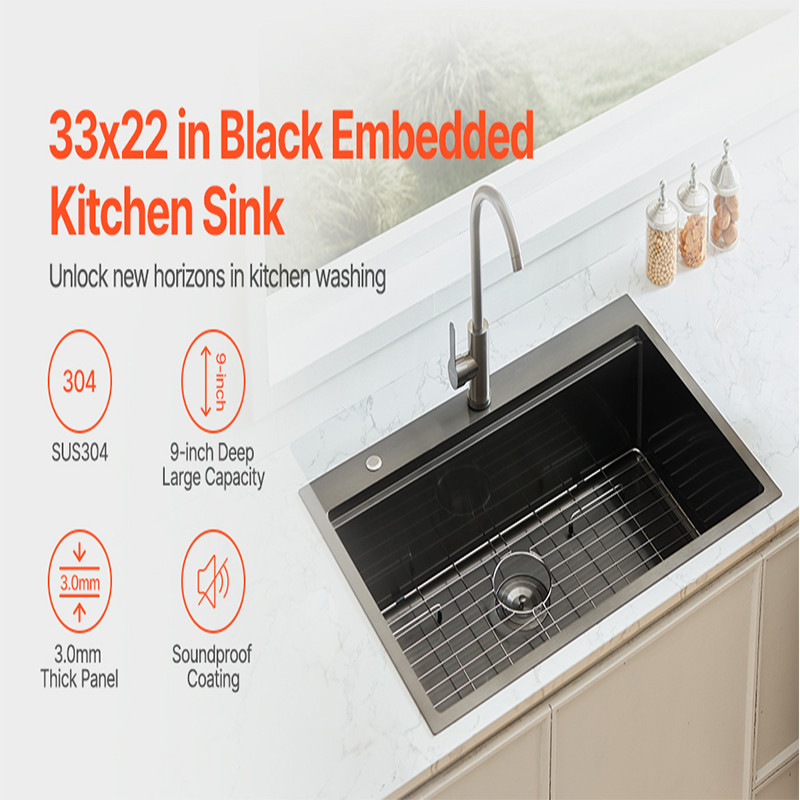
As homeowners, we often focus on the aesthetics of our sinks, from gleaming faucets to stylish basins. However, the unsung hero of any functional sink is a component that is frequently overlooked: the drain outlet. I've learned through experience that selecting the right drain size is absolutely crucial for preventing a cascade of plumbing headaches, from the frustration of slow-draining water and stubborn clogs to the potential for more serious leaks and water damage. This seemingly small detail can make a massive difference in the daily performance and long-term health of our homes' plumbing systems.
Join me as we embark on a comprehensive exploration of household sink drain outlet sizes across the globe. In this analysis, we will navigate the common dimensions you'll encounter, uncover the fascinating regional variations between countries, and provide practical, step-by-step techniques for measuring your own drains. My goal is to demystify the world of sink drains, empowering you with the knowledge and confidence to tackle any related plumbing project, whether it's a simple replacement or a full-scale renovation.
Key Takeaways
- Standard Sizes: The most common household sink drain sizes in North America are 1.25 inches for bathroom sinks, 1.5 inches for kitchen sinks, and 2 inches for high-capacity applications like utility or bar sinks.
- Global Variations: While North America primarily uses the imperial system (inches), Europe and many other parts of the world rely on the metric system (millimeters), with common sizes like 32mm and 40mm. This makes cross-regional compatibility a key consideration.
- Size Matters: The diameter of your drain pipe directly impacts its flow rate and ability to pass waste. Using an undersized drain can lead to frequent clogs, slow drainage, unpleasant gurgling sounds, and strain on your entire plumbing system.
- Accurate Measurement is Crucial: Before purchasing or installing any drain components, you must accurately measure the sink's drain opening and the existing plumbing pipe's diameter. Using calipers provides the most precise measurement.
- Adapters are Essential Tools: When connecting pipes of different sizes or systems (e.g., metric to imperial), adapters are necessary to create a secure, leak-proof seal. Always ensure the adapter is compatible with your pipe materials and thread types.
- Check Local Codes: Plumbing codes, which can vary by region, dictate the minimum drain sizes for different fixtures to ensure safety and functionality. Always consult your local building authority for specific requirements in your area.
A Global Analysis of Drain Outlet Sizes for Household Sinks in Different Countries: Common Dimensions We Encounter
Understanding the standard dimensions of sink drains is the first step toward mastering your home's plumbing. While there is a world of variation, a few key sizes appear consistently in residential settings. These dimensions are not arbitrary; they have been standardized over time to match the specific demands of each type of fixture.
The Standard Players: 1.25, 1.5, and 2 Inches
In many parts of the world, particularly North America, drain sizes are based on the imperial system. Three diameters have become the established standards for nearly all residential applications.
1.25-inch Drains: Often Found in Bathrooms
The 1.25-inch (or 1-1/4 inch) drain is the quintessential choice for residential bathroom sinks. This size is perfectly adequate for the demands of a lavatory, which primarily handles water from handwashing and brushing teeth, along with soap and toothpaste. It is not designed to handle solid food waste, so a smaller diameter is sufficient. Most bathroom sink drain openings are designed to accommodate this size, though you may also encounter 1.5-inch and 1 5/8-inch openings. The actual drain pipe connecting to the wall is typically 1.25 inches, creating a consistent path for wastewater.
1.5-inch Drains: The Kitchen Workhorse
Moving to the kitchen, the 1.5-inch (or 1-1/2 inch) drain is the undisputed champion. This larger diameter is essential to handle the higher volume of water and, more importantly, the food scraps, grease, and other debris that are a daily reality in any kitchen. While the drain opening in the sink itself is typically a standard 3.5 inches to accommodate a strainer basket or garbage disposal, the drain pipe connecting to the P-trap and the wall is almost always 1.5 inches. Most garbage disposals are designed to discharge into a 1.5-inch pipe, making this size critical for a properly functioning kitchen setup.
2-inch Drains: For Higher Capacity Needs
While less common in primary kitchen and bath sinks, the 2-inch drain is reserved for fixtures that need to handle a higher volume of water or potential debris. You will often find 2-inch drains used for:
- Laundry or Utility Sinks: These sinks often handle large volumes of water discharged from washing machines, as well as lint, dirt, and other solids. A 2-inch drain line is often required to prevent backups.
- High-Capacity Kitchens or Bar Sinks: In commercial settings or very busy residential kitchens with multiple basins, a 2-inch drain might be used to ensure rapid, clog-free drainage. Some plumbing codes, like the Uniform Plumbing Code (UPC), even recommend a 2-inch drain as the minimum for kitchen sinks to prevent clogs and ensure efficient flow.
- Showers: While not a sink, it's relevant to note that shower drains are commonly 2 inches in diameter to handle the high flow rate of water.
This larger diameter provides a significantly greater capacity for wastewater, making it a robust solution for demanding applications.
Why Size Matters: Preventing Problems and Ensuring Efficiency
Choosing the right size is not just about fitting parts together; it's about the fundamental performance of your sink. The diameter of the drain pipe directly impacts its ability to handle wastewater efficiently.
Preventing Clogs: A pipe that is too small for the fixture it serves is a clog waiting to happen. A 1.25-inch bathroom drain would quickly become overwhelmed by the food particles from a kitchen sink, leading to frequent blockages. Similarly, grease and oil from cooking can solidify and build up inside pipes, constricting flow. A properly sized drain ensures that water velocity is sufficient to carry away waste effectively.
Avoiding Slow Draining: Even if a clog doesn't form immediately, an undersized pipe will cause water to drain slowly, leaving frustrating standing water in your basin. This not only disrupts daily tasks but can also be a symptom of a larger issue. Sometimes slow draining is caused by a build-up of hair and soap scum, which an appropriately sized pipe can better manage.
Eliminating Gurgling and Odors: Have you ever heard a gurgling sound coming from your drain? This is often the sound of trapped air bubbles trying to escape through the water in your P-trap. This can happen when a partial clog restricts flow or, more critically, when the plumbing vent system is blocked or improperly sized. An undersized drain contributes to this problem by creating negative pressure that pulls air from wherever it can, leading to gurgling and even siphoning the water out of the P-trap, which in turn allows unpleasant sewer gases to enter your home.
Ultimately, matching the drain size to the sink's purpose is a foundational principle of good plumbing that ensures a quiet, fast, and reliable system.
Regional Variations: A Global Analysis of Drain Outlet Sizes for Household Sinks in Different Countries
As with many construction standards, sink drain sizes are not universal. The world is largely divided between two measurement systems: the imperial system (inches) and the metric system (millimeters). This divergence is a critical factor for anyone importing fixtures or dealing with plumbing in different regions.
North America's Imperial System: Inches Reign Supreme
In the United States and Canada, plumbing standards are dominated by the imperial system. This means that pipes, fittings, and drain outlets are almost universally measured and sold in inches. As we've discussed, the standard sizes are 1.25", 1.5", and 2". While Canada has officially adopted the metric system for many purposes, the construction and plumbing trades continue to heavily rely on imperial units, largely due to deep economic ties and supply chain integration with the United States.
A critical, often overlooked detail is the thread standard. North America uses National Pipe Taper (NPT) threads. NPT threads have a 60-degree angle and are tapered, meaning they get slightly narrower along their length. This taper is designed to create a seal through a wedging action when tightened, but it almost always requires a sealant like Teflon tape or pipe dope to be fully leak-proof. Trying to connect an NPT fitting with a non-NPT fitting is a recipe for leaks and stripped threads.
Europe's Metric Dominance: Millimeters Take Over
Across the Atlantic in Europe, the metric system is the standard. This shift from inches to millimeters is more than just a conversion; it involves a different set of standard sizes and thread types.
Common metric drain sizes include:
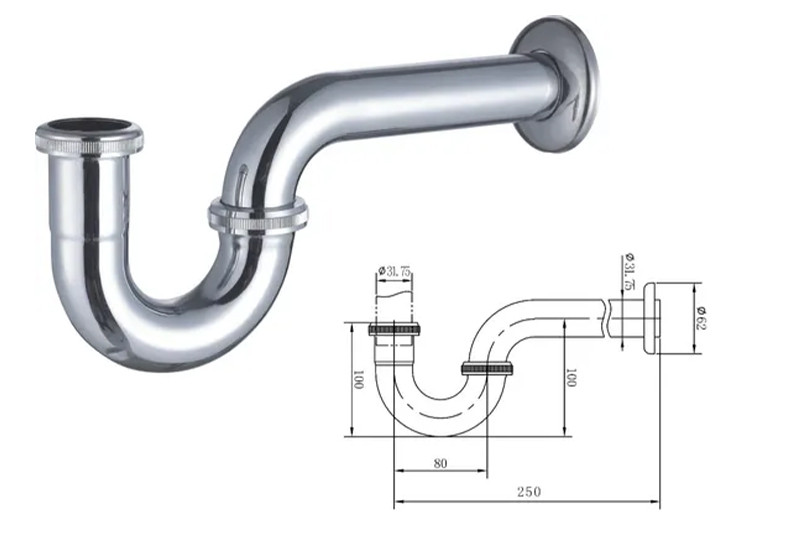
- 32mm: This is the typical size for bathroom basins and is the metric equivalent of the 1.25-inch drain.
- 40mm: This is the standard for kitchen sinks, baths, and showers in the UK and much of Europe, serving the same role as the 1.5-inch drain in North America.
- 50mm: Used for commercial applications or where multiple waste pipes are joined together, this is similar to the 2-inch standard.
The thread standard in Europe and many other parts of the world is British Standard Pipe (BSP). BSP threads have a 55-degree angle with rounded peaks and valleys. BSP comes in two main variants:
- BSPT (British Standard Pipe Taper): Similar to NPT, the thread is tapered to help form a seal.
- BSPP (British Standard Pipe Parallel): The threads are straight (parallel) and require a bonded washer or O-ring to create a pressure-tight seal.
Because of the differences in thread angle and shape, NPT and BSP threads are not compatible. Attempting to join them will result in leaks and damage to the fittings.
| Location | Bathroom Sink Drain | Kitchen Sink Drain | Thread Standard |
|---|---|---|---|
| North America (USA/Canada) | 1.25 inches | 1.5 inches | NPT (60° angle) |
| Europe (UK, etc.) | 32mm (approx. 1.25") | 40mm (approx. 1.5") | BSP (55° angle) |
Asia and Australia: A Mix of Standards and Evolving Norms
The plumbing landscape in Asia and Australia is a fascinating mosaic of different standards, reflecting historical ties, regional trade, and modern harmonization efforts.
Australia and New Zealand: Plumbing in these countries is governed by the joint AS/NZS 3500 series of standards. While they use the metric system for measurements, the actual drain sizes are often influenced by British standards. For instance, bathroom vanities might use a 1.5-inch plug, while kitchen sinks often use a 1.75-inch plug, with waste pipes typically being 40mm or 50mm. This creates a hybrid environment where both metric and imperial-derived sizes coexist.
China and Southeast Asia: These regions have largely standardized on the metric system. Bathroom basins will typically use 32mm or 40mm drain pipes, while kitchens predominantly feature 40mm or 50mm pipes. As infrastructure and housing development continue to grow rapidly in these areas, there is a strong trend towards modern, harmonized metric standards for new construction.
Japan: Japan has its own highly developed set of regulations, known as the Japanese Industrial Standards (JIS). While metric, Japanese plumbing has unique characteristics. For example, kitchen sinks often feature a very large drain opening (around 14cm) that leads to a deep, integrated strainer basket designed to catch nearly all food debris before it enters the pipework. This design reflects a different approach to waste management at the sink level.
This mix of standards means that one must be incredibly diligent when sourcing or installing plumbing fixtures in these diverse regions, as what is "standard" can change dramatically from one country to the next.
Understanding Local Plumbing Codes and Regulations
Beyond the regional "common practices," virtually all plumbing installations are governed by legally-binding codes. These codes are not mere suggestions; they are regulations designed to ensure the health, safety, and functionality of a building's plumbing system.
In the United States, most local codes are based on one of two model codes:
- International Plumbing Code (IPC): This code sets minimum requirements for plumbing systems. For example, the 2021 IPC specifies that kitchen sinks, whether with a food waste disposer or not, should correspond to a 2 DFU (Drainage Fixture Unit) load and have a minimum trap size of 1.5 inches. Sinks in general are required to have waste outlets of at least 1.5 inches.
- Uniform Plumbing Code (UPC): Often used in western states, the UPC also provides detailed requirements for sizing and installation. The UPC requires fixtures to be trapped by a liquid seal to prevent sewer gas from entering a building. It also has specific rules, such as requiring commercial food waste disposers to have a separate trap.
Why are these codes so important?
- Public Health: The primary goal of plumbing codes is to protect public health. They ensure that wastewater is removed safely and that the potable water supply is not contaminated.
- Safety: Improper installations can lead to more than just leaks. Water leaking near electrical wiring can create a deadly shock hazard. Codes mandate proper pipe support, fixture clearance, and materials to prevent system failures.
- Legal & Financial Consequences: Performing plumbing work that violates local codes can result in significant penalties. This can include fines, stop-work orders, and the costly requirement to tear out and redo the work correctly. Non-compliant work can also devalue a property and create legal liabilities.
Before starting any plumbing project, it is absolutely essential to consult your local building department or a licensed plumber to understand the specific codes and permit requirements in your jurisdiction. The national standards provide a baseline, but the local codes are the law you must follow.
How to Measure Your Sink Drain Outlet: A Critical Step in Our Analysis of Drain Outlet Sizes for Household Sinks in Different Countries
Theory is useful, but at some point, you need to get your hands dirty. Accurately measuring your existing sink drain is the most critical step before you buy any replacement parts. A mistake here can lead to multiple trips to the hardware store and immense frustration. I've learned that taking a few extra moments to measure correctly saves hours of trouble later.
Tools I Use for Accurate Measurement
You don't need a truck full of specialized equipment for this task. In fact, a few simple household tools are usually sufficient.
- Tape Measure or Ruler: A standard tape measure is the most common tool for this job. While it can be tricky to get a perfectly accurate reading on a curved object, it's usually good enough to distinguish between a 1.25-inch and 1.5-inch pipe.
- Digital or Vernier Calipers: For a truly precise measurement, nothing beats a set of calipers. This tool has jaws that clamp around the outside of the pipe (for outer diameter) or expand within the pipe's opening (for inner diameter). Digital calipers are especially user-friendly, as they provide an exact reading on an LCD screen, eliminating any guesswork.
- Diameter Tape (Pi Tape): This is a specialty flexible tape designed to measure the outer diameter of a cylindrical object. You wrap it around the pipe's circumference, and the scale on the tape directly shows the diameter, having already done the circumference-to-diameter calculation for you.
For most homeowners, a good tape measure used carefully will do the trick. However, if you have calipers, you can be absolutely certain of your measurements.
Step-by-Step Guide to Internal and External Diameter Measurement
To avoid any confusion, it's important to understand what you're measuring. You'll typically need two key dimensions: the diameter of the hole in the sink itself, and the diameter of the drain pipe you're connecting to.
1. Measuring the Sink Drain Opening:
- First, clear the sink and remove any pop-up stopper or strainer basket that might be in the way.
- Take your tape measure or calipers and measure the diameter of the hole directly in the sink basin. This is often a standard size, like 3.5 inches for a kitchen sink, to accommodate the drain assembly flange. For a bathroom sink, this opening is typically smaller.
2. Measuring the Existing Drain Pipe (Outer Diameter):
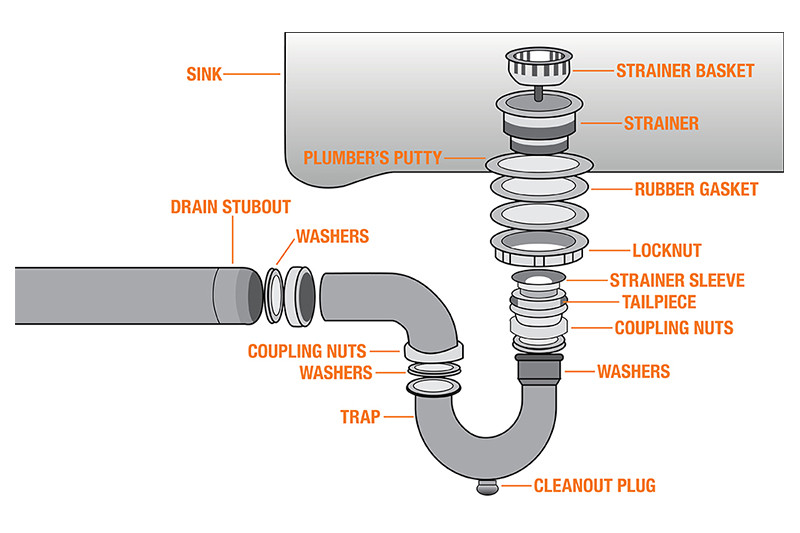
- Look under the sink at the vertical pipe coming down from the sink drain assembly (this is called the tailpiece) and the P-trap assembly.
- Using Calipers (Most Accurate): Open the large outer jaws of the caliper, place them around the pipe, and close them until they make firm contact. Read the measurement on the display or scale. This gives you the Outer Diameter (OD).
- Using a Tape Measure: Hold your tape measure across the widest part of the pipe. It can be difficult to find the exact center, but do your best to measure from outer edge to outer edge. Double-check your measurement a couple of times to ensure consistency.
It is the Outer Diameter of the drain pipe that will correspond to the nominal pipe size (e.g., 1.5-inch pipe).
Consulting Product Specifications for Confirmation
If you're ever in doubt after measuring, the most reliable source of truth is the product's own documentation. Here's how to track it down:
- Look for a Model Number: Many sinks have a model number printed, stamped, or attached via a label on the underside of the fixture. It might begin with a letter like "K" for kitchen sinks and is often near the dimensions or on a separate sticker. For faucets, the model number might be on a tag attached to one of the supply lines under the sink.
- Check the Original Packaging or Manual: If you happen to have the original box or user manual, the specifications, including the required drain outlet size, will be listed there. This is the most direct way to confirm the manufacturer's intended size.
- Search Online: Once you have a brand name or model number, a quick search online will almost always lead you to the manufacturer's website or a plumbing supply site. These sites host product specification sheets (or "spec sheets") which are detailed documents providing all dimensions, including the precise drain size required.
- Take a Picture: If you can't find any numbers, take clear photos of the sink and its underside. You can use these images to get help from staff at a plumbing supply store or even use online forums where experts can often identify a fixture by its design.
By combining your physical measurements with the official product specs, you can be 100% confident that you are purchasing the correct parts for the job.
Adapters and Converters: Bridging the Gap in Our Analysis of Drain Outlet Sizes for Household Sinks in Different Countries
In a perfect world, every sink would connect seamlessly to the existing plumbing. In reality, we often encounter mismatches, especially when mixing fixtures and pipes from different regions or eras. This is where adapters and converters become indispensable tools for any plumber or DIY enthusiast.
When and Why I Might Need an Adapter
An adapter is most commonly needed in one of the following scenarios:
- Connecting Different Sizes: This is the most frequent use. You might be installing a new 1.25-inch bathroom sink drain to existing 1.5-inch wall plumbing, or upgrading a kitchen sink and needing to step up the pipe size. A reducer fitting or reducing coupling is used to create a secure connection between two pipes of different diameters.
- Connecting Different Systems (Metric to Imperial): If you've purchased a beautiful European sink with a 40mm drain outlet but live in the U.S. where the wall pipe is 1.5 inches, you'll need a special metric-to-imperial adapter. These fittings are specifically designed to bridge the gap between the two different measurement standards and often their different thread types (BSP vs. NPT).
- Connecting Different Materials: Sometimes you need to connect pipes made of different materials, such as PVC to ABS, or plastic to an older metal pipe. Flexible adapters, often called Fernco couplings, are excellent for this purpose. They use a rubber-like sleeve with stainless steel clamps to create a tight seal between dissimilar materials.
- Connecting a Trap to the Drain Pipe: The fitting used to connect the P-trap assembly to the drain pipe extending from the wall is called a trap adapter. These adapters are designed to create a leak-proof seal, often using a slip joint with a compression nut and washer. They are available in sizes to match the common drain pipe dimensions.
Without the correct adapter, you risk creating a weak, leaking joint that can cause water damage and other plumbing headaches.
Ensuring Compatibility and Compliance
Simply finding an adapter that seems to fit is not enough. To ensure a professional, long-lasting installation, you must confirm both component compatibility and code compliance.
Thread Compatibility: As discussed, NPT and BSP threads are not interchangeable. Forcing them together will damage the threads and create a leak. If you are connecting metric (likely BSP) and imperial (likely NPT) systems, you must use an adapter specifically designed for this conversion. The angles of the threads are different (55° for BSP, 60° for NPT), and they will not seal properly otherwise.
Sealing Method: The type of seal is critical. Tapered threads (NPT and BSPT) create a seal through the wedging of the threads themselves but almost always require a sealant for a guaranteed leak-proof connection. PTFE tape (Teflon tape) or a pipe dope compound should be applied to the male threads. Parallel threads (BSPP), however, rely on a gasket or O-ring to create the seal. Using sealant on a BSPP fitting that requires a gasket will not work and may even prevent a proper seal.
Material Compatibility: Ensure the adapter material is compatible with the pipes you're connecting. While less of an issue with modern PVC and ABS, connecting different types of metal pipes (e.g., copper to galvanized steel) without a proper dielectric union can lead to galvanic corrosion, where one metal corrodes rapidly, leading to leaks and pipe failure.
Code Compliance: Not all fittings are approved for all uses. Local plumbing codes have strict rules about the types of fittings that can be used. For example, some flexible "rubber" couplings are only permitted for below-grade (underground) applications, while others with a metal shield may be allowed above grade. Always check that the adapter you plan to use is approved by your local plumbing authority for your specific application to avoid a failed inspection and costly rework.
Taking these steps ensures your connection is not just functional, but also safe, durable, and fully compliant with professional standards.
Types of Adapters and Their Applications
The world of plumbing adapters is diverse, with each type serving a specific function. Here are the most common ones you'll encounter for sink drains:
Slip-Joint Adapters (Trap Adapters): These are the standard fittings for connecting a P-trap to the drain pipe. They use a compression nut and a beveled plastic or rubber washer to create a seal. Their primary advantage is that they allow for easy adjustment and removal without needing to cut pipes, making them ideal for under-sink plumbing where access can be tight.
Threaded Adapters: These adapters have threads (male MIPT or female FIPT) that screw onto a corresponding threaded pipe. They create a strong, rigid connection and are common where a permanent, non-adjustable connection is desired. A sealant is almost always required to ensure a leak-proof joint.
Reducer Couplings and Bushings: These fittings are used to connect pipes of two different sizes.
- Reducer Coupling: This is a single fitting with two different-sized ends (e.g., 1.5-inch on one side, 1.25-inch on the other). It directly joins two different pipes.
- Reducer Bushing: This fitting is designed to fit inside another larger fitting to reduce its size. For example, you would place a 1.5" x 1.25" bushing inside a standard 1.5-inch coupling or elbow to allow it to accept a 1.25-inch pipe. Bushings are useful for saving space in tight configurations.
Flexible Couplings (Fernco-style): These are rubber or elastomeric PVC sleeves with stainless steel band clamps. Their main advantage is versatility. They can connect pipes of slightly different outside diameters and are excellent for joining dissimilar materials like plastic to cast iron or copper. They are also great for repairs and accommodating slight misalignments in the pipework.
Metric-to-Imperial Converters: These specialized adapters are essential for global projects. One end is designed to fit a metric pipe size (e.g., 40mm) and may use a BSP thread, while the other end fits an imperial pipe size (e.g., 1.5 inches) with an NPT thread. They are the only correct way to join pipes from these two different systems.
Having the right adapter on hand turns a potentially frustrating mismatch into a simple and secure connection.
The Importance of Correct Sizing: A Concluding Analysis of Drain Outlet Sizes for Household Sinks in Different Countries
After this global journey analyzing sink drain sizes, one truth stands out: correct sizing is not a trivial detail but the very foundation of a healthy, functional plumbing system. From preventing everyday annoyances to avoiding catastrophic failures, the diameter of your drain pipe has far-reaching implications for your home.
Preventing Leaks and Ensuring Efficient Drainage
The selection of a correctly sized drain outlet is the first and most critical line of defense against leaks and poor performance. The diameter of a drain pipe plays a fundamental role in its overall efficiency. A properly sized pipe ensures that wastewater is carried away quickly, creating enough velocity to scour the pipes of light debris and prevent solids from settling. When a pipe is too small, water flow is restricted, leading to slow drainage, backups, and an increased likelihood of clogs. This can cause water to pool in and around the sink, and if connections are not perfectly sealed, this standing water can eventually find a way to leak, causing water damage to cabinets and flooring.
Conversely, while it might seem that a larger pipe is always better, that isn't necessarily true. An overly large pipe can reduce the flow velocity of the water, which can prevent it from effectively carrying away solid waste, leading to sediment buildup over time. The key is to match the drain size to the fixture's expected output, ensuring a balanced and efficient system.
Component Compatibility and Longevity of Your Plumbing System
A plumbing system is a network of interconnected parts. The longevity and performance of the entire system depend on the compatibility of each individual component. Using the correct drain size ensures that every part of the sink's drainage assembly—from the strainer and tailpiece to the P-trap and wall connection—is designed to work in harmony.
When components are mismatched (e.g., using adapters to force a 1.25-inch assembly into a 1.5-inch system), you create points of turbulence and areas where debris can easily accumulate. This puts unnecessary stress on joints and can accelerate wear and tear. Furthermore, connecting dissimilar metals, such as a brass fitting to a galvanized steel pipe without a proper dielectric union, can cause galvanic corrosion. This electrochemical reaction can rapidly degrade the less noble metal, leading to premature pipe failure and leaks.
By ensuring every component is correctly sized and made of a compatible material, you create a robust, seamless system. This not only guarantees efficient performance day-to-day but also significantly extends the lifespan of your plumbing, saving you from costly repairs and replacements down the road.
Meeting Plumbing Codes for Safety and Functionality
Ultimately, adhering to plumbing codes is non-negotiable. These regulations exist for a critical reason: to protect public health and safety. Codes dictate the minimum acceptable drain sizes for different fixtures to ensure functionality and prevent hazardous conditions. For example, codes specify pipe sizes to handle expected water flow, reducing the risk of backups that can cause property damage and introduce contaminated water into your home.
Compliance with these codes ensures:
- Safety: Preventing the backflow of sewer gases, which can be harmful or even explosive, and ensuring the clean water supply remains uncontaminated.
- Functionality: mandating appropriate pipe slopes (typically 1/4 inch per foot) and venting to ensure gravity can do its job, allowing water and waste to flow away smoothly.
- Legality: Ensuring that your home meets legal building requirements. Work done without regard for codes can result in fines, failed inspections, and difficulty when it comes time to sell the property.
By choosing the correct sink drain outlet size, you are not just making a technical choice; you are taking a crucial step in upholding the safety, integrity, and legal compliance of your home's plumbing system.
Frequently Asked Questions (FAQs)
1. What is the main difference between a kitchen sink drain and a bathroom sink drain? The primary difference is the size. Kitchen sinks typically use a 1.5-inch drain pipe to handle a higher volume of water and food debris, while bathroom sinks commonly use a smaller 1.25-inch drain suitable for water, soap, and toothpaste.
2. Can I use a smaller drain pipe than my sink's outlet requires? This is strongly discouraged. Using an undersized drain pipe will restrict water flow, leading to slow drainage, frequent clogs, gurgling sounds, and potential backups. Always use the pipe size recommended for the fixture and by local plumbing codes.
3. How do I know if my plumbing is metric or imperial? The most reliable way is to measure the outer diameter of your pipes. If the sizes align with 1.25, 1.5, or 2 inches, you have an imperial system (common in North America). If they measure 32mm, 40mm, or 50mm, you likely have a metric system (common in Europe and other regions). Geography is a big clue, but in homes with imported fixtures, measuring is the only way to be certain.
4. Is installing a sink drain adapter a difficult DIY project? For many common scenarios, like connecting a P-trap with a slip-joint adapter or using a flexible coupling, the process is straightforward for a confident DIYer. However, if the project involves solvent-welding PVC/ABS or converting between thread types (NPT to BSP), it requires more precision. If you are ever unsure, it is always best to consult a licensed plumber to ensure a leak-free and code-compliant connection.
5. Why does my sink drain make a gurgling sound? A gurgling sound is usually caused by trapped air in the drain line. This can be a sign of a partial clog that is disrupting water flow or, more seriously, an issue with the plumbing's vent system. A blocked vent creates negative pressure, which can siphon water from the P-trap and allow sewer gases into your home.
Conclusion
In conclusion, my deep dive into the world of household sink drain outlet sizes has reinforced its profound importance. Correct sizing is far more than just a minor technical detail; it is a fundamental pillar of a safe, efficient, and leak-free plumbing system. By investing a small amount of time to accurately measure your fixtures, understand regional standards, and choose the right components—including adapters when necessary—you are proactively preventing costly future problems. This knowledge empowers you to enjoy the peace of mind that comes with a well-functioning home. I hope this comprehensive guide serves you well in all your future plumbing endeavors.
Ultimately, this global analysis of drain outlet sizes reveals that while the specifics may vary from imperial to metric, the core principles remain constant. The success of any plumbing installation, regardless of location, hinges on accurate sizing, component compatibility, and adherence to local codes. I encourage you to apply this knowledge to ensure your home's plumbing is not just functional, but built to last, providing safety and reliability for years to come. Please feel free to share this article or leave your thoughts below to help others in their plumbing journey.