Understanding Stainless Steel for Outdoor Sinks: 304 vs 316 Explained
- Share
- Issue Time
- Feb 8,2026
Summary
Choosing between 304 and 316 stainless steel for your outdoor sink? Learn the key differences in corrosion resistance, cost, and ideal use cases—coastal vs inland—to make a durable, long-lasting choice.
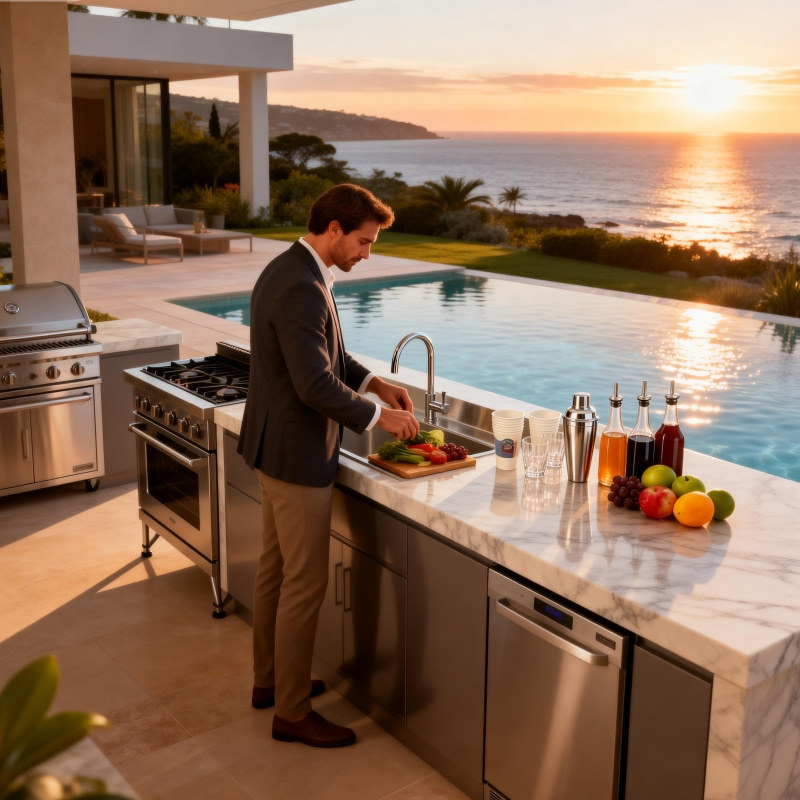
When planning your dream outdoor kitchen, you'll inevitably encounter a crucial decision: which grade of stainless steel is best for your outdoor sink? As a designer focused on creating durable and beautiful outdoor spaces, I often guide clients through the nuances of 304 and 316 stainless steel. Outdoor environments present unique challenges for kitchen components, from rain and humidity to salt spray and extreme temperatures. Choosing the right material for your stainless steel outdoor sinks isn't just about aesthetics; it's about long-term resilience against rust, corrosion, and wear.
At Samsink, we specialize in high-quality stainless steel sinks, and we understand that optimal material selection is key to performance and longevity. Let's delve into the specifics of 304 versus 316 stainless steel to help you make an informed choice for your outdoor oasis, whether you need a full-featured outdoor kitchen sink or a practical stainless steel garden sink.
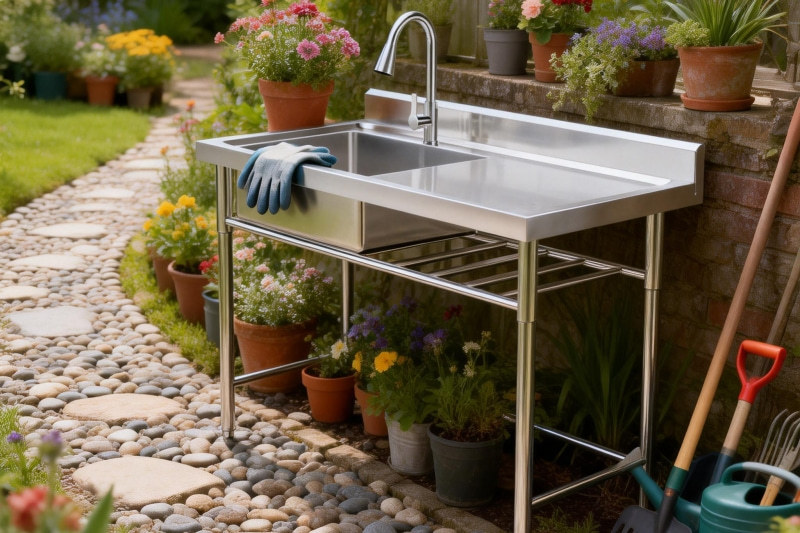
The Enduring Appeal of 304 Stainless Steel for Outdoor Sinks
Type 304 stainless steel is often hailed as the industry standard, and for good reason. It represents a fantastic combination of performance, aesthetics, and value, making it the most widely used grade of stainless steel across the globe. For many homeowners, a 304 stainless steel outdoor kitchen sink provides the perfect balance of properties needed for a beautiful and lasting installation.
Composition and Core Characteristics of 304 Stainless Steel Outdoor Sinks
To understand why 304 is so popular, we need to look at its chemical makeup. This austenitic stainless steel alloy is defined by its specific blend of elements, which impart its signature strength and corrosion resistance.
Chromium, Nickel, and Corrosion Resistance
The key to 304 stainless steel's defensive capabilities lies in its composition, which typically includes about 18% chromium and 8% nickel. When exposed to oxygen, the chromium forms a thin, invisible, and passive layer of chromium oxide on the surface of the steel. This passive layer is what protects the underlying iron from rusting. If the surface is scratched, the layer quickly reforms, effectively "healing" itself and continuing to provide protection. The nickel content enhances this corrosion resistance, particularly against certain acids, while also improving the steel's formability and toughness, making it easier to shape into complex designs like a sophisticated stainless steel outdoor kitchen sink.
Versatility and Common Applications Beyond Your Outdoor Stainless Steel Sink
The properties of 304 stainless steel make it incredibly versatile. Its popularity isn't limited to kitchens; it's a foundational material in numerous industries. You will find it in everything from food processing equipment and dairy storage to architectural paneling and automotive trim. Its hygienic properties and ease of cleaning make it a top choice for commercial kitchens, hospitals, and pharmaceutical settings. This widespread use is a testament to its reliability and proven performance, giving you confidence when choosing it for a vital component like an outdoor sink.
Why 304 Stainless Steel Outdoor Sinks Are a Popular Choice
For the majority of outdoor kitchen projects, 304 stainless steel hits the sweet spot. It offers a robust solution that can withstand typical environmental challenges without the premium cost associated with higher grades.
Balancing Durability and Affordability for a Stainless Steel Outdoor Sink
One of the most compelling reasons to choose a 304 stainless steel outdoor sink is its excellent cost-to-performance ratio. It provides substantial corrosion resistance and durability that is more than adequate for most residential settings. While it is more susceptible to corrosion from chlorides (like salt) than its 316 counterpart, it holds up exceptionally well in environments that are not exposed to coastal salt spray or de-icing salts. This makes it a highly practical and budget-friendly choice that doesn't compromise on quality for the average backyard setup.
Ease of Maintenance for Your 304 Outdoor Stainless Steel Sink
Maintaining the lustrous appearance of a 304 stainless steel sink is straightforward. Regular cleaning with mild soap and water is typically all that's needed to remove dirt and grime. For more stubborn spots, a non-abrasive cleaner and a soft cloth can be used. Routine cleaning is vital as it removes surface deposits that could potentially compromise the passive layer and lead to staining or corrosion over time. With minimal effort, a 304 outdoor sink can maintain its beauty and functionality for many years, making it a low-maintenance and high-reward investment.
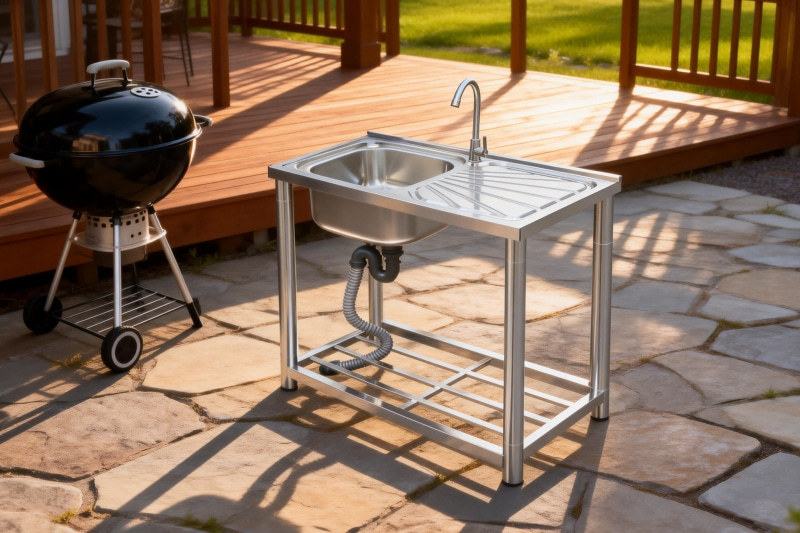
Unveiling 316 Marine-Grade Stainless Steel for Outdoor Sinks
When an outdoor kitchen project demands the highest level of corrosion resistance, 316 stainless steel steps into the spotlight. Often referred to as "marine-grade," this material is engineered for survival in the harshest conditions, offering a significant upgrade in durability for specific applications.
The Molybdenum Advantage in 316 Stainless Steel Outdoor Sinks
The primary difference between 304 and 316 stainless steel is a single, crucial element: molybdenum. The addition of approximately 2-3% molybdenum to the alloy's composition dramatically enhances its ability to resist corrosion, especially from chlorides and other industrial solvents.
Enhanced Resistance to Chlorides and Saltwater for Your Outdoor Stainless Steel Sink
The inclusion of molybdenum gives 316 stainless steel superior resistance to pitting and crevice corrosion, particularly in environments rich with chlorides. This is why it earned the "marine-grade" moniker. Salt spray from the ocean, salty air in coastal regions, and runoff from de-icing salts used on patios and walkways can all accelerate corrosion in standard stainless steel. Molybdenum strengthens the passive chromium-oxide layer, making it far more robust and resilient against these specific types of attacks. An outdoor sink made from 316 stainless steel is therefore the undisputed champion for coastal homes or areas with high salinity.
Superior Performance in Extreme Environments with 316 Outdoor Stainless Steel Sinks
Beyond coastal areas, 316 stainless steel is the preferred material for environments with high pollution or exposure to industrial chemicals. The enhanced corrosion resistance also makes it ideal for areas that experience heavy use of cleaning agents or are located near swimming pools where chlorine exposure is a concern. This level of durability ensures that even in the most challenging settings, a 316 stainless steel outdoor utility sink will resist staining and degradation, offering peace of mind and preserving the sink’s pristine appearance for the long haul.
Considerations for Investing in a 316 Stainless Steel Outdoor Sink
While the performance benefits are clear, choosing a 316 stainless steel sink involves weighing its premium cost against its long-term advantages.
Higher Cost vs. Long-Term Value for Premium Outdoor Stainless Steel Sinks
The addition of molybdenum and often a higher nickel content makes 316 stainless steel more expensive to produce than 304. This results in a higher purchase price for a 316 outdoor sink. However, this upfront cost should be viewed as an investment in longevity. In a corrosive environment, a 304 sink might show signs of pitting or rust over time, potentially requiring replacement. A 316 sink, in the same environment, is far more likely to remain pristine for its entire lifespan. This long-term value can make the initial higher cost a worthwhile expenditure, preventing future replacement costs and maintenance headaches.
Ideal Scenarios for a Marine-Grade Stainless Steel Outdoor Sink
Investing in a 316 stainless steel outdoor sink is a strategic decision. It is the ideal choice for:
- Coastal Properties: Homes located within a few miles of the ocean where salt is present in the air.
- Seaside and Lakeside Docks: Perfect for a fish cleaning station or an outdoor bar sink near saltwater or brackish water.
- ** poolside Cabanas:** Resists corrosion from splashed chlorinated water.
- Regions with Cold Winters: Areas where de-icing salts are frequently used on patios, driveways, and surrounding surfaces.
- High-Pollution Urban Areas: Locations with significant industrial air pollution.
In these scenarios, the "insurance policy" provided by 316's superior corrosion resistance is invaluable.
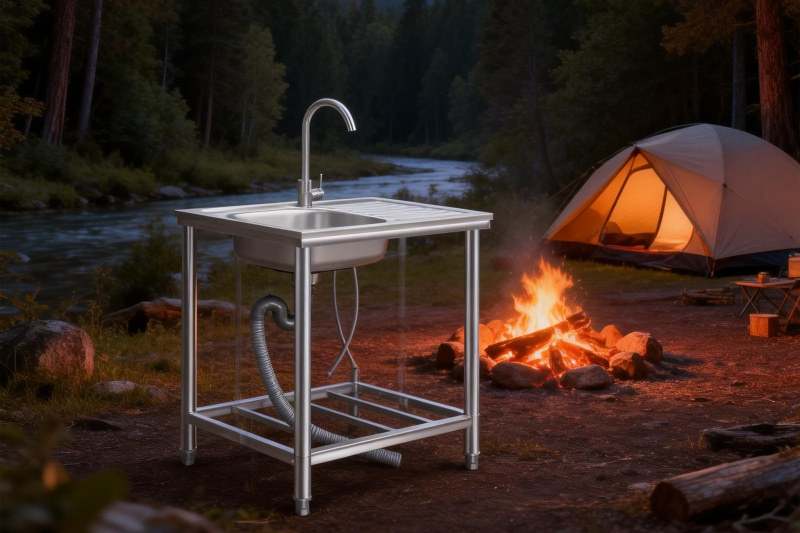
304 vs. 316 Stainless Steel Outdoor Sinks: Making the Right Choice
Now that we've explored the individual characteristics of both 304 and 316 stainless steel, it's time for a direct comparison to help you make the final decision for your outdoor kitchen or utility space. The right choice hinges on understanding the key differences and how they apply to your specific situation.
Key Distinctions Between 304 and 316 Stainless Steel for an Outdoor Sink
While they may look nearly identical to the naked eye, their performance under pressure is what sets them apart. These differences all stem from their unique chemical compositions.
Compositional Differences and Their Impact on Outdoor Stainless Steel Sinks
As we've touched upon, the defining difference is molybdenum. Type 304 contains 18% chromium and 8% nickel, while Type 316 contains 16-18% chromium, 10-14% nickel, and 2-3% molybdenum. This small addition of molybdenum profoundly enhances the steel's ability to form a stable passive layer, particularly in the presence of chlorides. The increased nickel content in 316 also contributes to its improved overall corrosion resistance and stability.
Here is a quick reference table to summarize the key differences:
| Feature | 304 Stainless Steel | 316 Stainless Steel |
|---|---|---|
| Composition | ~18% Chromium, ~8% Nickel | ~17% Chromium, ~10% Nickel, ~2% Molybdenum |
| Common Name | 18/8 Stainless Steel | Marine-Grade Stainless Steel |
| Corrosion Resistance | Good general resistance | Excellent resistance, especially to chlorides & acids |
| Best For | General use, inland environments | Coastal areas, poolside, high-salinity zones |
| Cost | More affordable | Higher upfront cost |
| Applications | Kitchen appliances, food prep, architecture | Marine hardware, chemical processing, medical implants |
Corrosion Resistance: A Critical Factor for Your Outdoor Stainless Steel Sink
This is the most critical distinction for an outdoor application. While 304 stainless steel offers excellent resistance to general atmospheric corrosion, it has a vulnerability: chloride ions. These ions can break down the passive layer in localized spots, leading to a form of corrosion known as "pitting," which appears as small, dark brown pits on the surface. For a stainless steel outdoor sink in a coastal area, this is a significant risk. The molybdenum in 316 stainless steel provides a robust defense against this specific type of attack, making it far superior for resisting pitting and crevice corrosion from saltwater, de-icing salts, and chlorine.
Heat Resistance and Strength Considerations for Outdoor Stainless Steel Sinks
Both 304 and 316 stainless steels offer good heat resistance and are not typically damaged by the temperature fluctuations seen in an outdoor kitchen, such as placing a hot pan in the sink. Their mechanical properties, such as tensile strength and hardness, are also very similar and more than sufficient for the demands of a residential sink. While there are minor differences, they are not significant enough to be a deciding factor for this application. The primary consideration remains, unequivocally, corrosion resistance.
Practical Advice for Selecting Your Samsink Outdoor Stainless Steel Sink
With the technical details covered, let's translate this into actionable advice for your purchase.
Assessing Your Environment: Coastal vs. Inland for Your Stainless Steel Outdoor Sink
The single most important question to ask yourself is: "What is my environment like?"
- Inland and Low-Salinity Areas: If you live more than 10-15 miles from a coast, do not use harsh de-icing salts near your sink, and are not next to a saltwater pool, a 304 stainless steel sink is almost always the perfect choice. It provides all the durability and corrosion resistance you need at a more accessible price point.
- Coastal and High-Salinity Areas: If you can smell salt in the air, live near the coast, have a saltwater pool, or use de-icing salts on your patio, investing in a 316 stainless steel sink is strongly recommended. The extra cost is a small price to pay for the peace of mind and long-term protection against rust and pitting.
Budgetary Implications and Long-Term Investment in a Stainless Steel Outdoor Sink
Your budget is always a key factor. A 316 stainless steel sink can cost 25% to 40% more than an equivalent 304 model. While it's tempting to opt for the lower-cost option, consider the potential cost of replacement. If you are in a borderline environment, choosing 316 is a smart long-term investment. If you are clearly in a non-corrosive environment, the extra cost of 316 provides no significant additional benefit, and your money is better saved or spent on other features.
The Importance of Regular Cleaning and Maintenance for All Outdoor Stainless Steel Sinks
Regardless of which grade you choose, maintenance is key. Neither 304 nor 316 is completely "stain-proof." They are "stain-less." Regular cleaning is essential to maintain the passive layer that protects the steel.
- Rinse Regularly: Rinse the sink with fresh water after each use, especially if it has been exposed to salty or acidic foods.
- Weekly Cleaning: Clean with a soft cloth, mild detergent, and water. Always wipe in the direction of the steel's grain.
- Avoid Abrasives: Do not use steel wool, abrasive pads, or harsh chemical cleaners like bleach, as they can damage the protective layer and lead to rust.
- Remove Deposits: Don't let wet sponges, cloths, or metal cans sit in the sink, as this can trap water and lead to surface rust or staining.
Proper care will ensure your sink, whether 304 or 316, remains a beautiful and functional centerpiece of your outdoor kitchen for decades.
Samsink's Commitment to Quality Outdoor Stainless Steel Sinks
At Samsink, we don't just sell sinks; we provide solutions built on a foundation of expertise and a commitment to quality. Understanding materials like 304 and 316 stainless steel is at the core of what we do, allowing us to guide our customers to the perfect product for their needs.
Our Expertise in Designing and Manufacturing Stainless Steel Outdoor Sinks
Our passion for stainless steel fabrication is backed by decades of hands-on experience and a deep understanding of how these materials perform in real-world environments.
Over 30 Years of Innovation in Stainless Steel Outdoor Sink Solutions
With over three decades in the industry, Samsink has honed its craft in manufacturing high-performance stainless steel products. This long history has been marked by continuous innovation, allowing us to refine our processes, source the best materials, and develop sink designs that are both beautiful and incredibly functional. Our experience means we can confidently stand behind every outdoor sink we produce, knowing it's built to last.
Customization Options for Your Perfect Stainless Steel Outdoor Sink
We recognize that every outdoor kitchen is unique. That's why we offer a range of customization options to help you create the perfect sink for your space. Whether you need a specific size, a custom drainboard configuration, or an integrated ice chest, our team can work with you to design a bespoke stainless steel sink that meets your exact specifications and enhances your outdoor living experience.
Durability and Aesthetics: The Samsink Promise for Every Stainless Steel Outdoor Sink
Our goal is to deliver a product that not only withstands the elements but also elevates the design of your outdoor space. We believe that durability and beauty should go hand-in-hand.
Meeting High Standards for Commercial and Residential Outdoor Stainless Steel Sinks
Samsink products are engineered to meet rigorous standards, making them suitable for both demanding commercial applications and high-end residential projects. We pay close attention to factors like gauge (thickness), finish, and weld quality to ensure every sink is robust and reliable. This commitment to excellence ensures that whether you're a homeowner or a professional chef, you're getting a product you can trust.
Sustainable and Long-Lasting Outdoor Stainless Steel Sinks from Samsink
Stainless steel is an inherently sustainable material. It is 100% recyclable and has an exceptionally long lifespan, reducing the need for replacements. By choosing a high-quality Samsink outdoor sink, you are making a sustainable choice, investing in a product that will not end up in a landfill after a few years. Our sinks are designed to be a permanent, beautiful feature of your home.

Frequently Asked Questions (FAQ)
1. In simple terms, what's the main difference between 304 and 316 stainless steel for a sink?
The simplest way to think about it is that 316 stainless steel has an added "shield" against salt and other harsh chemicals. Both are strong and rust-resistant, but the small amount of molybdenum in 316 gives it superior protection in coastal, poolside, or heavily salted environments. For most other locations, 304 provides excellent, all-around protection.
2. Is it a mistake to use a 304 stainless steel sink outdoors?
Absolutely not! For the vast majority of outdoor kitchens in inland areas, 304 stainless steel is the perfect material. It's durable, corrosion-resistant enough for rain and typical weather, and more affordable. It only becomes a potential issue when constantly exposed to high levels of chlorides, like salt spray from the ocean or de-icing salts.
3. How do I know if I live in a "corrosive" environment that needs a 316 sink?
A good rule of thumb is proximity to the coast. If you live within 10-15 miles of a saltwater body, you should strongly consider 316. Other indicators include having a saltwater swimming pool, using de-icing salts on your patio in the winter, or living in an area with high industrial air pollution. If none of these apply, you are likely in a low-corrosion environment where 304 is sufficient.
4. Will a 316 "marine-grade" outdoor sink ever rust?
While 316 stainless steel is exceptionally resistant to rust, it is not entirely "rust-proof." Under very harsh conditions and without proper maintenance, even 316 can show signs of corrosion. For instance, leaving metal objects like steel wool or cast-iron pans to sit in the sink can cause transferable "surface rust" spots. Also, harsh chemicals like muriatic acid or bleach can damage the protective surface. However, with regular, simple cleaning, a 316 sink will remain free of rust in its intended environments for decades.
5. What does the "gauge" of a stainless steel sink mean, and is it important?
The gauge refers to the thickness of the stainless steel. Counterintuitively, a lower gauge number means thicker steel. For example, 16-gauge steel is thicker and more durable than 20-gauge steel. For an outdoor kitchen sink, a lower gauge (16 or 18) is highly recommended. Thicker steel is more resistant to dents and vibrations, feels more solid, and helps dampen the noise from the garbage disposal and running water.
Conclusion
Ultimately, the choice between 304 and 316 stainless steel for your outdoor sink depends on your specific needs, location, and budget. Both are excellent choices, offering durability and resistance to the elements. 304 offers a fantastic balance of performance and value for most applications, while 316 provides an essential upgrade for challenging coastal and high-salinity environments. Samsink is dedicated to providing premium outdoor stainless sinks that meet this wide range of requirements.
Regardless of the grade, proper care and maintenance will ensure your sink retains its beauty and functionality for years to come. Consider your environment, weigh the benefits, and invest in a quality stainless steel sink that complements your lifestyle and completes your outdoor oasis.
We at Samsink are here to help you navigate these choices, offering our extensive experience and a diverse range of high-quality stainless steel outdoor sinks to bring your outdoor kitchen dreams to life. Feel free to explore our collection or contact our experts for personalized advice.