What Are the Essential Considerations for a Stainless Steel Restaurant Sink?
- Share
- Issue Time
- Oct 19,2026
Summary
This comprehensive guide explores the critical role of stainless steel sinks in commercial kitchens, emphasizing their impact on hygiene, efficiency, and regulatory compliance. It highlights Grade 304 stainless steel as the industry standard, chosen for its superior corrosion resistance, with Grade 316 recommended for more demanding environments. The article stresses the importance of steel gauge, noting that 16-gauge is ideal for most commercial applications, while 14-gauge provides maximum dur
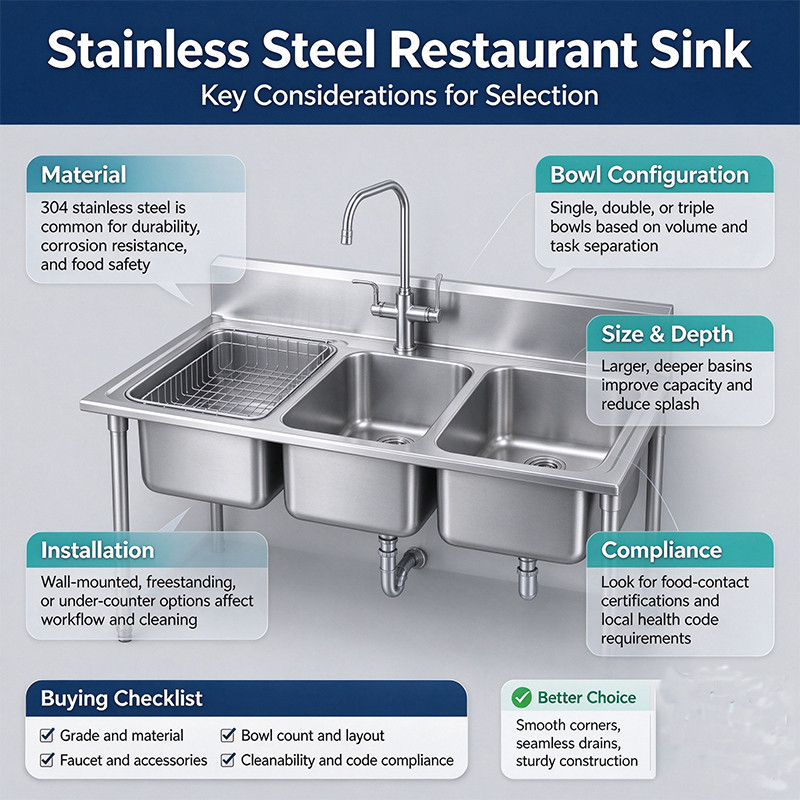
As we delve into the heart of any commercial kitchen, we quickly realize that the humble sink plays a pivotal role in maintaining hygiene, efficiency, and operational flow. For restaurant owners and managers, choosing the right equipment, especially a stainless steel restaurant sink, is not just about functionality; it's a critical decision that impacts food safety, employee workflow, and overall compliance.
This guide will walk you through the essential considerations when selecting, installing, and maintaining your stainless steel restaurant sink, ensuring you make an informed choice that meets both regulatory standards and your operational needs.
Key Takeaways
- Material is Non-Negotiable: Grade 304 stainless steel is the undisputed industry standard for commercial sinks. Its superior resistance to corrosion, rust, and acidic foods makes it a durable, long-lasting investment. For extremely harsh environments with high salt or chemical exposure, Grade 316 offers an even higher level of protection.
- Gauge Dictates Durability: The thickness of the steel, known as its gauge, is a critical factor in a sink's resilience. For most commercial kitchens, 16-gauge steel provides the perfect balance of strength, durability, and cost. In extremely high-volume or demanding settings, a thicker 14-gauge sink offers maximum resistance to dents and impacts.
- Hygiene is Paramount: Stainless steel's non-porous surface is its greatest hygienic asset. It prevents bacteria, grease, and food particles from seeping into the material, making it easy to clean and sanitize effectively. To ensure your sink meets public health standards, always look for NSF (National Sanitation Foundation) certification, a mark of trust that verifies the equipment is designed for cleanability and safety.
- The Right Sink for the Right Job: A functional kitchen requires a strategic layout of specialized sinks. This includes dedicated handwashing sinks to prevent cross-contamination, three-compartment sinks for the crucial wash-rinse-sanitize process, and specialty prep or utility sinks to maintain a clean workflow.
- Compliance is Key: Your sink setup must adhere to local health codes and federal guidelines like the FDA Food Code and ADA (Americans with Disabilities Act) requirements. This involves proper placement, ensuring correct water temperatures, and providing accessible designs for all employees.
- Think Long-Term: While upfront cost is a consideration, prioritizing quality pays dividends. Well-constructed sinks with features like welded drainboards and coved corners are easier to maintain and last longer. Investing in a high-quality brand like Samsink ensures you receive a product engineered for the rigors of a commercial kitchen, leading to a lower total cost of ownership over time.
Understanding the Foundation: Why Stainless Steel is Key for Your Restaurant Sink
When outfitting a commercial kitchen, the choice of material for your sink is a foundational decision that impacts everything from daily operations to long-term budget. Stainless steel is the top choice for restaurant and food service environments, and for good reason. It provides a unique combination of durability, hygiene, and value that no other material can match. It stands up to the intense pace of a professional kitchen, resisting everything from high heat to chemical cleaners and constant impact.
The Unbeatable Durability of Stainless Steel (Grade 304)
The most common and highly recommended type of stainless steel for commercial kitchens is Grade 304. Also known as 18/8 stainless steel because of its composition of 18% chromium and 8% nickel, this grade offers an exceptional balance of performance and cost. The chromium content provides a passive, self-healing layer that protects the steel from rust and oxidation, while the nickel enhances its durability and resistance to corrosion.
Corrosion Resistance: Essential in a Busy Kitchen, our sinks must withstand harsh conditions.
A commercial kitchen is a challenging environment, with constant exposure to water, steam, high-acidity foods like tomatoes and citrus, and strong cleaning chemicals. Grade 304 stainless steel is specifically engineered to withstand these conditions without rusting, staining, or deteriorating. This resistance is crucial for maintaining a safe and professional-looking kitchen. While even more robust options like Grade 316 exist for coastal areas with salt in the air or for kitchens using extremely harsh chemicals, Grade 304 is the reliable workhorse for the vast majority of food service operations.
Strength and Longevity: Resisting Dents and Impacts, ensuring our investment lasts.
Pots are dropped, pans are stacked, and heavy equipment is moved around daily. A restaurant sink must be able to absorb this punishment without denting, warping, or breaking. The inherent strength of 304 stainless steel ensures it can handle the physical demands of a high-volume kitchen. This physical toughness means a well-made stainless steel sink is a long-term investment, often lasting for decades with proper care, which ultimately reduces replacement costs and operational downtime.
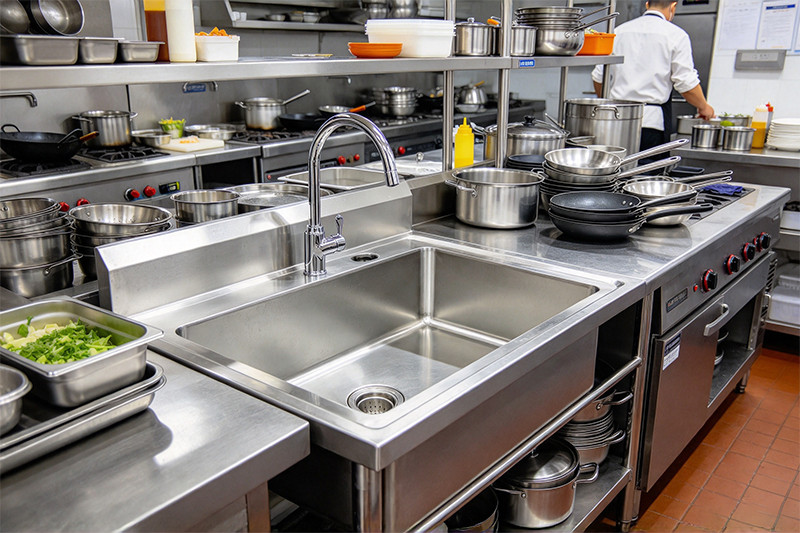
Decoding the Gauge: Thickness Matters for Your Stainless Steel Restaurant Sink
When you see a sink described by "gauge," it's referring to the thickness of the steel. It's a counter-intuitive measurement: the lower the gauge number, the thicker and stronger the steel. Choosing the right gauge is about balancing durability with budget, and understanding the demands of your specific kitchen environment is key.
16-Gauge: The Commercial Standard for Most Operations, balancing cost and toughness.
For the majority of restaurants, bars, and commercial kitchens, 16-gauge (approximately 1.59mm thick) stainless steel is considered the gold standard. It provides an excellent combination of durability and performance, strong enough to resist dents from daily use while remaining a cost-effective choice. Reputable suppliers consistently recommend 16-gauge as the minimum for most commercial applications, as it offers a significant step up in resilience compared to thinner gauges. A 16-gauge sink from a quality manufacturer like Samsink will provide the stability and longevity needed for a busy kitchen.
Thicker Gauges for Heavy-Duty Environments (14-Gauge), for extreme demands.
In environments with exceptionally heavy use—such as institutional kitchens, food processing plants, or butcher shops—upgrading to 14-gauge (approximately 1.98mm thick) steel is a wise investment. This thicker, more robust steel offers maximum resistance to dents, bowing, and damage from heavy impacts. While it comes at a higher price point, the enhanced durability ensures the sink will withstand the most demanding conditions for years to come.
Here's a simple breakdown of common sink gauges:
| Gauge | Thickness (Approx.) | Best For |
|---|---|---|
| 14-Gauge | 0.0781 inches (1.98mm) | Heavy-duty, industrial, and high-impact environments. Maximum durability. |
| 16-Gauge | 0.0625 inches (1.59mm) | The commercial standard. Ideal for most restaurants, bars, and cafes. |
| 18-Gauge | 0.0500 inches (1.27mm) | Light-to-medium duty. Suitable for low-volume bars or small cafes. |
| 20-Gauge+ | 0.0375 inches or less | Residential or very light use only. Not recommended for commercial settings. |
Hygiene and Ease of Cleaning for Every Stainless Steel Restaurant Sink
In the food service industry, hygiene is not just a preference; it's a legal and ethical requirement. The material and design of your sink play a critical role in preventing foodborne illness.
Smooth, Non-Porous Surfaces Prevent Bacterial Growth, keeping our kitchen safe.
One of the most significant advantages of stainless steel is its non-porous surface. Unlike materials such as wood or some plastics, which have microscopic crevices where germs and moisture can hide, stainless steel is smooth and impenetrable. This means that bacteria, food particles, and liquids stay on the surface, where they can be easily wiped away and sanitized. This characteristic makes it fundamentally more hygienic and easier to maintain the high cleanliness standards required in a commercial kitchen.
NSF Certification: A Mark of Trust and Safety, validating our commitment to hygiene.
To ensure your equipment is designed for sanitation, always look for the NSF certification mark. NSF International (formerly the National Sanitation Foundation) is an independent organization that tests and certifies foodservice equipment to ensure it meets strict public health and safety standards.
An NSF-certified sink has been evaluated to confirm:
- Materials are food-safe: They are non-toxic and won't leach harmful substances.
- It's designed for cleanability: The sink is constructed to be easily cleaned, with features like smooth surfaces and coved corners that prevent bacteria from hiding.
- It meets health department requirements: Many local health departments require foodservice establishments to use NSF-certified equipment.
Choosing an NSF-certified sink is a clear signal to inspectors and customers that you are committed to food safety.
Navigating the Types: Essential Stainless Steel Restaurant Sinks for Every Need
A well-equipped commercial kitchen doesn't have just one sink; it has a strategically placed system of sinks, each with a specific purpose. Using dedicated sinks for different tasks—handwashing, dishwashing, and food preparation—is a fundamental principle of food safety, designed to prevent cross-contamination and ensure operational efficiency. Let's explore the essential types of stainless steel sinks every restaurant needs.
Dedicated Handwashing: The Critical Stainless Steel Hand Sink
The importance of the handwashing sink cannot be overstated. Dirty hands are a primary vehicle for spreading foodborne illnesses, and providing a dedicated, accessible sink is the first line of defense.
Preventing Cross-Contamination is Our Priority, protecting our customers.
Health codes are crystal clear: handwashing must occur only in a designated handwashing sink. Employees are strictly prohibited from washing their hands in sinks used for food prep, dishwashing, or janitorial tasks. This strict separation is crucial to prevent bacteria and other pathogens from hands from contaminating food or clean dishes. A dedicated hand sink, used exclusively for this purpose, is a non-negotiable component of a safe kitchen.
Placement: Accessibility Near Food Prep and Restrooms, for staff convenience.
According to the FDA Food Code, handwashing sinks must be conveniently located for employees in all food preparation, dispensing, and warewashing areas. They must also be situated in or immediately next to restrooms. Some local health departments even specify a maximum distance, such as within 25 feet of any food handling station. Convenient placement encourages frequent and proper handwashing, as staff are more likely to wash their hands when a sink is within easy reach.
ADA Compliance for Inclusivity, ensuring accessibility for all.
To ensure your kitchen is accessible to all employees, handwashing stations must comply with the Americans with Disabilities Act (ADA). Key ADA requirements for sinks include:
- Maximum Height: The rim of the sink can be no more than 34 inches above the finished floor.
- Knee and Toe Clearance: There must be open space beneath the sink to allow a wheelchair user to approach it.
- Faucet Operation: Faucets must be operable with one hand and minimal force, without tight grasping or twisting.
Multi-Compartment Washing: The Workhorse Stainless Steel Restaurant Sink
Multi-compartment sinks are the backbone of any manual warewashing station, designed to handle the heavy volume of pots, pans, and utensils used in a commercial kitchen.
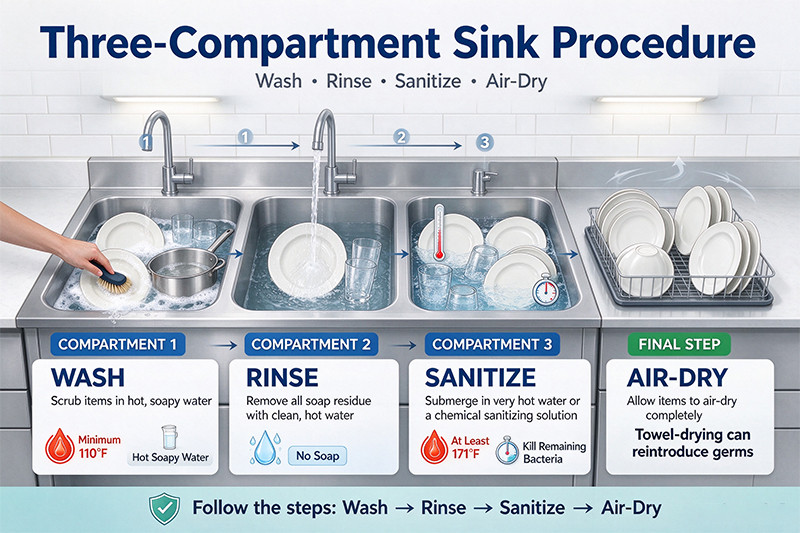
Three-Compartment Sinks: Wash, Rinse, Sanitize for Dishes, a regulatory must-have.
Even if you have a commercial dishwasher, most health departments require a three-compartment sink as a backup and for washing items that are too large or delicate for the machine. This sink facilitates the essential three-step cleaning process:
- Wash: In the first compartment, items are scrubbed in hot, soapy water (minimum 110°F).
- Rinse: In the second compartment, all soap residue is removed with clean, hot water.
- Sanitize: In the third compartment, items are submerged in either very hot water (at least 171°F) or a chemical sanitizing solution for a specific amount of time to kill remaining bacteria.
After sanitizing, items must be air-dried, as towel-drying can reintroduce germs.
Kitchen and Bar Sinks: Sizing for Utensils and Glassware, based on our specific needs.
The size of your multi-compartment sink should be determined by the largest items you need to wash, such as full-size sheet pans or large stockpots. Bar areas require their own specialized, more compact underbar sinks. These are also typically multi-compartment sinks that allow bartenders to efficiently dump drinks, wash glassware, rinse, and sanitize in a contained space, ensuring a clean glass is ready for every customer.
Specialty Sinks: Maximizing Utility with Your Stainless Steel Restaurant Sink Setup
Beyond handwashing and dishwashing, other tasks require dedicated sinks to maintain a hygienic and efficient workflow.
Prep Sinks: Keeping Food Preparation Separate and Clean, a key to avoiding contamination.
A food prep sink is used exclusively for washing fruits and vegetables, thawing meats under running water, or other tasks involved in preparing ingredients. Keeping this activity separate from the warewashing area is vital to prevent soil and pathogens from raw produce or meat from contaminating clean dishes. These sinks are typically located in the food prep area for easy access.
Utility/Mop Sinks: Essential for Heavy Cleaning Tasks, kept distinct from food areas.
A mop sink, also known as a utility or service sink, is a critical component for general facility cleaning. These units are designed for filling and emptying mop buckets and disposing of dirty water. They are often floor-mounted to avoid having to lift heavy, full buckets, which reduces the risk of spills and injuries. Crucially, mop sinks must be kept entirely separate from any food-related sinks to prevent cross-contamination from floor dirt and cleaning chemicals.
Mobile Sinks: Versatility for Temporary or Outdoor Operations, expanding our service area.
For catering businesses, food trucks, or special events, portable hand sinks offer a versatile solution. These self-contained units include their own water tanks and heaters, providing the necessary handwashing facilities required by health codes in locations without permanent plumbing.
Mounting Options for Your Stainless Steel Restaurant Sink
The way a sink is mounted affects space, hygiene, and ease of installation.
Wall-Mounted: Saving Space and Increasing Hygiene by preventing floor contact.
Wall-mounted sinks are a popular choice in commercial kitchens because they keep the floor area clear. This design makes it significantly easier to clean underneath the sink, preventing the buildup of dirt and grime. By maximizing floor space, they are ideal for tight kitchens where every inch counts.
Freestanding: Common, Flexible, and Often with Undershelves for added storage.
The most common type of sink in commercial kitchens is the freestanding model, which stands on four legs. This design is versatile and can be placed anywhere plumbing allows. Many freestanding sinks, like those offered by Samsink, feature integrated undershelves, providing valuable extra storage space for cleaning supplies or equipment.
Base-Mounted: Hands-Free Operation, ideal for specific high-hygiene settings.
Base-mounted, or pedestal, sinks conceal plumbing within a single base. They are often equipped with foot pedals or knee valves for hands-free water activation, which is a significant sanitary advantage in settings like healthcare facilities or high-end kitchens where minimizing contact with surfaces is a priority.## Beyond the Basin: Faucets, Features, and Fixtures for Your Stainless Steel Restaurant Sink
A sink is only as good as its components. The right faucets, accessories, and design features can transform a simple basin into a highly efficient, hygienic, and compliant workstation. These elements are not just add-ons; they are crucial to maximizing the functionality of your stainless steel restaurant sinks.
Choosing the Right Faucets for Your Stainless Steel Restaurant Sink
The faucets you choose will directly impact hygiene, water usage, and workflow efficiency. From hands-free models to heavy-duty sprayers, each type serves a specific purpose in a commercial kitchen.
Hands-Free Options: Knee/Foot Valves vs. Electronic Sensors, evaluating reliability.
To minimize cross-contamination, hands-free faucets are a must for handwashing sinks. The two primary options are mechanical valves and electronic sensors.
- Knee/Foot Valves: These are mechanically operated by pressing a pedal on the floor or a valve with your knee. They are extremely durable, reliable, and require no electricity or batteries, making them a favorite in many high-volume kitchens.
- Electronic Sensors: These faucets activate when they sense motion. While they offer a modern, touch-free experience that customers often appreciate in public restrooms, they rely on batteries or a hardwired electrical connection. In a busy kitchen, considerations around sensor sensitivity and power source reliability are important.
While sensor faucets are excellent for guest-facing areas, many kitchen professionals prefer the robust, purely mechanical reliability of foot or knee valves.
Practical Choices: Deck Mount, Wall Mount, and Pre-Rinse Units, matching our workflow.
The style of faucet should align with the sink's function and installation.
- Deck-Mount Faucets: These are mounted directly onto the sink deck or an adjacent countertop.
- Wall-Mount Faucets: These attach to the wall behind the sink, which keeps the sink deck clear and makes it easier to clean.
- Pre-Rinse Units: Essential for any dishwashing station, pre-rinse faucets feature a high-pressure spray head on a flexible hose. This allows staff to quickly blast food debris off plates before they go into the wash basin or dishwasher, significantly speeding up the cleaning process and improving the effectiveness of the warewashing cycle. Modern pre-rinse faucets are available in various heights to accommodate different sink setups and ceiling clearances.
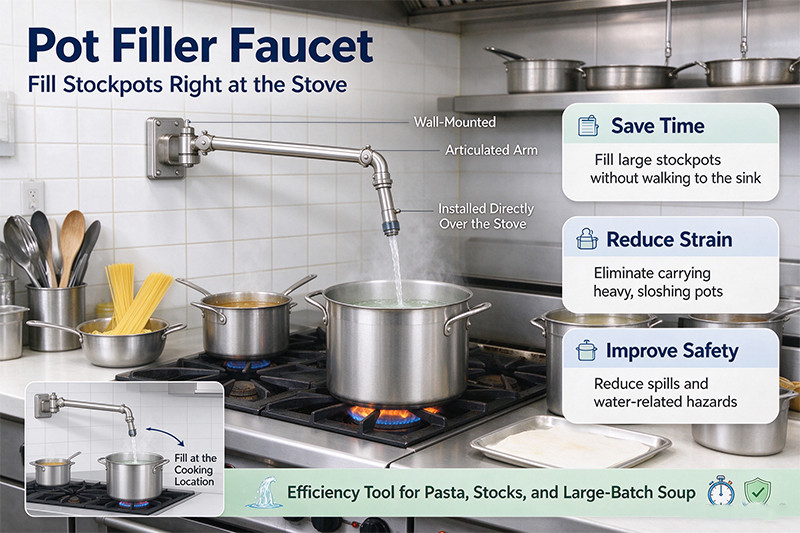
Pot Fillers: A Convenient Addition for Larger Kitchens, improving efficiency.
A pot filler is a wall-mounted, articulated faucet installed directly over the stove. Its purpose is simple but transformative: it allows chefs to fill large, heavy stockpots with water right where they cook, eliminating the need to carry sloshing, heavy pots from the sink. This not only saves significant time and physical strain but also improves kitchen safety by reducing spills. For any kitchen that frequently boils pasta, makes stocks, or prepares large batches of soup, a pot filler is a powerful efficiency tool.
Enhancing Functionality with Accessories and Features for Your Stainless Steel Restaurant Sink
Small design details can make a big difference in a sink's performance, hygiene, and lifespan. High-quality sinks, like those from Samsink, often incorporate these features into their design.
Backsplashes and Side Splashes for Wall Protection, maintaining cleanliness.
Most commercial sinks come with an integrated backsplash—a raised lip at the back of the sink that protects the wall from water splashes. This is a critical feature for hygiene, as it prevents water from seeping into drywall, which can lead to mold and bacterial growth. Some local health codes have specific height requirements for backsplashes, often a minimum of 18 inches behind cooking areas. Side splashes can also be added to sinks placed in corners or next to other equipment to contain water.
Integrated Garbage Disposers for Efficiency, streamlining waste management.
Connecting a commercial-grade garbage disposal to a sink, particularly the wash basin of a three-compartment sink, dramatically improves workflow and hygiene. Instead of scraping food waste into a trash can, staff can rinse it directly down the drain. This reduces labor, minimizes odors, and helps prevent drain clogs. Garbage disposals grind food scraps into fine particles that are safely flushed into the sewage system, making waste management faster and cleaner.
Welded Drainboards and Sealed Seams for Superior Hygiene (NSF Standard), minimizing germ traps.
For maximum sanitation, look for sinks with integrated and welded components rather than drop-in pieces.
- Welded Drainboards: A drainboard that is welded directly to the sink creates a single, seamless unit. This eliminates the crevice between a drop-in drainboard and the sink rim, a notorious trap for food debris and bacteria. NSF standards require drainboards to be properly sloped to ensure complete drainage, preventing water from pooling.
- Sealed Seams and Coved Corners: NSF-certified sinks are designed to be free of cracks, crevices, and sharp 90-degree corners where pathogens can hide. Instead, they feature smooth, continuous welds and "coved" or rounded internal corners. This sanitary design makes the sink much easier to clean thoroughly and prevents the buildup of bacteria. Choosing a sink built to these standards is a critical investment in food safety.## Compliance and Cleanliness: Regulatory Must-Haves for Your Stainless Steel Restaurant Sink
Navigating the web of health codes and federal regulations is one of the most critical aspects of setting up a commercial kitchen. Your sink configuration is not just a matter of preference; it's a matter of law. Health inspectors meticulously scrutinize sink setups because they are central to preventing foodborne illness. A compliant kitchen is a safe kitchen.
Meeting Health Department Standards with Your Stainless Steel Restaurant Sink Set-up
Local and state health departments derive their rules from the FDA Food Code, a model set of guidelines for food safety. While specific requirements can vary by jurisdiction, the core principles remain the same and focus heavily on preventing cross-contamination.
FDA Food Code Requirements for Sink Types and Placement, guiding our kitchen design.
The FDA Food Code provides a clear blueprint for a safe kitchen layout. Key sink requirements include having dedicated sinks for handwashing, a three-compartment sink for manual warewashing, a prep sink for food, and a service sink for janitorial duties. The placement is just as important as the type; handwashing sinks must be conveniently located and easily accessible in all food prep and dishwashing areas to encourage frequent use. Failing to have the correct number and type of sinks is one of the most common reasons a restaurant fails a health inspection.
The Strict Rule: Dedicated Sinks for Dedicated Purposes, preventing critical cross-contamination.
This is the golden rule of kitchen sinks: one sink, one purpose. You cannot wash your hands in a prep sink, thaw chicken in the dishwashing sink, or dump mop water in a handwashing sink. Each of these actions introduces a significant risk of cross-contamination. Health codes mandate this strict separation to create clear, hygienic zones within the kitchen. Every handwashing sink should also be clearly marked with a sign reminding employees to wash their hands.
Water Temperature and Supply: Essential for Proper Sanitation, a non-negotiable.
Proper cleaning and sanitation depend on having a reliable supply of hot and cold water at the correct temperatures.
- Handwashing Sinks: The 2022 FDA Food Code specifies a minimum water temperature of 85°F (29°C) at handwashing sinks.
- Three-Compartment Sinks: For manual dishwashing, the wash and rinse compartments should be at least 110°F (43°C). If using hot water to sanitize in the third compartment, the water must reach 171°F (77°C). Specific chemical sanitizers may have different temperature requirements, often around 75°F (24°C).
Your facility's hot water heater must be robust enough to consistently supply these temperatures during peak hours.
ADA and Accessibility Requirements for Stainless Steel Restaurant Sinks
The Americans with Disabilities Act (ADA) ensures that workplaces are accessible to individuals with disabilities. These requirements apply to commercial kitchen sinks to ensure all employees can perform their duties safely and comfortably.
Optimal Height and Clearance for Easy Access, creating an inclusive environment.
For a sink to be ADA-compliant, it must adhere to specific dimensional requirements:
- Height: The sink's rim or the counter it is set in cannot be more than 34 inches from the finished floor.
- Knee Clearance: There must be a clear space underneath the sink for wheelchair access, generally at least 27 inches high, 30 inches wide, and 19 inches deep. This is why wall-mounted sinks or sinks in open-base vanities are often the best choices for accessibility.
Insulated Pipes and Single-Hand Operated Faucets, for safety and ease of use.
ADA compliance also extends to the fixtures and plumbing associated with the sink:
- Insulated Pipes: To prevent burns, any exposed hot water and drain pipes under an accessible sink must be insulated or otherwise covered to protect against contact. This is a critical safety measure, especially for individuals who may have limited sensation in their legs.
- Faucet Operation: Faucets must be operable with one hand and require less than five pounds of force, without needing tight grasping, pinching, or twisting. Lever handles, push-buttons, and electronic sensor faucets are all excellent ADA-compliant options.
Planning for Inspections: What We Need to Show with Our Stainless Steel Restaurant Sinks
When a health inspector arrives, they are looking for both proper setup and documented proof of compliance and maintenance. Being prepared can make the difference between a smooth inspection and a stressful one.
Proper Layout to Prevent Cross-Contamination, simplifying compliance.
The inspector will visually assess your kitchen's layout to ensure a logical workflow that separates "dirty" activities (like dishwashing and receiving) from "clean" ones (like final food prep and plating). Your sink arrangement is central to this. They will verify that dedicated sinks are in the correct locations and used only for their intended purpose.
Documentation: Certifications and Equipment Specifications, ready for review.
Be prepared to provide documentation for your equipment and procedures. This includes:
- Permits and Certifications: Your food establishment operating permit, food handler certifications for staff, and any manager certifications should be current and accessible.
- Equipment Specifications: Keep spec sheets for major equipment, like your Samsink commercial sinks, which show they are NSF-certified.
- Logs and Records: Maintain up-to-date temperature logs, cleaning schedules, and pest control service records.
Having an organized binder with all relevant documents shows the inspector that you have a proactive and professional approach to food safety.## Long-Term Value: Maintaining and Optimizing Your Stainless Steel Restaurant Sink
A high-quality stainless steel sink from a trusted brand like Samsink is a significant investment in your kitchen's future. By implementing proper maintenance routines and making smart choices from the start, you can ensure this investment delivers value for many years. Thinking about long-term value means looking beyond the initial price tag to consider durability, operational efficiency, and ongoing costs.
Daily Care and Cleaning for Your Stainless Steel Restaurant Sink
Stainless steel is remarkably durable, but it is not indestructible. Consistent, proper cleaning is the key to preserving its function and appearance. The goal is to protect the passive chromium oxide layer that prevents rust and corrosion.
Simple Cleaning Routines Prevent Residue and Rust, preserving appearance and function.
A simple daily cleaning routine is all it takes to keep your sink in top condition.
- Rinse After Use: Rinse the sink thoroughly with warm water after each major use to remove food particles and soap residue.
- Wash with Mild Soap: Use a soft sponge or microfiber cloth with a few drops of mild dish soap for daily cleaning.
- Wipe with the Grain: Always scrub or wipe in the direction of the metal's grain or polish lines to avoid creating visible micro-scratches.
- Rinse and Dry: Rinse away all soap and residue, then wipe the sink dry with a soft cloth. Drying the sink prevents water spots, especially in areas with hard water, and ensures the surface is exposed to oxygen, which helps maintain its protective layer.
Avoiding Abrasive Materials to Preserve the Surface, protecting our investment.
The biggest threat to a stainless steel sink's finish is abrasion. To protect it:
- Avoid Steel Wool and Scouring Pads: Never use steel wool, metal scouring pads, or abrasive powdered cleansers. These will scratch the surface and can leave behind tiny iron particles that lead to rust.
- Be Mindful of Harsh Chemicals: Do not use cleaners containing chlorine bleach, ammonia, or other harsh acids. These chemicals can attack the sink's protective layer, causing pitting and corrosion. If products like bleach do come into contact with the sink, rinse them away immediately and thoroughly.
- Don't Let Items Sit: Avoid leaving wet sponges, cloths, or metal cookware in the sink for extended periods, as this can trap moisture and lead to staining or corrosion.
Addressing Leaks and Water Waste from Your Stainless Steel Restaurant Sink
A dripping faucet or a leaking drain is more than just an annoyance; it's a source of wasted money and potential water damage. Proactive maintenance is essential for water conservation and cost control.
The Impact of Worn Gaskets: Small Leaks, Big Waste, affecting our bottom line.
Most leaks under a commercial sink originate from a few common problem areas, such as a worn-out basket strainer seal or a loose slip nut on the drain pipe. A small, slow drip may seem insignificant, but it can waste thousands of gallons of water over a year, leading to higher utility bills. These leaks can also cause water damage to floors and cabinets and create a slip hazard for staff.
Regular Maintenance for Water Conservation, a step towards sustainability.
Water conservation is both an environmental responsibility and a smart business practice.
- Fix Leaks Promptly: Make it a policy to report and fix any leaks, no matter how small, within 24 hours. A simple gasket or washer replacement is an inexpensive fix that can save a significant amount of money over time.
- Install Water-Efficient Fixtures: When choosing faucets, opt for low-flow models. For example, replacing an old pre-rinse spray valve with a high-efficiency model can save over 7,000 gallons of water per year.
- Educate Staff: Train your team on water-saving habits, such as not leaving taps running unnecessarily and only running full racks in the dishwasher.
Investing Wisely: Customization and Quality for Your Stainless Steel Restaurant Sink
Your kitchen's layout is unique, and sometimes an off-the-shelf sink doesn't quite fit your space or workflow. Thinking about the total cost of ownership rather than just the initial price will lead to a better return on investment.
Considering Custom Options for Unique Layouts, maximizing our space efficiently.
For kitchens with unusual dimensions or specific workflow needs, a custom-fabricated stainless steel sink can be an excellent solution. Customization allows you to specify the exact dimensions, bowl configurations, drainboard placement, and other features to create a sink that fits your space perfectly. This can maximize efficiency and make the most of every square inch of your kitchen.
Prioritizing Build Quality Over Low Initial Cost, securing long-term savings.
While it can be tempting to choose the cheapest sink available, this is often a costly mistake. Low-priced sinks may use thinner gauge steel or have lower-quality welding, making them prone to dents, leaks, and corrosion. A high-quality sink, while having a higher initial price, is a long-term investment that pays for itself through durability and low maintenance. A well-built sink made from 16-gauge, 304-grade stainless steel can last for 15 to 30 years with proper care, saving you significant money on repairs and replacements. By investing in a reputable brand known for quality construction, you ensure your kitchen is built on a foundation of reliability and long-term value.
Frequently Asked Questions (FAQs)
1. What is the best grade of stainless steel for a restaurant sink?
For the vast majority of commercial kitchens, Grade 304 stainless steel is the best choice. It offers an excellent balance of corrosion resistance, durability, and cost-effectiveness, making it the industry standard for food-contact surfaces. In highly corrosive environments, such as coastal locations with salt in the air or facilities that use harsh chemicals, upgrading to Grade 316 stainless steel is recommended. Grade 316 contains molybdenum, which provides superior protection against salt and chloride-induced pitting.
2. What is the difference between 16-gauge and 18-gauge stainless steel sinks?
The "gauge" refers to the thickness of the steel, and the lower the number, the thicker the steel. A 16-gauge sink is thicker (approx. 1.59mm) and more durable than an 18-gauge sink (approx. 1.27mm). For most commercial restaurant applications, 16-gauge is considered the standard as it provides robust resistance to dents and daily wear and tear. An 18-gauge sink is a more budget-friendly option suitable for lighter-duty use, such as in a small cafe or bar. For extremely demanding environments, 14-gauge is the most durable option.
3. Why is NSF certification important for a commercial sink?
NSF (National Sanitation Foundation) certification is a third-party verification that a product meets strict standards for public health and safety. For a commercial sink, the NSF mark indicates that it is:
- Made from food-safe materials that are non-toxic and corrosion-resistant.
- Designed for easy cleaning and sanitation, with features like smooth, non-porous surfaces and coved corners to prevent bacteria from accumulating.
- Compliant with health department regulations, as many jurisdictions require NSF-certified equipment. Choosing an NSF-certified sink provides peace of mind that you are investing in a product engineered for hygiene and safety.
4. How many sinks do I need in my commercial kitchen?
Most health codes require a minimum of three to four distinct sink types to prevent cross-contamination:
- A Dedicated Handwashing Sink: Must be conveniently located in all food prep and warewashing areas, and used only for washing hands.
- A Three-Compartment Sink: For the manual wash, rinse, and sanitize process for dishes, pots, and utensils.
- A Food Preparation (Prep) Sink: Used exclusively for washing produce and other food items.
- A Mop/Utility Sink: A separate sink for janitorial tasks like filling and emptying mop buckets. Always check with your local health department for their specific requirements.
5. How should I clean my stainless steel sink to avoid scratching or damaging it?
The key is to use gentle cleaning methods and avoid harsh materials.
- DO use a soft cloth or sponge with mild dish soap and warm water for daily cleaning.
- DO always wipe in the direction of the steel's grain.
- DO rinse thoroughly and wipe the sink dry with a microfiber cloth to prevent water spots.
- DO NOT use abrasive materials like steel wool, scouring pads, or powdered cleansers like Comet.
- DO NOT use cleaners containing chlorine bleach or ammonia, as they can cause corrosion.
6. Is it worth investing in a custom-built stainless steel sink?
For many restaurants, a custom sink is a smart long-term investment. While the upfront cost is higher than a standard model, customization allows you to:
- Maximize your specific kitchen layout, making efficient use of challenging or limited space.
- Optimize your workflow by placing sink compartments, drainboards, and faucets exactly where your staff needs them.
- Incorporate unique features tailored to your menu and operational needs. A well-designed custom sink can improve productivity and sanitation, providing excellent long-term value.
7. How can I reduce water waste from my commercial sinks?
Water conservation can significantly lower your utility bills. Key strategies include:
- Fix leaks immediately. A small drip from a worn faucet gasket can waste an enormous amount of water over time.
- Install high-efficiency fixtures. Low-flow faucet aerators and pre-rinse spray valves can reduce water consumption by over 50% without sacrificing performance.
- Use hands-free faucets with sensors or foot pedals, which automatically shut off water when not in use.
- Train your staff on water-saving practices like only running full dishwasher loads and not thawing food under a running tap.
Conclusion
Choosing the right stainless steel restaurant sink is a fundamental step in building a successful and compliant commercial kitchen. By understanding the critical importance of material grade and gauge, the necessity of dedicated sinks for different tasks, and the specific requirements for fixtures and regulatory compliance, you can create a kitchen that is safe, efficient, and built to last. Making an informed decision about your stainless steel restaurant sinks is not just about buying equipment; it is an investment in the safety, hygiene, and overall success of your entire restaurant operation.
Ready to build a kitchen foundation you can trust? Explore the comprehensive collection of durable, NSF-certified stainless steel commercial sinks from Samsink. Our experts can help you select the perfect models to meet your operational needs and regulatory requirements. Invest in quality today for a more efficient and compliant tomorrow.