Summary
How Samsink specifies and builds a custom stainless steel ice cream machine counter: machine cut-out sizing and reinforcement, a sloped drip tray with welded outlet, weld and finish control, and the inspection steps run before crating.
A stainless steel ice cream machine counter is not a work table with a machine standing on it. It is a fabricated station where the machine is dropped into a cut-out, the melt water has to leave the surface without pooling, and every joint has to survive daily dairy-and-sugar cleaning. This brief records how Samsink specifies and builds that station, from the first drawing to the crate.
Samsink has fabricated stainless steel sinks and custom commercial stainless steel equipment since 1995, with production bases in Foshan, China and Bangkok, Thailand. This page is the technical record of one build type that comes back to us again and again from gelato chains, dessert equipment distributors and shop fitters — the custom stainless steel ice cream machine counter.
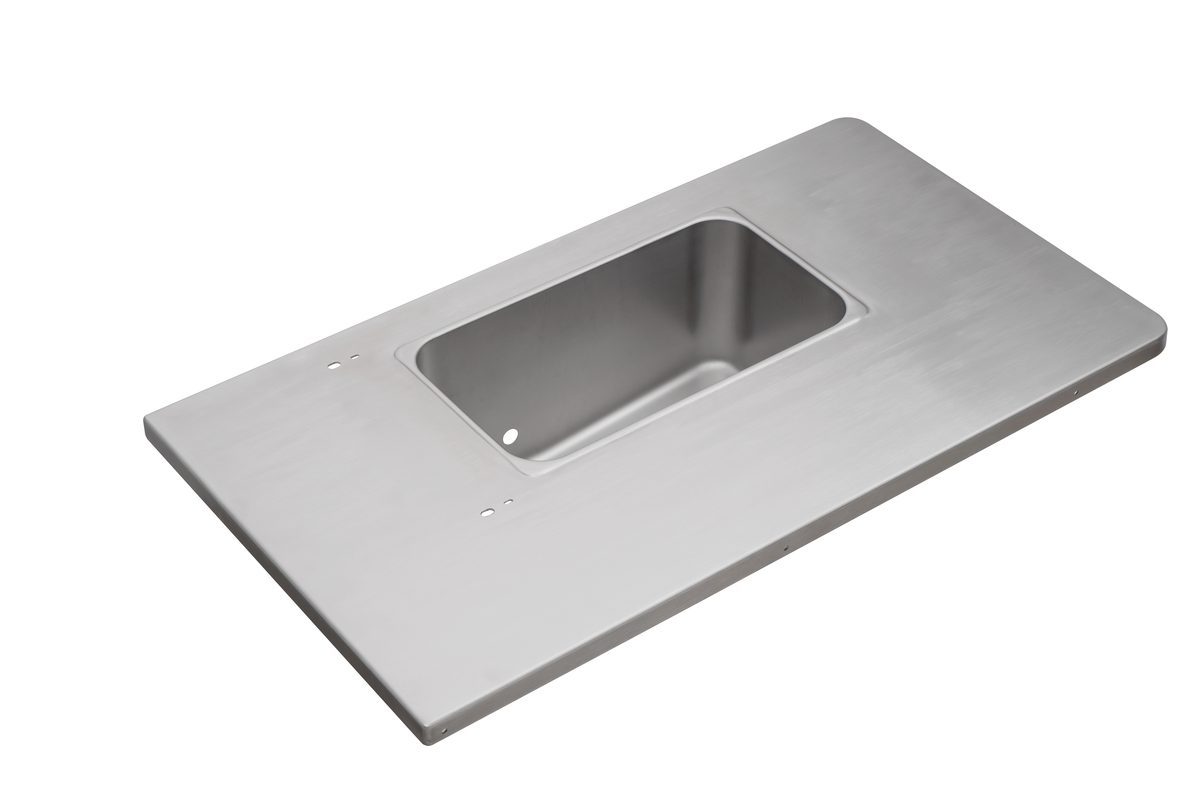
The table below is the specification sheet we hold for this build. Values marked “per project” are fixed only after the customer’s machine drawing, not before — a counter that fits one machine model will not necessarily accept the next generation of it.
| Item | Specification |
| Application | Ice cream / gelato machine mounting counter with drop-in cut-out and drainage |
| Material | SUS304 (304) stainless steel; 316 available where high-chloride sanitisers are used |
| Work top | 1.2–1.5 mm sheet, flat, with a reinforcing flange or sub-frame under the opening |
| Machine opening | Cut to the machine base plate, tolerance ±0.5 mm, corners radiused, 1–2 mm clearance per side |
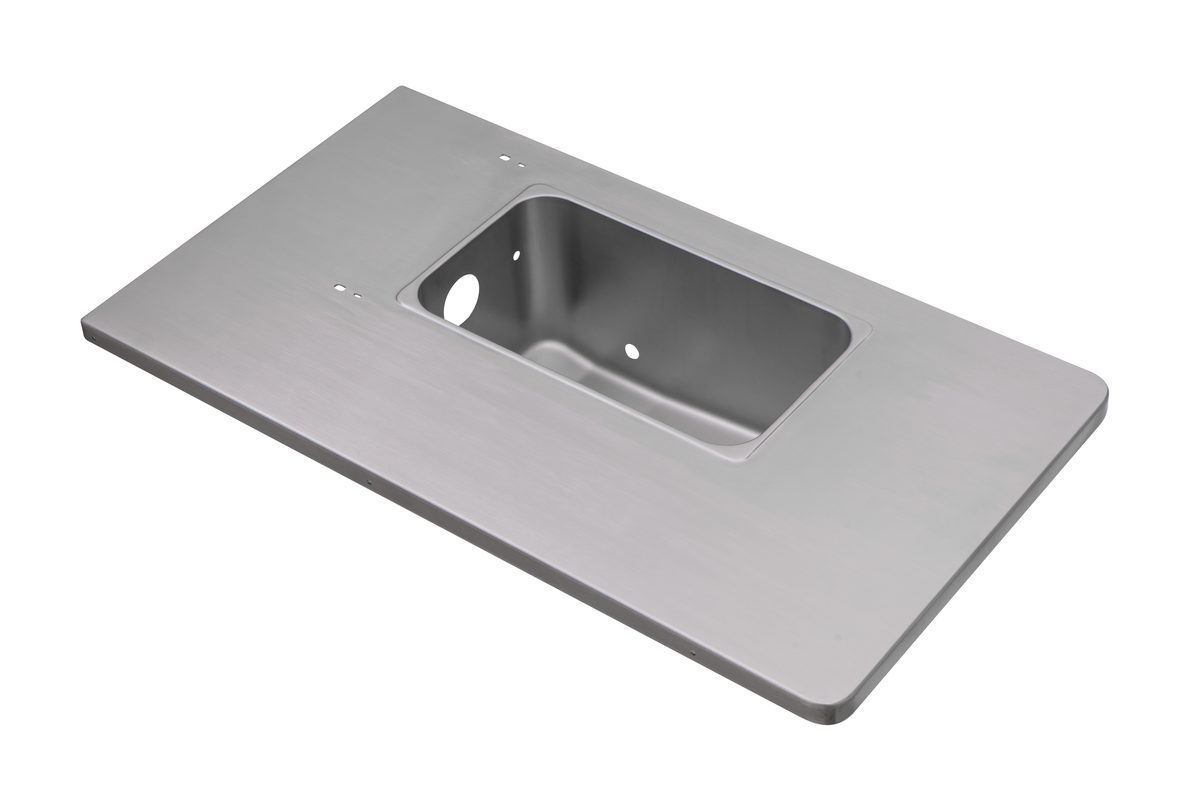
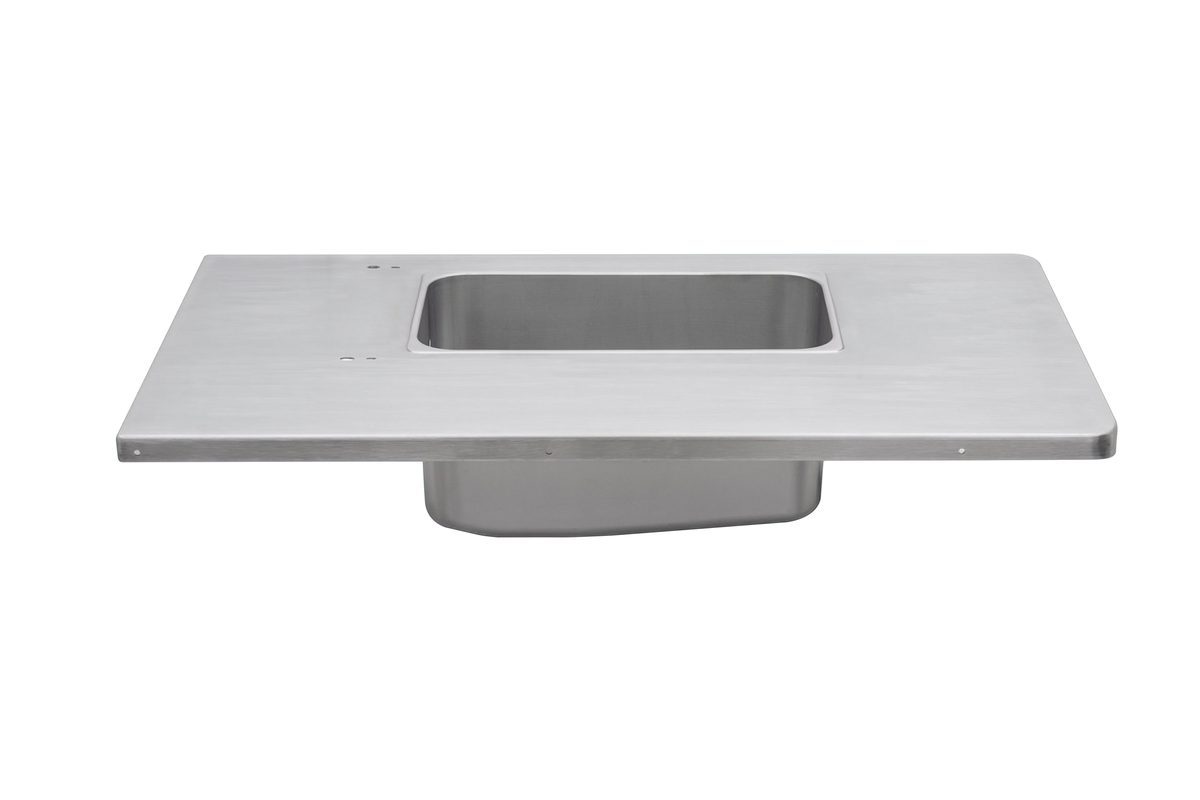
| Drainage | Sloped drip tray (1.5–2° fall) with welded drain nipple, removable perforated grid |
| Body & frame | 1.0–1.2 mm tube frame; fully welded or knock-down bolted, per shipping preference |
| Finish | #4 brushed, unidirectional; mirror or embossed on request; welds ground and passivated |
| Feet / mobility | Adjustable feet ±20 mm as standard; braked casters optional |
| Validation | Dimensional check, flatness ≤1.5 mm/m, weld inspection, water drain test before packing |
| Packing | PE film + honeycomb board + plywood crate, fumigation-free for export |
Three forces drive every dimension on this build, and all three come from the ice cream machine:
Machine housings overhang their feet, and the overhang differs between brands and generations. We cut to the base plate or the manufacturer’s cut-out drawing, then add 1–2 mm clearance per side: enough to lift the machine out for servicing without forcing it, tight enough that it does not walk across the opening while running.
An unreinforced cut-out in 1.2 mm sheet flexes. On this build the opening carries a formed flange of 20–30 mm, and where the machine load is heavy we weld a sub-frame of square tube directly under the flange so the weight transfers into the legs instead of the top sheet. The flange also gives the machine a seat, so the top surface stays visually continuous.
A machine that cannot be reached will be run until it fails. The brief therefore includes a removable front or side access panel, hose and cable pass-throughs with grommets, and a rear air gap. The drain connection has to be reachable with the machine in place.
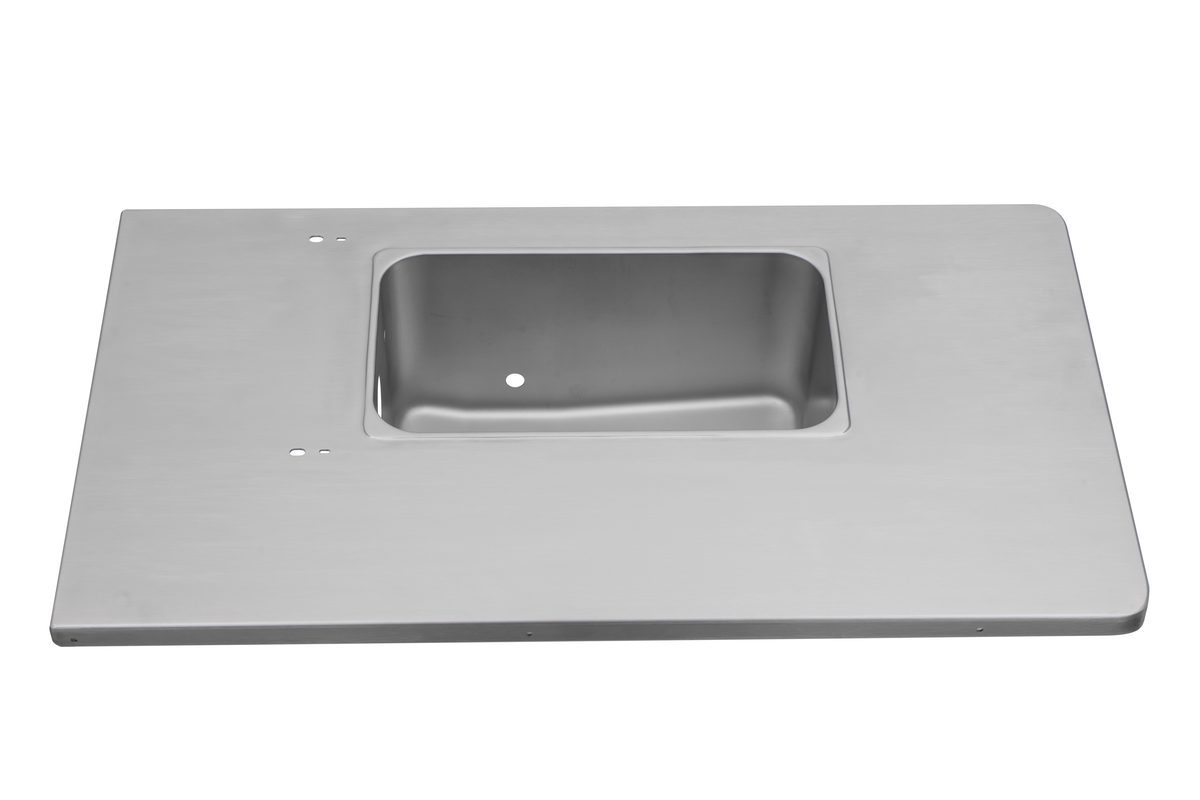
Water is the part of an ice cream station that gets designed last and causes the most callbacks. Our standard arrangement:
The frame is 1.0–1.2 mm square tube. Joints are TIG welded, ground flush on visible faces and passivated so the chromium oxide layer is restored where heat has burned it away — this is the step that keeps a weld from rusting in a wet dairy environment while the sheet around it stays clean.
Finish is #4 brushed with unidirectional grain, which hides fingerprints and small scuffs far better than a mirror polish on a working counter. Mirror and embossed finishes are available, but on a surface that gets wiped twenty times a day the brushed grain is the practical choice. Protective film stays on until the unit is unpacked on site.
| Check | Method | Acceptance |
| Machine opening size | Caliper / laser measurement against the approved drawing | ±0.5 mm on width and depth; corners radiused as drawn |
| Top flatness | Straight edge and feeler gauge across and along the top | ≤1.5 mm per metre; no dishing around the opening |
| Weld integrity | Visual inspection plus dye penetrant on the drain joint | No pin holes, no undercut, no discolouration left unpassivated |
| Drain performance | Fill and timed drain of the drip tray | Tray empties within 60 s, no standing water, no seepage |
| Hygiene details | Hand check of tray coving and internal corners | Continuous coved joints; no exposed threads in the food zone |
| Stability | Load the opening with machine-equivalent weight | No visible deflection; unit sits level on all four feet |
| Surface protection | Film inspection under raking light | Film intact, no scratches through the brushed grain |
Export packing for this station is PE film over the film-protected surfaces, honeycomb board on edges and corners, and a plywood crate sized to the assembled body. Knock-down versions are packed flat with numbered panels and an assembly sheet, which cuts freight volume substantially for container loads. Crates are fumigation-free and marked per the buyer’s shipping instructions.
Samsink was founded in Foshan, China in 1995 and has manufactured stainless steel sinks and custom equipment for three decades, with a second production base in Bangkok, Thailand since 2018. Eight production lines and more than 500 in-house molds support a monthly capacity above 100,000 units, and our quality system is certified to ISO 9001, with cUPC and NSF certification on the product lines that require it. More than 1,000 clients across North America, South America, Australia, the Middle East, Africa and Southeast Asia buy from us — many of them for over twenty years.
For a build like this one, that matters in three practical ways: the cut-out is engineered against your machine drawing rather than guessed from a photo; the drain joint is welded, tested and passivated in-house instead of assembled on site; and the unit ships from a base that already exports to your market.
If you are specifying an ice cream station, these pages continue the loop from equipment to components to quote:
Useful companions on the component side: a stainless steel work table with casters (SM-1828-01) when the station has to move, and an underbar ice bin (SM-C-IS1) where the counter also serves scoops and toppings. The full set of builds in this category sits in our Custom Stainless Steel Equipments case library, including a restaurant chain build that used the same measurement-first approach.
Share the ice cream machine model, its base plate dimensions, the working height you need and your destination port. Our export engineering team returns a dimensional proposal, material confirmation and lead time — usually within two working days.
Request a quoteBack to Samsink homePrepared by the Samsink export engineering team. Specifications in this brief describe our standard practice for machine-mount counters; final dimensions are always fixed against the customer’s approved machine drawing.