Stainless Steel Sink Knowledge Center: Sizes, Gauges & Terminology
A one-stop reference for procurement managers, contractors, brand owners and designers. Master global sink standards, decode industry jargon and convert units in seconds, then spec your custom sink with confidence.
Jump to a Section
Stainless Steel Sink Glossary
14 key industry terms decoded in plain English for buyers. Terms are grouped by category.
304 Stainless Steel
MaterialThe most common food-grade stainless steel (18% chromium, 8% nickel). Excellent corrosion resistance and value, the default choice for kitchen sinks.
316 Stainless Steel
MaterialAdds molybdenum to 304, giving superior resistance to chlorides, acids and salt. Ideal for coastal, marine, hospital and chemical-heavy environments.
Gauge
MaterialA US and Canada unit for sheet thickness where a lower number means thicker steel. 16 gauge (1.59 mm) is the sink industry standard.
Undermount
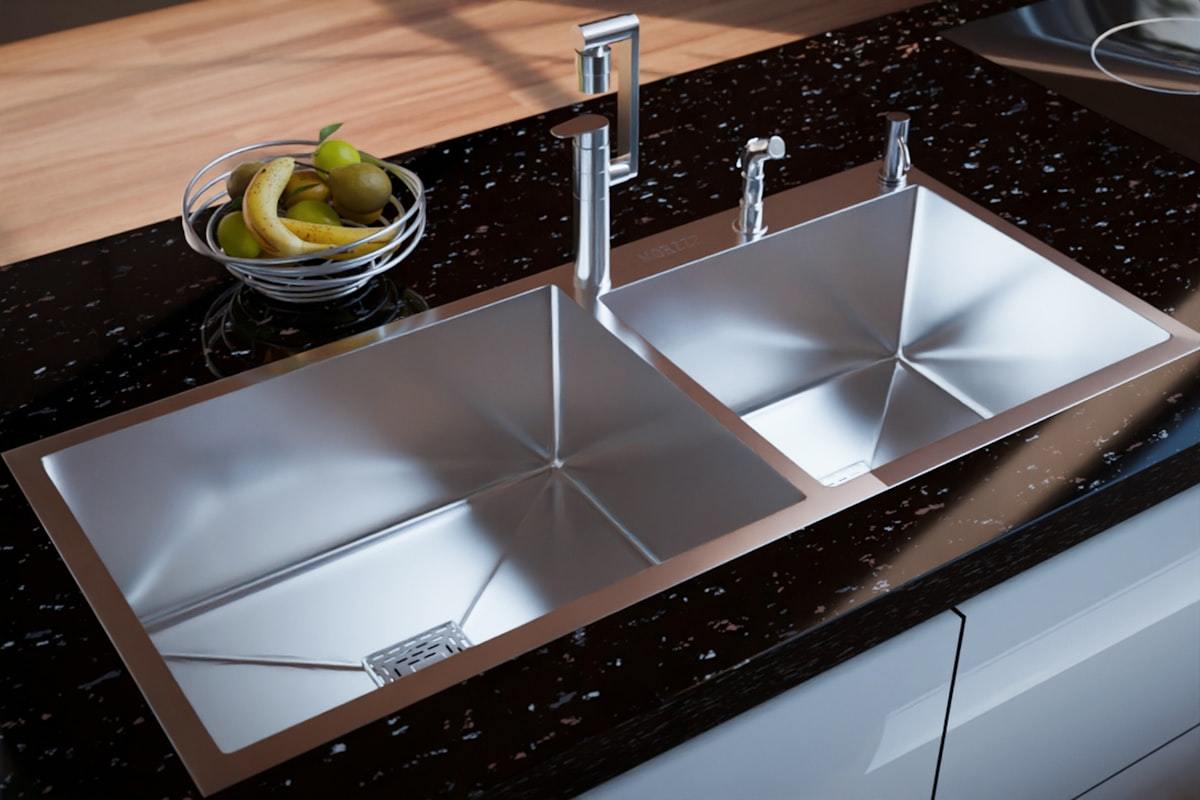
InstallationA sink installed beneath the countertop for a seamless surface. Debris wipes straight into the bowl. Requires stone or solid-surface counters.
Top-mount / Drop-in
InstallationA sink that drops into a cut-out with the rim sitting on the counter. Works with any countertop including laminate; the easiest to install.
Apron-front / Farmhouse
InstallationA sink whose front face extends to the counter edge with no visible rim. A bold residential statement style; 16-gauge T-304 is recommended.
Basin Depth
StructureThe interior depth of the sink bowl, typically 150 to 250 mm. Deeper basins reduce splashing and fit larger items. Residential standard is 180 to 200 mm.
Bowl
StructureThe individual washing basin of a sink. Single-bowl, double-bowl and triple-bowl sinks have one, two or three basins. Often used interchangeably with basin and compartment.
Compartment
StructureCommercial kitchen term for each washing basin. One, two and three-compartment sinks support different workflow stages.
Drainboard
StructureAn integrated flat, sloped area beside the bowl for draining dishes or prepping food. Very common in EU, UK and Australian kitchens.
Drain Opening
StructureThe hole diameter for the drain assembly. US standard is 3.5 in (89 mm) or 4.5 in (114 mm); EU and Asia use 90, 110, 140 or 185 mm.
Antibacterial Sink
Sink TypesA sink with a surface treatment that inhibits bacterial growth. Important for hospitals, food plants and pet grooming applications.
Utility Sink
Sink TypesA large, deep sink for heavy-duty cleaning in laundry rooms, garages and janitorial closets. Often called a slop sink or laundry sink.
Finish
FinishThe surface treatment that decides how a sink looks, feels and wears. Options range from brushed and mirror to coatings such as anti-fingerprint, antibacterial and PVD — see Module B for all 14 factory options.
Surface Finish Options
14 factory-proven stainless steel surface treatments from Samsink. The finish decides how a sink looks, feels and wears — choose by style, durability and budget.
Mirror Finish
Bright PolishingHigh-gloss, highly reflective surface with a premium look. Easy to clean and corrosion-resistant; ideal for high-end kitchens and hotel projects.
Brushed Finish
Satin / HairlineFine unidirectional grain with a matte sheen. The most scratch- and fingerprint-resistant option and the default choice for most sinks.
Matte / Sand Blasted
Shot BlastingUniform low-reflective rough texture with an industrial look. Excellent at hiding surface imperfections and welding marks.
Mirror Super Bright
Mirror PolishingUltra mirror finish achieved in a dust-free workshop with nano-grade polishing. Maximum reflectivity with no micro-scratches.
Anti-fingerprint
AF CoatingHydrophobic and oleophobic coating that repels fingerprints and oil. A wipe cleans it instantly; standard upgrade for mid-to-high-end sinks.
Antibacterial
Silver Ion NanoSilver-ion nano coating achieving up to 99.9% sterilization. Ideal for hospitals, schools, restaurants and laboratories.
PVD Titanium Plating
PVD CoatingVacuum-deposited titanium layer in rich colors. Extremely durable, wear-resistant and non-fading — a premium designer choice.
Chrome Plating
Chromium PlatingElectro-deposited chromium layer giving a mirror-bright, ultra-hard surface with long service life for high-wear applications.
Powder Spraying
PaintingFull-color custom coatings cured at high temperature. Strong adhesion, weather-resistant and perfect for outdoor or colored sinks.
ECC Hydrophilic
Cleanup ECCJapan Cleanup-style ceramic electrophoretic coating. Super-hydrophilic self-cleaning: plain water rinses away grease, no detergent needed.
3D Embossed + Barrier
LIXIL NEOJapan LIXIL-style 3D embossed texture with barrier coating. Dual physical-chemical stain defense, scratch-hiding and easy to clean.
Electropolishing
ElectrochemicalElectrolytic smoothing reaching nano-level finish without stress. Best corrosion resistance; used for medical and food-grade sinks.
Pickling & Passivation
Acid TreatmentRemoves oxide scale, rust and weld marks, then forms a protective passive film. The essential base treatment for every sink.
Etching
Chemical EtchingChemical engraving of complex patterns and logos that never peel off. Perfect for custom branding and decorative designs.
Samsink Standard Polish
Value OptionSamsink's own cost-effective polish, bright to about 6K. Built for high-volume markets that need good looks at the best price.
Finish & Budget Guide
Cost reference: Brushed, anti-fingerprint and passivation are value options. Mirror, satin and powder spraying sit mid-range. PVD, ECC, 3D embossed and electropolishing are premium. Contact our team to match a finish to your project budget.
Ask for Finish AdviceGlobal Sink Size Standards
Typical stainless steel sink dimensions across major markets. Sizes vary by manufacturer, so treat these as reference values.
North America
Unit: inches- Single bowl: 22 x 25 in (559 x 635 mm)
- Double bowl: 33 x 22 in (838 x 559 mm)
- Triple bowl: 43 x 22 in (1092 x 559 mm)
- Depth: 6 to 10 in (152 to 254 mm)
- Drain: 3.5 or 4.5 in
Europe / Middle East
Unit: millimetres- Single bowl: 500 x 400 mm
- Single bowl wide: 600 to 750 x 500 mm
- Double bowl: 800 x 500 mm
- Depth: 150 to 220 mm
- Drain: 90 / 110 / 140 mm
China / Asia
Unit: millimetres- Single bowl: 680 to 800 x 450 mm
- Double bowl: 750 to 820 x 430 to 450 mm
- Triple bowl: 970 to 1030 x 480 to 500 mm
- Depth: 180 to 200 mm
- Panel: 3 mm or thicker
Australia / NZ
Unit: millimetres- Single bowl: 780 x 480 mm
- 1.5 bowl: 1080 x 480 mm
- Double bowl: 1180 x 480 mm
- Depth: 170 to 200 mm
- Drain: LHB or RHB layouts
Commercial Sinks
NSF / ANSI 51- Hand-wash: 1 compartment, 24 x 20 in
- Food prep: 1 to 2 compartments
- Pot sink: 1 to 3 deep compartments
- Gauge: 16 ga (1.59 mm) or thicker
- Grade: 304 or 316 food-contact
Buyer Tip
US specs are quoted in inches with gauge numbers. EU, Chinese and Australian specs are metric. Always confirm whether the dimension is the outer rim or the basin interior, and request the certificate with your quote.
Ask Our EngineersUnit Converters & Quick References
Stop guessing. Convert gauge to millimetres and inches to millimetres, and check the standards buyers use every day.

Stainless Steel Gauge Chart
Gauge is an inverse measure: lower number equals thicker steel. Nominal stainless steel thickness values.
| Gauge | mm | inches | Use |
|---|---|---|---|
| 14 | 1.98 | 0.078 | Heavy commercial |
| 16 | 1.59 | 0.0625 | Recommended standard |
| 18 | 1.27 | 0.050 | Budget residential |
| 20 | 0.95 | 0.0375 | Too thin for bowls |
| 22 | 0.79 | 0.0312 | Avoid for sinks |
Inch to Millimetre Quick Table
1 inch equals 25.4 mm. Common sink dimensions converted for quick reference.
| Inches | Millimetres | Common use |
|---|---|---|
| 3.5 in | 88.9 mm | US drain opening |
| 4.5 in | 114.3 mm | US large drain |
| 6 in | 152.4 mm | Shallow basin depth |
| 8 in | 203.2 mm | Standard depth |
| 10 in | 254.0 mm | Deep basin |
| 22 in | 558.8 mm | US single bowl width |
| 33 in | 838.2 mm | US double bowl width |
Buying Know-how
Answers to the questions buyers ask us most before they send an RFQ.
304 vs 316 stainless steel, which should I choose?
304 (18/8) is the default food-grade choice: excellent corrosion resistance and great value, covering 95% of kitchen applications. 316 adds molybdenum, making it far more resistant to chlorides and acids. Choose 316 for coastal areas, marine environments, hospitals and chemical-heavy commercial kitchens. In doubt, 304 wins on cost and 316 wins on durability.
What is the difference between 16 gauge and 18 gauge?
16 gauge (1.59 mm) is about 25% thicker than 18 gauge (1.27 mm), meaning better dent resistance, less noise and longer life, at higher cost. 16 gauge is the recommended standard for sinks. 18 gauge suits budget residential projects. Anything thinner, such as 20 or 22 gauge, flexes and dents easily.
Single, double or triple bowl, how do I decide?
Single bowl suits small kitchens and washing large pots. Double bowl is the family default: one side for washing, one for rinsing or prep. Triple bowl serves high-volume kitchens wanting dedicated prep, wash and rinse zones. For commercial projects, match compartment count to your workflow stages.
Do commercial sinks really need NSF certification?
In North America, NSF/ANSI 51 certification is effectively mandatory for food-contact equipment in inspected establishments, and many jurisdictions add cUPC for plumbing compliance. Certified sinks protect you from failed health inspections and liability. Always request the certificate with your quotation.
Undermount or top-mount, which install is right?
Undermount gives a sleek, seamless counter and wipes debris straight into the bowl, but needs stone or solid-surface counters. Top-mount is the easiest to install and works with any countertop, though cleaning around the rim is harder. Commercial kitchens overwhelmingly choose undermount or flush-mount for hygiene.
Is 304 stainless steel really rust-proof?
Stainless means stain-resistant, not stain-proof. 304 resists corrosion from water and most foods, but prolonged chlorine, salt or acid exposure can cause pitting, which is where 316 wins. Regular cleaning and rinsing keep a 304 sink immaculate for decades.
What is the minimum order quantity for custom sinks?
At Samsink, custom OEM/ODM orders start at just 5 units, a rare flexibility for a factory. Standard production runs 30 days and hand-made custom sinks can ship in as little as 15 days, backed by 30+ years of experience and 500+ in-house molds.
What does basin depth actually affect?
Deeper basins of 200 mm or more reduce splashing, fit large pots and are preferred in commercial kitchens, but raise working height and cost. Match depth to your tallest washing task rather than fashion.
Certification & Standards
Global compliance at a glance, and why it matters for your project approval.
NSF / ANSI 51
North AmericaFood equipment safety standard required for commercial food-contact sinks.
cUPC
USA / CanadaUniform Plumbing Code certification for safe water supply and drainage connection.
ISO 9001
GlobalQuality management system certification across production, inspection and delivery.
CE Marking
European UnionConformity marking required for products sold within the European Economic Area.
HS Code 7324
Global TradeCustoms classification for sanitary ware including steel sinks; Samsink assists with trade documentation.
Material Verification
GlobalAISI 304, 316 and 430 grades verified with material certificates and batch traceability.
Measure & Start Your Custom Sink
Measure right, then jump straight into the right entry point for your project.
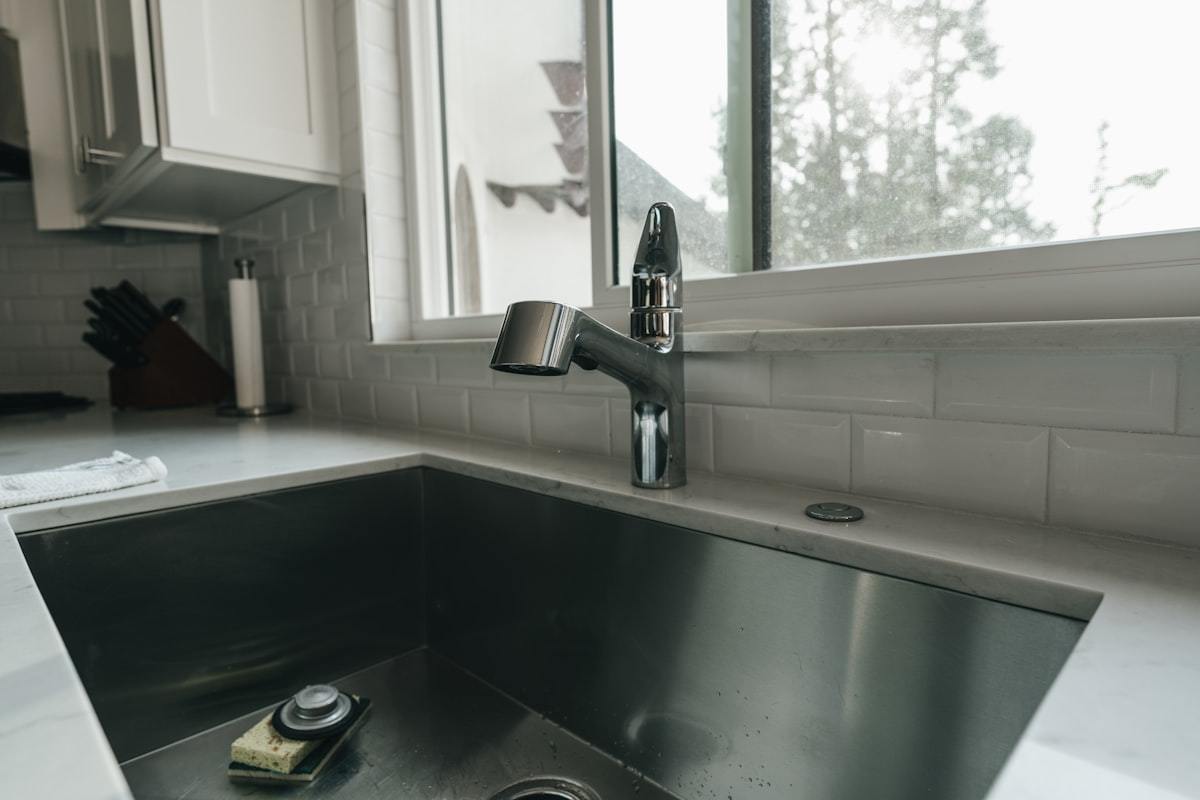
Measure the actual opening in millimetres and inches. This is the size that matters, not the rim size.
Pick depth by your washing needs, from 180 to 250 mm, and gauge by durability needs, 16 gauge recommended.
304 for standard, 316 for harsh environments. Finish: brushed, mirror, anti-fingerprint or antibacterial.
Undermount, top-mount or flush-mount. Drain position, overflow, accessories and laser logo engraving for OEM.
Samsink engineers respond with drawings, pricing and lead time. MOQ from 5 units, delivery from 15 days.
Choose Your Custom Sink Path
Pick the entry point that matches your project and our team will take it from there.
Know the specs? Now spec with Samsink.
30+ years manufacturing stainless steel sinks for 1,000+ global clients. Custom sizes, shapes and finishes with MOQ from 5 units, and dual production bases in China and Thailand.